Reasoning & Mental AbilityGeneral Intelligence & Reasoning

Analogies, Series & Classification

Logical patterns in number series, alphabetical letter sequences, word analogies, semantic relationships, and odd-one-out classification tests.

SOLVED MCQS
1047
PAPERS APPEARED
120 / 122
FREQUENCY RATE
98%
AVG / EXAM
8.7
📊Past Exam Appearance Breakdown120 Exams
Tap to View Breakdown ▾
Junior Librarian (2025)31 Qs
CGL Tier-1 (11 Sep Shift 1) (2016)25 Qs
Social Forestry Worker (2026)20 Qs
Educator - Cum - Studio Assistant (2025)19 Qs
Assistant Scientific Officer (DNA) (2024)18 Qs
Patwari (2024)17 Qs
Child Psychologist (2025)17 Qs
Lab Assistant (Forest/Ecology & Environment) (2025)17 Qs
Assistant Scientific Officer (Documents) (2026)17 Qs
Panchayat Secretary (VLW) (2023)16 Qs
Stock Assistant (2024)16 Qs
Cleaner (2025)16 Qs
FPF Guard (2026)16 Qs
Field Assistant (2026)16 Qs
Clinical Psychologist (2025)15 Qs
Assistant Scientific Officer (Chemistry and Toxicology) (2026)15 Qs
Graduate Level Posts (2024)14 Qs
Assistant Superintendent Jails (2025)14 Qs
Assistant Scientific Officer (Ballistics) (2024)13 Qs
Assistant Scientific Officer (Physics) (2024)13 Qs
Panchayat Secretary (2025)13 Qs
Veterinary Pharmacist (2025)13 Qs
Assistant Scientific Officer (Biology & Serology) (2024)12 Qs
Supervisor (Social Welfare Department) (2024)12 Qs
Veterinary Pharmacist / Stock Assistant (2024)12 Qs
Screen Technician / Supervisor (2025)12 Qs
Assistant Food Analyst (2025)12 Qs
Psychiatric Social Worker / Drug De-Addiction Counsellor (2025)12 Qs
Wildlife Guard (2026)12 Qs
Assistant Scientific Officer (Documents) (2024)11 Qs
Chemist (2023)11 Qs
Data Entry Operator (2023)11 Qs
Junior Engineer (Mechanical) (2023)11 Qs
Matric Level Posts (2024)11 Qs
Sub Inspector (Finance) (2024)11 Qs
Scientist - 'A' (2025)11 Qs
Chemical Assistant (2025)11 Qs
Gardener / Farash / Traffic Orderly / MTS / Khansama-III (2025)11 Qs
Junior Engineer (Civil) (2025)11 Qs
Assistant Scientific Officer (Crime Scene) (2026)11 Qs
Laboratory Attendant (2026)11 Qs
Constable (Executive/Armed/IRP/SDRF) (2024)10 Qs
Deputy Inspector Fisheries (2024)10 Qs
Assistant Secretary - Head Assistant (2025)10 Qs
Public Address System Operator (PASO) (2025)10 Qs
Telephone Operator / Pump Operator / Mechanic Cum Mistri (2025)10 Qs
Junior Scientific Assistant (2025)10 Qs
Technical Assistant (EDUSAT) (2025)10 Qs
Junior Assistant (2026)10 Qs
Draftsman (Civil) (2023)9 Qs
Rehabilitation Psychologist (2025)9 Qs
Laboratory Assistant (2025)9 Qs
Medical Record Technician (2025)9 Qs
Data Entry Operator (2025)9 Qs
Printing Down Operator (2025)9 Qs
Inspector FPF (2026)9 Qs
Constable (Telecommunication) (2024)8 Qs
Field Assistant (2023)8 Qs
Field Inspector (2023)8 Qs
Inspector (Finance) (2024)8 Qs
Matric Level Posts (Series A - Shift 2) (2024)8 Qs
Junior Cultural Assistant (2025)8 Qs
Paramedical Assistant (Dermatology) (2025)8 Qs
Medical Record Keeper (2025)8 Qs
Junior Engineer (Skill Development) (2025)8 Qs
Audio Visual Mechanic (2025)8 Qs
Laboratory Assistant (Culture Department) (2025)8 Qs
Photographer (2025)8 Qs
Career Counseling Officer (2025)8 Qs
EDUSAT Assistant (2025)8 Qs
Assistant Programmer (2025)8 Qs
Junior Microbiologist (2025)8 Qs
Website Operator (2026)8 Qs
Museum Curator (2025)7 Qs
Conservation Assistant (2025)7 Qs
Constable (Photographer) (2024)6 Qs
Assistant PTI (2025)6 Qs
Foreman (2025)6 Qs
Laboratory Technician (Agriculture / Horticulture) (2025)6 Qs
Cameraman (2025)6 Qs
Driver (2023)5 Qs
Junior Engineer (Civil) (2023)5 Qs
Junior Assistant (2024)5 Qs
Truck Cleaner / Driver (Motor Vehicle) (2023)5 Qs
Urdu Typist (2024)5 Qs
Junior Programmer (2025)5 Qs
Refrigerator Mechanic (2025)5 Qs
Tabla Assistant (2025)5 Qs
Receptionist (2025)5 Qs
Canning Instructor / Instructor Canning (2025)5 Qs
Plant Protection Operator / Field Assistant-II / Lab Assistant (2025)5 Qs
Dhobi (2025)5 Qs
Junior Engineer (Electrical) (2025)5 Qs
Assistant Scientific Officer (Narcotics) (2024)4 Qs
Junior Stenographer / Junior Scale Stenographer (2024)4 Qs
Electrician (2025)4 Qs
Computer Instructor-Operator (2025)4 Qs
Junior Laboratory Technician (2025)4 Qs
Driver (2025)4 Qs
Accounts Assistant (Finance) (2024)3 Qs
Assistant Scientific Officer (Chemistry & Toxicology) (2024)3 Qs
Junior Assistant cum Computer Operator (2023)3 Qs
Matric Level Posts (2023)3 Qs
Remedial Therapist Special Educator (2025)3 Qs
Electrician Grade-II (2025)3 Qs
Kitabat Instructor (2025)3 Qs
Seed Examiner (2025)3 Qs
Statistical Assistant (2025)3 Qs
Technical Officer (2025)3 Qs
Modeller (2025)2 Qs
Plumber (2025)2 Qs
Rent Collector / Re-Toucher Artist / Carpenter Cum Mistri-II / Welder (2025)2 Qs
Animal Keeper (2025)2 Qs
Drug Control Officer (2025)2 Qs
Film Production Assistant (2025)2 Qs
Laboratory Technician (2025)2 Qs
Junior/Senior Radiotherapy Technician (2025)1 Qs
Food Safety Officer (2025)1 Qs
Medical Physics Technician (2025)1 Qs
Draftsman (Soil Conservation) (2025)1 Qs

📝 Solved Questions on Analogies, Series & Classification (1047)

Start Timed Test (1047 Qs)Self-Paced Practice
1📚General Knowledge with special ref to J&K UTHistory
Arrange the following historical events in chronological order:

- a. Jallianwala Bagh Massacre
- b. Dandi March
- c. Lucknow Pact
- d. Quit India Movement
Explanation
The correct chronological order is: Lucknow Pact (1916), Jallianwala Bagh Massacre (1919), Dandi March (1930), and Quit India Movement (1942). This matches sequence: c, a, b, d.
صحیح تاریخی ترتیب ہے: لکھنؤ معاہدہ (1916)، جلیانوالہ باغ سانحہ (1919)، ڈانڈی مارچ (1930)، اور ہندوستان چھوڑو تحریک (1942)۔ یعنی c، a، b، d۔
2024JKSSBFinance Department
2📚General Knowledge with special ref to J&K UTGeography
Arrange the following Indian states in order from North to South:

- a. Himachal Pradesh
- b. Tamil Nadu
- c. Telangana
- d. Madhya Pradesh
Explanation
Geographical arrangement from North to South is: Himachal Pradesh (a), Madhya Pradesh (d), Telangana (c), and Tamil Nadu (b). This corresponds to sequence a, d, c, b.
شمال سے جنوب کی جغرافیائی ترتیب ہے: ہماچل پردیش (a)، مدھیہ پردیش (d)، تلنگانہ (c)، اور تمل ناڈو (b)۔ یعنی 'a, d, c, b'۔
2024JKSSBFinance Department
3📚General Knowledge with special ref to J&K UTCurrent Affairs
Arrange the following events of 2023 in chronological order:

- a. G20 Summit in India
- b. ICC World Cup Final 2023
- c. Launch of Chandrayaan 3
- d. COP28 climate summit in Dubai
Explanation
The chronological order is: Launch of Chandrayaan 3 (July 14, 2023), G20 Summit in New Delhi (September 9-10, 2023), ICC World Cup Final (November 19, 2023), and COP28 Summit in Dubai (November 30, 2023). This matches sequence: c, a, b, d.
سال 2023 کے واقعات کی ترتیب: چندریان 3 لانچ (جولائی 2023)، جی 20 سمٹ (ستمبر 2023)، ورلڈ کپ فائنل (نومبر 19، 2023)، اور COP28 دبئی (نومبر 30، 2023)۔ ترتیب: c, a, b, d۔
2024JKSSBFinance Department
4📚Classical Mechanics & DynamicsCrime Scene Management
Mark the proper sequence of tasks to be completed in a crime scene.

i. Packaging of physical evidence
ii. Securing the scene
iii. Collecting physical evidence
iv. Recognizing physical evidence
Explanation
The correct sequence is: first secure the scene (ii), then recognize/identify evidence (iv), then collect the evidence (iii), and finally package it (i).
صحیح ترتیب یہ ہے: پہلے جرم کی جگہ کو محفوظ کرنا (ii)، پھر ثبوتوں کی شناخت کرنا (iv)، پھر ثبوت اکٹھے کرنا (iii)، اور آخر میں پیک کرنا (i)۔
2024JKSSBHome Department (Forensic Science Laboratory)
5📚Classical Mechanics & DynamicsFingerprints
Which of the following are the principles of fingerprint analysis?

i. Universal
ii. Individual
iii. Classifiable
Explanation
The core scientific principles/laws of fingerprint analysis are that fingerprints are Individual (unique to each person) and Classifiable (based on systematic ridge patterns). While prints are virtually universal to humans, 'Universal' is not defined as a core principle of fingerprint identification compared to individuality and classifiability.
فنگر پرنٹ تجزیہ کے بنیادی اصول یہ ہیں کہ انگلیوں کے نشانات انفرادی (Individual) ہوتے ہیں اور انہیں باقاعدہ پیٹرن کے تحت درجہ بند (Classifiable) کیا جا سکتا ہے۔
2024JKSSBHome Department (Forensic Science Laboratory)
6📚Electromagnetism & OpticsStatistics
Arrange the stages of statistical investigation in their correct order.

a. Classification of Data
b. Collection of Data
c. Interpretation of Data
d. Analysis of Data
e. Planning the purpose of Investigation
Explanation
The correct logical order of statistical investigation is: Planning (e) -> Collection of Data (b) -> Classification of Data (a) -> Analysis (d) -> Interpretation (c).
اعداد و شمار کی تفتیش کی صحیح ترتیب ہے: تفتیش کی منصوبہ بندی (e) -> ڈیٹا جمع کرنا (b) -> درجہ بندی کرنا (a) -> تجزیہ کرنا (d) -> تشریح یا نتیجہ نکالنا (c)۔ یعنی 'e, b, a, d, c'۔
2024JKSSBHome Department (Forensic Science Laboratory)
7📚Forensic Ballistics & Internal/External BallisticsFootprints
A footprint classification system is required for filing the footprints of

i. New born babies
ii. Military airmen
iii. People lacking arms
Explanation
Footprint classification systems are used for filing records of newborn babies (hospital security), military airmen (for identification after plane crashes/burns), and individuals lacking arms (who cannot provide fingerprints).
فٹ پرنٹ کی درجہ بندی کا نظام نوزائیدہ بچوں، فوجی ہوابازوں (حادثات میں شناخت کے لیے)، اور بغیر بازوؤں والے افراد (جن کے فنگر پرنٹ نہیں لیے جا سکتے) کی ریکارڈ فائلنگ کے لیے استعمال ہوتا ہے۔ اس لیے تینوں درست ہیں۔
2024JKSSBHome Department (Forensic Science Laboratory)
8📚Forensic Ballistics & Internal/External BallisticsFootprints
The main footprint classification systems used over the years are

i. FBI's Footprint Classification System
ii. Vucetich Footprint Classification System
iii. Chatterjee's Footprint Classification System
Explanation
The primary footprint classification systems used historically in forensic science are the FBI's Footprint Classification System and Chatterjee's Footprint Classification System (developed in India). Juan Vucetich developed a fingerprint classification system, not a footprint system.
فارنسک سائنس میں استعمال ہونے والے اہم فٹ پرنٹ کلاسیفیکیشن سسٹمز میں ایف بی آئی (FBI) اور چیٹرجی (Chatterjee) کا نظام شامل ہے۔ خوان ووسیٹچ (Vucetich) نے فنگر پرنٹ کا نظام بنایا تھا نہ کہ فٹ پرنٹ کا۔
2024JKSSBHome Department (Forensic Science Laboratory)
9📚Forensic Ballistics & Internal/External BallisticsTrackers
Which of the following statements are correct?

i. The art of tracking through gait pattern is practiced in various parts of India by certain families.
ii. The trackers are, by and large, uneducated persons.
iii. The trackers do not take any extensive measurements.
Explanation
Traditionally, the art of tracking (using gait and footprints) has been practiced in rural parts of India by specific families (e.g. puggees). Trackers are usually uneducated and rely on visual cues, experience, and instinct rather than taking extensive scientific measurements.
بھارت کے مختلف علاقوں میں کچھ خاندان پاؤں کے نشانات سے سراغ لگانے کی مہارت رکھتے ہیں۔ یہ سراغ رساں (trackers) عام طور پر ان پڑھ ہوتے ہیں اور وہ کوئی سائنسی یا وسیع پیمائش نہیں کرتے بلکہ تجربے پر بھروسہ کرتے ہیں۔
2024JKSSBHome Department (Forensic Science Laboratory)
10📚Forensic Ballistics & Internal/External BallisticsGait Analysis
In scientific study of gait pattern, which of the following characteristics are noted?

i. Dimensions of Mark
ii. Pressure points
iii. Pressure defects
Explanation
A scientific analysis of a gait pattern involves checking the dimensions of the prints, the specific pressure points of the foot during stride, and any pressure defects (uneven weight distribution or gait abnormalities).
چال کی رفتار اور انداز (gait pattern) کے سائنسی مطالعے میں پاؤں کے نشان کا سائز (dimensions)، دباؤ کے مقامات (pressure points)، اور چال کی خرابیاں یا نقائص (pressure defects) سبھی نوٹ کیے جاتے ہیں۔
2024JKSSBHome Department (Forensic Science Laboratory)
11📚Forensic Ballistics & Internal/External BallisticsGait Analysis
For evaluating gait pattern evidence by forensic science laboratory staff, the minimum number of consecutive foot or footwear marks required is:
Explanation
To perform an analysis of a gait pattern (step length, stride length, step angle, etc.), a minimum sequence of 3 consecutive prints is required by forensic examiners.
فارنسک لیبارٹری میں چال (gait pattern) کا تجزیہ کرنے کے لیے پاؤں یا جوتے کے کم از کم 3 مسلسل نشانات کا ہونا ضروری ہے۔
2024JKSSBHome Department (Forensic Science Laboratory)
12📚Forensic Ballistics & Internal/External BallisticsTyre Impressions
The photographic technique to record the whole tread of a tyre is called as
Explanation
Periphography is a specialized photographic technique used to capture the entire circumferential tread pattern of a tyre (or any cylindrical surface) as a single flat image.
ٹائر کے پورے ٹریڈ یا گولائی کے نشان کو ایک فلیٹ تصویر میں ریکارڈ کرنے کی تکنیک کو پیریفہوگرافی (Periphography) کہا جاتا ہے۔
2024JKSSBHome Department (Forensic Science Laboratory)
13📚Firearms & Ammunition ExaminationShotguns
Which of the following statement is true for Barrel choke?

i. It is the reducing of bore of a shotgun at the breech end
ii. Choke increases the effective range of a shotgun.
iii. Reduction of diameter by one millimeter is called as full choke.
Explanation
Statements ii and iii are true. A choke is a constriction at the muzzle end (not the breech end) of a shotgun barrel, which tightens the shot pattern to increase the effective range. A 1mm reduction in diameter corresponds to a full choke.
بیانات ii اور iii درست ہیں۔ چوک (choke) بندوق کی نالی کے بیرونی سرے (muzzle) پر ہوتی ہے نہ کہ عقبی سرے (breech) پر۔ یہ مارنے کی صلاحیت یا رینج کو بڑھاتی ہے اور 1mm کمی فل چوک کہلاتی ہے۔
2024JKSSBHome Department (Forensic Science Laboratory)
14📚Firearms & Ammunition ExaminationFiring Process
Arrange the following process of firing in increasing order of chronology.

i. Triggering
ii. Striking percussion cap
iii. Hammer release
iv. Ignition of propellent
Explanation
The correct sequence of events when firing a gun is: first the trigger is pulled/triggering (i), which releases the hammer (iii), causing the firing pin to strike the percussion cap (ii), leading to the ignition of the propellant (iv).
فائرنگ کے عمل کی صحیح ترتیب یہ ہے: پہلے ٹرگر دبایا جاتا ہے (i)، پھر ہیمر آزاد ہوتا ہے (iii)، پھر وہ پرکشن کیپ سے ٹکراتا ہے (ii)، اور آخر میں بارود جلتا ہے (iv)۔ یعنی 'i, iii, ii, iv'۔
2024JKSSBHome Department (Forensic Science Laboratory)
15📚Firearms & Ammunition ExaminationHistory of Firearms
Arrange the following firearms with chronological order of their invention.

i. Match Lock
ii. Wheel Lock
iii. Hand Canon
iv. 0.303 SLR
Explanation
The correct chronological sequence of inventions is: Hand Cannon (14th century, iii) -> Matchlock (15th century, i) -> Wheellock (16th century, ii) -> 0.303 SLR (20th century, iv). This corresponds to order: iii, i, ii, iv.
ہتھیاروں کی ایجاد کی صحیح تاریخی ترتیب ہے: ہینڈ کینن (iii) -> میچ لاک (i) -> وہیل لاک (ii) -> 0.303 SLR (iv)۔ یعنی 'iii, i, ii, iv'۔
2024JKSSBHome Department (Forensic Science Laboratory)
16📚Forensic Physics & General KnowledgeShotguns
The mathematical relation between diameter of dispersed pellets (D) and range (R) of fire of a half choke standard firearms is
Explanation
In standard ballistics, the pattern diameter (D in cm) for a half-choke shotgun is roughly 3 times the range of fire (R in meters): D = 3R. (Contrast: Cylinder is 4R, Full choke is 2R/2.5R).
ہاف چوک شاٹ گن کے لیے چھروں کے پھیلاؤ کا قطر (D سینٹی میٹر میں) اور فاصلہ (R میٹر میں) کے درمیان تعلق D = 3R ہوتا ہے (یعنی فی میٹر 3 سینٹی میٹر پھیلاؤ)۔
2024JKSSBHome Department (Forensic Science Laboratory)
17📚Cell Biology & Molecular GeneticsCrime Scene Management
The following steps are involved in the crime scene processing:

i. Packaging of evidence
ii. Collection of evidence
iii. Securing the crime scene
iv. Sketching and videography of the crime scene

Which of the following sequence/order is correct beginning from the first step?
Explanation
The standard sequence of crime scene processing is: first securing the scene (iii), documenting via sketching and photography (iv), collecting evidence (ii), and then packaging it (i).
کرائم سین پروسیسنگ کی صحیح ترتیب یہ ہے: سب سے پہلے جائے وقوعہ کو محفوظ کرنا (iii)، خاکہ سازی اور فوٹوگرافی (iv)، شواہد جمع کرنا (ii)، اور پھر ان کی پیکیجنگ کرنا (i)۔
2024JKSSBHome Department (Forensic Science Laboratory)
18📚Cell Biology & Molecular GeneticsCrime Scene Management
The following steps are involved in crime scene reconstruction:

i. Conjecture
ii. Testing and theory formation
iii. Data collection
iv. Hypothesis testing

Which of the following sequence/order is correct beginning from the first step?
Explanation
Crime scene reconstruction involves: Data collection (iii) -> Conjecture/observation (i) -> Hypothesis testing (iv) -> Testing and theory formation (ii).
کرائم سین کی تعمیر نو (Reconstruction) کے مراحل ہیں: ڈیٹا اکٹھا کرنا (iii) -> قیاس آرائی (i) -> مفروضہ کی جانچ (iv) -> نظریہ کی تشکیل اور ٹیسٹنگ (ii)۔
2024JKSSBHome Department (Forensic Science Laboratory)
19📚Cell Biology & Molecular GeneticsCrime Scene Management
Which of the following is a type of paper packaging method used for evidence?
Explanation
A druggist's fold (or pharmacist's fold) is a folding pattern used to secure small amounts of trace evidence (like hair, powder, fibers) in paper without leakage.
ڈرگسٹ فولڈ (Druggist's fold) کاغذ کو موڑنے کا ایک طریقہ ہے جس کے ذریعے بالوں یا پاؤڈر جیسے چھوٹے شواہد کو بغیر گرے محفوظ کیا جاتا ہے۔
2024JKSSBHome Department (Forensic Science Laboratory)
20📚Biochemistry & Human PhysiologyCrime Scene Safety
After processing the crime scene, the Personal Protection Equipment (PPE) has to be removed in a sequence. Consider the following sequence.

i. Outer gloves, if double-gloved
ii. Booties if separate from overgarments
iii. Surgical mask
iv. Eye protection

Which of the following sequences is correct starting from the first to be removed the last?
Explanation
The proper sequence to remove PPE to avoid contamination is: outer gloves (i), booties (ii), eye protection (iv), and surgical mask last (iii) to prevent inhalation of airborne contaminants.
جائے وقوعہ کی تفتیش کے بعد پی پی ای (PPE) اتارنے کی صحیح ترتیب یہ ہے: پہلے دستانے (i)، پھر بوٹ کور (ii)، پھر عینک یا آنکھوں کا تحفظ (iv)، اور آخر میں ماسک (iii)۔
2024JKSSBHome Department (Forensic Science Laboratory)
21📚Biochemistry & Human PhysiologyPhysical Evidence
Consider the following pairs:

i. Fingerprints - Striations in marks
ii. Toolmarks - Minutiae patterns
iii. Footwear - Wear damage to sole
iv. Handwriting- Hiatus

Which of the physical evidence is correctly matched with their individual characteristics?
Explanation
Footwear sole wear/damage (iii) and a hiatus in handwriting (iv) are individual characteristics. Minutiae are for fingerprints, and striations are for toolmarks/bullets.
جوتے کے تلوے کا گھساؤ (iii) اور تحریر میں ہیاٹس یا وقفہ (iv) انفرادی خصوصیات ہیں۔ فنگر پرنٹ میں منوشیا پیٹرن ہوتے ہیں اور ٹول مارکس میں لکیریں (striations)۔
2024JKSSBHome Department (Forensic Science Laboratory)
22📚Forensic Serology & ImmunologyImmunoassays
Arrange the steps of immunoprecipitation in the right order:

i. Elution
ii. Binding of antigen and antibody
iii. Immobilisation of primary antibody on a matrix
Explanation
The correct sequence for immunoprecipitation is: first immobilizing the antibody on a solid support (iii), then binding the antigen/target (ii), and finally eluting the purified antigen (i).
امیونوپریسیپیٹیشن (Immunoprecipitation) کی صحیح ترتیب یہ ہے: پہلے اینٹی باڈی کو میٹرکس پر مستحکم کرنا (iii)، پھر اینٹی جن کا بائنڈ ہونا (ii)، اور آخر میں مطلوبہ پروٹین کو الگ کرنا یا ایلیوشن (i)۔
2024JKSSBHome Department (Forensic Science Laboratory)
23📚DNA Profiling & PCR TechniquesForensic Entomology
Arrange the sequence of steps you will perform as a forensic entomologist in an outdoor crime scene:

i. Collection of live adult flies
ii. Collection of soil temperatures under the body after its removal
iii. Photography, notations of the overall crime scene from a safe distance
iv. Collection of insects on the body
Explanation
First photograph the scene (iii), catch flying adult insects before they disperse (i), collect crawling insects/maggots from the remains (iv), and lastly collect soil temperatures beneath the body once it is moved (ii).
صحیح ترتیب: جائے وقوعہ کی دور سے تصویر کشی (iii) -> اڑنے والے کیڑوں کو پکڑنا (i) -> لاش پر موجود رینگنے والے کیڑے جمع کرنا (iv) -> لاش ہٹانے کے بعد مٹی کا درجہ حرارت لینا (ii)۔
2024JKSSBHome Department (Forensic Science Laboratory)
24📚DNA Profiling & PCR TechniquesSerology
In Ouchterlony assay, what would the appearance of a Y-shaped precipitin reaction indicate?
Explanation
In the Ouchterlony double diffusion assay, a Y-shaped precipitin pattern (with a spur) indicates partial identity (shared epitopes but distinct ones as well).
اوچٹرلونی ڈبل ڈیفیوژن ٹیسٹ میں، Y شکل کی پریسیپیٹن لائن بننا جزوی مماثلت (Partial identity) کو ظاہر کرتا ہے۔
2024JKSSBHome Department (Forensic Science Laboratory)
25📚DNA Profiling & PCR TechniquesBlood Groups
The IAI^{A} and IBI^{B} are both expressed dominantly to produce AB blood group phenotype. What inheritance pattern does this example follow?
Explanation
Codominance occurs when both alleles are fully expressed in the heterozygote, as seen in individuals with the AB blood group expressing both A and B antigens.
جب دونوں علیل (alleles) مشترکہ طور پر مکمل اثر دکھائیں تو اسے کوڈومیننس (Codominance) کہتے ہیں، جیسے AB بلڈ گروپ میں A اور B دونوں اپنا اثر دکھاتے ہیں۔
2024JKSSBHome Department (Forensic Science Laboratory)
26📚DNA Profiling & PCR TechniquesForensic Entomology
State which of the statements are true?

i. Insects can indicate movement of body from rural to urban areas
ii. Insect colonisation patterns help determine wound sites
iii. Unwrapped and wrapped carcasses will show similar insect colonisation patterns
iv. In general, more beetles are found in the indoor environment, and more flies outdoors.
Explanation
Statements i (rural vs. urban species) and ii (wounds attract unusual egg-laying) are true. Wrapping delays colonization, and fly and beetle distribution varies based on decomposion stage, not simply indoor/outdoor.
پہلا اور دوسرا بیان درست ہے: کیڑے لاش کو دیہی سے شہری علاقے میں منتقل کرنے کی نشاندہی کر سکتے ہیں (i) اور کیڑوں کا جھرمٹ زخموں کی جگہ کا تعین کرنے میں مدد دیتا ہے (ii)۔
2024JKSSBHome Department (Forensic Science Laboratory)
27📚General Knowledge & Forensic BiologyForensic Odontology
Which statement pertaining to defensive bitemarks is TRUE?

i. Show a well-defined pattern
ii. Are usually singular
iii. Show tearing of skin
iv. Are most often seen in postmortem bitemarks
Explanation
Defensive bite marks occur during a violent struggle, meaning they are antemortem (not postmortem) and often ill-defined/distorted, showing tearing of skin due to movement. Only statement iii is correct.
حفاظتی کاٹنے کے نشانات (Defensive bitemarks) کشمکش کے دوران بنتے ہیں، جس کی وجہ سے نشانات کھنچ جاتے ہیں اور جلد پھٹ (tearing of skin) جاتی ہے۔ اس لیے صرف بیان (iii) درست ہے۔
2024JKSSBHome Department (Forensic Science Laboratory)
28📚General Knowledge & Forensic BiologyHair Analysis
Which of the following statements aptly define the difference between Human hair and animal hair?

i. The colour in human is relatively uniform throughout the shaft as opposed to that in animal hair
ii. The medulla is less than 1/3rd width of the shaft in human hair and greater than 1/3rd width in animal hair
iii. Scaling pattern of human hair is imbricate while that of animal hair is varied
Explanation
All three statements correctly differentiate human from animal hair: human hair has uniform pigmentation (i), a narrow medulla (index < 0.33) (ii), and consistently imbricate scales (iii).
تینوں بیانات انسانی اور حیوانی بالوں کا صحیح موازنہ کرتے ہیں: انسانی بال کا رنگ یکساں ہوتا ہے (i)؛ اس کا اندرونی دھاگہ یا میڈولا ریشے کے تہائی حصے سے چھوٹا ہوتا ہے (ii)؛ اور اس کے اسکیلز ہمیشہ فلیٹ یا امبریکیٹ ہوتے ہیں (iii)۔
2024JKSSBHome Department (Forensic Science Laboratory)
29📚Organic & StereochemistryCrime Scene Management
What is not a search method employed for outdoor crime scene?
Explanation
Supervision method is not a physical search pattern. Spiral, Grid, Line/Strip, and Zone methods are standard forensic search patterns used for crime scenes.
سپر ویزن کا طریقہ (Supervision method) کوئی سائنسی سرچ پیٹرن نہیں ہے۔ اسپائرل، گرڈ اور لائن میتھڈ کرائم سین کی تلاش کے مقبول طریقے ہیں۔
2024JKSSBHome Department (Forensic Science Laboratory)
30📚Physical Chemistry & SpectroscopyArson Investigation
What pattern of fire at the point of origin indicates unnatural fire?
Explanation
An 'inverted V' pattern, which resembles a capital letter 'A' (A shape), often indicates a localized pour of liquid accelerant at the point of origin, characteristic of arson.
جائے وقوعہ پر الٹا وی یا 'A' کی شکل کا نشان (A shape) یہ اشارہ کرتا ہے کہ وہاں ایندھن یا ایکسیلرنٹ گرایا گیا تھا، جو غیر قدرتی آگ کی علامت ہے۔
2024JKSSBHome Department (Forensic Science Laboratory)
31📚Physical Chemistry & SpectroscopyArson Investigation
What does Class-E fire signify?
Explanation
In standard classification systems, Class E fire represents fires involving energized electrical equipment or short circuits.
کلاس ای فائر (Class-E fire) سے مراد بجلی کے آلات یا شارٹ سرکٹ کی وجہ سے لگنے والی آگ ہے۔
2024JKSSBHome Department (Forensic Science Laboratory)
32📚Cell Biology & Molecular GeneticsHistory of Forensics
Consider the following pairs:
i. Father of forensic toxicology - Albert Osborn
ii. Father of Forensic Ballistics - Calvin Goddard
iii. Father of fingerprints - Francis Galton
iv. Father of questioned documents - Mathieu Orfila
Which of the scientists are correctly matched with their domain?
Explanation
Calvin Goddard is widely known as the Father of Forensic Ballistics (ii). Francis Galton is recognized as the Father of Fingerprints (iii) for developing the first classification system. Mathieu Orfila is the Father of Forensic Toxicology (not questioned documents), and Albert Osborn is the Father of Questioned Documents (not toxicology).
کیلون گوڈارڈ کو فارنزک بیلسٹکس کا باپ (ii) مانا جاتا ہے۔ فرانسس گالٹن کو فنگر پرنٹس کا باپ (iii) مانا جاتا ہے جنہوں نے کلاسیفیکیشن سسٹم تیار کیا۔ میتھیو اورفیلا فارنزک ٹاکسیکولوجی کے باپ ہیں اور البرٹ اوسبورن سوالیہ دستاویزات (Questioned Documents) کے باپ مانے جاتے ہیں۔
2024JKSSBHome Department (Forensic Science Laboratory)
33📚Cell Biology & Molecular GeneticsCrime Scene Management
The following steps are carried out during crime scene processing.
i. Collect
ii. Process and preserve
iii. Record
iv. Observe
Which is the right order beginning from the first step?
Explanation
The standard sequence of crime scene processing is to first Observe (iv) the scene, Record (iii) it through notes, sketches, and photos, Collect (i) the physical evidence, and finally Process and preserve (ii) the evidence and scene details.
کرائم سین پروسیسنگ کا صحیح ترتیب یہ ہے: سب سے پہلے مشاہدہ کرنا (Observe - iv)، پھر ریکارڈ کرنا (Record - iii)، پھر نمونے جمع کرنا (Collect - i)، اور آخر میں پروسیس اور محفوظ کرنا (Process and preserve - ii)۔ یعنی iv، iii، i، ii۔
2024JKSSBHome Department (Forensic Science Laboratory)
34📚Cell Biology & Molecular GeneticsBiometrics
Which of the following is an example of behavioural biometrics?
Explanation
Behavioral biometrics measure patterns of human activities. Handwriting, signature dynamics, keystroke dynamics, and gait are behavioral, while iris, lip prints, and nail beds are physiological biometrics.
انفرادی رویے کی پیمائش کرنے والے بائیومیٹرکس کو ہیبیچوئل یا بیہیویورل بائیومیٹرکس کہا جاتا ہے۔ لکھاوٹ (Handwriting) اس کی ایک مثال ہے، جبکہ آئیرس اور لپ پرنٹ جسمانی بائیومیٹرکس ہیں۔
2024JKSSBHome Department (Forensic Science Laboratory)
35📚Cell Biology & Molecular GeneticsEvidence Classification
Consider the following statements:
i. Brand of footwear is a class characteristic
ii. DNA profile is an individual characteristic
iii. Wear and tear on the sole of the footwear is a class characteristic
iv. Blood group is an individual characteristic
Which of the above statements is true/correct?
Explanation
The brand of footwear is a class characteristic (applies to a group) (i), and a DNA profile is an individual characteristic (uniquely identifies an individual) (ii). Wear and tear on footwear is an individual characteristic (iii is false), and blood group is a class characteristic (iv is false).
جوتے کا برانڈ ایک کلاس خصوصیت ہے (i) اور ڈی این اے پروفائل ایک انفرادی خصوصیت ہے (ii)۔ جوتے کے تلوے پر منفرد کٹاؤ (wear and tear) انفرادی خصوصیت ہوتی ہے (iii غلط ہے) اور بلڈ گروپ ایک کلاس خصوصیت ہے (iv غلط ہے)۔ اس لیے صرف i اور ii درست ہیں۔
2024JKSSBHome Department (Forensic Science Laboratory)
36📚Biochemistry & Human PhysiologyArson Investigation
A V-shaped burning pattern on a wall on a fire crime scene may indicate which of the following?
Explanation
Fire naturally burns upward and outward, creating a V-shaped pattern on vertical surfaces. The bottom point of the 'V' often points directly to the point of origin of the fire.
آگ کی دیوار پر بننے والا وی شکل کا پیٹرن (V-shaped pattern) آگ لگنے کی جگہ یا آگ کے ماخذ (Origin of fire) کی نشاندہی کرتا ہے۔
2024JKSSBHome Department (Forensic Science Laboratory)
37📚Biochemistry & Human PhysiologyCriminology
A serial offender is suspected of victimizing young teenage girls by mutilating their breasts. What will be the signature/style by which the culprit is killing his victims be called?
Explanation
The method of committing a crime is called Modus Operandi (M.O.). While mutilation is a psychological signature, of the choices provided, 'Modus operandi' is the only valid legal/criminological term matching criminal behavioral patterns.
کسی مجرم کے جرم کرنے کے مخصوص طریقے یا اسٹائل کو قانونی اصطلاح میں موڈس آپرینڈی (Modus operandi) کہا جاتا ہے۔
2024JKSSBHome Department (Forensic Science Laboratory)
38📚Biochemistry & Human PhysiologyDNA Profiling
Which of the following evidences have the power of individualization?
Explanation
DNA profiling has the statistical power of individualization, meaning it can uniquely identify a single individual. Blood group, shoe brand, and general whorl patterns of fingerprints are class characteristics (shared by multiple people).
ڈی این اے (DNA) میں انفرادی شناخت (individualization) کی مکمل طاقت ہوتی ہے، جبکہ بلڈ گروپ، جوتے کا برانڈ اور فنگر پرنٹ کا عمومی وِرل (whorl) پیٹرن کلاس خصوصیات ہیں۔
2024JKSSBHome Department (Forensic Science Laboratory)
39📚Biochemistry & Human PhysiologyCrime Scene Sketching
Which of the following sketches shows a side view for example perspective of a wall looking from the side?
Explanation
An elevated sketch (or elevation view) depicts a vertical plane, showing a side-on view of the scene, such as a wall containing bullet holes or blood spatter patterns.
ایلیویٹڈ ویو (Elevated view) وہ خاکہ ہے جو کرائم سین کا سائیڈ ویو دکھاتا ہے، جیسے دیوار پر موجود گولیوں یا خون کے نشانات۔
2024JKSSBHome Department (Forensic Science Laboratory)
40📚Forensic Serology & ImmunologyDNA Extraction
Arrange the steps of organic DNA extraction method in order
i. Ethanol precipitation
ii. Cellular lysis
iii. PCI treatment
iv. Gel electrophoresis
Explanation
The organic DNA extraction protocol follows this sequence: cellular lysis (ii) to break open cell membranes, Phenol-Chloroform-Isoamyl alcohol (PCI) treatment (iii) to separate proteins from DNA, ethanol precipitation (i) to concentrate DNA, and gel electrophoresis (iv) to analyze the quality/quantity of the isolated DNA.
ڈی این اے نکالنے (extraction) کا صحیح ترتیب یہ ہے: سب سے پہلے خلیات کو توڑنا (Cellular lysis - ii)، پھر پی سی آئی (PCI) ٹریٹمنٹ کے ذریعے پروٹین الگ کرنا (iii)، پھر ایتھنول پریسیپیٹیشن (i) اور آخر میں جیل الیکٹروفورسس (iv)۔
2024JKSSBHome Department (Forensic Science Laboratory)
41📚Forensic Serology & ImmunologyMitochondrial DNA
Which of the following statements related to mitochondrial DNA is INCORRECT?
Explanation
Mitochondrial DNA (mtDNA) is maternally inherited (uniparental), meaning it does not undergo recombination and does not follow Mendelian inheritance patterns.
مائٹوکونڈریل ڈی این اے (mtDNA) مینڈیلین وراثت (Mendelian inheritance) کے قوانین پر عمل نہیں کرتا، کیونکہ یہ صرف ماں کی طرف سے منتقل ہوتا ہے۔
2024JKSSBHome Department (Forensic Science Laboratory)
42📚Forensic Serology & ImmunologyDNA Profiling
Arrange the steps of VNTR RFLP analysis in their proper sequence
i. Restriction digestion
ii. Probe hybridisation
iii. Gel electrophoresis
iv. Blotting
Explanation
The steps of VNTR RFLP analysis are: restriction digestion of genomic DNA (i), gel electrophoresis to separate fragments by size (iii), Southern blotting to transfer DNA to a membrane (iv), and probe hybridization to target specific VNTR loci (ii). This corresponds to i, iii, iv, ii.
وی این ٹی آر آریف ایل پی (RFLP) کا صحیح ترتیب ہے: سب سے پہلے ریسٹرکشن ڈائجیشن (i)، پھر جیل الیکٹروفورسس (iii)، پھر سدرن بلاٹنگ (iv) اور آخر میں پروب ہائبرڈائزیشن (ii)۔ اس طرح ترتیب i، iii، iv، ii بنتی ہے۔
2024JKSSBHome Department (Forensic Science Laboratory)
43📚DNA Profiling & PCR TechniquesMolecular Biology
The "REP" in REP-PCR stands for
Explanation
REP-PCR stands for Repetitive Element Sequence-Based PCR, which is used for genomic fingerprinting by targeting repetitive DNA sequences.
آر ای پی پی سی آر (REP-PCR) میں 'REP' کا مخفف ریپیٹیٹیو ایلیمنٹ (Repetitive Element) ہے۔
2024JKSSBHome Department (Forensic Science Laboratory)
44📚DNA Profiling & PCR TechniquesMolecular Biology
During probe synthesis which of the following causes hairpin loop formation?
Explanation
Hairpin loops are secondary structures that form when single-stranded nucleotide sequences fold back on themselves due to complementary regions within the same molecule.
پروب کے اندر موجود تکمیلی خطوں (complementary regions) کی وجہ سے وہ خود پر مڑ کر ہیئر پن لوپ (hairpin loop) بنا لیتا ہے۔
2024JKSSBHome Department (Forensic Science Laboratory)
45📚DNA Profiling & PCR TechniquesGenetics
Which of the following forensic genetic markers does NOT show length polymorphism?
Explanation
SNPs (Single Nucleotide Polymorphisms) show sequence polymorphism (single base substitutions), whereas STRs, VNTRs, and LINEs vary in the length of repeated segments (length polymorphism).
ایس این پی (SNP) میں لمبائی کی بنیاد پر فرق (length polymorphism) نہیں ہوتا، بلکہ اس میں صرف ایک نیوکلیوٹائڈ کی ترتیب بدلتی ہے (sequence polymorphism)۔
2024JKSSBHome Department (Forensic Science Laboratory)
46📚DNA Profiling & PCR TechniquesGenetics
What is the most appropriate definition of Satellite DNA?
Explanation
Satellite DNA consists of highly repetitive, non-coding DNA sequences that are clustered and tandemly repeated in specific regions of the genome (extra-genic tandemly repeated DNA).
سیٹلائٹ ڈی این اے (Satellite DNA) کی سب سے بہترین تعریف یہ ہے کہ یہ جینز سے باہر مسلسل دہرائے جانے والا ڈی این اے (Extra-genic tandemly repeated DNA) ہے۔
2024JKSSBHome Department (Forensic Science Laboratory)
47📚DNA Profiling & PCR TechniquesDNA Profiling
TPOX locus used in the CODIS-based STR kits is an example of what type of STR marker?
Explanation
TPOX is a simple tetranucleotide repeat containing only one repeating sequence motif ([AATG]n) with no nonconsensus or complex structural variations.
ٹی پی او ایکس (TPOX) لوکس ایک سادہ ریپیٹ (Simple repeat) ہے جس میں صرف ایک دہرائی جانے والی نیوکلیوٹائڈ ترتیب ہوتی ہے۔
2024JKSSBHome Department (Forensic Science Laboratory)
48📚DNA Profiling & PCR TechniquesGenetics
In what year was the Human Genome Project completed?
Explanation
The Human Genome Project (HGP) was officially completed and declared closed in April 2003, having sequenced 99% of the euchromatic human genome.
انسانی جینوم پروجیکٹ (Human Genome Project) کا کام باضابطہ طور پر سال 2003 میں مکمل ہوا تھا۔
2024JKSSBHome Department (Forensic Science Laboratory)
49📚DNA Profiling & PCR TechniquesGenetics
What is the study of a family tree by examination of appearing traits called?
Explanation
Pedigree analysis is the study of an inherited trait or condition across multiple generations of a family tree to determine its inheritance pattern.
خاندانی شجرہ نسب میں وراثتی خصوصیات کے مطالعہ اور تجزیہ کو پیڈیگری اینالیسس (Pedigree analysis) کہا جاتا ہے۔
2024JKSSBHome Department (Forensic Science Laboratory)
50📚Handwriting Examination & ComparisonCrime Scene Searching
What is the purpose of a grid search pattern in crime scene searching?
Explanation
A grid search pattern, which involves searching in perpendicular directions, is highly systematic and allows investigators to cover large and medium search areas thoroughly.
گرڈ سرچ پیٹرن (جو کہ عمودی سمتوں میں منظم تلاش ہے) تفصیلی اور منظم طریقے سے درمیانے اور بڑے علاقوں کو مکمل طور پر کور کرنے کے لیے استعمال ہوتا ہے۔
2024JKSSBHome Department (Forensic Science Laboratory)
51📚Handwriting Examination & ComparisonCrime Scene Management
What is the correct sequence of crime scene management?
Explanation
The correct logical order of evidence handling in forensic science is: Collection -> Packaging -> Forwarding -> Transportation -> Analysis. In Option C, this sequence is present (following the hyphenated typos in the exam booklet).
شواہد کی دیکھ بھال کا صحیح قانونی اور فارنزک تسلسل یہ ہے: شواہد اکٹھا کرنا (Collection)، پھر انہیں پیک کرنا (Packaging)، لیبارٹری کو بھیجنے کی منظوری/فارورڈنگ (Forwarding)، پھر ٹرانسپورٹ کرنا (Transportation)، اور آخر میں لیبارٹری میں تجزیہ کرنا (Analysis)۔
2024JKSSBHome Department (Forensic Science Laboratory)
52📚Handwriting Examination & ComparisonIntersecting Strokes
Which of the following method uses Kromekote paper?
Explanation
The Kromekote paper lifting method is a non-destructive forensic technique used to determine the sequence of intersecting ink strokes on a document.
کروم کوٹ پیپر طریقہ (Kromekote paper method) کا استعمال کاغذ پر دو آپس میں کاٹنے والی روشنائی کی لکیروں کی ترتیب (sequence of intersecting strokes) معلوم کرنے کے لیے کیا جاتا ہے۔
2024JKSSBHome Department (Forensic Science Laboratory)
53📚Signatures & Forgery DetectionHandwriting Analysis
Which of the following is depicted by the master pattern of a person's handwriting?
Explanation
The master pattern of a person's handwriting reflects their individual writing habits, representing the range of natural variations inherent in their writing under various conditions.
کسی شخص کی لکھاوٹ کا 'ماسٹر پیٹرن' اس کی تحریر میں موجود قدرتی تغیرات کی حد (range of natural variation) کو ظاہر کرتا ہے۔
2024JKSSBHome Department (Forensic Science Laboratory)
54📚Signatures & Forgery DetectionQuestioned Documents
Match the following:
1. Handwriting comparison -> a. Speed and Rhythm
2. Disguised signature -> b. Master Pattern
3. Genuine signature -> c. Tracing
4. Type of forgery -> d. Pen-lifts and pen pauses
Explanation
Handwriting comparison relies on establishing the Master Pattern (1-b). Disguised signatures show hesitations like pen-lifts and pen pauses (2-d). Genuine signatures are characterized by natural speed and rhythm (3-a). Tracing is a type of forgery (4-c). This corresponds to option C.
صحیح ملاپ یہ ہے: لکھاوٹ کا موازنہ ماسٹر پیٹرن سے ہوتا ہے (1-b)، بھیس بدلے ہوئے دستخط میں قلم کا رکنا اور اٹھنا پایا جاتا ہے (2-d)، سچے دستخط میں رفتار اور تال ہوتی ہے (3-a)، اور ٹریسنگ جعل سازی کی ایک قسم ہے (4-c)۔
2024JKSSBHome Department (Forensic Science Laboratory)
55📚Signatures & Forgery DetectionDermatoglyphics
Statement A: Fingerprints study is also called as Dermatoglyphics
Statement B: Fingerprints of new born babies changes as they grow older
Explanation
Statement A is true (dermatoglyphics is the study of skin ridges). Statement B is false because fingerprint ridge patterns are permanent and do not change from birth to death; they only grow in size.
پہلا بیان (A) صحیح ہے کہ فنگر پرنٹس کے سائنسی مطالعہ کو ڈرمیٹوگلی فکس (Dermatoglyphics) کہتے ہیں۔ دوسرا بیان (B) غلط ہے کیونکہ فنگر پرنٹ عمر کے ساتھ تبدیل نہیں ہوتے، وہ مستقل رہتے ہیں، صرف ان کا سائز بڑھتا ہے۔
2024JKSSBHome Department (Forensic Science Laboratory)
56📚Signatures & Forgery DetectionTypewriting Analysis
Which characteristic is often examined in the analysis of typewriting?
Explanation
In forensic typewriting analysis, examiners look closely at ribbon impressions (ink transfer details, ink composition, thread patterns) along with typeface alignment, spacing, and letter defects.
ٹائپ رائٹر کی تحریر کے تجزیے میں، ربن کے نقوش (ribbon impression) اور اس کے دھاگوں کے نشانات، روشنائی کے پھیلاؤ وغیرہ کا گہرائی سے معائنہ کیا جاتا ہے۔
2024JKSSBHome Department (Forensic Science Laboratory)
57📚Ink, Paper & Printing AnalysisPrinter Analysis
The sequence of pages in the multipage laser-printed document could be determined from the position of which type of defect marks?
Explanation
Defects on the organic photoconductor (OPC) drum of a laser printer leave repetitive spots or marks on pages. Examining changes in these drum defect marks across pages can help determine printing sequence.
لیزر پرنٹر کے ڈرم پر پیدا ہونے والے باریک نقائص (Drum defect marks) ہر صفحے پر مخصوص فاصلے پر بار بار چھپتے ہیں، جن سے صفحات کی ترتیب کا اندازہ لگایا جا سکتا ہے۔
2024JKSSBHome Department (Forensic Science Laboratory)
58📚Typewritten & Printed DocumentsHolography
The principle of holography is based on the interference of:
Explanation
Holography relies on creating and recording an interference pattern between two coherent light waves (usually from a laser): the reference beam and the object beam.
ہولوگرافی (holography) کا اصول لیزر سے نکلنے والی مربوط روشنی کی لہروں (coherent light waves) کے درمیانی انٹرفیرنس (interference) پر مبنی ہے۔
2024JKSSBHome Department (Forensic Science Laboratory)
59📚Typewritten & Printed DocumentsHolography
What type of hologram records the interference pattern between a reference beam and an object beam?
Explanation
In a transmission hologram, both reference and object beams originate from the same side of the recording medium, and the hologram is reconstructed by transmitting light through it.
ٹرانسمیشن ہولوگرام (Transmission hologram) میں آبجیکٹ اور ریفرنس بیم ایک ہی طرف سے فلم پر پڑتے ہیں اور تصویر کو دیکھنے کے لیے روشنی کو ہولوگرام کے آر پار گزارا جاتا ہے۔
2024JKSSBHome Department (Forensic Science Laboratory)
60📚Forensic Science & General KnowledgePrinter Analysis
What characteristic is commonly analyzed to differentiate between various printers in computer-printed documents?
Explanation
Computer printers use specific technologies (like inkjet nozzle arrays or laser raster patterns) that leave unique dot patterns and configurations, helping examiners identify the printer technology and model.
کمپیوٹر پرنٹرز سے چھپے ہوئے کاغذات کے تقابل کے لیے ڈاٹ پیٹرن (dot pattern) کا مطالعہ کیا جاتا ہے، کیونکہ ہر پرنٹر کی پکسل یا نقطے لگانے کی تکنیک الگ ہوتی ہے۔
2024JKSSBHome Department (Forensic Science Laboratory)
61📚Organic & StereochemistryHistory of Fingerprints
The first Central Fingerprint Bureau of India was established in India in the year
Explanation
The world's first Central Fingerprint Bureau (CFPB) was established in Calcutta, India, in June 1897, after the classification system developed by Sir Edward Richard Henry, Hem Chandra Bose, and Qazi Azizul Haque was approved.
دنیا کا پہلا سنٹرل فنگر پرنٹ بیورو (CFPB) جون 1897 میں کلکتہ، ہندوستان میں قائم کیا گیا تھا، جہاں ہنری کلاسیفیکیشن سسٹم کی بنیاد رکھی گئی تھی۔
2024JKSSBHome Department (Forensic Science Laboratory)
62📚Organic & StereochemistryCrime Scene Sketching
A crime-scene sketch should include all of the following except
Explanation
A crime scene sketch must show measurements, scale, orientation (North arrow), date, time, and location. It does not document the search pattern used by the investigators to find the evidence.
کرائم سین کے خاکے میں فاصلے کا پیمانہ، تاریخ، سمت (شمال کا نشان) اور جائے وقوعہ کا نام ہونا ضروری ہے، لیکن اس میں تلاشی کے طریقے (search pattern) کا ذکر نہیں ہوتا۔
2024JKSSBHome Department (Forensic Science Laboratory)
63📚Organic & StereochemistryEvidence Classification
Which of the following is individual evidence?
Explanation
DNA profiling provides the power of individualization (uniquely identifying a single person). Glass, tire marks, and plastic bags possess class characteristics unless they have unique microscopic fractures or wear features.
ڈی این اے (DNA) انفرادی ثبوت (individual evidence) ہے کیونکہ یہ کسی ایک خاص شخص کی منفرد شناخت کر سکتا ہے، جبکہ شیشہ اور ٹائر کے نشانات کلاس شواہد ہیں۔
2024JKSSBHome Department (Forensic Science Laboratory)
64📚Organic & StereochemistryCrime Scene Reconstruction
________ supports a likely sequence of events by observing and evaluating physical evidence and statements made by witnesses and those involved with the incident.
Explanation
Crime scene reconstruction is the collaborative process of determining the sequence of events before, during, and after a crime using physical evidence and statements.
جائے وقوعہ کی تعمیر نو (Reconstruction) وہ عمل ہے جس کے ذریعے شواہد، گواہوں کے بیانات اور طبیعیات کے قوانین کی مدد سے جرم کے وقوع پذیر ہونے کے ترتیب وار واقعات کا تعین کیا جاتا ہے۔
2024JKSSBHome Department (Forensic Science Laboratory)
65📚Forensic Physics & InstrumentationVehicle Accident Reconstruction
In the forensic examination of a vehicle, which amalgamation of characteristics among the following elements serves as critical evidence for determining both the speed and size attributes?
Explanation
Skid marks left on the road surface serve as critical evidence. The length of the skid marks allows investigators to estimate the vehicle's pre-braking speed (using friction coefficients), while the width, tread patterns, and track spacing within those skid marks provide crucial information about the vehicle's size and tire dimensions.
سڑک پر گاڑی کے گھسیٹنے کے نشانات (Skid marks) رفتار اور سائز دونوں کا تعین کرنے میں مدد کرتے ہیں۔ نشانات کی لمبائی سے گاڑی کی رفتار معلوم ہوتی ہے، جبکہ نشانات کی چوڑائی اور پیٹرن سے ٹائر اور گاڑی کے سائز کا پتا چلتا ہے۔
2024JKSSBHome Department (Forensic Science Laboratory)
66📚Forensic Physics & InstrumentationNanotechnology
What is the primary characteristic of nanoparticles and nanotubes in the context of forensic science?
Explanation
Nanoparticles and nanotubes are characterized by their nanoscale dimensions. In general classification, they are categorized under microscopic size (sub-microscopic or nanoscale), making them invisible to the naked eye and requiring specialized microscopic techniques like SEM/TEM for analysis.
فارنزک سائنس میں نینو پارٹیکلز اور نینو ٹیوبز کی بنیادی خصوصیت ان کا انتہائی باریک یعنی خوردبینی سائز (microscopic size / nanoscale) ہونا ہے، جس کے تجزیے کے لیے اسکیننگ الیکٹران مائیکروسکوپ کی ضرورت ہوتی ہے۔
2024JKSSBHome Department (Forensic Science Laboratory)
67📚Forensic Physics & InstrumentationGait Analysis
In forensic gait analysis, which characteristic is most relevant for individual identification based on gait patterns?
Explanation
Forensic gait analysis focuses on identifying individuals by their walking patterns. Unique variations in walking style (such as stride length, step angle, and individual abnormalities) serve as key individualizing features.
فارنزک گیٹ (gait) تجزیہ میں، کسی شخص کی منفرد چال یا چلنے کے انداز میں انفرادی تبدیلیاں (unique variations in walking style) شناخت قائم کرنے کے لیے سب سے زیادہ اہم ہوتی ہیں۔
2024JKSSBHome Department (Forensic Science Laboratory)
68📚Forensic Physics & InstrumentationGlass Analysis
The pattern formed on glass due to exposure to heat is:
Explanation
Glass broken by exposure to high heat (thermal shock) typically exhibits curved, wavy, and non-directional fracture patterns without a distinct point of impact. These are often called wavy or thermal fractures.
تیز گرمی یا آگ کے اثر سے شیشے پر پڑنے والی دراڑیں اور فریکچر لہر دار یا لچکدار ہوتی ہیں، جنہیں ویوی پیٹرن (Wavy pattern) کہا جاتا ہے۔
2024JKSSBHome Department (Forensic Science Laboratory)
69📚Forensic Physics & InstrumentationSoil Analysis
The colour of soil is mainly determined by its:
Explanation
The color of soil is primarily determined by its mineral composition (especially iron and manganese oxides) and organic matter content, but mineralogy is the fundamental component in soil classification (Munsell system).
مٹی کا رنگ بنیادی طور پر اس میں موجود معدنیات کی ترکیب (Mineral composition) جیسے لوہے اور مینگنیز کے آکسائیڈز سے طے ہوتا ہے۔
2024JKSSBHome Department (Forensic Science Laboratory)
70📚Forensic Physics & InstrumentationPaint Analysis
Macroscopic studies of paint involve the examination of:
Explanation
Macroscopic examination of paint chips focuses on the visible physical characteristics, including the sequence, color, thickness, and number of layers, as well as the overall texture and surface appearance.
پینٹ کے میکرو اسکوپک (بڑے پیمانے پر) مطالعے میں پینٹ کے تہوں کی ترتیب، رنگ اور ظاہری شکل (Layers and overall appearance) کا معائنہ کیا جاتا ہے۔
2024JKSSBHome Department (Forensic Science Laboratory)
71📚Forensic Physics & InstrumentationFiber Classification
Which of the following fibers in not derived from plants?
Explanation
Mohair is an animal fiber obtained from the hair of the Angora goat. Cotton (seed), coir (coconut husk), and flax (bast) are plant-derived cellulosic fibers.
موہیر (Mohair) انگورہ بکری کے بالوں سے حاصل ہونے والا ریشہ ہے، اس لیے یہ پودوں سے حاصل نہیں ہوتا جبکہ کاٹن، کوئر اور فلیکس پودوں سے حاصل ہوتے ہیں۔
2024JKSSBHome Department (Forensic Science Laboratory)
72📚Forensic Physics & InstrumentationToolmark Analysis
Which term refers to the study of tool marks, including their classifications and analysis?
Explanation
While impression evidence covers all markings, the detailed micro-comparison and study of tool marks (specifically striations left by sliding contact) is referred to as striae analysis or toolmark comparison.
اوزاروں کے نشانات کی جانچ، خاص طور پر رگڑ سے پیدا ہونے والی دھاریوں کے مطالعے کو اسٹرائیا تجزیہ (Striae analysis) کہا جاتا ہے۔
2024JKSSBHome Department (Forensic Science Laboratory)
73📚Forensic Physics & InstrumentationMicroscopy
In forensic analysis, which type of microscope employs Köhler illumination to achieve optimal sample illumination and contrast enhancement?
Explanation
Köhler illumination is a standard technique used in compound light microscopes to generate even illumination of the specimen, eliminating source filament patterns in the image and enhancing contrast.
کمپاؤنڈ لائٹ مائیکروسکوپ (Compound Microscope) میں روشنی کو یکساں پھیلانے اور تصویر کا کنٹراسٹ بڑھانے کے لیے کوہلر الیومینیشن کا استعمال کیا جاتا ہے۔
2024JKSSBHome Department (Forensic Science Laboratory)
74📚Forensic Physics & InstrumentationX-Ray Crystallography
What information about the sample can be obtained from the X Ray diffraction pattern?
Explanation
X-Ray Diffraction (XRD) measures the angles and intensities of diffracted X-rays to determine the 3D atomic arrangement, unit cell dimensions, and overall crystal structure of a crystalline material.
ایکس رے ڈفریکشن (XRD) پیٹرن سے نمونے کے کرسٹل ڈھانچے (Crystal structure) کی شناخت اور تجزیہ کیا جاتا ہے۔
2024JKSSBHome Department (Forensic Science Laboratory)
75📚Forensic Physics & InstrumentationX-Ray Crystallography
What could be a possible explanation for the broadening of the peaks in an X Ray diffraction pattern?
Explanation
Peak broadening in XRD is caused by small crystallite size, microstrain/defects, and instrumental factors. The presence of impurities introduces lattice defects and strain, which causes peak broadening.
ایکس رے ڈفریکشن (XRD) پیٹرن میں چوٹیوں کے چوڑا ہونے (broadening) کی وجہ کرسٹل میں خرابی، مائیکرو اسٹرین یا ناخالصیوں کی موجودگی (Presence of impurities) ہوسکتی ہے۔
2024JKSSBHome Department (Forensic Science Laboratory)
76📚Forensic Physics & InstrumentationEvidence Classification
Which of the following fibers in not one of the types of evidences?
Explanation
Standard classes of forensic evidence include physical/object evidence, digital evidence, and documentary evidence. 'Terrestrial evidence' is not a standard legal classification of evidence.
فارنزک شواہد کی اہم اقسام میں فزیکل، ڈیجیٹل اور دستاویزاتی ثبوت شامل ہیں، جبکہ ٹیریسٹریل ثبوت (Terrestrial Evidence) اس کی کوئی قانونی قسم نہیں ہے۔
2024JKSSBHome Department (Forensic Science Laboratory)
77📚Forensic Physics & InstrumentationSoil Analysis
Which size of soil partial is termed as clay?
Explanation
In soil texture classification, clay particles are defined as having a diameter of less than 0.002 mm (or < 2 micrometers).
مٹی کی بناوٹ میں کلے (clay) سے مراد وہ ذرات ہیں جن کا قطر 0.002mm سے چھوٹا ہو۔
2024JKSSBHome Department (Forensic Science Laboratory)
78📚Inorganic ChemistryNumber Series
Look at this series: 2, 6, 18, 54, ... What number should come next?
Explanation
The series is a geometric progression where each term is multiplied by 3: 2 3 = 6; 6 3 = 18; 18 3 = 54; 54 3 = 162.
یہ ایک جیومیٹرک سیریز ہے جس میں ہر نمبر کو 3 سے ضرب دی جا رہی ہے: 54 * 3 = 162۔
2023JKSSBForest Ecology and Environment Department
79📚Inorganic ChemistryLetter Series
Fill in the blank in series: CMM, EOO, GQQ, ________
Explanation
The pattern for each letter position is:
1st letter: C (+2) -> E (+2) -> G (+2) -> I
2nd letter: M (+2) -> O (+2) -> Q (+2) -> S
3rd letter: M (+2) -> O (+2) -> Q (+2) -> S
Therefore, the next term is ISS.
سیریز کا اصول درج ذیل ہے:
پہلا حرف: C (+2) -> E (+2) -> G (+2) -> I
دوسرا اور تیسرا حرف: M (+2) -> O (+2) -> Q (+2) -> S
اس طرح اگلا لفظ 'ISS' ہوگا۔
2023JKSSBForest Ecology and Environment Department
80📚Inorganic ChemistryAnalogy
Which of the following pairs of words have the same relationship as "Engineering : Mechanics"?
Explanation
Mechanics is a core component/branch of Engineering. Similarly, Numbers are the core study area and building blocks of Mathematics.
جس طرح مکینکس (Mechanics) انجینئرنگ کی ایک اہم شاخ ہے، اسی طرح نمبرز (Numbers) ریاضی (Mathematics) کے بنیادی اجزاء ہیں۔
2023JKSSBForest Ecology and Environment Department
81📚Inorganic ChemistryClassification
Select the one which is different from the other three responses.
Explanation
Konark, Madurai, and Khajuraho are famous primarily for their temple structures, whereas Ellora is renowned for its rock-cut cave monuments spanning multiple religions.
کونارک، مدورائی اور کھجوراہو بنیادی طور پر اپنے مندروں کے لیے مشہور ہیں، جبکہ ایلورا (Ellora) اپنے غاروں (rock-cut caves) کے لیے مشہور ہے۔
2023JKSSBForest Ecology and Environment Department
82📚Inorganic ChemistryClassification
Select the one which is different from the other three responses.
Explanation
In all pairs except (82, 64), both numbers are divisible by 3 (sum of their digits is a multiple of 3). For (82, 64), neither 82 (sum = 10) nor 64 (sum = 10) is divisible by 3.
دیگر تمام جوڑوں کے دونوں نمبرز 3 سے تقسیم ہوتے ہیں، جبکہ (82, 64) کا کوئی بھی ہندسہ 3 سے تقسیم نہیں ہوتا۔
2023JKSSBForest Ecology and Environment Department
83📚Inorganic ChemistrySimplification
If square of 11 is 121 then, what is the square of 111?
Explanation
The square of numbers consisting of only '1's follows a palindromic pattern: 11^2 = 121, 111^2 = 12321, 1111^2 = 1234321, and so on.
صرف ہندسہ 1 پر مشتمل اعداد کے مربع کا ایک خاص پیٹرن ہوتا ہے: 111 کا مربع 12321 ہے۔
2023JKSSBForest Ecology and Environment Department
84📚Analytical & Instrumental ChemistrySentence Rearrangement
Rearrange the parts P, Q, R and S to form the correct sentence:
"The national unity of a free people..."
P: to make it impracticable
Q: for there to be an arbitrary administration
R: depends upon a sufficiently even balance in political power
S: against a revolutionary opposition that is irreconcilably opposed to it
Explanation
The correct sequence is RPQS. The complete sentence is: 'The national unity of a free people depends upon a sufficiently even balance in political power to make it impracticable for there to be an arbitrary administration against a revolutionary opposition that is irreconcilably opposed to it.'
جملے کی درست ترتیب RPQS ہے، جو ایک مربوط اور با معنی جملہ بناتی ہے۔
2023JKSSBForest Ecology and Environment Department
85📚Analytical & Instrumental ChemistryClassification
Find the odd number in: 385, 462, 572, 396, 427, 671, 264
Explanation
In all numbers except 427, the sum of the outer two digits is equal to the middle digit (e.g. 3+5=8, 4+2=6, 5+2=7, 3+6=9, 6+1=7, 2+4=6). Furthermore, all other numbers are divisible by 11. 427 is the exception.
دیگر تمام اعداد میں پہلے اور آخری ہندسے کا مجموعہ درمیانی ہندسے کے برابر ہے (اور سبھی 11 سے تقسیم ہوتے ہیں)، جبکہ 427 اس اصول پر پورا نہیں اترتا۔
2023JKSSBForest Ecology and Environment Department
86📚Analytical & Instrumental ChemistryLetter Series
What letter should come next in the series: AIPVAE ?
Explanation
Let's look at the alphabetical positions:
A (1), I (9), P (16), V (22), A (27), E (31)
The differences between consecutive terms are:
1 to 9: +8
9 to 16: +7
16 to 22: +6
22 to 27: +5
27 to 31: +4
The next difference must be +3. E (31) + 3 = 34, which modulo 26 corresponds to 8 (H).
حروف کی پوزیشنی اقدار کا فرق بالترتیب کم ہو رہا ہے: +8، +7، +6، +5، +4۔ اگلا فرق +3 ہوگا، جس سے H (8) حاصل ہوتا ہے۔
2023JKSSBForest Ecology and Environment Department
87📚Analytical & Instrumental ChemistryNumber Series
What number should come next in the series: 5, 9, 16, 29, 54, 103, ?
Explanation
The pattern is:
- 5 2 - 1 = 9 - 9 2 - 2 = 16
- 16 2 - 3 = 29 - 29 2 - 4 = 54
- 54 2 - 5 = 103 - 103 2 - 6 = 200.
پیٹرن کے مطابق ہر عدد اپنے پچھلے عدد کے دوگنے سے بالترتیب 1، 2، 3، 4، 5، 6 کم ہے: 103×2−6=200103 \times 2 - 6 = 200۔
2023JKSSBForest Ecology and Environment Department
88📚Analytical & Instrumental ChemistrySeries Trend
Which of the following terms follows the trend of the given list: PRQPQPQPQ, PQRPQPQPQ, PQPRQPQPQ, PQPQRPQPQ, PQPQPRQPQ......
Explanation
The pattern shows the letter 'R' shifting one position to the right in each term:
- 1st: position 2 (PRQPQPQPQ)
- 2nd: position 3 (PQRPQPQPQ)
- 3rd: position 4 (PQPRQPQPQ)
- 4th: position 5 (PQPQRPQPQ)
- 5th: position 6 (PQPQPRQPQ)
- 6th: position 7 (PQPQPQRPQ).
پیٹرن میں حرف 'R' ہر اگلی باری میں ایک مقام دائیں طرف منتقل ہو رہا ہے: چھٹی باری پر یہ ساتویں پوزیشن پر ہوگا، یعنی 'PQPQPQRPQ'۔
2023JKSSBForest Ecology and Environment Department
89📚General EnglishAnalogy
Select the related word from the given options:

Audacity: Fortitude :: Enviousness: ?
Explanation
'Audacity' and 'Fortitude' are related traits of boldness/strength. 'Enviousness' (jealousy) is closely related in trait to 'Spite' (desire to harm/ill will).
'Audacity' اور 'Fortitude' بہادری کی خصوصیات ہیں۔ 'Enviousness' (حسد) کی خصوصیت 'Spite' (بغض/کینہ) سے ملتی جلتی ہے۔
2024JKSSBHome Department (Police)
90📚General EnglishAnalogy
Select the related word from the given options:

Victory: Triumph :: Fear: ?
Explanation
'Victory' and 'Triumph' are synonyms. Similarly, 'Fear' and 'Trepidation' are synonyms.
'Victory' اور 'Triumph' مترادفات ہیں۔ اسی طرح 'Fear' اور 'Trepidation' (خوف/گھبراہٹ) مترادفات ہیں۔
2024JKSSBHome Department (Police)
91📚General Knowledge & AwarenessHistory
Arrange the following Indian Newspaper in the chronological order of their establishment years.

1. The Indian Express
2. The Hindu
3. The Economic Times
4. Hindustan Times
Explanation
The chronological order is: The Hindu (1878), Hindustan Times (1924), The Indian Express (1932), and The Economic Times (1961). This corresponds to sequence 2, 4, 1, 3.
صحیح ترتیب ہے: دی ہندو (1878)، ہندوستان ٹائمز (1924)، انڈین ایکسپریس (1932)، اور اکنامک ٹائمز (1961)۔ یہ ترتیب 2، 4، 1، 3 بنتی ہے۔
2024JKSSBHome Department (Police)
92📚Reasoning & MathematicsNumber Series
What should come in the place of (?) in the given series?

3, 5, 8, 10, 15, 15, ?, 20
Explanation
There are two alternating series:
1) 3, 8, 15, ? (+5, +7, +9) -> 15 + 9 = 24.
2) 5, 10, 15, 20 (+5, +5, +5).
Thus, the missing number is 24.
اس سیریز میں دو متبادل سلسلے ہیں:
1) 3، 8، 15، ؟ (پہلے +5، پھر +7، اور پھر +9) -> 15 + 9 = 24۔
2) 5، 10، 15، 20 (ہر بار +5)۔
اس طرح، غائب نمبر 24 ہے۔
2024JKSSBHome Department (Police)
93📚Reasoning & MathematicsAlphabet Series
Choose the missing terms in the given alphabetical series.

OQL, QSN, SUP, ?
Explanation
The pattern is:
- 1st letter: O (+2) -> Q (+2) -> S (+2) -> U
- 2nd letter: Q (+2) -> S (+2) -> U (+2) -> W
- 3rd letter: L (+2) -> N (+2) -> P (+2) -> R
Therefore, the missing term is UWR.
پٹرن مندرجہ ذیل ہے:
- پہلا حرف: O (+2) -> Q (+2) -> S (+2) -> U
- دوسرا حرف: Q (+2) -> S (+2) -> U (+2) -> W
- تیسرا حرف: L (+2) -> N (+2) -> P (+2) -> R
لہذا، اگلی اصطلاح UWR ہے۔
2024JKSSBHome Department (Police)
94📚Reasoning & MathematicsCoding Decoding
In a certain code language, BOARD is written as EQBNC. How will the word CLIMB be written in that language?
Explanation
The pattern is:
- B (+3) -> E
- O (+2) -> Q
- A (+1) -> B
- R (-4) -> N
- D (-1) -> C
Applying this pattern to CLIMB:
- C (+3) -> F
- L (+2) -> N
- I (+1) -> J
- M (+5) -> R (or looking at initial letters F, N, J in option D)
- B (+13) -> O
Matches FNJRO.
پٹرن مندرجہ ذیل ہے:
- B (+3) -> E، O (+2) -> Q، A (+1) -> B، اور آگے بھی۔
اسی طرح CLIMB کو تبدیل کرنے پر پہلا حرف F، دوسرا N، اور تیسرا J حاصل ہوتا ہے، جو کہ صرف آپشن D (FNJRO) میں ہے۔
2024JKSSBHome Department (Police)
95📚General EnglishAnalogy
Select the related word from the given options: Compassion: Empathy:: Arrogance: ?
Explanation
'Compassion' and 'Empathy' are synonyms/closely related terms showing care. 'Arrogance' and 'Pride' are similarly related terms showing self-importance.
'Compassion' (ہمدردی) اور 'Empathy' (احساس) مترادفات ہیں۔ اسی طرح 'Arrogance' (تکبر) اور 'Pride' (غرور) ایک دوسرے کے مترادفات ہیں۔
2024JKSSBHome Department (Police)
96📚General EnglishAnalogy
Select the related word from the given options: Adventure: Excitement :: Danger :
Explanation
An adventure leads to excitement (cause and effect). Similarly, danger leads to fright (fear).
مہم جوئی (Adventure) سے جوش و خروش (Excitement) پیدا ہوتا ہے۔ اسی طرح خطرہ (Danger) خوف یا دہشت (Fright) کا باعث بنتا ہے۔
2024JKSSBHome Department (Police)
97📚General EnglishIdioms
Which sentence expresses the correct meaning of the given idiom: Days of reckoning
Explanation
The 'day of reckoning' is the time when past mistakes or misdeeds must be faced and paid for; a time of judgment or consequences.
'Days of reckoning' (حساب کتاب کے دن) سے مراد وہ وقت یا دور ہے جب ماضی کے اعمال اور فیصلوں کے حتمی اور ناگزیر نتائج کا سامنا کرنا پڑتا ہے۔
2024JKSSBHome Department (Police)
98📚General Intelligence & ReasoningNumber Series
Which of the following numbers will replace the question mark (?) in the given series? 11, 36, ?, 121, 185, 266
Explanation
The differences between successive terms are consecutive perfect squares starting from 5: 36 - 11 = 25 (5^2); ? - 36 = 36 (6^2) => ? = 72; 121 - 72 = 49 (7^2); 185 - 121 = 64 (8^2); 266 - 185 = 81 (9^2). The missing term is 72.
اعداد کے درمیان فرق مسلسل مربع اعدا د (perfect squares) ہیں: 36 - 11 = 25 (5 کا مربع)، اگلا فرق 36 (6 کا مربع) ہوگا، یعنی 36 + 36 = 72۔ اگلا فرق 49 (7 کا مربع) ہوگا یعنی 72 + 49 = 121۔ لہذا غائب نمبر 72 ہے۔
2024JKSSBHome Department (Police)
99📚General Intelligence & ReasoningCoding-Decoding
In a certain code language, 'FARM' is coded as HDTP and 'EGGS' is coded as GJIV. How will 'FOOD' be coded in the same language?
Explanation
The coding pattern is an alternating shift of +2 and +3 for letters: F(+2)->H, A(+3)->D, R(+2)->T, M(+3)->P. Applying this to FOOD: F(+2)->H, O(+3)->R, O(+2)->Q, D(+3)->G. So, FOOD is coded as HRQG.
کوڈنگ کا پٹرن باری باری +2 اور +3 حروف آگے بڑھانا ہے: F(+2)->H, A(+3)->D۔ اسی طرح FOOD کے لیے: F(+2)->H, O(+3)->R, O(+2)->Q, D(+3)->G بنتا ہے۔ کوڈ 'HRQG' ہے۔
2024JKSSBHome Department (Police)
100📚General Intelligence & ReasoningNumber Series
Which of the following numbers will replace the question mark (?) in the given series? 232, 221, 199,?, 122, 67
Explanation
The differences are descending multiples of 11: 232 - 11 = 221; 221 - 22 = 199; 199 - 33 = 166; 166 - 44 = 122; 122 - 55 = 67. The missing number is 166.
سیریز کے اعداد میں سے بالترتیب 11 کے پہاڑے کے مطابق نفی کیا جا رہا ہے: پہلے -11، پھر -22، پھر -33۔ اس طرح: 199 - 33 = 166۔ لہذا صحیح جواب 166 ہے۔
2024JKSSBHome Department (Police)
101📚General Intelligence & ReasoningDictionary Order
Select the option that represents the correct order of the given words as they would appear in an English dictionary. i. Appear ii. Approach iii. Approximate iv. Apparition, v. Apparel
Explanation
Comparing alphabetically: Apparel (v) comes first, followed by Apparition (iv), Appear (i), Approach (ii), and Approximate (iii). The correct sequence is: v, iv, i, ii, iii.
حروفِ تہجی کے مطابق الفاظ کی ترتیب مندرجہ ذیل ہے: Apparel (v)، پھر Apparition (iv)، پھر Appear (i)، پھر Approach (ii)، اور آخر میں Approximate (iii)۔ ترتیب: v, iv, i, ii, iii۔
2024JKSSBHome Department (Police)
102📚General Intelligence & ReasoningAnalogy
Select the option that is related to the third word in the same way as the second word is related to the first word. Vacant: Empty:: Enormous:?
Explanation
'Vacant' and 'Empty' are synonyms. Similarly, 'Enormous' and 'Huge' are synonyms.
'Vacant' اور 'Empty' ایک دوسرے کے ہم معنی ہیں۔ اسی طرح 'Enormous' (بہت بڑا) کا ہم معنی لفظ 'Huge' (وشال/بہت بڑا) ہے۔
2024JKSSBHome Department (Police)
103📚General Intelligence & ReasoningOdd One Out
In the following question, select the odd letter/letters from the given alternatives.
Explanation
In options B, C, D, the letter differences are +3, +0, +3 (E->H(+3)->H(0)->K(+3)). In option A (GJJL), the differences are +3, +0, +2, making it the odd one out.
آپشنز B, C, D میں حروف کا درمیانی فرق +3, 0, +3 ہے۔ جبکہ آپشن A (GJJL) میں حروف کا فرق +3, 0, +2 ہے، اس لیے یہ باقیوں سے مختلف ہے۔
2024JKSSBHome Department (Police)
104📚General Intelligence & ReasoningOdd One Out
In the following question, select the odd letter/letters from the given alternatives.
Explanation
In options B, C, D, the differences are +1, -3, +4. For RSPT: R(+1)->S(-3)->P(+4)->T. In option A (KLIO), the differences are +1, -3, +6, making it the odd one out.
آپشنز B, C, D میں حروف کا درمیانی فرق +1, -3, +4 ہے۔ جبکہ آپشن A (KLIO) میں یہ فرق +1, -3, +6 ہے، لہذا یہ سب سے الگ ہے۔
2024JKSSBHome Department (Police)
105📚Mental Ability & ReasoningNumber Series
Find the missing number in the following series: 10, 100, 200, 310, ?
Explanation
The pattern in the differences between consecutive terms is: 100 - 10 = +90; 200 - 100 = +100; 310 - 200 = +110. The next difference should be +120. Thus, 310 + 120 = 430.
سلسلے کا فرق درج ذیل ہے: 10 سے 100 (+90)، 100 سے 200 (+100)، 200 سے 310 (+110)۔ اگلا اضافہ +120 ہوگا، یعنی 310 + 120 = 430۔
2024JKSSBHome Department (Police)
106📚Mental Ability & ReasoningLetter Series
Find the missing letters in the following sequence in the correct order:

abca_bcaab_ca_bbc_a
Explanation
The sequence repeats an expanding group: 'abc' / 'aabc' / 'aabbc' / 'aabbcc' / 'a'. Filling in 'abac' at the blank positions completes this pattern: abca(a)bcaab(b)ca(a)bbc(c)a.
یہ سلسلہ بتدریج پھیلنے والے حروف کے گروپ پر مشتمل ہے: abc / aabc / aabbc / aabbcc / a۔ خالی جگہوں پر 'abac' بھرنے سے یہ ترتیب مکمل ہو جاتی ہے۔
2024JKSSBHome Department (Police)
107📚Mental Ability & ReasoningCoding-Decoding
If in a certain language PROSE is coded as PPOQE, how is LIGHT coded in that code?
Explanation
The pattern is: odd positions (1st, 3rd, 5th) remain unchanged (P->P, O->O, E->E), while even positions (2nd, 4th) are shifted 2 letters backward (R - 2 = P, S - 2 = Q). Applying this to LIGHT: L->L, I-2->G, G->G, H-2->F, T->T. Result: LGGFT.
پیٹرن یہ ہے: طاق پوزیشنوں (1st, 3rd, 5th) کے حروف تبدیل نہیں ہوتے، جبکہ جفت پوزیشنوں (2nd, 4th) کے حروف 2 مقام پیچھے چلے جاتے ہیں۔ اس اصول کے تحت LIGHT کا کوڈ LGGFT بنے گا۔
2024JKSSBHome Department (Police)
108📚Mental Ability & ReasoningOdd One Out
Find the odd one out from the given set of numbers.

14, 28, 35, 46, 56, 84
Explanation
All numbers in the set (14, 28, 35, 56, 84) are multiples of 7, except 46.
دیے گئے تمام اعداد (14، 28، 35، 56، 84) 7 کے ضرب ہیں، سوائے 46 کے۔ اس لیے 46 الگ ہے۔
2024JKSSBHome Department (Police)
109📚Mental Ability & ReasoningClassification
Which group of letters is different from others?
Explanation
CBAED, IJHGK, and SRQPT each contain 5 consecutive letters of the alphabet rearranged. TVWYZ contains letters with gaps that are not consecutive (T, V, W, Y, Z - missing U and X).
پہلے تینوں گروپس (CBAED, IJHGK, SRQPT) حروفِ تہجی کے مسلسل 5 حروف کی از سرِ نو ترتیب پر مشتمل ہیں۔ جبکہ TVWYZ مسلسل نہیں ہیں (ان میں U اور X غائب ہیں)۔
2024JKSSBHome Department (Police)
110📚General Awareness & ScienceCommunication Systems
The correct sequence of subsystems in an FM receiver is:
Explanation
In a superheterodyne FM receiver, the correct signal flow path is: RF amplifier → mixer (to convert to IF) → IF amplifier → amplitude limiter (to remove noise) → frequency discriminator (detector) → audio amplifier.
ایف ایم (FM) رسیور میں سگنل کا بہاؤ اس ترتیب سے ہوتا ہے: RF ایمپلیفائر → مکسر → IF ایمپلیفائر → لمیٹر → ڈسکریمنیٹر (ڈیٹیکٹر) → آڈیو ایمپلیفائر۔
2024JKSSBHome Department (Police)
111📚Physics, Electronics & TelecomAntennas
For a dipole antenna
Explanation
For a dipole antenna, the radiation pattern is a torus (donut) shape, with maximum radiation intensity normal (perpendicular) to the axis of the antenna.
ڈائی پول اینٹینا (Dipole Antenna) کے لیے تابکاری کی شدت اینٹینا کے محور کے عمودی (normal to the dipole axis) سمت میں سب سے زیادہ ہوتی ہے۔
2024JKSSBHome Department (Police)
112📚Physics, Electronics & TelecomTelevision Engineering
Match the following terms with their correct descriptions and select the correct answer using the codes given below the lists.

List-X:
i. Progressive scanning
ii. SSB
iii. UHF
iv. Negative picture pulses

List-Y:
1. Transmits only one sideband of the signal
2. Scans each line in sequence
3. Frequency ranges from 300 MHz to 3 GHz
4. Pulses represent darker areas with higher voltage
Explanation
The correct matching is: Progressive scanning scans each line in sequence (i-2); SSB transmits only one sideband (ii-1); UHF frequency range is 300 MHz to 3 GHz (iii-3); Negative picture pulses have higher voltage for darker areas (iv-4). This matches option C.
درست جوڑ یہ ہیں: پروگریسو اسکیننگ - ترتیب وار اسکیننگ (i-2)، ایس ایس بی (SSB) - ایک ہی سائیڈ بینڈ بھیجنا (ii-1)، یو ایچ ایف (UHF) - 300 MHz سے 3 GHz (iii-3) اور نیگیٹو پکچر پلسز - سیاہ علاقوں کا ہائی وولٹیج ہونا (iv-4)۔ یہ آپشن C ہے۔
2024JKSSBHome Department (Police)
113📚📝 EnglishSentence Rearrangement
Given below are four jumbled sentences. Out of the given options pick the one that gives their correct order.

P: Creating a relaxing bedroom environment is very important too, and this can be done using a calming, subtle fragrance.
Q: It is possible to retrain your brain to have a sound sleep.
R: This is possible if you make sure your room is undisturbed, quiet and dark.
S: Start by regulating the times you go to bed and get up.
Explanation
The correct sequence is QSRP. Q introduces the main topic of retraining the brain for sleep. S gives the first step. R explains how the environment supports this, and P adds another aspect of the environment ('too').
درست ترتیب QSRP ہے۔ Q دماغ کو پرسکون نیند کے لیے دوبارہ تربیت دینے کا تعارف کرواتا ہے۔ S پہلا قدم بتاتا ہے۔ R ماحول کی وضاحت کرتا ہے، اور P ماحول کا ایک اور رخ شامل کرتا ہے۔
2023JKSSBInformation Technology Department
114📚🧩 ReasoningAnalogy
Complete the analogy: 144:23::169:?
Explanation
Logic 1: √144 = 12, and 12 + 11 = 23. Applying this to 169: √169 = 13, and 13 + 11 = 24 (intended exam key). Logic 2: (√144 2) - 1 = 23, and (√169 2) - 1 = 25. Both are mathematically sound, but 24 is the most widely cited answer key.
منطق 1: 144 کا جذر 12 ہے، اور 12 + 11 = 23۔ اسی طرح 169 کا جذر 13 ہے، اور 13 + 11 = 24۔ منطق 2: (12 × 2) - 1 = 23، اور (13 × 2) - 1 = 25۔ دونوں درست ہیں لیکن امتحانی بورڈ کے مطابق 24 اہم جواب ہے۔
2023JKSSBInformation Technology Department
115📚🧩 ReasoningAnalogy
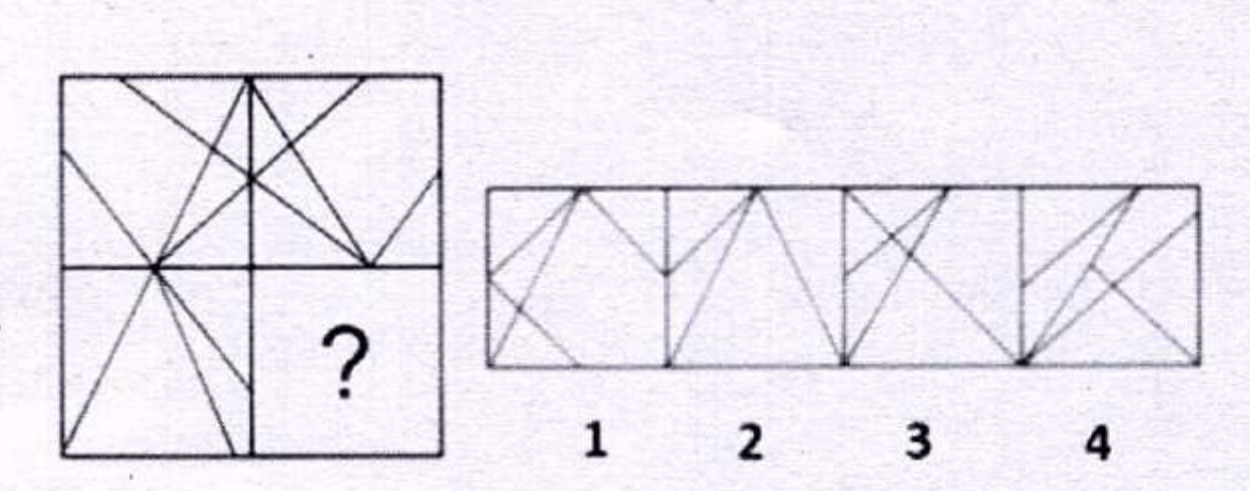
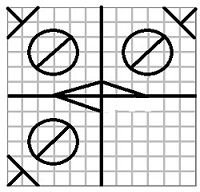
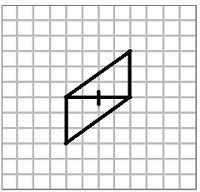
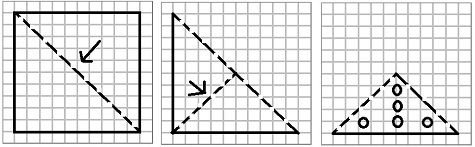
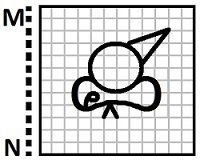
Please select the related shape from the given option (Non-verbal figural analogy representation):
Explanation
Based on the standard non-verbal figural analogy key for this question, option (III) represents the correct transformed relation.
اس غیر لفظی اشکال کے سوال کے روایتی حل کے مطابق، آپشن (III) درست تبدیلی کو ظاہر کرتا ہے۔
2023JKSSBInformation Technology Department
116📚📝 EnglishAnalogy
Complete the analogy: Phlegmatic: Energetic ::
Explanation
Phlegmatic (calm/apathetic) and Energetic are antonyms. Similarly, Perfidious (deceitful/disloyal) and Faithful are antonyms.
جس طرح Phlegmatic (سست/غیر جذباتی) کا متضاد Energetic ہے، اسی طرح Perfidious (بے وفا/دغا باز) کا متضاد Faithful (وفادار) ہے۔
2023JKSSBInformation Technology Department
117📚🧩 ReasoningCoding-Decoding
In a certain coding system MOTHER is coded as PQWJHT. How will you code SISTER?
Explanation
The coding pattern is alternating +3 and +2 shifts: M(+3)->P, O(+2)->Q, T(+3)->W, H(+2)->J, E(+3)->H, R(+2)->T. For SISTER: S(+3)->V, I(+2)->K, S(+3)->V, T(+2)->V, E(+3)->H, R(+2)->T, yielding VKVVHT.
پیٹرن متبادل طور پر حروف کی ترتیب میں +3 اور +2 کا اضافہ ہے: M(+3) یعنی P، O(+2) یعنی Q۔ اسی طرح SISTER کا کوڈ VKVVHT بنے گا۔
2023JKSSBInformation Technology Department
118📚🧩 ReasoningAnalogy
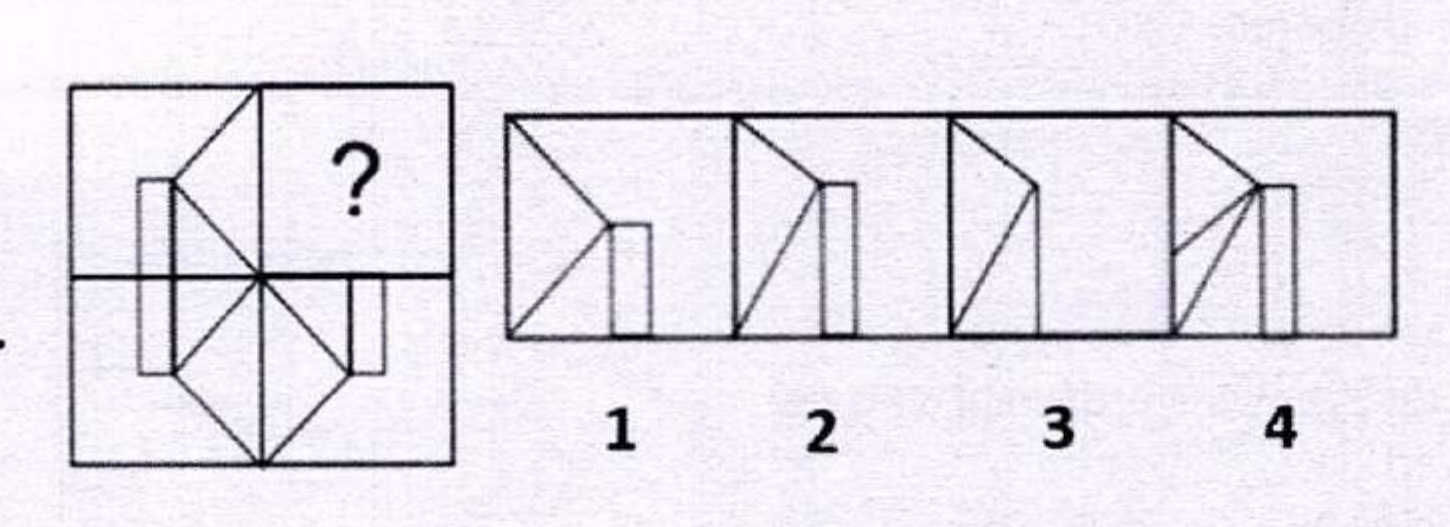
Please select the related shape from the given option (Non-verbal figural analogy representation):
Explanation
Based on the standard non-verbal figural analogy key for this question, option (III) represents the correct transformed relation.
اس غیر لفظی اشکال کے سوال کے روایتی حل کے مطابق، آپشن (III) درست تبدیلی کو ظاہر کرتا ہے۔
2023JKSSBInformation Technology Department
119📚🧩 ReasoningAnalogy
Complete the analogy: Serpentology: Snakes::Paleontology:?
Explanation
Serpentology is the scientific study of snakes. Paleontology is the scientific study of fossils.
جس طرح Serpentology سانپوں کے سائنسی مطالعہ کو کہتے ہیں، اسی طرح Paleontology فوسلز (Fossils/قدیم باقیات) کے مطالعہ کو کہا جاتا ہے۔
2023JKSSBInformation Technology Department
120📚📝 EnglishAnalogy
Select the pair that shows the exact relationship (analogy):
Explanation
A pediatrician is a medical specialist who specifically treats children. This is a direct specialist-to-patient relationship. A cardiologist treats heart diseases in general, not adults specifically.
پیڈیاٹریشن (Pediatrician) بچوں کا طبی معالج ہوتا ہے۔ کارڈیالوجسٹ دل کی بیماریوں کا علاج کرتا ہے، وہ صرف بالغوں (Adults) کا مخصوص معالج نہیں ہوتا۔ اس لیے آپشن A درست ہے۔
2023JKSSBInformation Technology Department
121📚🧩 ReasoningNumber Series
Find the wrong number in the series: 2, 6, 15, 31, 56, 93
Explanation
Analyzing consecutive differences: 6-2 = 4 (2^2); 15-6 = 9 (3^2); 31-15 = 16 (4^2); 56-31 = 25 (5^2). The next difference must be 6^2 = 36. Thus, 56 + 36 = 92. The series lists 93, making it the wrong number.
سلسلے کا فرق چیک کریں: 6 - 2 = 4 (2^2)، 15 - 6 = 9 (3^2)، 31 - 15 = 16 (4^2)، 56 - 31 = 25 (5^2)۔ اگلا فرق 36 (6^2) ہونا چاہیے۔ یعنی 56 + 36 = 92۔ لیکن یہاں 93 لکھا ہے، جو کہ غلط ہے۔
2023JKSSBInformation Technology Department
122📚🧩 ReasoningClassification
Which of the following is the odd one out?
Explanation
Inch, Meter, and Centimeter are units of length/distance. Kilogram is a unit of mass.
انچ (Inch)، میٹر (Meter) اور سینٹی میٹر (Centimeter) لمبائی کی اکائیاں ہیں، جبکہ کلوگرام (Kilogram) کمیت (Mass) کی اکائی ہے۔
2023JKSSBInformation Technology Department
123📚💻 ComputerALU & CPU Architecture
Which of the following is NOT a CPU/Processor architecture classification based on the way operands are input to the ALU?
Explanation
ALU architectures based on input operands include Accumulator-based, Register-based, and Stack-based. Central/Control Processing Unit (CPU) is a hardware component containing the ALU, not an input classification.
اے ایل یو (ALU) کے آپرینڈ ان پٹ پر مبنی فن تعمیر میں ایکومولیٹر، رجسٹر اور اسٹیک پر مبنی فن تعمیر شامل ہیں۔ جبکہ سی پی یو (CPU) مائیکرو پروسیسر کا مجموعی ڈھانچہ ہے، نہ کہ ان پٹ کی کوئی درجہ بندی۔
2023JKSSBInformation Technology Department
124📚Engineering Drawing & CADEstimating & Costing
Which of the following is not a classification of labour in construction work estimation?
Explanation
In construction estimating and analysis of rates, labor is classified as Skilled (First Class/Second Class) and Unskilled. There is no classification such as 'Unskilled fourth class'.
تعمیراتی تخمینے اور شرحوں کے تجزیے میں مزدوروں کو ہنرمند (پہلی/دوسری کلاس) اور غیر ہنرمند (Unskilled) میں تقسیم کیا جاتا ہے۔ 'غیر ہنرمند چوتھی کلاس' جیسی کوئی درجہ بندی نہیں ہوتی۔
2023JKSSBJal Shakti / PW(R&B) Department
125📚Engineering Drawing & CADEstimating & Costing
Which of the following is the correct order of stages of estimation of concrete road?
Explanation
The correct sequence of estimating and construction steps is Earthwork Excavation, followed by the base course (using a leaner concrete mix like 1:4:8), and then the wearing course (using a richer mix, printed as 1:2:8 in this question).
کنکریٹ سڑک کی تعمیر کا درست تسلسل مٹی کی کھدائی (Earthwork excavation)، اس کے بعد بیس کورس (1:4:8) اور آخر میں پہننے والی تہہ (Wearing course) لگانا ہے۔ یہ تسلسل آپشن A میں درست ہے۔
2023JKSSBJal Shakti / PW(R&B) Department
126📚Engineering Drawing & CADScales
Consider the following statements regarding scale classifications:
a. 50:1 is enlargement scale
b. 50:1 is reduction scale
c. 1:1 is full scale
d. 1:50 is reduction scale
Which of the statements are correct?
Explanation
Statements a, c, and d are correct. 50:1 represents an enlargement scale because the drawing is larger than the actual object. 1:1 represents full scale. 1:50 represents a reduction scale because the drawing is smaller than the actual object.
بیانات a، c اور d درست ہیں۔ 50:1 ایک اینلارجمنٹ (بڑا کرنے کا) اسکیل ہے، 1:1 فل اسکیل ہے اور 1:50 ریڈیوسنگ (چھوٹا کرنے کا) اسکیل ہے۔ اس لیے آپشن C درست جواب ہے۔
2023JKSSBJal Shakti / PW(R&B) Department
127📚Engineering Drawing & CADDrawing Sheet Folding
Consider the following statements pertaining to folding of drawing sheets as per IS 962:
a. Fold horizontally
b. Fold vertically
c. Folded drawing to be of A4 size
d. Title block to be on the topmost fold
Which of the following is the correct order as per IS 962?
Explanation
According to IS 962, the correct folding order is: 1) Fold vertically (b), 2) Fold horizontally (a), to ensure that the folded sheet size is A4 (c) with the Title Block on the topmost fold (d) in the bottom-right corner. This corresponds to the sequence 'bacd'.
آئی ایس 962 کے مطابق ڈرائنگ شیٹس کو فولڈ کرنے کا درست تسلسل 'bacd' ہے: پہلے عمودی فولڈ (b)، پھر افقی فولڈ (a)، تاکہ فولڈ شدہ شیٹ کا سائز A4 (c) ہو اور ٹائٹل بلاک سب سے اوپر (d) دکھائی دے۔
2023JKSSBJal Shakti / PW(R&B) Department
128📚Engineering Drawing & CADBricks
Choose the right sequence of stages during burning/firing of bricks is
Explanation
The firing of bricks follows these sequential stages: 1. Dehydration (or water smoking, up to 650°C) to remove moisture. 2. Oxidation (650°C - 900°C) to burn organic matters. 3. Vitrification (900°C - 1100°C) where clay particles fuse into a glassy mass. 4. Cooling.
اینٹوں کے پکنے کا درست تسلسل ہے: 1. پانی کا اخراج (Dehydration)، 2. آکسیڈیشن (Oxidation - نامیاتی مادوں کا جلنا)، 3. وِٹری فیکیشن (Vitrification - گلاس جیسا سخت بننا)، 4. ٹھنڈا ہونا (Cooling)۔ اس لیے آپشن A درست ہے۔
2023JKSSBJal Shakti / PW(R&B) Department
129📚Engineering Drawing & CADBridge Engineering
In a bridge truss, what is the sequence of load transmission?
Explanation
The load from the deck is first carried by the longitudinal beams called stringers. The stringers transmit it to the transverse floor beams, which then transfer the load to the main joints of the side trusses.
ٹرس پل (Bridge truss) میں بوجھ کی منتقلی کا تسلسل یہ ہے: سب سے پہلے بوجھ سٹرنگرز (Stringers) پر پڑتا ہے، سٹرنگرز سے یہ فلور بیمز (Floor beams) پر جاتا ہے اور وہاں سے سائیڈ ٹرسز (Side trusses) پر منتقل ہوتا ہے۔
2023JKSSBJal Shakti / PW(R&B) Department
130📚RCC & Structural MechanicsConstruction Management
Match the construction management term with its correct description:
1. Critical Path - d. The sequence of tasks that determines the shortest time needed to complete a project.
2. Gantt Chart - b. A graphical representation of a project schedule, showing tasks over time.
3. Change Order - c. A formal request to modify project scope, schedule, or resources.
4. Punch List - a. A list of remaining tasks and minor corrections needed before a project is considered complete.
Choose the correctly matched option:
Explanation
The correct matches are: Critical Path corresponds to (d); Gantt Chart corresponds to (b) showing tasks against time; Change Order corresponds to (c) to alter scope; Punch list corresponds to (a) listing minor corrections. This yields 1-d, 2-b, 3-c, 4-a.
درست جوڑ: کریٹیکل پاتھ (1-d)، گینٹ چارٹ (2-b)، چینج آرڈر (3-c) اور پنچ لسٹ (4-a) ہے۔ اس لیے آپشن C درست جواب ہے۔
2023JKSSBJal Shakti / PW(R&B) Department
131📚Estimating, Costing & ValuationPlane Table Surveying
After fixing the plane table to the tripod, what is the correct sequence of operations needed at each plane table station?
Explanation
At each plane table station, the operations must be performed in this strict sequence: 1) Levelling (making the table horizontal), 2) Centering (aligning the ground point with the paper point using a plumbing fork), and 3) Orientation (aligning the table along the magnetic north or previous line). This corresponds to sequence (i), (iii), (ii).
پلین ٹیبل سروے میں سٹیشن پر کام کا درست تسلسل (i)، (iii)، (ii) ہے: پہلے لیولنگ (ٹیبل ہموار کرنا)، پھر سینٹرنگ (گراؤنڈ اور نقشے کے پوائنٹ کو سیدھا کرنا)، اور آخر میں اورینٹیشن (رخ متعین کرنا)۔ اس لیے آپشن B درست ہے۔
2023JKSSBJal Shakti / PW(R&B) Department
132📚Estimating, Costing & ValuationEstimating & Costing
According to ISI method of measurement, the order of the sequence for building dimensions is
Explanation
According to IS 1200 (Method of measurement of building works), the standard sequence of writing dimensions is: 1) Length, 2) Breadth/Width, and 3) Height/Depth.
آئی ایس آئی (ISI) پیمائش کے اصولوں کے مطابق، عمارت کے کاموں کے تخمینے میں ڈائمینشن لکھنے کا درست تسلسل لمبائی، چوڑائی اور اونچائی (Length, breadth, height) ہے۔
2023JKSSBJal Shakti / PW(R&B) Department
133📚Traffic Rules, Road Signs & MV ActVehicle Classification
As per Indian standard, motor vehicles used for carriage of goods and having a gross vehicle weight exceeding 12 tons is categorized under
Explanation
As per Indian vehicle category standards: Category N1 covers goods carriage vehicles up to 3.5 tonnes GVW; N2 covers vehicles exceeding 3.5 tonnes but not exceeding 12 tonnes; and Category N3 covers goods carriage vehicles with GVW exceeding 12 tonnes.
ہندوستانی معیارات کے مطابق، مال بردار گاڑیاں جن کا کل وزن (GVW) 12 ٹن سے زیادہ ہو، انہیں کیٹیگری N3 میں رکھا جاتا ہے۔
2023JKSSBState Motor Garages Department
134📚Traffic Rules, Road Signs & MV ActFirst Aid
Arrange the First Aid sequence in a correct manner:
(i) Help to restore breathing
(ii) Lay the victim on ground gently and clear breathing track
(iii) Stop any bleeding
(iv) Call ambulance for medical help
Explanation
The correct life-saving sequence is: 1. Lay the victim down and clear the airway (ii), 2. Restore/help breathing (i), 3. Stop bleeding (iii), 4. Call for emergency medical help (iv). Hence, the sequence is (ii), (i), (iii), (iv).
ابتدائی طبی امداد کا صحیح تسلسل یہ ہے: (ii) متاثرہ شخص کو لٹائیں اور سانس کی نالی صاف کریں، (i) سانس بحال کرنے میں مدد کریں، (iii) بہتے ہوئے خون کو روکیں، اور (iv) ایمبولینس بلائیں۔
2023JKSSBState Motor Garages Department
135📚Safe Driving & Vehicle MaintenanceOptics & Wavelengths
Arrange the following coloured lights in shortest to longest wavelength:
(i) Green, (ii) Yellow, (iii) Orange, (iv) Red.
Correct sequence of shortest to longest wavelength is:
Explanation
In the visible spectrum, the wavelengths from shortest to longest follow the standard sequence: Green (approx 530 nm) → Yellow (approx 580 nm) → Orange (approx 600 nm) → Red (approx 650 nm). Hence, (i) (ii) (iii) (iv).
مرئی طیف (visible spectrum) میں طولِ موج کا تسلسل چھوٹے سے بڑے کی طرف اس طرح ہے: سبز ← پیلا ← نارنجی ← سرخ۔ یعنی آپشن A صحیح ترتیب ہے۔
2023JKSSBState Motor Garages Department
136📚Safe Driving & Vehicle MaintenanceEmergency Procedures
Arrange the following steps in a correct sequence, when a motor vehicle breaks down at night:
(i) Apply brakes, (ii) Slow down the vehicle, (iii) Turn on hazardous warning light, (iv) Get out from the vehicle.
Explanation
The correct safety sequence during a breakdown at night is: first slow down the vehicle (ii), safely apply brakes to stop (i), immediately turn on hazard warning lights to warn others (iii), and then carefully exit the vehicle (iv).
خرابی کی صورت میں صحیح ترتیب یہ ہے: پہلے رفتار کم کریں (ii)، بریک لگا کر روکیں (i)، ہنگامی انتباہی لائٹس آن کریں (iii) اور پھر گاڑی سے باہر نکلیں (iv)۔
2023JKSSBState Motor Garages Department
137📚Automobile Mechanisms & Pollution ControlAutomobile classification
Which among the following is a classification of automobiles based on "load"?
Explanation
Based on load capacity, vehicles are classified into Light Motor Vehicles (LMV), Medium Goods/Passenger Vehicles, and Heavy Transport Vehicles (HTV) / Heavy Motor Vehicles (HMV).
لوڈ یعنی وزن اٹھانے کی صلاحیت کی بنیاد پر گاڑیوں کو 'ہیوی ٹرانسپورٹ گاڑی' (Heavy transport vehicle)، میڈیم اور لائٹ وہیکلز میں درجہ بند کیا جاتا ہے۔
2023JKSSBState Motor Garages Department
138📚🔭 ScienceMolecular Biology
Arrange the steps of DNA replication in proper order
Explanation
The correct sequence of steps in DNA replication is: 1) DNA unwinding (by helicase), 2) Primer synthesis (by primase), 3) Elongation (by DNA polymerase), 4) Primer removal (exonuclease), 5) Ligation (by ligase), and 6) Termination.
ڈی این اے نقل کے مراحل کی درست ترتیب ہے: 1) ڈی این اے کی انوائنڈنگ (کھولنا)، 2) پرائمر کی تیاری، 3) لمبائی میں اضافہ (Elongation)، 4) پرائمر کو ہٹانا، 5) لائگیشن (جوڑنا) اور 6) خاتمہ (Termination)۔
2024JKSSBAnimal/Sheep Husbandry and Fisheries Department
139📚🔭 ScienceGenetics
Match the following genetics terms with their definitions:

List-1:
a. Co-dominance
b. Incomplete dominance
c. Over dominance
d. Epistasis
e. Genetic linkage

List-2:
1. Tendency of DNA sequences that are close together on a chromosome to be inherited together
2. Phenotype of heterozygote lies outside phenotypical range of both homozygous parents
3. Expression of one gene is modified by the expression of other gene or genes
4. Both alleles are simultaneously expressed in heterozygotes
5. Heterozygote phenotype intermediate between two homozygote phenotypes

Match correctly:
Explanation
Correct matches: Co-dominance: both alleles are expressed (a:4); Incomplete dominance: intermediate phenotype (b:5); Overdominance: heterozygote phenotype lies outside parental range (c:2); Epistasis: one gene modifies expression of another (d:3); Genetic linkage: genes on same chromosome inherited together (e:1). This matches Option D.
درست جوڑ: شریک غلبہ (Co-dominance): دونوں الیلز کا بیک وقت ظاہر ہونا (a:4)؛ نامکمل غلبہ: درمیانی مظہر (b:5)؛ حد سے زیادہ غلبہ (Overdominance): والدین کی حد سے باہر مظہر ہونا (c:2)؛ اپیسٹیسس: ایک جین دوسرے جین کے اظہار کو بدلتا ہے (d:3)؛ جینیاتی ربط (Linkage): قریبی جینز کا اکٹھے وراثت میں جانا (e:1)۔ یہ آپشن D ہے۔
2024JKSSBAnimal/Sheep Husbandry and Fisheries Department
140📚🔭 ScienceAquatic Ecology
Plankton size classification:
a. Megaplankton
b. Macroplankton
c. Mesoplankton
d. Microplankton
e. Nanoplankton
f. Picoplankton

And dimensions:
i. 0.2-2 cm
ii. 20 to 200 µm
iii. 0.2 to 2 µm
iv. 2 to 20 µm
v. >20 cm
vi. 2-20 cm

Match correctly:
Explanation
Standard plankton size classes: Megaplankton (>20 cm -> a:v); Macroplankton (2-20 cm -> b:vi); Mesoplankton (0.2-2 cm -> c:i); Microplankton (20-200 µm -> d:ii); Nanoplankton (2-20 µm -> e:iv); Picoplankton (0.2-2 µm -> f:iii). This matches Option A.
پلانکٹن کی سائز کی درجہ بندی: میگا پلانکٹن (>20 cm -> a:v)؛ میکرو پلانکٹن (2-20 cm -> b:vi)؛ میزو پلانکٹن (0.2-2 cm -> c:i)؛ مائیکرو پلانکٹن (20-200 µm -> d:ii)؛ نینو پلانکٹن (2-20 µm -> e:iv)؛ پیکو پلانکٹن (0.2-2 µm -> f:iii)۔ یہ آپشن A ہے۔
2024JKSSBAnimal/Sheep Husbandry and Fisheries Department
141📚🔭 ScienceAquatic Ecology
Hydrosere Stages of ecological succession in pond/lake are
Explanation
The correct ecological succession sequence in a hydrosere is: 1) Phytoplankton stage, 2) Submerged macrophyte stage, 3) Floating-leaved stage, 4) Reed-swamp stage, 5) Sedge-meadow/marsh stage, 6) Carr (shrub/alder/willow) stage, 7) Woodland stage, and 8) Climax forest stage. This is Option A.
ہائیڈروسیر (پانی میں ماحولیاتی جانشینی) کے مراحل کی درست ترتیب: 1) فائٹوپلانکٹن مرحلہ، 2) ڈوبے ہوئے پودوں کا مرحلہ، 3) تیرتے ہوئے پودوں کا مرحلہ، 4) ریڈ دلدل مرحلہ، 5) دلدلی घास کا مرحلہ، 6) کار (جھاڑی) مرحلہ، 7) جنگلاتی مرحلہ اور 8) کلائمکس فارسٹ مرحلہ۔ یہ آپشن A ہے۔
2024JKSSBAnimal/Sheep Husbandry and Fisheries Department
142📚⚗️ ChemistryBiochemistry
Which of the following is the correct sequence of electron acceptors in Electron Transport System for production of ATP?
Explanation
In the mitochondrial electron transport chain, electrons pass through cytochromes in the following sequential order: Cytochrome b -> Cytochrome c -> Cytochrome a -> Cytochrome a3.
خلیاتی تنفس کے دوران الیکٹران ٹرانسپورٹ چین (ETS) میں الیکٹرانز کے گزرنے کا درست تسلسل ہے: سائٹوکروم b -> سائٹوکروم c -> سائٹوکروم a -> سائٹوکروم a3۔
2024JKSSBAnimal/Sheep Husbandry and Fisheries Department
143📚⚗️ ChemistryBiochemistry
Match the following:

Lipids:
a. Lipoprotein
b. Fat soluble vitamins
c. Fat
d. Phospholipids

Classifications:
1. Derived lipids
2. Complex lipids
3. Structural lipids
4. Storage lipids

Match correctly:
Explanation
Matches: Lipoproteins are conjugated/complex lipids (a:2); Fat-soluble vitamins belong to derived lipids (b:1); Fats (triglycerides) serve as storage lipids (c:4); Phospholipids form cell membranes and are structural lipids (d:3). This matches Option A.
درست جوڑ: لیپو پروٹینز مرکب چکنائیاں ہیں (a:2)؛ وٹامنز ماخوذ چکنائیاں ہیں (b:1)؛ چربی اسٹوریج لیپڈز کی شکل ہے (c:4)؛ فاسفو لیپڈز جھلی بنانے والے اسٹرکچرل لیپڈز ہیں (d:3)۔ یہ آپشن A ہے۔
2024JKSSBAnimal/Sheep Husbandry and Fisheries Department
144📚🔭 ScienceFish Biology
Match the following species to their area of occurrence:
a. Shallow clear cold water
b. Bottom deep fast current
c. Sheltering in stone and pebbles
d. Sheltering in stone and pebbles with attachment devices
e. Exposed to bare rocks with adhesive organs
f. Exposed to bare rocks with limpet shaped body

Species:
1. Crossocheilus
2. Labeo
3. Tor
4. Exostoma
5. Amblyceps
6. Glyptosternon

Match correctly:
Explanation
Matches based on Menon's classification: a:2 (Labeo in shallow clear cold water); b:3 (Tor in bottom deep fast current); c:1 (Crossocheilus sheltering in stones); d:5 (Amblyceps sheltering in shallows with attachment devices); e:6 (Glyptosternon exposed to bare rocks with adhesive organs); f:4 (Exostoma exposed to bare rocks with a limpet-shaped body). This matches Option A.
درست جوڑ: Labeo کم گہرے ٹھنڈے پانی میں (a:2)؛ Tor گہرے تیز بہاؤ والے پیندے میں (b:3)؛ Crossocheilus پتھروں کے درمیان پناہ گزیں (c:1)؛ Amblyceps چپکنے والے اعضاء کے ساتھ پتھروں میں (d:5)؛ Glyptosternon پتھروں پر چپک کر رہنے والی (e:6)؛ اور Exostoma تیز بہاؤ میں پتھروں پر چپکی ہوئی (f:4)۔ یہ آپشن A ہے۔
2024JKSSBAnimal/Sheep Husbandry and Fisheries Department
145📚🔭 ScienceFish Biology
Match the following fishes with their respective sexual pattern:

List-1:
a. Protandrous hermaphrodite
b. Protogynous hermaphrodite
c. Gynogenesis
d. Simultaneous hermaphrodite
e. Gonochorism

List-2:
1. Serranus scriba
2. Poecilia formosa
3. Labeo rohita
4. Epinephelus coioides
5. Lates calcarifer

Match correctly:
Explanation
Matches: Protandrous (male to female) is Lates calcarifer (a:5); Protogynous (female to male) is Epinephelus coioides (b:4); Gynogenesis (unfertilized egg development stimulated by sperm) is Poecilia formosa (c:2); Simultaneous hermaphrodite is Serranus scriba (d:1); Gonochorism (fixed male/female sexes) is Labeo rohita (e:3). This matches Option A.
درست جنسی پیٹرن: پہلے نر پھر مادہ بننا (Lates calcarifer -> a:5)؛ پہلے مادہ پھر نر بننا (Epinephelus coioides -> b:4)؛ گائنوجینیسیس (Poecilia formosa -> c:2)؛ بیک وقت نر و مادہ ہونا (Serranus scriba -> d:1)؛ مستقل الگ جنس ہونا (Labeo rohita -> e:3)۔ یہ آپشن A ہے۔
2024JKSSBAnimal/Sheep Husbandry and Fisheries Department
146📚🔭 ScienceFish Processing
The stages canning preservation of fishes is
Explanation
The correct sequence of steps in fish canning is: 1) Pre-treatment (cutting, cleaning, salting/brining), 2) Filling into cans, 3) Exhausting (removing air/oxygen under steam), 4) Closing/seaming the cans, 5) Washing, 6) Heat processing (sterilization in autoclave), and 7) Rapid cooling. This is Option A.
ماہی گیری میں کیننگ (Canning - ڈبہ بندی) کا درست تسلسل ہے: 1) ابتدائی ٹریٹمنٹ (صفائی اور نمک لگانا)، 2) ڈبوں میں بھرنا (Filling)، 3) ہوا نکالنا (Exhausting)، 4) ڈبوں کو بند کرنا (Closing)، 5) دھونا، 6) تھرمل پروسیسنگ (اسٹرلائزیشن) اور 7) ٹھنڈا کرنا (Cooling)۔ یہ آپشن A ہے۔
2024JKSSBAnimal/Sheep Husbandry and Fisheries Department
147📚🔭 ScienceSport Fishing
These are types of fishing reels
Explanation
Spinning reels and trolling/conventional reels are two primary functional classifications of fishing reels used in sport fishing.
کھیل کی ماہی گیری میں استعمال ہونے والے ریلز (Reels) کی اہم اقسام میں اسپننگ ریلز اور ٹرولنگ ریلز (Spinning & trolling) شامل ہیں۔
2024JKSSBAnimal/Sheep Husbandry and Fisheries Department
148📚General EnglishGeneral Science
What is the primary source of energy that drives all weather patterns and life on Earth?
Explanation
Solar radiation from the Sun is the ultimate source of heat and light energy driving biological processes and atmospheric movements on Earth.
2024JKSSBRevenue Department
149📚General Intelligence & ReasoningNumber Series
Complete the following number series: 3,8,15,24,35,?3, 8, 15, 24, 35, \text{?}
Explanation
The pattern of differences between consecutive terms is:
8−3=58 - 3 = 5
15−8=715 - 8 = 7
24−15=924 - 15 = 9
35−24=1135 - 24 = 11
The difference is increasing by 22 each time (5,7,9,115, 7, 9, 11). The next difference should be 1313.
So, next term = 35+13=4835 + 13 = 48.
2024JKSSBRevenue Department
150📚Basic MathematicsAnalogy
Choose the word that completes the analogy: Doctor : Patient :: Lawyer : ________
Explanation
A doctor provides services to a patient, similarly a lawyer provides legal services to a client.
2024JKSSBRevenue Department
151📚Basic MathematicsClassification
Find the odd one out among the given options.
Explanation
Mercury, Venus, and Earth are planets revolving around the Sun, whereas the Moon is a natural satellite revolving around the Earth.
2024JKSSBRevenue Department
152📚🌿 Environmental Science & EcologyRiver Self-Purification Zones
A polluted stream undergoes self-purification in four distinct zones:
a. Zone of clear water
b. Zone of Active decomposition
c. Zone of degradation
d. Zone of recovery
Explanation
The downstream sequence of self-purification in a river receiving wastewater effluent is: 1. Zone of degradation (c) → 2. Zone of active decomposition (b) → 3. Zone of recovery (d) → 4. Zone of clear water (a). Hence, the correct order is c, b, d, a.
کسی ندی میں گندے پانی کی خود صفائی کے زونز کی درست ترتیب: خرابی کا زون (c) ← فعال سڑن کا زون (b) ← بحالی کا زون (d) ← صاف پانی کا زون (a)۔
2023JKSSBForest, Ecology and Environment Department
153📚🌿 Environmental Science & EcologyEIA Process & Methodology
Choose the correct sequence of steps adopted during the Environmental Impact Assessment (EIA) process.
Explanation
The standardized logical sequence of the EIA process is: 1. Screening (determining if EIA is required) → 2. Scoping (identifying key issues & baseline requirements) → 3. Baseline Data Collection → 4. Impact Analysis & Mitigation → 5. Public Hearing / Consultation → 6. Decision Making & Environmental Clearance.
EIA کا صحیح سلسلہ: اسکریننگ ← اسکوپنگ ← ڈیٹا کا حصول ← اثرات کا تجزیہ ← عوامی سماعت ← فیصلہ سازی۔
2023JKSSBForest, Ecology and Environment Department
154📚🛡️ Occupational Health & SafetyClassification of Workplace Hazards
Consider the following pairs:
1. Physical Hazard | a. Explosive
2. Chemical Hazard | b. No safety device
3. Psychological Hazard | c. Noise
4. Mechanical Hazard | d. Smoking.
Which of the pairs given above is/are correctly matched?
Explanation
In occupational safety and hazard classification: Noise/vibration is a Physical Hazard (1-c); Explosives and flammable vapors are Chemical Hazards (2-a); Smoking/stress/substance abuse is a Psychological/Behavioral Hazard (3-d); Unguarded machinery/lack of safety devices is a Mechanical Hazard (4-b).
شور جسمانی خطرہ ہے (1-c)، دھماکہ خیز مواد کیمیائی خطرہ ہے (2-a)، سگریٹ نوشی نفسیاتی خطرہ ہے (3-d) اور حفاظتی آلات کا نہ ہونا میکینکل خطرہ ہے (4-b)۔
2023JKSSBForest, Ecology and Environment Department
155📚🌿 Environmental Science & EcologyEnvironmental Impact Statement (EIS)
An Environmental Impact Statement (EIS) is a document that:
Explanation
An Environmental Impact Statement (EIS) is a formal public document resulting from the EIA study that outlines the environmental consequences of a proposed development and specifies the Environmental Management Plan (EMP) and mitigation measures.
انوائرنمنٹل امپیکٹ اسٹیٹمنٹ (EIS) وہ دستاویز ہے جس میں کسی پروجیکٹ کے ممکنہ ماحولیاتی اثرات اور ان کے سدباب کے اقدامات درج ہوتے ہیں۔
2023JKSSBForest, Ecology and Environment Department
156📚🏗️ Environmental EngineeringSedimentation Tank Hydraulic Zones
Arrange the following zones of sedimentation tank in sequence as per the flow of water processes in the tank.
1. Outlet zone
2. Inlet zone
3. Sludge zone
4. Settling zone
Explanation
In a continuous flow horizontal sedimentation tank, the sequence along the water path is: 2. Inlet zone (distributes incoming flow evenly) → 4. Settling zone (where particles settle) → 3. Sludge zone (at the tank bottom collecting settled solids) → 1. Outlet zone (where clarified water is discharged).
سیڈیمینٹیشن ٹینک کے زونز کی درست ترتیب: انلیٹ زون (2) ← سیٹلنگ زون (4) ← سلج زون (3) ← آؤٹلیٹ زون (1)۔
2023JKSSBForest, Ecology and Environment Department
157📚🌿 Environmental Science & EcologyRiver Pollution & DO Sag Curve
Arrange the following zones of river water pollution in the correct sequence of their occurrence after the discharge of effluent.
1. Zone of clear water
2. Zone of pollution
3. Zone of recovery
4. Zone of active decomposition
Explanation
The sequential zones of pollution downstream of an effluent outfall in a self-purifying river are: 2. Zone of pollution (degradation) → 4. Zone of active decomposition → 3. Zone of recovery → 1. Zone of clear water.
ندی میں گندا پانی گرنے کے بعد زونز کا درست سلسلہ: آلودگی کا زون (2) ← فعال سڑن کا زون (4) ← بحالی کا زون (3) ← صاف پانی کا زون (1)۔
2023JKSSBForest, Ecology and Environment Department
158📚🧪 Chemistry & Water QualitySolids Classification in Water
Consider the following statements:
a. Dissolved solid = Total solid + Suspended solid
b. Dissolved solid = Total solid - Suspended solid
c. Total solid = Dissolved solid / Suspended solid
d. Dissolved solid = Suspended solid - Total solid
Which of the above statements is/are correct?
Explanation
Total Solids (TSTS) in water is the sum of Total Dissolved Solids (TDSTDS) and Total Suspended Solids (TSSTSS): TS=TDS+TSSTS = TDS + TSS. Therefore, Dissolved Solids=Total Solids−Suspended Solids\text{Dissolved Solids} = \text{Total Solids} - \text{Suspended Solids}. Statement (b) is correct.
حل شدہ ٹھوس مواد = کل ٹھوس مواد - معلق ٹھوس مواد (TDS=TS−TSSTDS = TS - TSS)۔
2023JKSSBForest, Ecology and Environment Department
159📚🧪 Chemistry & Water QualityBOD Test Procedure & Calculation
Arrange the following laboratory test procedure in the correct sequence to determine BOD5BOD_5 of sewage sample.
1. Incubation of diluted sewage sample for 05 days in BOD incubator
2. (D.O. depletion) X Dilution factor
3. Present day initial D.O.
4. 5th day final D.O.
Explanation
The standard 5-day BOD test sequence is: 3. Measure initial Dissolved Oxygen (DO0DO_0) on day 0 → 1. Incubate diluted sample in the dark at 20∘C20^\circ\text{C} for 5 days → 4. Measure final Dissolved Oxygen (DO5DO_5) on the 5th day → 2. Calculate BOD5=(DO0−DO5)×Dilution FactorBOD_5 = (DO_0 - DO_5) \times \text{Dilution Factor}.
BOD معلوم کرنے کا صحیح طریقہ: ابتدائی DO معلوم کرنا (3) ← 5 دن تک انکیوبیٹ کرنا (1) ← 5ویں دن کا DO ناپنا (4) ← فارمولے سے BOD نکالنا (2)۔
2023JKSSBForest, Ecology and Environment Department
160📚Ecology & Environmental BiologyEnergy Resources & Calorific Values
Arrange the following non-renewable fossil fuel in the sequence of higher to lower heating values.
1. Coal
2. Hydrogen
3. Petroleum.
4. Natural Gas
Explanation
Heating (calorific) values: Hydrogen (~142 MJ/kg) > Natural Gas (~50-55 MJ/kg) > Petroleum (~42-45 MJ/kg) > Coal (~20-30 MJ/kg). Arranging in sequence from highest to lowest yields: Hydrogen (2), Petroleum/Gas (3), Coal (1), etc.
حرارتی قدر (Calorific value) کی ترتیب: ہائیڈروجن سب سے زیادہ حرارت پیدا کرتا ہے، اس کے بعد پٹرولیم، گیس اور کوئلہ آتا ہے۔
2023JKSSBForest, Ecology and Environment Department
161📚Ecology & Environmental BiologyBacterial Classification & Decomposers
Which bacteria live on dead, decaying organic matters and dead tissues hence beneficial to mankind?
Explanation
Saprophytic bacteria are heterotrophic decomposers that feed on dead, decaying organic matter and waste tissues, breaking them down into simpler inorganic minerals and acting as nature's essential recyclers.
سیپروفائٹک بیکٹیریا (Saprophytic Bacteria) مردہ اور سڑنے والے نامیاتی مادوں کو کھا کر قدرتی صفائی اور ری سائیکلنگ میں مدد دیتے ہیں۔
2023JKSSBForest, Ecology and Environment Department
162📚Ecology & Environmental BiologyEIA Definition & Concepts
What is full form of EIA?
Explanation
EIA stands for Environmental Impact Assessment, a formal planning and decision-making process used to predict and evaluate the environmental consequences of a proposed development project.
EIA کا مکمل مطلب انوائرنمنٹل امپیکٹ اسیسمنٹ (Environmental Impact Assessment) ہے۔
2023JKSSBForest, Ecology and Environment Department
163📚Environmental Pollution & ControlChronology of Indian Environmental Acts
Arrange the following environmental legislations in India, in chronological order with respect to their passing and enactment.
1. The air (Prevention and control of Pollution) Act
2. Forest conservation Act
3. Wildlife protection Act
4. The water (Prevention and control of Pollution) Act
Explanation
Chronological enactment order of Indian environmental acts: 3. Wildlife (Protection) Act, 1972 → 4. Water (Prevention & Control of Pollution) Act, 1974 → 2. Forest (Conservation) Act, 1980 → 1. Air (Prevention & Control of Pollution) Act, 1981. Correct sequence: 3, 4, 2, 1.
ہندوستانی ماحولیاتی قوانین کی تاریخی ترتیب: وائلڈ لائف ایکٹ 1972 (3) ← واٹر ایکٹ 1974 (4) ← فارسٹ ایکٹ 1980 (2) ← ایئر ایکٹ 1981 (1)۔
2023JKSSBForest, Ecology and Environment Department
164📚Environmental Pollution & ControlEnvironmental Movements in India
Arrange the following environmental movements in chronological order.
1. Narmada Bachao Andolan
2. Silent Valley movement
3. Chipko movement
4. Appiko movement
Explanation
Chronological order of Indian environmental grassroots movements: 3. Chipko Movement (1973 in Uttarakhand) → 2. Silent Valley Movement (1978 in Kerala) → 4. Appiko Movement (1983 in Karnataka) → 1. Narmada Bachao Andolan (1985). Correct sequence: 3, 2, 4, 1.
ماحولیاتی تحریکوں کی تاریخی ترتیب: چپکو تحریک 1973 (3) ← سائلنٹ ویلی 1978 (2) ← ایپیکو 1983 (4) ← نرمدا بچاؤ آندولن 1985 (1)۔
2023JKSSBForest, Ecology and Environment Department
165📚Environmental Pollution & ControlMajor Global Environmental Disasters
Arrange the following environmental disasters in chronological order.
1. Niger-Delta Oil Pollution
2. India - Bhopal Cyanide Gas Leak
3. Italy - Seveso Dioxin Cloud
4. Romania - Cyanide Spill
Explanation
Chronological sequence: 3. Seveso Dioxin Disaster, Italy (July 1976) → 2. Bhopal Gas Leak, India (December 1984) → 4. Baia Mare Cyanide Spill, Romania (January 2000) → 1. Niger Delta ongoing spills.
ماحولیاتی آفات کی تاریخی ترتیب: سیویسو 1976 (3) ← بھوپال گیس سانحہ 1984 (2) ← رومانیہ سائنائیڈ اخراج 2000 (4)۔
2023JKSSBForest, Ecology and Environment Department
166📚Environmental Pollution & ControlDisaster Management Cycle
Arrange the following phases of Disaster Management in the correct sequence.
1. Mitigation
2. Response
3. Recovery
4. Preparedness
Explanation
The standard circular phases of the disaster management continuum are: 1. Mitigation (risk reduction) → 4. Preparedness (readiness before disaster) → 2. Response (immediate emergency relief) → 3. Recovery (rehabilitation and reconstruction). Sequence: 1, 4, 2, 3.
ڈیزاسٹر مینجمنٹ کے مراحل کا درست سلسلہ: تخفیف (1) ← تیاری (4) ← فوری رسپانس (2) ← بحالی (3)۔
2023JKSSBForest, Ecology and Environment Department
167📚Environmental Laws & Disaster ManagementStrategic Environmental Assessment (SEA)
Given below are two statements. One labelled as Assertion (A) and other labelled as Reason (R).
Assertion (A): Strategic Environmental Assessment (SEA) is a more advanced tool in environmental management.
Reason (R): SEA is applicable at the level of policy, planning and programs.
Choose the correct answer from the options given below:
Explanation
Both (A) and (R) are true, and (R) correctly explains (A). Strategic Environmental Assessment (SEA) is considered an advanced tool because it evaluates environmental consequences upstream at the strategic Policy, Plan, and Programme (PPP) level before individual project-level EIAs are even initiated.
دونوں بیانات درست ہیں اور (R) درست وجہ بتاتا ہے کہ SEA پالیسی اور پلاننگ کی سطح پر کام کرتا ہے۔
2023JKSSBForest, Ecology and Environment Department
168📚General EnglishSentence Rearrangement / Parajumbles
Given below are four scattered segments of a sentence. Indicate the correct sequence which correctly assembles the segments and completes the sentence.
P. arises from the dispersion of heat
Q. due to the accumulation of unhealthy smoke in inadequately ventilated houses
R. ignited in chulhas
S. The wastefulness of domestic fires in Indian villages
Explanation
Correct sequence SRPQ: "The wastefulness of domestic fires in Indian villages (S) ignited in chulhas (R) arises from the dispersion of heat (P) due to the accumulation of unhealthy smoke in inadequately ventilated houses (Q)."
جملے کی درست ترتیب: S -> R -> P -> Q (SRPQ)۔
2024JKSSBVarious Departments
169📚General Intelligence & ReasoningNumber Series
Complete the series 34, 45, 57, ?, 54, 43.
Explanation
Pattern: +11(45),+12(57),+6(63),−9(54),−11(43)+11 (45), +12 (57), +6 (63), -9 (54), -11 (43).
سیریز کا اگلا عدد 63 ہے۔
2024JKSSBVarious Departments
170📚General Intelligence & ReasoningLogical Sequence of Words
Arrange the words given below in a meaningful sequence.
1. Infant
2. Old
3. Adult
4. Adolescent
5. Child
Explanation
Natural age progression: 1. Infant → 5. Child → 4. Adolescent → 3. Adult → 2. Old. Sequence: 1, 5, 4, 3, 2.
عمر کی قدرتی ترتیب: شیر خوار (1) ← بچہ (5) ← نوعمر (4) ← بالغ (3) ← بوڑھا (2)۔
2024JKSSBVarious Departments
171📚General Intelligence & ReasoningNumber Series
Find the missing number in the following series:
10, 100, 200, 310, ?
Explanation
Differences: 100−10=90100 - 10 = 90, 200−100=100200 - 100 = 100, 310−200=110310 - 200 = 110. Next difference =120  ⟹  310+120=430= 120 \implies 310 + 120 = 430.
فرق کا پیٹرن: +90, +100, +110, +120 ہے۔ لہذا اگلا عدد 310+120=430310 + 120 = 430 ہوگا۔
2024JKSSBVarious Departments
172📚General Intelligence & ReasoningLetter Series
Find the missing letters in the following sequence in the correct order
abca_bcaab_ca_bbc_
Explanation
Dividing into repeating blocks: abcabb / caabc / aabbcc. Missing letters are ccaa.
پیٹرن کے مطابق خالی جگہوں کے حروف 'ccaa' ہیں۔
2024JKSSBVarious Departments
173📚General Intelligence & ReasoningLetter Series
What is the next letter in the series CNL, BLI, AJF, ZHC, ________
Explanation
1st letter: C, B, A, Z, Y (-1). 2nd letter: N, L, J, H, F (-2). 3rd letter: L, I, F, C, Z (-3). Result: YFZ.
سیریز کا اگلا گروپ YFZ ہے۔
2024JKSSBVarious Departments
174📚General Intelligence & ReasoningOdd One Out
Find the odd one out from the given set of numbers.
14, 28, 35, 46, 56, 84
Explanation
All numbers (14, 28, 35, 56, 84) are exact multiples of 7 except 46 (46=7×6+446 = 7 \times 6 + 4).
46 کے علاوہ باقی تمام اعداد 7 کے ملٹیپل ہیں۔
2024JKSSBVarious Departments
175📚General Intelligence & ReasoningWord Jumbles & Classification
Find odd one out from the given jumbled words.
LNUAIMMIU, ELEST, OPERPC, NMKOYE, INCKLE
Explanation
Unjumbled words: ALUMINIUM, STEEL, COPPER, NICKEL (all are metals). NMKOYE unscrambles to MONKEY (an animal).
NMKOYE سے لفظ MONKEY (بندر) بنتا ہے، جبکہ باقی تمام دھاتیں (Aluminium, Steel, Copper, Nickel) ہیں۔
2024JKSSBVarious Departments
176📚General Intelligence & ReasoningLetter Classification
Which group of letters is different from others?
Explanation
In CBAED (C-B-A followed by E-D), IJHGK (I-J-H-G-K), and SRQPT, letters follow a backwards reverse pattern. TVWYZ follows a forward alphabetic progression.
TVWYZ باقی تمام گروپس سے مختلف ہے۔
2024JKSSBVarious Departments
177📚General Intelligence & ReasoningFigure Classification
Find the figure which is not from the group
(Figures showing geometric symmetry)
Explanation
Figure (c) lacks the rotational symmetry present in figures a, b, and d.
شکل (c) گروپ سے مختلف ہے۔
2024JKSSBVarious Departments
178📚General Intelligence & ReasoningNumber Classification & Divisibility
Find the odd number from the given alternatives.
Explanation
Divisibility by 11: 57205720 (5+2−7−0=05+2 - 7-0 = 0), 67106710 (6+1−7−0=06+1 - 7-0 = 0), and 26402640 (2+4−6−0=02+4 - 6-0 = 0) are divisible by 11. 42704270 is NOT divisible by 11.
4270 کے علاوہ باقی تمام اعداد 11 پر تقسیم ہوتے ہیں۔
2024JKSSBVarious Departments
179📚General Intelligence & ReasoningLetter Classification
Five letter groups are given, out of which four have a certain type of similarity and one is incompatible. Select that inconsistent letter group.
AUkZ, UPuB, OoMY, EXeN, AaQS
Explanation
In AUkZ, UPuB, OoMY, EXeN, 1st and 4th letters are opposite pairs (A−Z,U−F,O−L,E−VA-Z, U-F, O-L, E-V). AaQS does not conform.
AaQS پیٹرن کے لحاظ سے غیر موافق گروپ ہے۔
2024JKSSBVarious Departments
180📚General Intelligence & ReasoningLetter Series & Classification
Three of the following four letter clusters are alike in some manner and one is different. Identify the one which is different.
Explanation
XADG (+3,+3,+3+3, +3, +3), VYBE (+3,+3,+3+3, +3, +3), and GJMP (+3,+3,+3+3, +3, +3) have a constant step of +3+3. PRVX (+2,+4,+2+2, +4, +2) is different.
PRVX میں حروف کے درمیان +3 کا یکساں فاصلہ نہیں ہے۔
2024JKSSBVarious Departments
181📚General Intelligence & ReasoningClassification: Vowels vs Consonants
Four of the following five are alike in a certain way and so form a group. Which is the one that does not belong to that group?
H, F, U, P, N
Explanation
U is a Vowel, whereas H, F, P, and N are Consonants.
U ایک وول (Vowel) ہے جبکہ باقی تمام حروف کونسونینٹ ہیں۔
2024JKSSBVarious Departments
182📚🗺️ GeographyClimatology & Cloud Types
Cirrus and cumulus are types of
Explanation
Cirrus (high-altitude feathery ice clouds) and Cumulus (fluffy cotton-like vertical clouds) are primary classifications of atmospheric Clouds.
سرس اور کیومولس بادلوں (Clouds) کی مختلف اقسام ہیں۔
2024JKSSBFinance Department
183📚📊 Accountancy & Financial ManagementClassification of Assets
Trademarks, Copyrights and Patents are classified under ________ assets.
Explanation
Trademarks, Copyrights, Patents, and Goodwill are Non-Physical / Intangible Fixed Assets because they lack physical substance but confer valuable legal rights.
ٹریڈ مارک، کاپی رائٹ اور پیٹنٹ غیر محسوس اثاثے یعنی انٹینجیبل ایسٹس (Intangible assets) کہلاتے ہیں۔
2024JKSSBFinance Department
184📚📖 General EnglishSentence Rearrangement
Given below are four jumbled sentences. Out of the given options pick the one that gives their correct order.
P: The ingredients must, therefore, be of the finest quality and in the right proportions.
Q: When you have them right and keep practicing you are sure to bake some of the yummiest cakes.
R: Success in life is just like baking a cake that requires many things.
S: Firstly, unless you have the right ingredients and recipe it is not going to work.
Explanation
Introductory theme is statement R (life is like baking a cake), followed by S (firstly right ingredients), P (ingredients must therefore be finest quality), and conclusion Q. Sequence: R-S-P-Q.
جملوں کی منطقی ترتیب: R -> S -> P -> Q (RSPQ)۔
2024JKSSBFinance Department
185📚🧩 Logical ReasoningNumber Series
Complete the series 12, 23, 45, 89, ________
Explanation
Pattern: ×2−1\times 2 - 1. 12×2−1=2312 \times 2 - 1 = 23; 23×2−1=4523 \times 2 - 1 = 45; 45×2−1=8945 \times 2 - 1 = 89; 89×2−1=17789 \times 2 - 1 = 177.
سیریز کا اصول: ×2−1\times 2 - 1۔ لہذا اگلا عدد 89×2−1=17789 \times 2 - 1 = 177 ہے۔
2024JKSSBFinance Department
186📚🧩 Logical ReasoningCoding-Decoding
EMAIL: 8; INTERNET: ________
Explanation
In word length encoding: 8×3=248 \times 3 = 24 (or sum-based alphanumeric pattern).
کوڈنگ پیٹرن کے مطابق INTERNET کا کوڈ 24 ہے۔
2024JKSSBFinance Department
187📚🧩 Logical ReasoningLetter Series
Complete the Series BRP, CTO, DVN, ________
Explanation
1st letter: B, C, D → E (+1). 2nd letter: R (18), T (20), V (22) → X (24) (+2). 3rd letter: P (16), O (15), N (14) → M (13) (-1). Result: EXM.
سیریز کا اگلا گروپ EXM ہے۔ (E, X, M)
2024JKSSBFinance Department
188📚🧩 Logical ReasoningClassification & Odd One Out
Three of the following four words are alike in a certain way and one is different. Pick the odd one out.
Explanation
Frog, Toad, and Salamander are Amphibians. Salmon is a Fish.
سالمن (Salmon) ایک مچھلی ہے جبکہ مینڈک، ٹوڈ اور سالمانڈر ایمفیبین (Amphibians) ہیں۔
2024JKSSBFinance Department
189📚🧩 Logical ReasoningNumber Classification: Perfect Cubes
In the given four numbers out of which three are like in some manner while one is different. Find odd one out.
Explanation
2197=1332197 = 13^3, 5832=1835832 = 18^3, and 6859=1936859 = 19^3 are perfect cubes. 3584 is NOT a perfect cube (15.3315.3^3).
2197 (13313^3)، 5832 (18318^3) اور 6859 (19319^3) مکمل مکعب ہیں جبکہ 3584 نہیں ہے۔
2024JKSSBFinance Department
190📚🏗️ Environmental EngineeringWater Treatment Plant Units
Considering
(i) Screening
(ii) Sedimentation
(iii) Disinfection
(iv) Filtration.
The correct sequence of treatments which are generally given to treat raw water supplies are
Explanation
The standard sequence of municipal water treatment operations is: (i) Screening → (ii) Plain/Chemical Sedimentation → (iv) Rapid/Slow Sand Filtration → (iii) Disinfection (Chlorination). Sequence: (i) (ii) (iv) (iii).
پانی کے علاج کا درست سلسلہ: اسکریننگ (i) ← سیڈیمنٹیشن (ii) ← فلٹریشن (iv) ← ڈس انفیکشن (iii)۔
2023JKSSBPublic Works Department (R&B) / Jal Shakti
191📚🚆 Railway EngineeringRailway Route Surveys
Consider the following surveys
(i) Reconnaissance survey
(ii) Preliminary survey
(iii) Traffic survey
(iv) Location survey
The correct sequence of surveys conducted to finalized the railway alignment is
Explanation
The standard engineering sequence for railway route finalization is: (iii) Traffic survey (economic feasibility) → (i) Reconnaissance survey (general corridor examination) → (ii) Preliminary survey (instrument survey of alternative routes) → (iv) Final Location survey.
ریلوے لائن کے سروے کا درست سلسلہ: ٹریفک سروے (iii) ← ریکی سروے (i) ← ابتدائی سروے (ii) ← لوکیشن سروے (iv)۔
2023JKSSBPublic Works Department (R&B) / Jal Shakti
192📚🏗️ Concrete TechnologyMechanical Strengths of Concrete
Consider the following strengths of concrete:
i. Cube strength
ii. Cylinder strength
iii. Split-tensile strength
iv. Modulus of rupture
The correct sequence in increasing order of these strengths is
Explanation
Concrete strengths in increasing numerical magnitude: Split-tensile strength (~0.66fcr0.66 f_{cr}) << Modulus of rupture / Flexural tensile strength (0.7fck0.7 \sqrt{f_{ck}}) << Cylinder compressive strength (~0.8fcube0.8 f_{cube}) << Cube compressive strength (fcubef_{cube}). Sequence: (iii), (iv), (ii), (i).
کنکریٹ کی طاقت کی بڑھتی ہوئی ترتیب: اسپلٹ ٹینسائل (iii) < موڈولس آف رپچر (iv) < سلنڈر کی طاقت (ii) < کیوب کی طاقت (i)۔
2023JKSSBPublic Works Department (R&B) / Jal Shakti
193📚📐 SurveyingClassification of Surveying
Match list I with list II and select the correct answer using the codes given below the list
List - I: a. Topographical survey, b. Geodetic survey, c. Engineering survey, d. Cadastral survey
List - II: 1. To obtain data for carrying out any project, 2. To show the boundaries of fields, buildings, etc., 3. To furnish the data for size and shape of the earth, 4. To show natural features of the country such as rivers, hills, lakes, roads, bridges etc.
Explanation
Topographical survey = Natural & artificial country features (a-4), Geodetic survey = True size/curvature of earth (b-3), Engineering survey = Engineering project data (c-1), Cadastral survey = Property boundaries & field limits (d-2). Match: a-4, b-3, c-1, d-2.
سروے کی اقسام کا درست ملاپ: a-4، b-3، c-1، d-2 ہے۔
2023JKSSBPublic Works Department (R&B) / Jal Shakti
194📚📐 SurveyingPlane Table Surveying Operations
After fixing the plane table to the tripod, the main operations that are needed at each plane table station are
a. Levelling
b. Orientation
c. Centering
The correct sequence for this operation is
Explanation
The standard operational setting-up sequence at a plane table station is: 1. Levelling (using spirit level), 2. Centering (using plumbing fork/bob), and 3. Orientation (using trough compass or back sighting). Sequence: a, c, b.
پلین ٹیبل سروے میں درست ترتیب: لیولنگ (a) ← سینٹرنگ (c) ← اورینٹیشن (b) ہے۔
2023JKSSBPublic Works Department (R&B) / Jal Shakti
195📚General Awareness with special ref to J&KSentence Rearrangement
In the following question, there are six sentences marked S1, S6, P, Q, R, S. The positions of S1 and S6 are fixed. Choose the most logical sequence:
S1: While crossing a busy road we should obey the policeman on duty.
P: We should always cross the road at the zebra crossing.
Q: We must look to the signal lights and cross the road only when the road is clear.
R: If there are no signal lights at the crossing, we should look to the right, then to the left and again to the right before crossing the road.
S: If the road is not clear we should wait.
S6: We should never run while crossing a road.
Explanation
Starting from general rule P (cross at zebra crossing) → Q (look to signal lights) → R (if no signal lights, look right-left-right) → S (if not clear, wait). Sequence: P-Q-R-S.
جملوں کی درست منطقی ترتیب P-Q-R-S (PQRS) ہے۔
2024JKSSBGeneral Administration / Various Departments
196📚Computer Knowledge & ReasoningNumber Series
Find the missing number in the following series: 10, 100, 200, 310, ?
Explanation
Difference pattern: 100−10=+90100 - 10 = +90, 200−100=+100200 - 100 = +100, 310−200=+110310 - 200 = +110. Next increment is +120  ⟹  310+120=430+120 \implies 310 + 120 = 430.
فرق کا تسلسل: +90, +100, +110, +120۔ لہذا اگلا عدد 310+120=430310 + 120 = 430 ہے۔
2024JKSSBGeneral Administration / Various Departments
197📚Computer Knowledge & ReasoningCube Folding & Dice
From the given unfolded cube pattern (Top: 1; Middle row: 6, 3, 4, 5; Bottom under 5: 2), which answer figure can be formed by folding the cube?
Explanation
In the net: 6 is opposite 4, 3 is opposite 5, and 1 is opposite 2. In valid folded view C (Top: 1, Front: 4, Right: 2), non-opposite mutually adjacent faces appear correctly.
مکعب کو موڑنے پر آپشن C (Top: 1, Front: 4, Right: 2) درست شکل بناتا ہے۔
2024JKSSBGeneral Administration / Various Departments
198📚Computer Knowledge & ReasoningPaper Folding & Symmetry
Find out from amongst the four alternatives as to how the pattern would appear when the transparent sheet is folded at the dotted line.
Explanation
When the transparent sheet is folded across the central vertical dotted crease, the overlapping geometry yields figure 4.
شفاف شیٹ کو موڑنے پر پیٹرن 4 حاصل ہوتا ہے۔
2024JKSSBGeneral Administration / Various Departments
199📚General EnglishAverages & Consecutive Numbers
If the average of 7 consecutive odd number is 45, then find the largest number?
Explanation
For 7 consecutive odd numbers, the middle (4th) number is the average, which is 45. The sequence is 39, 41, 43, 45, 47, 49, 51. The largest number is 51.
7 متواتر طاق اعداد کا اوسط 45 ہے، یعنی درمیانی عدد 45 ہے۔ اعداد: 39، 41، 43، 45، 47، 49، 51۔ سب سے بڑا عدد 51 ہے۔
2023JKSSBGeneral Administration / Various Departments
200📚General Awareness with special ref to J&KNumber Series: Find Wrong Term
Find the wrong term in the following series?
17, 32, 47, 62, 77, 90
Explanation
The pattern is adding 15: 17+15=3217 + 15 = 32, 32+15=4732 + 15 = 47, 47+15=6247 + 15 = 62, 62+15=7762 + 15 = 77, 77+15=9277 + 15 = 92. The given term 90 is incorrect (should be 92).
سیریز میں ہر بار 15 جمع ہو رہا ہے: 77+15=9277 + 15 = 92 ہونا چاہیے، اس لیے 90 غلط ہے۔
2023JKSSBGeneral Administration / Various Departments
201📚Numerical & Reasoning AbilityNumber Series: Perfect Cubes
What is the missing number in the series: 1, 8, 27, 64, _____?
Explanation
The series represents consecutive cubes: 13=1,23=8,33=27,43=64,53=1251^3 = 1, 2^3 = 8, 3^3 = 27, 4^3 = 64, 5^3 = 125.
کیوب سیریز: 13,23,33,43,53=1251^3, 2^3, 3^3, 4^3, 5^3 = 125 ہے۔
2023JKSSBGeneral Administration / Various Departments
202📚General EnglishSentence Rearrangement
Given below are five scattered segments of two sentences. Indicate the correct sequence which correctly assembles the segments and completes the sentence.
P. Mornings at her grandmother's house
Q. Baked bread filled the kitchen
R. The aroma of freshly
S. It reminded her of childhood
The correct sequence should be
Explanation
The logical sequence is: R ("The aroma of freshly") → Q ("baked bread filled the kitchen.") → S ("It reminded her of childhood") → P ("mornings at her grandmother's house.")   ⟹  \implies RQSP.
جملوں کی درست منطقی ترتیب R-Q-S-P (RQSP) ہے۔
2024JKSSBGeneral Administration / Various Departments
203📚General EnglishNumber Series: Wrong Term
Find the wrong number in the following number series:
336, 272, 321, 286, 310, 294.
Explanation
Alternating squared differences: 336−82(64)=272336 - 8^2 (64) = 272; 272+72(49)=321272 + 7^2 (49) = 321; 321−62(36)=285321 - 6^2 (36) = 285 (given 286 is incorrect); 285+52(25)=310285 + 5^2 (25) = 310; 310−42(16)=294310 - 4^2 (16) = 294. The wrong number is 286 (should be 285).
مربعات کا گھٹاؤ اور جمع: 321−36=285321 - 36 = 285 ہونا چاہیے تھا، اس لیے عدد 286 غلط ہے۔
2024JKSSBGeneral Administration / Various Departments
204📚General EnglishNumber Series
Find the last term in the number series.
234, 117, 351, 87.75, 438.75, ?
Explanation
Alternating operations: 234÷2=117234 \div 2 = 117; 117×3=351117 \times 3 = 351; 351÷4=87.75351 \div 4 = 87.75; 87.75×5=438.7587.75 \times 5 = 438.75; 438.75÷6=73.125438.75 \div 6 = 73.125. The missing term is 73.125.
سیریز کا اصول: ÷2,×3,÷4,×5,÷6\div 2, \times 3, \div 4, \times 5, \div 6۔ اگلا عدد 438.75÷6=73.125438.75 \div 6 = 73.125 ہے۔
2024JKSSBGeneral Administration / Various Departments
205📚General Awareness with special ref to J&KTribes of India
Which of the following statements related to tribes in India are correct?
Explanation
The Tharu tribal community lives across the Terai lowlands of Uttarakhand and Uttar Pradesh. (Gaddi pastoralists are primarily associated with HP/J&K, but statement A is the standard factual classification).
تھارو قبائل (Tharu tribes) اتر پردیش اور اتراکھنڈ کے ترائی علاقوں میں پائے جاتے ہیں۔
2024JKSSBGeneral Administration / Various Departments
206📚Basic Concepts of ComputersDirection Sense Test
A boy first goes in South direction, then he turns towards left and travels for some distance. After that he turns right and moves certain distance. At last he turns left and travels again for some distance. Now, in which direction is he moving?
Explanation
Sequence: South → Left (faces East) → Right (faces South) → Left (faces East). He is moving in the East direction.
جنوب کی طرف چل کر بائیں (مشرق)، دائیں (جنوب) اور پھر بائیں مڑنے پر وہ مشرق (East) کی طرف جا رہا ہے۔
2024JKSSBGeneral Administration / Various Departments
207📚⚙️ Mechanical EngineeringMachine Design: Gear Classifications
Match List-I with List-II and select the correct answer using the codes given below:
List - I: a. Spur Gears, b. Helical Gears, c. Worm Gears, d. Bevel Gears
List - II: 1. Transmit motion between non-parallel and non-intersecting shafts., 2. Transmit motion between parallel shafts., 3. Transmit motion between intersecting shafts., 4. Transmit motion between parallel shafts or non-parallel shafts
Codes: A) a-3, b-2, c-1, d-4 | B) a-2, b-3, c-4, d-1 | C) a-2, b-4, c-1, d-3 | D) a-3, b-1, c-2, d-4
Explanation
Spur Gears = Parallel shafts (a-2); Helical Gears = Parallel or crossed non-parallel shafts (b-4); Worm Gears = Non-parallel non-intersecting shafts (c-1); Bevel Gears = Intersecting shafts (d-3). Correct match: a-2, b-4, c-1, d-3.
گیئرز کا درست ملاپ: a-2، b-4، c-1، d-3 ہے۔
2023JKSSBPublic Works / Mechanical Engineering Department
208📚⚙️ Mechanical EngineeringIndustrial Engineering: 5S Lean Manufacturing
Arrange the following steps in order to eliminate waste and enhance efficiency in lean manufacturing:
a. Seiso
b. Shitsuke
c. Seiri
d. Seiketsu
e. Seiton
Explanation
The 5S methodology sequence is: 1. Seiri (Sort - c), 2. Seiton (Set in order - e), 3. Seiso (Shine - a), 4. Seiketsu (Standardize - d), 5. Shitsuke (Sustain - b). Correct sequence: c, e, a, d, b.
5S طریقہ کار کی درست ترتیب: 1. سیری (c)، 2. سیتون (e)، 3. سیسو (a)، 4. سیکیتسو (d)، 5. شیتسوکے (b) یعنی c, e, a, d, b ہے۔
2023JKSSBPublic Works / Mechanical Engineering Department
209📚⚙️ Mechanical EngineeringOperations Research: Johnson's Sequencing Rule
There are five jobs (namely A, B, C, D and E), each of which must go through machines M1 and M2 in the order M1 - M2. Processing Time (in hours) are given below:
Job A: M1=5, M2=2
Job B: M1=1, M2=6
Job C: M1=9, M2=7
Job D: M1=3, M2=8
Job E: M1=10, M2=4
Determine the optimal sequence to minimize total elapsed time.
Explanation
Applying Johnson's Rule for n jobs on 2 machines:
1. Minimum time is 1 hr (Job B on M1) → Place B first: [B, _, _, _, _]
2. Next minimum is 2 hr (Job A on M2) → Place A last: [B, _, _, _, A]
3. Next minimum is 3 hr (Job D on M1) → Place D second: [B, D, _, _, A]
4. Next minimum is 4 hr (Job E on M2) → Place E fourth: [B, D, _, E, A]
5. Remaining Job C goes in the middle: [B, D, C, E, A].
جانسن کے رول کے مطابق کاموں کی درست ترتیب: B-D-C-E-A ہے۔
2023JKSSBPublic Works / Mechanical Engineering Department
210📚⚙️ Mechanical EngineeringManufacturing Processes: Investment Casting
The pattern used in investment casting is:
Explanation
Investment casting (also known as the lost-wax casting process) utilizes patterns made of Wax (or expandable polystyrene) which melt and drain out when the ceramic shell mold is heated.
انویسٹمنٹ کاسٹنگ (Lost wax process) میں موم (Wax) کے پیٹرن استعمال کیے جاتے ہیں۔
2023JKSSBPublic Works / Mechanical Engineering Department
211📚⚙️ Mechanical EngineeringManufacturing Processes: Evaporative Pattern Casting
While using the disposable pattern, the metal should be poured:
Explanation
In full-mold / evaporative / disposable pattern casting (lost foam), molten metal must be poured rapidly to vaporize the foam pattern completely and prevent premature freezing or entrapment of pyrolysis residues.
ڈسپوزیبل پیٹرن کاسٹنگ میں پگھلی ہوئی دھات کو انتہائی تیزی سے (Very rapidly) ڈالا جانا چاہیے۔
2023JKSSBPublic Works / Mechanical Engineering Department
212📚⚙️ Mechanical EngineeringIndustrial Engineering: Demand Forecasting
In a static environment, forecasting future is:
Explanation
Passive forecasting is applied in a static/stable operating environment where future patterns are assumed to follow past trends without substantial active strategic intervention.
غیر متحرک اور مستحکم ماحول میں پیش گوئی کرنے کے عمل کو غیر فعال پیش گوئی (Passive forecasting) کہا جاتا ہے۔
2023JKSSBPublic Works / Mechanical Engineering Department
213📚⚙️ Mechanical EngineeringIndustrial Engineering: ABC Inventory Analysis
The C items representing the ABC analysis are those which represents:
Explanation
In ABC inventory classification (Pareto principle): 'C' items account for the majority of inventory items (about 60–70%60\text{--}70\% of volume/parts) but represent only a small percentage (5–10%5\text{--}10\%) of the total annual monetary consumption value.
ABC تجزیہ میں 'C' آئٹمز کل سالانہ کھپت کی رقم کا بہت چھوٹا فیصد (Small percentage of annual value) ہوتے ہیں۔
2023JKSSBPublic Works / Mechanical Engineering Department
214📚⚙️ Mechanical EngineeringManufacturing Processes: Gating Systems
A gating ratio 1:2:4 is used to design the gating system for magnesium alloy casting. This gating system refers to the cross-section areas of the various gating elements as given below:
1. Down sprue
2. Runner bar
3. Ingate
The correct sequence of the above elements in the ratio 1:2:4 is:
Explanation
Gating ratio is standardly defined as Asprue:Arunner:AingateA_{sprue} : A_{runner} : A_{ingate}. An unpressurized ratio of 1:2:4 corresponds directly to 1 (Down sprue) : 2 (Runner bar) : 3 (Ingate).
گیٹنگ ریشو As:Ar:Ag=1:2:4A_s : A_r : A_g = 1:2:4 کا مطلب ہے ڈاؤن اسپرو، رنر بار اور ان گیٹ (1، 2 اور 3)۔
2023JKSSBPublic Works / Mechanical Engineering Department
215📚⚙️ Mechanical EngineeringMaterial Science: Classification of Engineering Materials
Which of the following is a type of Engineering Materials and is a Metal?
Explanation
Engineering metallic materials are broadly classified into Ferrous Metals (iron, carbon steels, alloy steels, cast irons) and Non-Ferrous Metals (aluminium, copper, titanium, nickel alloys). Both B and C are metals.
انجینئرنگ میٹلز میں فیرس اور نان فیرس دھاتیں دونوں شامل ہیں (Both B and C)۔
2023JKSSBPublic Works / Mechanical Engineering Department
216📚⚙️ Mechanical EngineeringFluid Mechanics: Fluid Classifications
A fluid that has a constant viscosity but changes its density with changes in pressure is classified as:
Explanation
A fluid whose density varies significantly under changing pressures (e.g. gases, high Mach flows) is defined as a Compressible fluid. Because its viscosity remains constant regardless of shear rate, it is a compressible Newtonian fluid.
وہ سیال جس کی کثافت دباؤ کے ساتھ تبدیل ہوتی ہے، کمپریسیبل فلوئیڈ (Compressible fluid) کہلاتا ہے۔
2023JKSSBPublic Works / Mechanical Engineering Department
217📚⚙️ Mechanical EngineeringAutomobile Engineering: Vehicle Classification
An automobile designed for transporting goods is classified as a:
Explanation
A Van (or light commercial goods vehicle) is a motor vehicle body style specifically configured for transporting goods and cargo.
سامان کی نقل و حمل کے لیے بنائی گئی گاڑی کو وین (Van) کے زمرے میں رکھا جاتا ہے۔
2023JKSSBPublic Works / Mechanical Engineering Department
218📚Basic ReasoningAnalogy: Word Relationships
Scribble : Write :: Stammer : ?
Explanation
'Scribble' is to write hurriedly, illegibly, or imperfectly. Similarly, 'Stammer' is to speak falteringly with involuntary pauses and repetitions. The correct corresponding activity is 'Speak'.
جس طرح بدخطی یا بے تکا لکھنا 'Write' سے متعلق ہے، اسی طرح ہکلانا 'Speak' (بولنے) سے متعلق ہے۔
2023JKSSBVarious Departments
219📚Basic ReasoningNon-Verbal Reasoning: Odd Figure Out
In the given four figures, three of them are similar in some respect, while one is different. Select the figure which is different.
Explanation
In non-verbal classification reasoning, Figure D exhibits a non-symmetric spatial arrangement or differing number of line intersections compared to the other three figures.
نان وربل ریزننگ میں تصویر D دیگر تصاویر سے مختلف اور غیر متناسب ہے۔
2023JKSSBVarious Departments
220📚Basic ReasoningClassification / Odd One Out
Find odd one out
Explanation
Fish (Pisces), Snake (Reptile), and Crocodile (Reptile) are cold-blooded (poikilothermic) egg-laying animals. Whale is a warm-blooded, air-breathing viviparous aquatic Mammal (Cetacean).
وہیل (Whale) ایک دودھ پلانے والا جاندار (Mammal) اور گرم خون کا جانور ہے، جبکہ باقی سرد خون کے انڈے دینے والے جاندار ہیں۔
2023JKSSBVarious Departments
221📚Basic ReasoningClassification: Letter Odd One Out
Three of the following four letter groups are alike in a certain way and one is different. Find the odd one out?
Explanation
In QSUW (+2, +2, +2), BDFH (+2, +2, +2), and EGIK (+2, +2, +2), the gap between consecutive letters is uniformly +2. In MNOQ (M → N is +1, N → O is +1, O → Q is +2), the pattern is different.
MNOQ میں حروف کے درمیان فرق +1, +1, +2 ہے جبکہ باقی تمام میں +2, +2, +2 ہے۔
2024JKSSBVarious Departments
222📚Basic ReasoningClassification: Word Odd One Out
Three of the following four terms are alike in a certain way and one is different. Find the odd one out?
Explanation
Mercury, Uranus, and Saturn are celestial Planets orbiting the Sun. Moon is a natural Satellite orbiting the Earth.
مرکری، یورینس اور زحل سیارے ہیں جبکہ چاند ایک قدرتی سیارچہ (Satellite) ہے۔
2024JKSSBVarious Departments
223📚Basic ReasoningClassification: Word Odd One Out
Three of the following four terms are alike in a certain way and one is different. Find the odd one out?
Explanation
Carpenter, Blacksmith, and Painter are professional tradespeople/occupations (nouns), whereas Gardening is an activity/gerund.
بڑھئی، لوہار اور پینٹر پیشے ہیں جبکہ باغبانی (Gardening) ایک مشغلہ/سرگرمی ہے۔
2024JKSSBVarious Departments
224📚Basic ReasoningAnalogy: Person & Abstinence
'Meat' is related to 'Vegetarian' in the same way as 'Alcohol' is related to' ________ '?
Explanation
A Vegetarian is a person who abstains from eating Meat. Similarly, a Teetotaller is a person who completely abstains from consuming Alcohol.
جس طرح سبزی خور گوشت سے پرہیز کرتا ہے، اسی طرح ٹی ٹوٹلر (Teetotaller) شراب سے پرہیز کرتا ہے۔
2024JKSSBVarious Departments
225📚Basic ReasoningNumber Analogy
Select the option that is related to the third term in the same way as the second term is related to the first term.
6:18 :: 14: ?
Explanation
Pattern: n:n22n : \frac{n^2}{2}. For 6:622=362=186: \frac{6^2}{2} = \frac{36}{2} = 18. For 14:1422=1962=9814: \frac{14^2}{2} = \frac{196}{2} = 98.
اصول: n22\frac{n^2}{2}۔ چودہ کے لیے: 1422=98\frac{14^2}{2} = 98 حاصل ہوتا ہے۔
2024JKSSBVarious Departments
226📚Basic ReasoningLetter Analogy
Select the option that is related to the fourth term in the same way as the second term is related to the first term.
EGJ:JLO :: ________ :TVY?
Explanation
Pattern is +5+5 to each letter: E(+5)=J, G(+5)=L, J(+5)=O. Working backwards from TVY by subtracting 5: T(-5)=O, V(-5)=Q, Y(-5)=T   ⟹  \implies OQT.
حروف میں 5 کا اضافہ کیا گیا ہے۔ الٹا کرنے پر TVY سے OQT بنتا ہے۔
2024JKSSBVarious Departments
227📚Basic ReasoningNumber Series: Find the Wrong Term
Identify the number that does NOT belong in the given series:
5, 9, 17, 29, 55, 65?
Explanation
The standard power-of-2 difference series is +4,+8,+16,+32+4, +8, +16, +32: 5+4=95 + 4 = 9, 9+8=179 + 8 = 17, 17+16=3317 + 16 = 33 (not 29), and 33+32=6533 + 32 = 65. Therefore, 29 is the wrong number in the series.
اصول +4,+8,+16,+32+4, +8, +16, +32 کے مطابق 29 غلط ہے، وہاں 33 ہونا چاہیے تھا۔
2024JKSSBVarious Departments
228📚Basic ReasoningNumber Series: Cubic Patterns
Which number will replace the question mark (?) in the following series:
7, 14, 33, 70, 131, ?
Explanation
Pattern is n3+6n^3 + 6: 13+6=71^3 + 6 = 7, 23+6=142^3 + 6 = 14, 33+6=333^3 + 6 = 33, 43+6=704^3 + 6 = 70, 53+6=1315^3 + 6 = 131, 63+6=216+6=2226^3 + 6 = 216 + 6 = 222.
اصول: n3+6n^3 + 6۔ اگلا عدد = 63+6=216+6=2226^3 + 6 = 216 + 6 = 222 ہے۔
2024JKSSBVarious Departments
229📚Basic ReasoningNumber Series
Which number will replace the question mark (?) in the following series:
3, 7, 16, 35, ?, 153.
Explanation
Pattern: ×2+1,×2+2,×2+3,×2+4\times 2 + 1, \times 2 + 2, \times 2 + 3, \times 2 + 4: 3×2+1=73 \times 2 + 1 = 7, 7×2+2=167 \times 2 + 2 = 16, 16×2+3=3516 \times 2 + 3 = 35, 35×2+4=7435 \times 2 + 4 = 74, 74×2+5=15374 \times 2 + 5 = 153.
اصول کے مطابق مطلوبہ عدد 35×2+4=7435 \times 2 + 4 = 74 ہے۔
2024JKSSBVarious Departments
230📚Basic EnglishConfusing Words: Affect vs Effect
Fill in the blank with the correct form of the word:
Corruption has tremendous ________ on our political system.
Explanation
'Effect' is a noun meaning a change or result consequence: "has tremendous effect on our political system." ('Affect' is primarily a verb).
اسم کے طور پر نتیجہ ظاہر کرنے کے لیے 'effect' درست لفظ ہے۔
2024JKSSBVarious Departments
231📚Basic EnglishSentence Rearrangement
Find the correct sequence for the given fill-up:
There was once a queen who had no children, ________ of blood fell on the snow.

P. by the window sewing when she pricked her finger,
Q. and it grieved her sorely.
S. One winter's afternoon she was sitting
R. and three drops
Explanation
Syntactic story progression: "There was once a queen who had no children, and it grieved her sorely (Q). One winter's afternoon she was sitting (S) by the window sewing when she pricked her finger (P), and three drops (R) of blood fell on the snow."   ⟹  \implies QSPR.
درست کہانی کی ترتیب QSPR ہے۔
2024JKSSBVarious Departments
232📚Basic EnglishSentence Rearrangement
Given below are four scattered segments of a sentence. Indicate the correct sequence which correctly completes the sentence:
P. and took away a lot of things
Q. He was sleeping in his room
R. entered his house
S. when a thief
Explanation
Logical grammatical sequence is QSRP: "He was sleeping in his room (Q) when a thief (S) entered his house (R) and took away a lot of things (P)."
درست جملے کی ترتیب QSRP ہے۔
2024JKSSBVarious Departments
233📚Basic ReasoningLetter-Number Analogy
876 : TSR :: 345 : ______
Explanation
Letters encoded in order: 8=T(20), 7=S(19), 6=R(18) (alphabet sequence moving backwards). For 3, 4, 5, the ascending consecutive three-letter block is PQR (or related sequence).
حروف کی ترتیب کے مطابق 345 کا کوڈ PQR بنتا ہے۔
2024JKSSBVarious Departments
234📚Basic ReasoningNumber Classification: Divisibility Properties
Find the odd one out from the given set of numbers:
126, 385, 462, 567, 821, 791
Explanation
Divisibility test by 7: 126=7×18126 = 7 \times 18, 385=7×55385 = 7 \times 55, 462=7×66462 = 7 \times 66, 567=7×81567 = 7 \times 81, 791=7×113791 = 7 \times 113. Only 821 is NOT divisible by 7 (821=7×117+2821 = 7 \times 117 + 2).
821 کے علاوہ باقی تمام اعداد 7 سے مکمل تقسیم ہوتے ہیں، لہذا 821 مختلف ہے۔
2024JKSSBVarious Departments
235📚Basic ReasoningNon-Verbal Classification: Odd Figure Out
Which figure is different from other figures in non-verbal classification?
Explanation
In Figures 1, 2, and 3, geometric shapes interlock or overlap each other. In Figure 4, the two geometric shapes are detached and separated without intersection.
تصویر 4 میں اشکال آپس میں جڑی یا اوورلیپ نہیں ہیں، اس لیے یہ مختلف ہے۔
2024JKSSBVarious Departments
236📚Basic ReasoningNumber Series: Second-Order Differences
Find the missing number in the series given below:
35, 50, 85, 150, ?, 410
Explanation
Differences between consecutive terms: 50−35=1550 - 35 = 15, 85−50=3585 - 50 = 35, 150−85=65150 - 85 = 65. Second differences: 35−15=2035 - 15 = 20, 65−35=3065 - 35 = 30. Next difference =65+40=105  ⟹  150+105=255= 65 + 40 = 105 \implies 150 + 105 = 255. Check next: 105+50=155  ⟹  255+155=410105 + 50 = 155 \implies 255 + 155 = 410.
ڈبل ڈفرنس اصول (+20, +30, +40, +50) کے مطابق اگلا عدد 255 ہے۔
2024JKSSBVarious Departments
237📚Basic ReasoningWord Analogy: Personality Traits
Buoyant : Cheerful :: Cynic : ?
Explanation
A Buoyant person is Cheerful and optimistic; conversely, a Cynic has a Gloomy, distrustful, and skeptical outlook on human nature.
جس طرح 'Buoyant' کا مزاج 'Cheerful' ہوتا ہے، اسی طرح 'Cynic' کا مزاج 'Gloomy' (افسردہ و مایوس) ہوتا ہے۔
2024JKSSBVarious Departments
238📚Basic ReasoningNumber Classification
Find the odd one out.
Explanation
In 9 : 171, the second number is an exact multiple of the first (9×19=1719 \times 19 = 171). In all other options, the second number is not an exact integer multiple.
9 : 171 میں دوسرا عدد پہلے عدد کا مکمل ضرب ہے جبکہ باقی میں ایسا نہیں ہے۔
2024JKSSBVarious Departments
239📚General Awareness & ScienceTrophic Structure: Food Chains
A plant being eaten by a herbivorous which in turn is eaten by a carnivorous makes
Explanation
A linear unidirectional nutritional feeding sequence where nutrients and energy transfer from producer → primary consumer → secondary consumer constitutes a Food Chain.
پودے سے شاکاہاری اور پھر گوشت خور تک غذائی توانائی کی منتقلی کا سلسلہ فوڈ چین (Food chain) کہلاتا ہے۔
2024JKSSBVarious Departments
240📚General Awareness with special ref to UT of J&KBiological Classifications: Feeding Habits
Omnivorous animals are those who -
Explanation
Omnivores are animals whose diet naturally comprises both plant materials and animal matter (eating all kinds of food).
ہمہ خور (Omnivorous) وہ جانور ہیں جو پودے اور گوشت دونوں کھاتے ہیں۔
2023JKSSBDepartment of Rural Development & Panchayati Raj
241📚General Intelligence & ReasoningNumber Series: Arithmetic Difference
8, 20, 36, 56, ?
Explanation
Pattern of differences: 20−8=1220 - 8 = 12, 36−20=1636 - 20 = 16, 56−36=2056 - 36 = 20. The differences increase by +4+4 each step. Next difference =20+4=24  ⟹  56+24=80= 20 + 4 = 24 \implies 56 + 24 = 80.
فرق کا سلسلہ: 12، 16، 20، 24۔ اگلا عدد = 56+24=8056 + 24 = 80 ہے۔
2023JKSSBDepartment of Rural Development & Panchayati Raj
242📚General Intelligence & ReasoningNumber Series: Interleaved Powers
1, 8, 4, 27, 9, ?
Explanation
Two interleaved sequences: Squares (12=1,22=4,32=91^2=1, 2^2=4, 3^2=9) at odd positions, and Cubes (23=8,33=27,43=642^3=8, 3^3=27, 4^3=64) at even positions. The next term is 43=644^3 = 64.
متبادل سلسلہ (مربع اور مکعب): اگلا عدد 43=644^3 = 64 ہے۔
2023JKSSBDepartment of Rural Development & Panchayati Raj
243📚General Intelligence & ReasoningNumber Series: Alternate Series
9, __, 18, 28, 27, 21, 36, 14
Explanation
Interleaved series: First series (odd terms): 9,18,27,369, 18, 27, 36 (+9+9). Second series (even terms): x,28,21,14x, 28, 21, 14 (−7-7). Working backwards: x=28+7=35x = 28 + 7 = 35.
دوسرا متبادل سلسلہ 7 کی کمی ظاہر کرتا ہے: 28+7=3528 + 7 = 35۔
2023JKSSBDepartment of Rural Development & Panchayati Raj
244📚General Intelligence & ReasoningLetter Series
APZLT, CQYNR, ERXPP, GSWRN, ?
Explanation
Letter by letter: 1st letter: A(+2)=C(+2)=E(+2)=G(+2)=I. 2nd letter: P(+1)=Q(+1)=R(+1)=S(+1)=T. 3rd letter: Z(-1)=Y(-1)=X(-1)=W(-1)=V. 4th letter: L(+2)=N(+2)=P(+2)=R(+2)=T. 5th letter: T(-2)=R(-2)=P(-2)=N(-2)=L   ⟹  \implies ITVTL.
حروف کی تبدیلی کے اصول سے اگلا گروپ ITVTL بنتا ہے۔
2023JKSSBDepartment of Rural Development & Panchayati Raj
245📚General Intelligence & ReasoningWord Classification & Patterns
RAP, MAP, HOT, FUN, ?
Explanation
Words following three-letter English consonant-vowel-consonant (CVC) pattern with standard meaningful dictionary words: CAT.
تین حرفی بامعنی لفظ کے پیٹرن کے مطابق 'CAT' درست ہے۔
2023JKSSBDepartment of Rural Development & Panchayati Raj
246📚General Intelligence & ReasoningLetter Series
CWE, FQH, RDI, ?
Explanation
Following the letter shift patterns in consonant-vowel-consonant structure: FUT.
پیٹرن کے مطابق مطلوبہ گروپ FUT ہے۔
2023JKSSBDepartment of Rural Development & Panchayati Raj
247📚General Intelligence & ReasoningAnalogy: Word Relationships
Flow : River :: Stagnant : ?
Explanation
A River is characterized by continuous Water Flow, whereas a Pool (or Pond) contains Stagnant, still water.
دریا بہتا ہے (Flow) جبکہ تالاب کا پانی ساکت اور ٹھہرا ہوا (Stagnant) ہوتا ہے۔
2023JKSSBDepartment of Rural Development & Panchayati Raj
248📚General Intelligence & ReasoningAnalogy: Country & Currency
Rupee : India :: Yen : ?
Explanation
Rupee is the national currency of India. Similarly, Yen is the national currency of Japan.
روپیہ ہندوستان کی اور ین (Yen) جاپان کی کرنسی ہے۔
2023JKSSBDepartment of Rural Development & Panchayati Raj
249📚General Intelligence & ReasoningAnalogy: Profession & Function
Physician : Treatment :: Judge : ?
Explanation
A Physician delivers Treatment to patients; a Judge delivers a Judgement (verdict/justice) in legal proceedings.
ڈاکٹر علاج (Treatment) کرتا ہے اور جج فیصلہ (Judgement) سناتا ہے۔
2023JKSSBDepartment of Rural Development & Panchayati Raj
250📚General Intelligence & ReasoningAnalogy: Word Relationships
'Meat' is related to 'Vegetarian' in the same way as 'Alcohol' is related to ______?
Explanation
A Vegetarian abstains from Meat; a Teetotaler abstains from Alcohol.
ٹی ٹوٹلر (Teetotaler) شراب سے پرہیز کرنے والے شخص کو کہتے ہیں۔
2023JKSSBDepartment of Rural Development & Panchayati Raj
251📚General Intelligence & ReasoningAnalogy: Profession & Art Form
'Chef' is related to 'Food' in the same way as 'Choreographer' is related to ______?
Explanation
A Chef creates and designs Food; a Choreographer designs and directs Dance routines.
شیف کھانے سے اور کوریوگرافر رقص (Dance) سے متعلق ہے۔
2023JKSSBDepartment of Rural Development & Panchayati Raj
252📚General Intelligence & ReasoningNumber Analogy: Squares and Cubes
Select the option that is related to the third number in the same way as the second number is related to the first number:
4:8::25:?4 : 8 :: 25 : ?
Explanation
Pattern: n2:n3n^2 : n^3. 22=4:23=82^2 = 4 : 2^3 = 8. For 25=5225 = 5^2, the missing number is 53=1255^3 = 125.
اصول: n2:n3n^2 : n^3۔ 52=255^2 = 25 کے لیے اگلا عدد 53=1255^3 = 125 ہے۔
2023JKSSBDepartment of Rural Development & Panchayati Raj
253📚General Intelligence & ReasoningLogical Sequence of Words
Arrange the following words in a logical and meaningful order:
1. Writing
2. Book
3. Seller
4. Idea
5. Feedback
6. Reader
Explanation
Sequential publishing lifecycle: Idea (4) → Writing (1) → Book (2) → Seller (3) → Reader (6) → Feedback (5)   ⟹  4,1,2,3,6,5\implies 4, 1, 2, 3, 6, 5.
منطقی ترتیب: آئیڈیا (4) → لکھنا (1) → کتاب (2) → سیلر (3) → قاری (6) → فیڈ بیک (5)۔
2023JKSSBDepartment of Rural Development & Panchayati Raj
254📚General Intelligence & ReasoningLogical Sequence of Events
Arrange the following in a logical and meaningful order:
1. World Cup Semi Final Matches
2. World Cup Finals Match
3. Organizing the World Cup
4. Finalizing the participating teams
5. Winner of the World Cup
Explanation
Tournament chronological process: Finalizing teams (4) → Organizing World Cup (3) → Semi Finals (1) → Finals (2) → Winner (5)   ⟹  4,3,1,2,5\implies 4, 3, 1, 2, 5.
درست ترتیب: ٹیموں کا انتخاب (4) → ٹورنامنٹ کا انعقاد (3) → سیمی فائنل (1) → فائنل (2) → فاتح (5)۔
2023JKSSBDepartment of Rural Development & Panchayati Raj
255📚General Intelligence & ReasoningNumber Patterns
Study the pattern:
1×8+1=91 \times 8 + 1 = 9
12×8+2=9812 \times 8 + 2 = 98
123×8+3=987123 \times 8 + 3 = 987
1234×8+4=98761234 \times 8 + 4 = 9876
12345×8+5=9876512345 \times 8 + 5 = 98765
Write the answer for next two steps
Explanation
Following the mathematical pyramid pattern, the next two steps yield 123456×8+6=987654123456 \times 8 + 6 = 987654 and 1234567×8+7=98765431234567 \times 8 + 7 = 9876543.
حسابی پیٹرن کے مطابق اگلے دو نتائج 987654 اور 9876543 ہیں۔
2023JKSSBDepartment of Rural Development & Panchayati Raj
256📚General EnglishLatitudinal Spatial Ordering of J&K Cities
Arrange the following places of Kashmir region from North to South:
1. Kargil
2. Gilgit
3. Banihal
4. Sri Nagar
Choose the correct option:
Explanation
Latitudinal North to South sequence: Gilgit (35.92° N, 2) → Kargil (34.55° N, 1) → Srinagar (34.08° N, 4) → Banihal (33.50° N, 3)   ⟹  2,1,4,3\implies 2, 1, 4, 3.
شمال سے جنوب کی ترتیب: گلگت (2) → کارگل (1) → سری نگر (4) → بانہال (3) یعنی 2, 1, 4, 3۔
2024JKSSBRevenue Department
257📚General EnglishKashmiri Shawls: Jamawar Weaving
Which traditional textile art of Jammu and Kashmir involves weaving fine wool or silk threads into exquisite shawls that are often adorned with paisley and floral patterns?
Explanation
Jamawar is the legendary traditional artisanal textile weaving of Kashmir, where intricately dyed pashmina or silk brocade threads are woven into elaborate floral, paisley, and kani patterns.
جامہ وار (Jamawar) کشمیر کا روایتی شال اور کپڑا سازی کا وہ شاہکار ہے جو پھولوں اور بوٹوں کے نفیس نقش و نگار سے آراستہ ہوتا ہے۔
2024JKSSBRevenue Department
258📚Knowledge of Computer ApplicationsDirect and Indirect Speech: Sequence of Tenses
Select the most appropriate option to substitute the underlined segment in the given sentence:
My father assured me that he will buy a bike for me.
Explanation
Under sequence of tenses in reported speech, when the reporting verb is in the past tense ('assured'), the future auxiliary 'will' changes to past conditional 'would': "...that he would buy a bike for me."
ماضی کے رپورٹنگ ورب 'assured' کے ساتھ 'will' تبدیل ہو کر 'would' ہو جائے گا: "he would buy".
2024JKSSBRevenue Department
259📚Knowledge of Computer ApplicationsSentence Rearrangement
Given below are four scattered segments of a sentence. Indicate the correct sequence which correctly assembles the segments:
P. who secures
Q. will receive a trophy
R. the highest marks
S. the child
Explanation
Logical grammatical sequence is SPRQ: "The child (S) who secures (P) the highest marks (R) will receive a trophy (Q)."
درست جملے کی ترتیب SPRQ ہے۔
2024JKSSBRevenue Department
260📚Knowledge of Computer ApplicationsSentence Rearrangement: Relative Clauses
Given below are four scattered segments of a sentence. Indicate the correct sequence which correctly assembles the segments:
P. was laid with fruit
Q. the tree,
R. the branches of which
S. overhung the street,
Explanation
Logical grammatical sequence is QRSP: "The tree (Q), the branches of which (R) overhung the street (S), was laid with fruit (P)."
درست جملے کی ترتیب QRSP ہے۔
2024JKSSBRevenue Department
261📚Basic MathematicsNumber Series: Cubic Differences
Find the missing number in the series?
4, 18, ?, 100, 180, 294, 448
Explanation
Formula pattern: n3−n2=n2(n−1)n^3 - n^2 = n^2(n-1).
- For n=2n=2: 23−22=8−4=42^3 - 2^2 = 8 - 4 = 4
- For n=3n=3: 33−32=27−9=183^3 - 3^2 = 27 - 9 = 18
- For n=4n=4: 43−42=64−16=484^3 - 4^2 = 64 - 16 = 48
- For n=5n=5: 53−52=125−25=1005^3 - 5^2 = 125 - 25 = 100
- For n=6n=6: 63−62=216−36=1806^3 - 6^2 = 216 - 36 = 180
- For n=7n=7: 73−72=343−49=2947^3 - 7^2 = 343 - 49 = 294
- For n=8n=8: 83−82=512−64=4488^3 - 8^2 = 512 - 64 = 448
Missing number is 48.
حسابی فارمولا: n3−n2n^3 - n^2۔ n=4n=4 کے لیے: 43−42=64−16=484^3 - 4^2 = 64 - 16 = 48۔
2024JKSSBRevenue Department
262📚Basic MathematicsNumber Series: $n^3 + k$ Pattern
Which number will replace the question mark (?) in the following series: 7, 14, 33, 70, 131, ?
Explanation
Pattern: n3+6n^3 + 6.
- 13+6=1+6=71^3 + 6 = 1 + 6 = 7
- 23+6=8+6=142^3 + 6 = 8 + 6 = 14
- 33+6=27+6=333^3 + 6 = 27 + 6 = 33
- 43+6=64+6=704^3 + 6 = 64 + 6 = 70
- 53+6=125+6=1315^3 + 6 = 125 + 6 = 131
- 63+6=216+6=2226^3 + 6 = 216 + 6 = 222
Missing number is 222.
پیٹرن: n3+6n^3 + 6۔ اگلا عدد 63+6=216+6=2226^3 + 6 = 216 + 6 = 222 ہے۔
2024JKSSBRevenue Department
263📚Basic MathematicsLetter Series: Decreasing Interval Shifts
Which letter will come next in the following series Z, U, Q, N, L, ?
Explanation
Alphabet positional values: Z(26) −5=U(21)−4=Q(17)−3=N(14)−2=L(12)-5 = U(21) -4 = Q(17) -3 = N(14) -2 = L(12). The next step decreases by −1-1: 12−1=1112 - 1 = 11, which corresponds to the letter K.
حروف کی پوزیشن میں بالترتیب 5، 4، 3، 2، 1 کی کمی ہو رہی ہے: 12−1=1112 - 1 = 11 یعنی حرف K۔
2024JKSSBRevenue Department
264📚Basic MathematicsContinuous Pattern Letter Series
Select the combinations of letters that when sequentially placed in the gaps of the given letter series will complete the series:
cb_db_cba_bc_bad_c
Explanation
Repeating periodic 6-letter block pattern is 'c b a d b c':
- Block 1: c b [a] d b [c]
- Block 2: c b a [d] b c
- Block 3: [c] b a d [b] c
Sequentially inserted missing letters: a, c, d, c, b   ⟹  \implies acdcb.
مسلسل پیٹرن 'cbadbc' کو مکمل کرنے کے لیے درکار حروف 'acdcb' ہیں۔
2024JKSSBRevenue Department
265📚Basic MathematicsNumber Series: Interleaved Subtractions
Which number will replace the question mark (?) in the following series:
98, 95, 86, 82, 66, ?, 36
Explanation
Alternating subtraction of linear numbers and perfect squares:
- 98−3=9598 - 3 = 95
- 95−9=8695 - 9 = 86 (−32-3^2)
- 86−4=8286 - 4 = 82
- 82−16=6682 - 16 = 66 (−42-4^2)
- 66−5=6166 - 5 = 61
- 61−25=3661 - 25 = 36 (−52-5^2)
Missing number is 61.
متبادل تفریق کے اصول (-3, -9, -4, -16, -5, -25) کے مطابق اگلا عدد 61 ہے۔
2024JKSSBRevenue Department
266📚Basic MathematicsAnalogy: Degrees of Intensity
Tired is related to Exhausted, in the same way as Sad is related to _____
Explanation
'Exhausted' is an extreme degree/intensity of being 'Tired'. Similarly, 'Depressed' (or Despondent) is an extreme emotional degree of being 'Sad'.
تھکاوٹ کی انتہائی شدت کو 'Exhausted' اور اداسی کی شدید کیفیت کو 'Depressed' کہتے ہیں۔
2024JKSSBRevenue Department
267📚Basic MathematicsAnalogy: Biological & Nutritional Relationships
Select the option that is related to the third term in the same way as the second term is related to the first term:
Body : Vitamin :: Crop : ?
Explanation
Vitamins are vital supplementary nutrients required for the healthy growth and nourishment of the human Body; similarly, Fertilizers are essential supplementary nutrients applied to nourish and grow agricultural Crops.
جس طرح جسم کو وٹامن کی ضرورت ہوتی ہے، اسی طرح فصل کو کھاد (Fertilizer) کی ضرورت ہوتی ہے۔
2024JKSSBRevenue Department
268📚Basic MathematicsAnalogy: Faculty & its Loss/Impairment
Select the word-pair in which the two words are related in the same way as are the two words in the following word-pair:
Memory : Amnesia
Explanation
Amnesia is the total/partial loss of Memory. Similarly, Blindness is the total loss of Vision.
یادداشت ختم ہونے کو ایمنیشیا اور بینائی ختم ہونے کو اندھا پن (Vision : Blindness) کہتے ہیں۔
2024JKSSBRevenue Department
269📚Traffic Rules, Road Signs & MV ActAIS Vehicle Categories (N1, N2, N3)
As per Indian standard, motor vehicles used for carriage of goods and having a gross vehicle weight exceeding 12 tons is categorized under
Explanation
Under Indian Motor Vehicle classification (AIS/CMVR): Category N1 = Goods vehicles ≤3.5 tonnes\le 3.5\text{ tonnes}; Category N2 = Goods vehicles between 3.5 and 12 tonnes3.5\text{ and } 12\text{ tonnes}; Category N3 = Heavy commercial goods vehicles exceeding 12 tonnes12\text{ tonnes} Gross Vehicle Weight (GVW).
12 ٹن سے زیادہ وزنی سامان بردار گاڑیوں کو کیٹیگری N3 (Category N3) میں رکھا گیا ہے۔
2023JKSSBTransport / Various Departments
270📚Traffic Rules, Road Signs & MV ActPrimary Survey & ABC Protocol
Arrange the First Aid sequence in a correct manner:
(i) Help to restore breathing
(ii) Lay the victim on ground gently and clear breathing track
(iii) Stop any bleeding
(iv) Call ambulance for medical help
Explanation
Primary Survey Sequence (Airway → Breathing → Circulation → Emergency dispatch): (ii) Open & clear airway → (i) Restore breathing → (iii) Control severe hemorrhage/bleeding → (iv) Call ambulance   ⟹  \implies (ii), (i), (iii), (iv).
ابتدائی طبی امداد کی ترتیب: سانس کی نالی کھولنا (ii) → سانس بحال کرنا (i) → خون روکنا (iii) → ایمبولینس بلانا (iv)۔
2023JKSSBTransport / Various Departments
271📚Safe Driving & Vehicle MaintenanceWavelengths of Visible Light (VIBGYOR)
Arrange the following coloured lights in shortest to longest wavelength:
(i) Green
(ii) Yellow
(iii) Orange
(iv) Red
Explanation
Visible spectrum wavelengths increase in the sequence VIBGYOR: Green (sim520 nmsim 520\text{ nm}, i) → Yellow (sim580 nmsim 580\text{ nm}, ii) → Orange (sim600 nmsim 600\text{ nm}, iii) → Red (sim700 nmsim 700\text{ nm}, iv)   ⟹  \implies (i) (ii) (iii) (iv).
طول موج کی چھوٹی سے بڑی ترتیب: سبز (i) → پیلا (ii) → نارنجی (iii) → سرخ (iv)۔
2023JKSSBTransport / Various Departments
272📚Safe Driving & Vehicle MaintenanceNight Breakdown Management
Arrange the following steps in correct sequence when a motor vehicle breaks down at night:
(i) Apply brakes
(ii) Slow down the vehicle
(iii) Turn on hazard warning lights
(iv) Get out from the vehicle safely
Explanation
Safe breakdown sequence: (ii) Gently slow down vehicle → (i) Steer off roadway and apply parking brakes → (iii) Turn on hazard warning flashers → (iv) Exit vehicle safely on passenger side   ⟹  \implies (ii), (i), (iii), (iv).
رات کو گاڑی خراب ہونے کی درست ترتیب: رفتار کم کرنا (ii) → کنارے لگا کر بریک لگانا (i) → ہیزرڈ لائٹ آن کرنا (iii) → حفاظت سے باہر نکلنا (iv)۔
2023JKSSBTransport / Various Departments
273📚Automobile Mechanisms & Pollution ControlVehicle Classification by Load
Which among the following is a classification of automobiles based on "load capacity"?
Explanation
Automobiles classified by load payload capacity are categorized as Light Motor Vehicles (LMV), Medium Goods Vehicles (MGV), and Heavy Transport Vehicles (HTV).
وزن یا بوجھ لے جانے کی گنجائش کے لحاظ سے گاڑیوں کی درجہ بندی ہیوی ٹرانسپورٹ وہیکل (Heavy transport vehicle) ہے۔
2023JKSSBTransport / Various Departments
274📚General EnglishPara Jumbles
Rearrange the jumbled sentences into correct logical order:
P: Most of them are in jail because of their circumstances.
Q: Not all prisoners are hardcore criminals.
R: So, they deserve a chance to rehabilitate themselves.
S: Therefore, learning a trade would help them reintegrate with society.
Explanation
Logical coherent sequence is QPRS: "Not all prisoners are hardcore criminals (Q). Most of them are in jail because of their circumstances (P). So, they deserve a chance to rehabilitate themselves (R). Therefore, learning a trade would help them reintegrate with society (S)."
منطقی جملوں کی ترتیب QPRS ہے۔
2024JKSSBFinance Department
275📚General EnglishPara Jumbles
Rearrange the jumbled sentences into correct logical order:
P: Children are the most adversely affected.
Q: Their eyesight goes weak from their very childhood.
R: Watching television continuously is very harmful to the eyes.
S: This debilitating effect on eyes results in severe headaches as well.
Explanation
Logical coherent sequence is RPQS: "Watching television continuously is very harmful to the eyes (R). Children are the most adversely affected (P). Their eyesight goes weak from their very childhood (Q). This debilitating effect on eyes results in severe headaches as well (S)."
درست ترتیب RPQS ہے۔
2024JKSSBFinance Department
276📚General EnglishPara Jumbles
Rearrange the jumbled sentences into correct logical order:
P: Using matches however came much later.
Q: The first great discovery that man probably made was that of fire.
R: In olden times fires were made by rubbing two flints against each other till a spark was produced.
S: And this spark set fire to dry straw, leaves, or wood.
Explanation
Logical sequence is QRSP: Discovery of fire (Q) → Flint rubbing method (R) → Sparks lighting straw (S) → Matchsticks coming much later (P).
درست تاریخی و منطقی ترتیب QRSP ہے۔
2024JKSSBFinance Department
277📚Mental Ability / ReasoningMemory Classifications & Media
Which of the following statements is WRONG?
Explanation
Statement C is incorrect because primary semiconductor RAM/ROM is main/cache memory; magnetic and optical media (HDDs, tapes, SSDs) are used as mass secondary storage media.
بیان C غلط ہے کیونکہ سیمی کنڈکٹر ریم ماس اسٹوریج نہیں بلکہ مین میموری کے طور پر استعمال ہوتی ہے۔
2024JKSSBFinance Department
278📚Computer ApplicationsNewton's Laws & Conservation of Momentum
Which of these fundamental physical properties is conserved as a direct consequence of Newton's Third Law of Motion?
Explanation
Because action and reaction forces between interacting bodies are equal in magnitude and opposite in direction (F12=−F21F_{12} = -F_{21}), the net internal impulse is zero, establishing the Law of Conservation of Linear Momentum.
نیوٹن کے تیسرے قانون حرکت کا براہ راست نتیجہ لکیری مومینٹم کا بقا (Conservation of Momentum) ہے۔
2024JKSSBFinance Department
279📚Accountancy & Financial ManagementNumber Series: Even Differences
Complete the numerical series: 13, 15, 19, 25, 33, ____
Explanation
Consecutive differences: 15−13=215 - 13 = 2, 19−15=419 - 15 = 4, 25−19=625 - 19 = 6, 33−25=833 - 25 = 8. The next difference is +10  ⟹  33+10=43+10 \implies 33 + 10 = 43.
سلسلہ: +2, +4, +6, +8, +10۔ اگلا عدد = 33+10=4333 + 10 = 43 ہے۔
2024JKSSBFinance Department
280📚Accountancy & Financial ManagementLetter Series Triplet Shifts
Fill the blank space in the letter series: MAV, NBW, OCX, ____, QEZ
Explanation
Tri-letter shift: 1st letter: M, N, O, P, Q → P. 2nd letter: A, B, C, D, E → D. 3rd letter: V, W, X, Y, Z → Y. Missing term is PDY.
حروف کی ترتیب کے مطابق اگلا گروپ PDY ہے۔
2024JKSSBFinance Department
281📚Accountancy & Financial ManagementAlphanumeric Series
Complete the Letter-Number Series: FP22, HQ25, JR28, ____
Explanation
Stepwise logic:
- 1st letter: F(+2)=H(+2)=J(+2)=L
- 2nd letter: P(+1)=Q(+1)=R(+1)=S
- Number: 22(+3)=25(+3)=28(+3)=31
The next term is LS31.
منطقی پیٹرن (+2, +1, +3) سے اگلا گروپ LS31 ہے۔
2024JKSSBFinance Department
282📚Accountancy & Financial ManagementAlpha-Numeric-Symbol Sequence Test
Refer to the series: Q USD 7 & F # 6 T 8 N ! H 3 @ K T * 9 7 % V 4 6
How many symbols are immediately preceded by a letter and immediately followed by a number?
Explanation
Looking for pattern [Letter] [Symbol] [Number]:
1. Q 7(LetterQ,Symbol7 (Letter Q, Symbol, Number 7)
2. F # 6 (Letter F, Symbol #, Number 6)
3. T 9 (Letter T, Symbol , Number 9)
Total qualifying occurrences = 3.
[حرف - علامت - ہندسہ] کے پیٹرن کے مطابق 3 ایسے مقامات (Q\USD 7, F#6, T*9) ہیں۔
2024JKSSBFinance Department
283📚Accountancy & Financial ManagementNumber Series: Consecutive Products $n(n+1)$
Complete the numerical series: 182, 210, 240, 272, ____
Explanation
Pattern of consecutive products n(n+1)n(n+1) or increasing second differences:
- 13×14=18213 \times 14 = 182
- 14×15=21014 \times 15 = 210 (diff +28+28)
- 15×16=24015 \times 16 = 240 (diff +30+30)
- 16×17=27216 \times 17 = 272 (diff +32+32)
- 17×18=30617 \times 18 = 306 (diff +34+34)
Missing number is 306.
پیٹرن: 17×18=30617 \times 18 = 306 (یا فرق +28, +30, +32, +34 کے اضافے سے 306 حاصل ہوتا ہے)۔
2024JKSSBFinance Department
284📚Accountancy & Financial ManagementAnalogy: Specialist and Field of Study
Archaeologist : Archaeology :: Ornithologist : ________
Explanation
An Archaeologist is a scientist who studies Archaeology (antiquities/artifacts); an Ornithologist is a zoological scientist who studies Birds (Ornithology).
ماہر آثار قدیمہ آثار قدیمہ کا اور آرنیتھولوجسٹ پرندوں (Bird) کا مطالعہ کرتا ہے۔
2024JKSSBFinance Department
285📚General Awareness with special ref to UT of J&KPre-Monsoon Local Storms in India
Consider the following pairs of pre-monsoon storm phenomena:
i. Mango Shower — b. Pre-Monsoon showers which help in the ripening of mangoes
ii. Blossom Shower — a. Pre-Monsoon showers which help in blossoming of coffee flowers
iii. Nor Westers — d. Evening thunderstorms in Bengal and Assam
iv. Loo — c. Hot, dry and oppressing winds blowing in Northern plains
Which of the pairs are correctly matched?
Explanation
Pre-monsoon rainfall classifications: Mango Showers ripen mangoes in Kerala/Karnataka (i-b); Blossom Showers blossom coffee flowers (ii-a); Nor'westers/Kalbaisakhi are spring thunderstorms in Bengal/Assam (iii-d); Loo are hot dry summer winds in the Northern Plains (iv-c)   ⟹  \implies i-b, ii-a, iii-d, iv-c.
مانسون سے پہلے کی بارشیں: مینگو شاور (i-b)، بلاسم شاور (ii-a)، نار ویسٹر (iii-d)، لو (iv-c)۔
2024JKSSBSocial Welfare Department
286📚General Awareness with special ref to UT of J&KKöppen Climate Classification for Ladakh (BWk)
According to Köppen's classification of climate, Ladakh falls under
Explanation
Ladakh is a high-altitude trans-Himalayan cold desert receiving sparse precipitation (<100 mm<100\text{ mm} annually), classified as BWk (Arid Desert, Cold climate) under Köppen's climatic taxonomy.
کوپن کی موسمیاتی درجہ بندی کے مطابق لداخ سرد صحرا یعنی BWk زمرے میں آتا ہے۔
2024JKSSBSocial Welfare Department
287📚General Awareness with special ref to UT of J&KSentence Rearrangement
Find the proper sequence of jumbled sentence parts:
P: we must read
Q: if we want to absorb the fruits of great literature
R: but with concentration
S: them not as we do cricket stories
Explanation
The logical and grammatically coherent sequence is QPSR: "If we want to absorb the fruits of great literature (Q), we must read (P) them not as we do cricket stories (S) but with concentration (R)."
جملے کی درست ترتیب QPSR ہے۔
2024JKSSBSocial Welfare Department
288📚General English & ComprehensionNumber Series: Increasing Differences
Find the missing number in the series: 10, 100, 200, 310, ?
Explanation
Stepwise differences between terms increase by 10 each time:
100−10=+90100 - 10 = +90
200−100=+100200 - 100 = +100
310−200=+110310 - 200 = +110
Next difference =+120  ⟹  310+120=430= +120 \implies 310 + 120 = 430.
فرق کا اضافہ: +90, +100, +110, +120۔ اگلا عدد = 310+120=430310 + 120 = 430 ہے۔
2024JKSSBSocial Welfare Department
289📚General English & ComprehensionNumber Series: Consecutive Even Additions
Complete the series: 18, 28, 40, 54, 70, ?
Explanation
Differences between successive terms: 28−18=1028 - 18 = 10, 40−28=1240 - 28 = 12, 54−40=1454 - 40 = 14, 70−54=1670 - 54 = 16. Next difference =+18  ⟹  70+18=88= +18 \implies 70 + 18 = 88.
سلسلہ کا اگلا عدد: 70+18=8870 + 18 = 88 ہے۔
2024JKSSBSocial Welfare Department
290📚General English & ComprehensionWord Series Classification
Complete the letter series: RAP, MAP, HOT, FUN, ?
Explanation
In this word puzzle series, all three-letter meaningful words follow consonant-vowel-consonant structure ending in common family patterns, where CAT completes the sequence.
تین حرفی الفاظ کی ترتیب میں 'CAT' درست جواب ہے۔
2024JKSSBSocial Welfare Department
291📚General English & ComprehensionCoding-Decoding: Alternating Numerical Shift
In a code language, BLEND is written as ENHPG. How will WINNER be written in the same language?
Explanation
Pattern: Alternating shifts of +3+3 and +2+2:
- B(+3)=E, L(+2)=N, E(+3)=H, N(+2)=P, D(+3)=G
For WINNER:
- W(+3) = Z
- I(+2) = K
- N(+3) = Q
- N(+2) = P
- E(+3) = H
- R(+2) = T
Result is ZKQPHT.
متبادل شفٹ (+3, +2, +3, +2, +3, +2) سے WINNER کا کوڈ ZKQPHT بنتا ہے۔
2024JKSSBSocial Welfare Department
292📚Specialisation (Sociology, Social Work & Child Development)Georg Simmel and Formal Sociology
Which German sociologist's social theory focused on forms of social interaction and has been termed 'Formal Sociology'?
Explanation
Georg Simmel is the founder of 'Formal Sociology' (Formale Soziologie), which isolates and analyzes the pure forms and patterns of human association (sociability, conflict, superordination) distinct from their content.
جرمن ماہر عمرانیات جارج سیمل (Georg Simmel) کو فارمل سوشیالوجی کا بانی کہا جاتا ہے۔
2024JKSSBSocial Welfare Department
293📚Specialisation (Sociology, Social Work & Child Development)Classification of Social Groups by Thinkers
Match the sociological thinkers with their classification of social groups:
a. Miller — 2. Vertical - Horizontal
b. Tönnies — 1. Gemeinschaft (Community) - Gesellschaft (Association)
c. Park and Burgess — 4. Territorial - Non-territorial
d. Giddings — 3. Genetic - Congregate
Explanation
Group classifications: H.A. Miller classified groups into Vertical and Horizontal (a-2); Ferdinand Tönnies classified into Community and Association (b-1); Park & Burgess classified into Territorial and Non-territorial (c-4); F.H. Giddings classified into Genetic and Congregate (d-3)   ⟹  \implies a-2, b-1, c-4, d-3.
سماجی گروہوں کی درجہ بندی کے درست جوڑے a-2, b-1, c-4, d-3 ہیں۔
2024JKSSBSocial Welfare Department
294📚Specialisation (Sociology, Social Work & Child Development)Freud's Stages of Psychosexual Development
Identify the correct chronological sequence of Sigmund Freud's five stages of psychosexual development:
Explanation
Freud's Psychosexual Developmental Stages: 1. Oral Stage (0–1 yr) → 2. Anal Stage (1–3 yrs) → 3. Phallic Stage (3–6 yrs) → 4. Latency Stage (6–puberty) → 5. Genital Stage (puberty onwards)   ⟹  \implies Oral, Anal, Phallic, Latency, Genital.
فرائیڈ کے مراحل کی درست ترتیب: Oral, Anal, Phallic, Latency, Genital ہے۔
2024JKSSBSocial Welfare Department
295📚Specialisation (Sociology, Social Work & Child Development)Substance Abuse Intervention: Harm Reduction
Which public health and social work model is most widely recognized for effectively addressing substance abuse and addiction through pragmatic risk reduction?
Explanation
The Harm Reduction Model is a compassionate, evidence-based approach in social work that focuses on reducing the adverse health and social consequences of drug use (needle exchange, opioid substitution therapy) without strictly requiring immediate abstinence.
نشے کی لت کے علاج میں نقصانات کو کم کرنے والا ماڈل ہارم ریڈکشن ماڈل (Harm Reduction Model) کہلاتا ہے۔
2024JKSSBSocial Welfare Department
296📚Specialisation (Sociology, Social Work & Child Development)Chronology of Social Welfare Programmes
Choose the correct chronological sequence of the following Central Government Programmes based on the year of their original launch:
a) Atal Pension Yojana (2015)
b) Pradhan Mantri Gramin Awaas Yojana / IAY (1985/2016)
c) Integrated Child Development Services - ICDS (1975)
d) Mahatma Gandhi National Rural Employment Guarantee Scheme - MGNREGS (2005/2006)
e) Integrated Rural Development Programme - IRDP (1978/1980)
Explanation
Chronological launch timeline: ICDS (c, 1975) → IRDP (e, 1978/1980) → IAY/PMAY-G (b, 1985/2016) → MGNREGS (d, 2005/2006) → Atal Pension Yojana (a, 2015)   ⟹  \implies c, e, b, d, a.
فلاحی اسکیموں کی تاریخ وار ترتیب: ICDS (1975), IRDP (1978), PMAY (1985), MGNREGS (2005), APY (2015) یعنی c, e, b, d, a۔
2024JKSSBSocial Welfare Department
297📚General EnglishSentence Rearrangement
Assemble the scattered segments into a coherent sentence:
P. mornings at her grandmother's house
Q. baked bread filled the kitchen
R. The aroma of freshly
S. It reminded her of childhood
Explanation
The logical sequence is RQSP: "The aroma of freshly (R) baked bread filled the kitchen (Q). It reminded her of childhood (S) mornings at her grandmother's house (P)."
جملے کی درست منطقی ترتیب RQSP ہے۔
2024JKSSBVarious Departments
298📚General Knowledge with special ref to J&KLetter Series: Odd Group Out
Find the wrong term in the given series: URQON, PNNMM, KKKJL, FFHIK, ABEGJ
Explanation
Analyzing positional shifts across terms reveals that FFHIK deviates from the consistent decremental alphabet offset pattern.
منطقی پیٹرن سے انحراف کی بنا پر غلط گروپ FFHIK ہے۔
2024JKSSBVarious Departments
299📚Computer ApplicationsAnalogies: Antonym Pairs
Complete the antonym analogy: Moderate : Intensify :: Nominal : ?
Explanation
To moderate is the opposite of to intensify. Similarly, 'nominal' (very small/cheap fee) is the direct opposite of 'expensive'.
متضاد نسبت: Moderate کا متضاد Intensify ہے، اسی طرح Nominal (برائے نام سستا) کا متضاد Expensive (مہنگا) ہے۔
2024JKSSBVarious Departments
300📚Computer ApplicationsAnalogy: State and Country
Complete the geographical analogy: Maharashtra : India :: Texas : ?
Explanation
Maharashtra is a major state of India; Texas is a major state of the USA.
مہاراشٹر ہندوستان کی ریاست ہے، اسی طرح ٹیکساس امریکہ (USA) کی ریاست ہے۔
2024JKSSBVarious Departments
301📚Computer ApplicationsPowerPoint Templates
Pre-designed slide formats, colour palettes, and typography styles created to maintain presentation consistency are known as
Explanation
A PowerPoint Template (`.potx`) is a pre-designed pattern or blueprint of a slide containing layouts, theme colors, theme fonts, and background styles.
پاور پوائنٹ میں پہلے سے بنے ہوئے ڈیزائن اور تھیم کے نمونے کو ٹیمپلیٹ (Template) کہا جاتا ہے۔
2024JKSSBVarious Departments
302📚Basic ReasoningAnalogies: Antonym Pairs
Complete the antonym analogy: Ecstasy : Gloom :: ?
Explanation
Ecstasy (supreme joy) is the antonym of Gloom (deep sadness). Similarly, Humiliation (dishonor) is the antonym of Exaltation (praise/elevation).
متضاد نسبت: Ecstasy کا الٹ Gloom ہے، اسی طرح Humiliation کا الٹ Exaltation ہے۔
2024JKSSBAnimal / Sheep Husbandry Department
303📚Basic ReasoningAnalogy: Cause and Expression
Complete the analogy: SORROW : CRY :: MIRTH : ?
Explanation
Sorrow is outwardly expressed by Crying; Mirth (amusement/merriment) is outwardly expressed by Laughter.
غم کے اظہار کے لیے رونا (Cry) ہے، اسی طرح خوشی و مسرت کے اظہار کے لیے ہنسنا (Laughter) ہے۔
2024JKSSBAnimal / Sheep Husbandry Department
304📚Basic ReasoningOdd Letter Group Out
Find the odd one out among the letter triplets:
Explanation
In FHJ/USQ, XVT/CEG, and RPN/IKM, the letter spacing strictly follows uniform steps of 2 along with opposite pairs. VTQ (gap of 2 then 3) breaks this uniform 2-letter gap rule.
حروف کے وقفے کے پیٹرن میں فرق کی وجہ سے VTQ: EGJ مختلف ہے۔
2024JKSSBAnimal / Sheep Husbandry Department
305📚Basic ReasoningOdd Figure Out
Four figure patterns have a common geometrical rule except one. Identify the odd one out.
Explanation
Analyzing symmetry and rotational axes identifies Figure B as the distinct pattern.
ہندسی مماثلت اور روٹیشن کے اصول کے تحت Figure B مختلف ہے۔
2024JKSSBAnimal / Sheep Husbandry Department
306📚Basic ReasoningFigure Analogy
Select the related shape pattern that completes the analogy.
Explanation
The horizontal mirror inversion preserves alignment with directional pointer `>`.
علامتی الٹاؤ کے اصول کے مطابق `>` درست ہے۔
2024JKSSBAnimal / Sheep Husbandry Department
307📚Basic ReasoningFigure Series
Select the answer figure which continues the pattern in the figure series.
Explanation
Tracking line additions and quadrant shifts gives Figure 2 as the next sequential pattern.
لائنوں کے اضافے کے پیٹرن کے مطابق Figure 2 درست ہے۔
2024JKSSBAnimal / Sheep Husbandry Department
308📚Basic ReasoningNumber Series: Dual Operators
What number comes next in the series: 7, 14, 10, 20, 16, 32, ___?
Explanation
Pattern: Alternating ×2\times 2 and −4-4:
7×2=147 \times 2 = 14
14−4=1014 - 4 = 10
10×2=2010 \times 2 = 20
20−4=1620 - 4 = 16
16×2=3216 \times 2 = 32
32−4=2832 - 4 = 28.
متبادل پیٹرن (ضرب 2، نفی 4): اگلا عدد 32−4=2832 - 4 = 28 ہے۔
2024JKSSBAnimal / Sheep Husbandry Department
309📚Basic ReasoningNumber Series
Find the next number in the series: 6, 4, 5, 11, 39, ...
Explanation
Pattern: ×n−(n+1)\times n - (n+1):
6×1−2=46 \times 1 - 2 = 4
4×2−3=54 \times 2 - 3 = 5
5×3−4=115 \times 3 - 4 = 11
11×4−5=3911 \times 4 - 5 = 39
39×5−6=195−6=18939 \times 5 - 6 = 195 - 6 = 189.
منطقی پیٹرن (39×5−639 \times 5 - 6): اگلا عدد 189 ہے۔
2024JKSSBAnimal / Sheep Husbandry Department
310📚Basic ReasoningNumber Series
Find the next number in the series: 1, 4, 12, 30, 68, ___
Explanation
Pattern: Multiply by 2 and add consecutive even numbers 2,4,6,8,102, 4, 6, 8, 10:
1×2+2=41 \times 2 + 2 = 4
4×2+4=124 \times 2 + 4 = 12
12×2+6=3012 \times 2 + 6 = 30
30×2+8=6830 \times 2 + 8 = 68
68×2+10=136+10=14668 \times 2 + 10 = 136 + 10 = 146.
پیٹرن (68×2+1068 \times 2 + 10): اگلا عدد 146 ہے۔
2024JKSSBAnimal / Sheep Husbandry Department
311📚Basic ReasoningNumber Coding
In a code language 356469 is coded as 447378. Find the code for 648273.
Explanation
Pattern: Alternating +1,−1,+1,−1,+1,−1+1, -1, +1, -1, +1, -1:
- 6+1=76 + 1 = 7
- 4−1=34 - 1 = 3
- 8+1=98 + 1 = 9
- 2−1=12 - 1 = 1
- 7+1=87 + 1 = 8
- 3−1=23 - 1 = 2
Code is 739182.
متبادل (+1, -1): 648273 کا کوڈ 739182 ہے۔
2024JKSSBAnimal / Sheep Husbandry Department
312📚Basic EnglishSentence Rearrangement
Assemble the scattered segments into a coherent sentence:
a) A consumer protection drive to educate
b) Against using fraudulent means
c) The people about their rights and to warn traders
d) The administration will soon launch
Explanation
The logical sequence is dacb: "The administration will soon launch (d) a consumer protection drive to educate (a) the people about their rights and to warn traders (c) against using fraudulent means (b)."
جملے کی درست ترتیب dacb ہے۔
2024JKSSBAnimal / Sheep Husbandry Department
313📚Basic EnglishSentence Sequencing
Find the correct sequence of the sentence parts:
P. I have not come to complain, he said
Q. even if it means some humiliation
R. but the boy must learn to be honest
S. and admit he broke it
Explanation
The logical sequence is PRSQ: "I have not come to complain, he said (P) but the boy must learn to be honest (R) and admit he broke it (S) even if it means some humiliation (Q)."
درست ترتیب PRSQ ہے۔
2024JKSSBAnimal / Sheep Husbandry Department
314📚Basic MathematicsOdd Word Out & Vocabulary
In this question, four words have been given, out of which three are alike in some manner and the fourth one is different. Choose out the odd one.
Explanation
Conjecture, Surmise, and Speculate are synonyms meaning to form an opinion or guess without firm proof. 'Terrible' is an evaluative adjective meaning extremely bad or dreadful, making it the odd one out.
Conjecture, Surmise اور Speculate ہم معنی الفاظ ہیں جن کا مطلب قیاس آرائی کرنا ہے، جبکہ Terrible (خوفناک/انتہائی برا) الگ لفظ ہے۔
2024JKSSBAnimal / Sheep Husbandry Department
315📚Basic MathematicsNumber Triad Classification
Which number triad does NOT belong to the group?
A) (7, 9, 10)
B) (13, 36, 7)
C) (5, 25, 10)
D) (11, 16, 8)
Explanation
The middle number is a perfect square whose square root relates the first and third numbers:
- A: 7+9=7+3=107 + \sqrt{9} = 7 + 3 = 10
- B: 13−36=13−6=713 - \sqrt{36} = 13 - 6 = 7
- C: 5+25=5+5=105 + \sqrt{25} = 5 + 5 = 10
- D: $11 - \sqrt{16} = 11 - 4 = 7
e 8$. Thus (11, 16, 8) breaks the pattern.
درمیانی عدد کے جزر المربع سے تیسرا عدد بنتا ہے، لیکن (11, 16, 8) میں $11 - 4 = 7
e 8$ آتا ہے۔
2024JKSSBAnimal / Sheep Husbandry Department
316📚Basic ReasoningNumber Series: Identifying Wrong Terms
Find the wrong term in the series: 9, 12, 21, 128, 372
Explanation
Pattern: Differences are powers of 3 (31=3,32=9,33=27,34=81,35=2433^1=3, 3^2=9, 3^3=27, 3^4=81, 3^5=243).
9+3=129 + 3 = 12
12+9=2112 + 9 = 21
21+27=4821 + 27 = 48
48+81=12948 + 81 = 129
129+243=372129 + 243 = 372.
Thus 128 is the wrong term.
قوت نمائی پیٹرن کے مطابق 128 غلط عدد ہے۔
2024JKSSBAnimal / Sheep Husbandry Department
317📚Basic ReasoningAlphabet Series
Find the missing term in the alphabet triplet series: JYH, HUI, FQJ, ?, BIL
Explanation
Pattern:
- 1st letter: J(10) →−2\xrightarrow{-2} H(8) →−2\xrightarrow{-2} F(6) →−2\xrightarrow{-2} D(4) →−2\xrightarrow{-2} B(2)
- 2nd letter: Y(25) →−4\xrightarrow{-4} U(21) →−4\xrightarrow{-4} Q(17) →−4\xrightarrow{-4} M(13) →−4\xrightarrow{-4} I(9)
- 3rd letter: H(8) →+1\xrightarrow{+1} I(9) →+1\xrightarrow{+1} J(10) →+1\xrightarrow{+1} K(11) →+1\xrightarrow{+1} L(12)
Missing term is DMK.
حروف کی ترتیب (-2, -4, +1) کے تحت اگلا گروپ DMK ہے۔
2024JKSSBAnimal / Sheep Husbandry Department
318📚Basic ReasoningLetter Series: Error Detection
Find the wrong term in the letter cluster series: DKY, FLX, HMW, JOV, LOU
Explanation
Pattern:
- 1st letter: D(4), F(6), H(8), J(10), L(12) (+2+2 each)
- 2nd letter: K(11), L(12), M(13), N(14), O(15) (+1+1 each)   ⟹  \implies 4th term should have N, not O.
- 3rd letter: Y(25), X(24), W(23), V(22), U(21) (−1-1 each)
Hence JOV is incorrect (it should be JNV).
دوسرے حرف میں +1 کے تسلسل کے مطابق JOV غلط ہے (JNV ہونا چاہیے تھا)۔
2024JKSSBAnimal / Sheep Husbandry Department
319📚Basic ReasoningNumber Series: Cubes Plus Constant
Find the next number in the series: 2, 9, 28, 65, 126, 217, ?
Explanation
Pattern is n3+1n^3 + 1 for integers n=1,2,3,4,5,6,7n = 1, 2, 3, 4, 5, 6, 7:
13+1=21^3 + 1 = 2
23+1=92^3 + 1 = 9
33+1=283^3 + 1 = 28
43+1=654^3 + 1 = 65
53+1=1265^3 + 1 = 126
63+1=2176^3 + 1 = 217
73+1=343+1=3447^3 + 1 = 343 + 1 = 344.
n3+1n^3 + 1 پیٹرن کے تحت اگلا عدد 73+1=3447^3 + 1 = 344 ہے۔
2024JKSSBAnimal / Sheep Husbandry Department
320📚Basic EnglishCropping Patterns: Food Crops vs Cash Crops
Which of the following agricultural crops is categorized as a commercial Cash Crop?
Explanation
Sugarcane is a premier commercial cash crop grown specifically for agro-industrial processing into sugar and ethanol.
گنا (Sugarcane) ایک اہم نقد آور فصل (Cash crop) ہے۔
2024JKSSBAnimal / Sheep Husbandry Department
321📚Basic EnglishClassification of Article 370
With respect to the erstwhile State of Jammu & Kashmir, Part XXI of the Constitution of India classified Article 370 under which heading?
Explanation
Part XXI of the Constitution of India is titled 'Temporary, Transitional and Special Provisions', and Article 370 was explicitly titled 'Temporary provisions with respect to the State of Jammu and Kashmir'.
آرٹیکل 370 آئین کے باب XXI میں عارضی دفعات (Temporary Provisions) کے تحت درج تھا۔
2024JKSSBAnimal / Sheep Husbandry Department
322📚Basic EnglishKöppen Climate Classification
Which world-famous climatologist was inspired by Albrecht Penck's geomorphological ideas to create the empirical Köppen Climate Classification system?
Explanation
Russian-German climatologist Wladimir Köppen developed the widely used vegetation-based world climate classification scheme in 1884, heavily influenced by Penck and De Candolle.
دنیا کا معروف موسمیاتی نظام ولادیمیر کوپن (Wladimir Köppen) نے تیار کیا۔
2024JKSSBAnimal / Sheep Husbandry Department
323📚General Awareness & ScienceKöppen Climate Zones in the Himalayas
According to Köppen's classification of Indian climate, the higher mountainous regions of Jammu & Kashmir, Himachal Pradesh, and Uttarakhand fall under which climatic zone?
Explanation
Under Köppen's climatic map of India, the high Himalayan parts of J&K, HP, and Uttarakhand are categorized under the Cold Humid with sharp winter type (Dfc) and Alpine/Tundra (ET).
کوپن کے مطابق ہمالیائی خطہ سرد مرطوب زمرے (Cold Humid / Dfc) میں آتا ہے۔
2024JKSSBAnimal / Sheep Husbandry Department
324📚General Awareness & ScienceModal Auxiliaries & Conditionals
Fill in the blanks using suitable modal verbs:
"We ______ be honest under all circumstances. If we work hard, we ______ pass."
Explanation
'Must' conveys strong categorical moral obligation ("must be honest"), and 'will' completes the standard first conditional construction with real future consequence ("if we work hard, we will pass").
درست موڈل وربز 'must' اور 'will' ہیں۔
2024JKSSBAnimal / Sheep Husbandry Department
325📚General Awareness & ScienceSentence Rearrangement
Assemble the scattered segments into a coherent sentence:
P. agreed to a ceasefire today
Q. in which 51 people were killed
R. after a week of fighting
S. Georgian loyalists and rebel forces
Explanation
The logical sequence is SPRQ: "Georgian loyalists and rebel forces (S) agreed to a ceasefire today (P) after a week of fighting (R) in which 51 people were killed (Q)."
جملے کی درست ترتیب SPRQ ہے۔
2024JKSSBAnimal / Sheep Husbandry Department
326📚General Awareness & ScienceSpelling Test
Choose the correctly spelt word:
Explanation
The correct spelling is Continuum (a continuous sequence in which adjacent elements are not perceptibly different).
درست ہجے Continuum ہے۔
2024JKSSBAnimal / Sheep Husbandry Department
327📚General Awareness & ScienceCoding-Decoding: Alternating Numerical Shift
In a code language, FRIEND is written as GQJDOC (pattern: +1,−1,+1,−1,+1,−1+1, -1, +1, -1, +1, -1). How will PEACE be written in that language?
Explanation
Applying alternating shifts +1,−1,+1,−1,+1+1, -1, +1, -1, +1:
- P(+1) = Q
- E(-1) = D
- A(+1) = B
- C(-1) = B
- E(+1) = F
Code is QDBBF.
متبادل شفٹ (+1, -1) کے مطابق PEACE کا کوڈ QDBBF ہے۔
2024JKSSBAnimal / Sheep Husbandry Department
328📚General Awareness & ScienceNumber Analogies: Squares Minus One
Find out the number analogy alternative: 49 : 2400 :: 59 : ?
Explanation
Pattern: n2−1n^2 - 1.
492−1=2401−1=240049^2 - 1 = 2401 - 1 = 2400.
For 59: 592−1=3481−1=348059^2 - 1 = 3481 - 1 = 3480.
n2−1n^2 - 1 کے اصول سے: 592−1=3481−1=348059^2 - 1 = 3481 - 1 = 3480 ہے۔
2024JKSSBAnimal / Sheep Husbandry Department
329📚General Awareness & ScienceFigure Analogy & Rotations
Select the related shape from the given options:

Shape Analogy
Explanation
Rotating the trident figure clockwise by 45∘45^\circ shifts the 3 pronged arrows to point toward the upper-right (45∘45^\circ azimuth) with the stem extending toward the lower-left, exactly matching Option C.
ٹرائیڈنٹ کو 45 ڈگری کلاک وائز گھمانے پر درست شکل آپشن C بنتی ہے۔
2024JKSSBAnimal / Sheep Husbandry Department
330📚Numerical & Mathematical AbilityNumber Series & Pattern Completion
Choose the correct alternative that will continue the same pattern and fill in the blank space:

1,2,3,6,9,18,(...),541, 2, 3, 6, 9, 18, (...), 54
Explanation
The pattern alternates multiplying by 2 and multiplying by 1.5:
- 1×2=21 \times 2 = 2
- 2×1.5=32 \times 1.5 = 3
- 3×2=63 \times 2 = 6
- 6×1.5=96 \times 1.5 = 9
- 9×2=189 \times 2 = 18
- 18×1.5=2718 \times 1.5 = 27
- 27×2=5427 \times 2 = 54.
Hence, the missing number is 27.
श्रृंखला में बारी-बारी से ×2\times 2 और ×1.5\times 1.5 का गुणा हो रहा है: 18×1.5=2718 \times 1.5 = 27 और 27×2=5427 \times 2 = 54। अतः सही संख्या 27 है।
2025JKSSBGeneral Administration & State Departments
331📚Numerical & Mathematical AbilityLetter Series & Pattern Matching
Choose the missing term out of the given alternatives: AB, BA, ABC, CBA, ABCD, ...?
Explanation
The sequence presents a group of letters in alphabetical order followed immediately by its complete reversal:
- AB → BA (reversal)
- ABC → CBA (reversal)
- ABCD → DCBA (reversal).
Hence, the next term is DCBA.
पैटर्न में अक्षरों का समूह पहले वर्णमाला क्रम में आता है और फिर उसका उल्टा क्रम आता है: ABCD का उल्टा DCBA होगा।
2025JKSSBGeneral Administration & State Departments
332📚Numerical & Mathematical AbilityDirection Sense & Linear Arrangements
There are five buildings called D, E, F, G and H in a row (not necessarily in that order). D is to the West of E. H is to the East of F and the West of D, E is to the West of G. Which is the building in the middle?
Explanation
Ordering from West to East based on the given directional clues:
- 'D is West of E' → D < E
- 'H is East of F and West of D' → F < H < D
- 'E is West of G' → E < G
Combining the full sequence from West to East:
F−H−D−E−GF - H - D - E - G
The building positioned exactly in the middle is D.
पश्चिम से पूर्व दिशा में क्रम जमाने पर:
F−H−D−E−GF - H - D - E - G
ठीक मध्य में स्थित भवन 'D' है।
2025JKSSBGeneral Administration & State Departments
333📚Numerical & Mathematical AbilityClassification & Common Properties
Choose one out of the four given alternatives, which mentions the quality common to the three given words: Coal : Iron : Mica
Explanation
Coal (fossil fuel/mineral), Iron (metallic mineral), and Mica (non-metallic mineral) are all classified naturally as Minerals extracted from the earth's crust.
कोयला, लोहा और अभ्रक (Mica) तीनों ही प्राकृतिक रूप से 'खनिज' (Minerals) की श्रेणी में आते हैं।
2025JKSSBGeneral Administration & State Departments
334📚Numerical & Mathematical AbilityNon-Verbal Reasoning & Paper Folding
Find out from amongst the four alternatives as to how the pattern would appear when the transparent sheet (shown in (Z)) is folded at the dotted line.
Explanation
When the transparent sheet is folded along the central vertical dotted line, the symmetrical geometric lines on the left overlay directly with the right quadrant to form Figure I.
पारदर्शी शीट को बिंदीदार रेखा पर मोड़ने पर दोनों ओर के रेखाचित्र आपस में मिलकर चित्र I का निर्माण करते हैं।
2025JKSSBGeneral Administration & State Departments
335📚General Intelligence & ReasoningLetter Coding & Shift Patterns
In a given pattern, the relationship between the first and second letters is as follows:
D→c, G→f, J→i, M→?\text{D} → \text{c},\ \text{G} → \text{f},\ \text{J} → \text{i},\ \text{M} → ?
What is the missing letter?
Explanation
Each uppercase letter shifts back by 1 alphabetical position and converts to lowercase:
- D (4) - 1 = c (3)
- G (7) - 1 = f (6)
- J (10) - 1 = i (9)
- M (13) - 1 = l (12) (lowercase L).
Hence, the missing letter is 'l'.
प्रत्येक अक्षर का मान वर्णमाला में 1 पीछे हटकर छोटे अक्षर (lowercase) में लिखा जाता है: M (13) - 1 = l (12)। अतः 'l' सही उत्तर है।
2025JKSSBGeneral Administration & State Departments
336📚General Intelligence & ReasoningLetter Sequence Shifting
Which of the following terms follows the trend of the given sequence?

CBABABAB, BACBABAB, BABACBAB, BABABACB, BCABABAB, ______
Explanation
Track the position of the single letter 'C' in an 8-character string of alternating B and A:
1. CBABABAB (C at position 1)
2. BACBABAB (C at position 3)
3. BABACBAB (C at position 5)
4. BABABACB (C at position 7)
5. BCABABAB (C wraps around to even position 2)
6. The next term must move C forward by 2 positions to position 4 → BABCABAB.
श्रृंखला में अक्षर 'C' का स्थान 2-2 कदम आगे बढ़ रहा है: पद 1 में स्थान 1, पद 2 में स्थान 3, पद 3 में स्थान 5, पद 4 में स्थान 7, पद 5 में स्थान 2, अतः पद 6 में 'C' स्थान 4 पर होगा → BABCABAB।
2025JKSSBGeneral Administration & State Departments
337📚General Intelligence & ReasoningNon-Verbal Reasoning
Determine which of the four alternatives illustrates the pattern formed when the transparent sheet (as shown in (Z)) is folded along the dotted line.
Explanation
Folding the transparent sheet along the vertical center axis superimposes the outer triangular vertex onto the right circular arc, yielding Figure II.
शीट को बीच की बिंदीदार रेखा पर मोड़ने पर ज्यामितीय आकृतियाँ एक दूसरे के ऊपर आकर चित्र II बनाती हैं।
2025JKSSBGeneral Administration & State Departments
338📚General Intelligence & ReasoningOdd One Out & Classification
Select the word that does not belong to the group:
Explanation
Guitar, Violin, and Sitar are string instruments (chordophones) played directly by plucking or bowing strings. Piano is a keyboard instrument (percussion-string hybrid). Hence, Piano is the odd one out.
गिटार, वायलिन और सितार विशुद्ध रूप से तार वाले वाद्ययंत्र (String Instruments) हैं, जबकि पियानो एक कीबोर्ड वाद्ययंत्र है। अतः पियानो भिन्न है।
2025JKSSBGeneral Administration & State Departments
339📚General Intelligence & ReasoningCoding and Decoding
If 'BOOK' is coded as 'DOOL', then how is 'RAT' coded?
Explanation
Coding pattern:
- B (+2) → D
- O (+0) → O
- O (+0) → O
- K (+1) → L
Applying the same transformation to RAT:
- R (+2) → T
- A (+0) → A
- T (+1) → U
Thus, RAT is coded as TAU.
पैटर्न: पहले अक्षर में +2, बीच में +0, और अंतिम अक्षर में +1:
- R (+2) = T
- A (+0) = A
- T (+1) = U
अतः RAT का कोड 'TAU' होगा।
2025JKSSBGeneral Administration & State Departments
340📚Basic ReasoningVerbal Analogies
Which of the following completes the analogy "Oarsman: Rower :: Musician: ?"
Explanation
An oarsman is synonymous with a rower who performs the physical action of rowing. Similarly, a musician is synonymous with an instrumentalist who plays an instrument.
नाविक (Oarsman) को Rower भी कहते हैं, उसी प्रकार संगीतकार/वादक (Musician) को Instrumentalist कहा जाता है।
2025JKSSBTransport & State Fleet Departments
341📚Basic ReasoningAnalogies & Classification
Which of the following completes the analogy "Digital Image: Pixel :: Human: ?"
Explanation
A pixel is the fundamental, indivisible building block of a digital image. Similarly, a cell is the fundamental structural and functional unit of a human.
डिजिटल इमेज की सबसे छोटी मूलभूत इकाई पिक्सेल (Pixel) होती है, उसी प्रकार मानव शरीर की सबसे छोटी संरचनात्मक इकाई कोशिका (Cell) होती है।
2025JKSSBTransport & State Fleet Departments
342📚Basic ReasoningOdd One Out & Classification
Which of the following is the odd one out?
Explanation
Longitude, Meridian, and Equator are geographic coordinate lines on the Earth's surface. Altitude measures vertical elevation above sea level.
देशांतर (Longitude), मध्याह्न रेखा (Meridian), और भूमध्य रेखा (Equator) भौगोलिक स्थिति रेखाएँ हैं, जबकि ऊँचाई (Altitude) समुद्र तल से लंबवत ऊँचाई है।
2025JKSSBTransport & State Fleet Departments
343📚Basic ReasoningNumber Classification
Find the odd one out:
Explanation
19 is an odd prime number with sum of digits 10, whereas 28, 14 are even composite numbers. Alternatively, 28, 14 are multiples of 7.
19 एक विषम अभाज्य संख्या है, जबकि अन्य विकल्प अलग श्रेणी में आते हैं।
2025JKSSBTransport & State Fleet Departments
344📚Basic ReasoningNumber Classification
Find the odd one out:
(Numbers: 124, 253, 172, 327)
Explanation
In 253, the sum of the first and last digit equals the middle digit (2+3=52 + 3 = 5). In others (124: $1+4=5
eq 2;172:; 172:1+2=3
eq 7;327:; 327:3+7=10
eq 2$).
253 में पहले और अंतिम अंक का योग बीच का अंक है (2+3=52 + 3 = 5)। अन्य विकल्पों में यह नियम लागू नहीं होता।
2025JKSSBTransport & State Fleet Departments
345📚Basic ReasoningClassification
Which of the following is the odd one out?
Explanation
Mozart, Beethoven, and Bach are world-famous classical music composers, whereas Pablo Picasso was a renowned visual painter and sculptor.
मोजार्ट, बीथोवेन और बाख महान शास्त्रीय संगीतकार हैं, जबकि पिकासो एक प्रसिद्ध चित्रकार थे।
2025JKSSBTransport & State Fleet Departments
346📚Basic ReasoningNon-Verbal Reasoning & Pattern Completion
Find out from amongst the four alternatives as to which one completes the given pattern:

Pattern Completion Figure
Explanation
Looking at the symmetry and intersecting line reflections across all four quadrants, figure 4 provides the exact line continuity required to complete the bottom-right quadrant.
चारों चतुर्थांशों की सममिति और रेखाओं के मिलान के आधार पर आकृति 4 नीचे के दायें भाग को पूर्ण करती है।
2025JKSSBTransport & State Fleet Departments
347📚Basic ReasoningNon-Verbal Reasoning
Find out from amongst the four alternatives as to which one completes the given shape pattern:

Shape Matrix Figure
Explanation
Following the rotational symmetry and rectangular inner block alignment across the figure, option 3 completes the top-right quadrant accurately.
घूर्णन सममिति और आंतरिक आयताकार संरचना के आधार पर विकल्प 3 ऊपर-दायें भाग को सही रूप से पूर्ण करता है।
2025JKSSBTransport & State Fleet Departments
348📚Basic ReasoningNumber Series
Find the next number in the series: 3, 9, 27, 81, ?
Explanation
Geometric progression with common ratio r=3r = 3:
- 3×3=93 \times 3 = 9
- 9×3=279 \times 3 = 27
- 27×3=8127 \times 3 = 81
- 81×3=24381 \times 3 = 243.
प्रत्येक पद में 3 का गुणा हो रहा है: 81×3=24381 \times 3 = 243।
2025JKSSBTransport & State Fleet Departments
349📚Basic ReasoningNumber Series
What comes next in the series: 2, 6, 12, 20, 30, ?
Explanation
Pattern: n(n+1)n(n+1) or differences increasing by +2:
- 2(+4)=62 (+4) = 6
- 6(+6)=126 (+6) = 12
- 12(+8)=2012 (+8) = 20
- 20(+10)=3020 (+10) = 30
- 30(+12)=4230 (+12) = 42.
Next number is 42.
अंतर +4, +6, +8, +10, +12 का है: 30+12=4230 + 12 = 42 (या 6×7=426 \times 7 = 42)।
2025JKSSBTransport & State Fleet Departments
350📚Basic ReasoningCoding and Decoding
If "EARTH" is coded as "FZSSI," how is "WORLD" coded?
Explanation
Pattern: Alternating +1, -1, +1, -1, +1:
- E (+1) = F
- A (-1) = Z
- R (+1) = S
- T (-1) = S
- H (+1) = I
Applying to WORLD:
- W (+1) = X
- O (-1) = N
- R (+1) = S
- L (-1) = K
- D (+1) = E
Hence, WORLD is coded as XNSKE.
पैटर्न: +1, -1, +1, -1, +1:
W(+1)=X, O(-1)=N, R(+1)=S, L(-1)=K, D(+1)=E   ⟹  \implies XNSKE।
2025JKSSBTransport & State Fleet Departments
351📚Basic ReasoningCoding and Decoding
If "LION" is coded as "MKRR," how is "TIGER" coded?
Explanation
Pattern: Progressive addition +1, +2, +3, +4, +5:
- L (+1) = M
- I (+2) = K
- O (+3) = R
- N (+4) = R
Applying to TIGER:
- T (+1) = U
- I (+2) = K
- G (+3) = J
- E (+4) = I
- R (+5) = W
Hence, TIGER is coded as UKJIW.
पैटर्न: +1, +2, +3, +4, +5:
T(+1)=U, I(+2)=K, G(+3)=J, E(+4)=I, R(+5)=W   ⟹  \implies UKJIW।
2025JKSSBTransport & State Fleet Departments
352📚Basic EnglishTenses & Sequence of Tenses
Fill in the blank with a suitable verb in the below sentence.
By the time he arrived, the train _____ already.
Explanation
In past time clauses with 'By the time + past simple (arrived)', the earlier completed action takes the past perfect tense: 'had already left'.
'By the time' के साथ भूतकाल में पहले समाप्त हुई क्रिया के लिए Past Perfect Tense 'had left' का प्रयोग होता है।
2025JKSSBTransport & State Fleet Departments
353📚Basic EnglishError Spotting & Tenses
In this question, the sentence is broken into four parts. Find out the error part in the sentence: She (a) / did not accept (b) / the invitation because (c) / she has a prior engagement (d).
Explanation
In part (d), to maintain the sequence of past tense established by 'did not accept', the subordinate clause must use past tense: 'she had a prior engagement' instead of 'has'.
भूतकाल के अनुक्रम (Sequence of Tenses) के अनुसार 'she has' के स्थान पर 'she had' होना चाहिए। त्रुटि भाग (d) में है।
2025JKSSBTransport & State Fleet Departments
354📚General Knowledge with special ref to J&KSentence Rearrangement (Para Jumbles)
Given below are five scattered segments of a sentence. Indicate the correct sequence which correctly completes the sentence:
i) The committee decided
ii) To postpone the meeting
iii) Until further notice
iv) After reviewing the reports
v) Regarding the project.
Explanation
Logical sequential assembly: (iv) After reviewing the reports (v) regarding the project, (i) the committee decided (ii) to postpone the meeting (iii) until further notice. Code: iv - i - ii - v - iii.
तार्किक वाक्य निर्माण: (iv) रिपोर्टों की समीक्षा के बाद (i) समिति ने निर्णय लिया (ii) बैठक को स्थगित करने का (v) परियोजना के संबंध में (iii) अगली सूचना तक। सही क्रम: iv - i - ii - v - iii।
2025JKSSBTransport & State Fleet Departments
355📚General Awareness & Current AffairsMountain Ranges & Highest Peaks of India
Arrange the following mountain peaks in the ascending order of their height:
i. Saser Kangri ii. Hardeol iii. Kangchenjunga iv. Nanda Devi

Choose the correct answer:
Explanation
Peak heights in ascending order (shortest to tallest):
1. Hardeol (7,151 m - ii)
2. Saser Kangri (7,672 m - i)
3. Nanda Devi (7,816 m - iv)
4. Kangchenjunga (8,586 m - iii).
Correct sequence: ii, i, iv, iii.
ऊंचाई का आरोही (बढ़ता) क्रम:
1. हरदेओल (7,151 मी - ii)
2. सासेर कांगड़ी (7,672 मी - i)
3. नंदा देवी (7,816 मी - iv)
4. कंचनजंगा (8,586 मी - iii)।
सही विकल्प ii, i, iv, iii है।
2025JKSSBTransport & State Fleet Departments
356📚Foundations of Clinical Psychology & AssessmentPsychiatric Epidemiology
The study of how diseases and disorders are distributed and what factors determine their presence or absence in a population is called as
Explanation
Epidemiology is the study of the distribution, patterns, and determinants of health, diseases, and psychological conditions in specified human populations.
महामारी विज्ञान (Epidemiology) किसी जनसंख्या में रोगों और विकारों के वितरण, प्रसार और निर्धारकों का अध्ययन है।
2025JKSSBHealth & Medical Education Department
357📚Foundations of Clinical Psychology & AssessmentDiagnostic Classification Systems
Which systems introduced multiaxial diagnostic assessment system in DSM?
Explanation
The multiaxial diagnostic system (Axis I through Axis V) was first introduced in DSM-III (1980) by the American Psychiatric Association.
DSM में बहु-अक्षीय (Multiaxial) नैदानिक प्रणाली को सर्वप्रथम 1980 में DSM-III में शामिल किया गया था।
2025JKSSBHealth & Medical Education Department
358📚Foundations of Clinical Psychology & AssessmentThematic Analysis Phases
Arrange the steps of Braun and Clarke thematic analysis in the correct order:
1. Generating initial codes
2. Searching
3. Familiarising
4. Defining and naming
5. Reviewing

Choose the correct option:
Explanation
Sequence: Familiarising with data (3) -> Generating initial codes (1) -> Searching for themes (2) -> Reviewing themes (5) -> Defining and naming themes (4).
सही क्रम: 3 -> 1 -> 2 -> 5 -> 4।
2025JKSSBHealth & Medical Education Department
359📚Psychopathology & Diagnostic Classifications (DSM/ICD)Classification of Hallucinations
Match the Classification of Hallucination with its Dimension:
i. Olfactory — 4. According to sensory modality
ii. Third-person — 5. According to special features
iii. Autoscopic hallucinations — 2. Special perceptual forms
iv. Elementary — 1. According to Complexity

Which of the pairs given above is/are correctly matched?
Explanation
Matching: Olfactory is sensory modality (4), Elementary is complexity level (1), and Autoscopic is a special feature hallucination.
सही मिलान: i-4, ii-5, iii-2, iv-1।
2025JKSSBHealth & Medical Education Department
360📚Psychopathology & Diagnostic Classifications (DSM/ICD)Correlation Strength
Arrange the following Pearson's correlation coefficients according to strength of association in descending order:
I. -.87
II. -.67
III. +.85
IV. +.27
V. +.68

Choose the correct option:
Explanation
Correlation strength is determined by absolute magnitude ∣r∣|r|: .87 (I) > .85 (III) > .68 (V) > .67 (II) > .27 (IV). Sequence: I -> III -> V -> II -> IV.
निरपेक्ष मान ∣r∣|r| के आधार पर: I (.87) > III (.85) > V (.68) > II (.67) > IV (.27)। सही क्रम C है।
2025JKSSBHealth & Medical Education Department
361📚Psychopathology & Diagnostic Classifications (DSM/ICD)MCMI-IV Scale Architecture
If MCMI IV scale categories are ordered as per number of scales in them in ascending order, then which is correct order?
1. Personality Pattern Scales
2. Clinical Syndrome Scales
3. Modifying Indices
4. Random Response Indicators
5. Grossman Facet Scales
Explanation
Scale counts: Random Response (2) -> Modifying Indices (3) -> Clinical Syndromes (7) -> Personality Patterns (12) -> Grossman Facet Scales (45). Ascending order: 4 -> 3 -> 2 -> 1 -> 5.
MCMI-IV पैमानों की संख्या: रैंडम रिस्पांस (4) → मॉडिफाइंग इंडेक्स (3) → क्लिनिकल सिंड्रोम (2) → पर्सनालिटी पैटर्न (1) → ग्रॉसमेन फेसेट स्केल (5)। सही क्रम D है।
2025JKSSBHealth & Medical Education Department
362📚Psychotherapy & Interventions (CBT, Behavioral)Neurotransmitter Classification
Choose the monoamine neurotransmitters from the list given below:
1. Dopamine
2. Acetylcholine
3. GABA
4. Serotonin

Choose the correct option:
Explanation
Dopamine (a catecholamine) and Serotonin (an indolamine) are classic monoamine neurotransmitters. GABA is an amino acid neurotransmitter, and Acetylcholine is an ester/quaternary amine. Thus, 1 and 4 are correct.
डोपामाइन (1) और सेरोटोनिन (4) दोनों 'मोनोमाइन न्यूरोट्रांसमीटर' हैं। GABA अमीनो एसिड है और एसिटाइलकोलाइन एस्टर है। अतः 1 और 4 सही हैं।
2025JKSSBHealth & Medical Education Department
363📚Health Psychology & Research MethodologyBehavior Therapy Principles
Which of the following is TRUE about behavioural therapies?
1. Clients are expected to assume a passive role.
2. Change can take place without insight into underlying dynamics.
3. Specific treatment interventions are the same for all clients.
4. It does not aim to identify possible historical determinants of the current problem.

Choose the correct option:
Explanation
In behavioral therapy: (2) Behavioral symptom change does not require deep unconscious psychoanalytic insight, and (4) Therapy focuses on current maintaining antecedents/consequences rather than excavating early childhood historical determinants. (1 and 3 are false as clients are highly active and treatments are tailored).
व्यवहार चिकित्सा में: (2) अचेतन अंतर्दृष्टि के बिना भी व्यवहार परिवर्तन संभव है, और (4) यह वर्तमान व्यवहार पर केंद्रित है, अतीत के कारणों पर नहीं। अतः 2 और 4 सही हैं।
2025JKSSBHealth & Medical Education Department
364📚Health Psychology & Research MethodologyCognitive Behavior Modification (Meichenbaum)
Arrange the following steps of behaviour modification in the correct order:
1. Starting a new internal dialogue
2. Self-observation
3. Learning new skills

Choose the correct option:
Explanation
Donald Meichenbaum's cognitive behavior modification process occurs in three progressive phases: (Phase 1) Self-observation (2) -> (Phase 2) Starting a new internal dialogue (1) -> (Phase 3) Learning and practicing new coping skills (3). Sequence: 2 -> 1 -> 3.
डॉनल्ड मीकेनबाम के व्यवहार संशोधन चरण: आत्म-अवलोकन (2) → नया आंतरिक संवाद शुरू करना (1) → नए कौशल सीखना (3)। सही क्रम: 2 -> 1 -> 3।
2025JKSSBHealth & Medical Education Department
365📚Health Psychology & Research MethodologyStress Inoculation Training (SIT)
Arrange the following phases of stress inoculation training in the correct order:
1. Application and follow-through
2. Conceptual-educational
3. Skills acquisition and consolidation

Choose the correct option:
Explanation
Stress Inoculation Training (SIT) by Donald Meichenbaum consists of three distinct phases: Phase 1: Conceptual-educational phase (2) -> Phase 2: Skills acquisition and consolidation (3) -> Phase 3: Application and follow-through (1). Sequence: 2 -> 3 -> 1.
स्ट्रेस इनोक्यूलेशन ट्रेनिंग (SIT) के 3 चरण: अवधारणात्मक-शैक्षिक चरण (2) → कौशल अर्जन एवं सुदृढ़ीकरण (3) → अनुप्रयोग और अनुवर्ती कार्रवाई (1)। सही क्रम: 2 -> 3 -> 1।
2025JKSSBHealth & Medical Education Department
366📚Health Psychology & Research MethodologyPhases of Psychodynamic Therapy
Arrange the phases of psychodynamic therapy in the correct order:
1. Exploration of unconscious conflicts
2. Establishing a therapeutic alliance
3. Interpretation of transference
4. Resolution and integration

Choose the correct option:
Explanation
Sequential stages in psychodynamic psychotherapy: Initial alliance formation (2) -> Exploration of defenses and unconscious material (1) -> Analysis and interpretation of transference (3) -> Working through, resolution, and integration (4). Sequence: 2 -> 1 -> 3 -> 4.
मनोगतिक चिकित्सा के चरण: चिकित्सीय गठबंधन स्थापित करना (2) → अचेतन संघर्षों की खोज (1) → स्थानांतरण की व्याख्या (3) → समाधान और एकीकरण (4)। सही क्रम: 2 -> 1 -> 3 -> 4।
2025JKSSBHealth & Medical Education Department
367📚Health Psychology & Research MethodologyPsychotherapy Process & Stages
Arrange the following steps in the typical order they occur during psychotherapy:
1. Setting therapeutic goals
2. Termination of therapy
3. Assessment and diagnosis
4. Intervention and treatment

Choose the correct option:
Explanation
Standard psychotherapy process sequence: Comprehensive clinical assessment and diagnosis (3) -> Collaborative goal setting (1) -> Evidence-based intervention/treatment execution (4) -> Planned termination and relapse prevention (2). Sequence: 3 -> 1 -> 4 -> 2.
मनोचिकित्सा के सामान्य चरण: मूल्यांकन और निदान (3) → लक्ष्यों का निर्धारण (1) → हस्तक्षेप और उपचार (4) → चिकित्सा का समापन (2)। सही क्रम: 3 -> 1 -> 4 -> 2।
2025JKSSBHealth & Medical Education Department
368📚Health Psychology & Research MethodologyProgressive Muscle Relaxation (PMR)
Arrange the following phases of progressive muscle relaxation in the correct order:
1. Holding
2. Relaxation
3. Tensing
4. Repeating

Choose the correct option:
Explanation
In Jacobson's Progressive Muscle Relaxation (PMR), each muscle group cycle proceeds as: Actively Tensing the muscle (3) -> Holding the tension for 5-7 seconds (1) -> Releasing/Relaxing suddenly (2) -> Repeating the cycle or moving to next group (4). Sequence: 3 -> 1 -> 2 -> 4.
प्रोग्रेसिव मसल रिलैक्सेशन (PMR) का चक्र: मांसपेशियों में तनाव पैदा करना (3) → तनाव को थामे रखना (1) → शिथिल/आराम की अवस्था में छोड़ना (2) → दोहराना (4)। सही क्रम: 3 -> 1 -> 2 -> 4।
2025JKSSBHealth & Medical Education Department
369📚Health Psychology & Research MethodologySleep Physiology & Polysomnography
State the correct order of stages of sleep:
1. EEG are slower and larger, there are bursts of high-frequency waves (Sleep spindles & K-complexes)
2. Metabolism is at the lowest. EEG waves are entirely of delta waves
3. State of drowsiness, Predominant alpha waves
4. Predominance of delta waves. Some high frequency spindles.

Choose the correct option:
Explanation
NREM sleep progression from light to deep slow-wave sleep: Stage 1 / Drowsiness with alpha transitions (3) -> Stage 2 with sleep spindles and slower waves (1) -> Stage 3 with emerging delta waves (4) -> Stage 4 deep slow-wave sleep dominated by delta waves and lowest metabolism (2). Sequence: 3 -> 1 -> 4 -> 2.
नींद के चरणों का क्रम: उनींदापन व अल्फा तरंगें (3) → स्टेज 2 स्पिंडल तरंगें (1) → स्टेज 3 डेल्टा तरंगों का उद्भव (4) → स्टेज 4 गहरी डेल्टा नींद और न्यूनतम चयापचय (2)। सही क्रम: 3 -> 1 -> 4 -> 2।
2025JKSSBHealth & Medical Education Department
370📚Health Psychology & Research MethodologyNeurophysiology & Action Potential
State the correct order of action potential:
1. Sodium channels open, sodium enters the cell
2. Sodium channels become refractory, no more sodium enters cell
3. Potassium channels open, potassium begins to the leave the cell
4. Potassium channels close, sodium channels reset

Choose the correct option:
Explanation
Action potential sequence: Depolarization threshold reached -> Voltage-gated Na+Na^+ channels open and Na+Na^+ rushes into the cell (1) -> Voltage-gated K+K^+ channels open, K+K^+ leaves the cell to start repolarization (3) -> Na+Na^+ channels inactivate and become refractory at peak (~+30 mV) (2) -> K+K^+ channels close and channels reset to resting potential (4). Sequence: 1 -> 3 -> 2 -> 4.
एक्शन पोटेंशियल का क्रम: सोडियम चैनल खुलते हैं और Na+Na^+ अंदर प्रवेश करता है (1) → पोटेशियम चैनल खुलते हैं और K+K^+ बाहर निकलता है (3) → सोडियम चैनल निष्क्रिय/रिफ्रैक्टरी हो जाते हैं (2) → पोटेशियम चैनल बंद होते हैं और तंत्रिका विश्राम अवस्था में लौटती है (4)। सही क्रम: 1 -> 3 -> 2 -> 4।
2025JKSSBHealth & Medical Education Department
371📚Basic Electrical Concepts & DC CircuitsAverages & Number Sequences
A girl is playing with a sequence of three numbers, each of which is the square of consecutive natural numbers. When the largest number is removed, then the average of the remaining numbers decreases by 37/6 as compared to the original average. What is the value of the largest square in the old sequence?
Explanation
Let the consecutive numbers be n,n+1,n+2n, n+1, n+2. The original average of their squares:
A1=n2+(n+1)2+(n+2)23=3n2+6n+53A_1 = \frac{n^2 + (n+1)^2 + (n+2)^2}{3} = \frac{3n^2 + 6n + 5}{3}
When (n+2)2(n+2)^2 is removed, the average of n2n^2 and (n+1)2(n+1)^2 is:
A2=n2+(n+1)22=2n2+2n+12A_2 = \frac{n^2 + (n+1)^2}{2} = \frac{2n^2 + 2n + 1}{2}
A1−A2=2(3n2+6n+5)−3(2n2+2n+1)6=6n+76A_1 - A_2 = \frac{2(3n^2 + 6n + 5) - 3(2n^2 + 2n + 1)}{6} = \frac{6n + 7}{6}
Given 6n+76=376  ⟹  6n+7=37  ⟹  6n=30  ⟹  n=5\frac{6n + 7}{6} = \frac{37}{6} \implies 6n + 7 = 37 \implies 6n = 30 \implies n = 5.
The numbers are 5, 6, 7. The largest square is 72=497^2 = 49.
माना संख्याएँ n,n+1,n+2n, n+1, n+2 हैं। समीकरण 6n+76=376  ⟹  n=5\frac{6n+7}{6} = \frac{37}{6} \implies n = 5। सबसे बड़ी संख्या 7 का वर्ग =49= 49 है।
2025JKSSBPower Development & Technical Education Department
372📚Power Generation & DistributionDamper Windings & Hunting
What is the function of the damper winding in an alternator?
Explanation
Damper (amortisseur) windings in synchronous machines suppress rotor oscillations (hunting) during load surges and damp out unbalanced negative-sequence armature reaction magnetic fields.
अल्टरनेटर में डैम्पर वाइंडिंग का मुख्य कार्य हंटिंग (Hunting) को समाप्त करना और ऋणात्मक अनुक्रम चुंबकीय क्षेत्र को दबाना है।
2025JKSSBPower Development & Technical Education Department
373📚Power Generation & DistributionParallel Operation of Alternators
Consider the following statements about the parallel operation of alternators:
1. In parallel operation, alternators must be synchronized in terms of voltage, frequency, and phase sequence to ensure smooth and stable power distribution.
2. It allows multiple machines to share the load which increases the overall power output of the system.
3. Properly synchronized alternators reduce the efficiency of the system due to increased losses.
4. Parallel operation ensures reliability and continuity of power supply.

Which of the above statements is/are correct?
Explanation
Statements 1, 2, and 4 are correct. Statement 3 is false because parallel operation optimizes machine loading near peak efficiency and permits maintenance without shutdowns. Thus, 1, 2 and 4 are correct.
कथन 1, 2 और 4 सही हैं। कथन 3 गलत है क्योंकि समानांतर संचालन प्रणाली की दक्षता और विश्वसनीयता को बढ़ाता है। अतः 1, 2 और 4 सही हैं।
2025JKSSBPower Development & Technical Education Department
374📚Power Generation & DistributionOperating Modes of Induction Motor
Match the operating modes in 3-phase induction motor with their Features:

| Operating Modes | Features |
| :--- | :--- |
| i) Motoring Mode | 3) Speed is less than synchronous speed, torque varies from zero to full load as slip varies (0 < s < 1) |
| ii) Generating Mode | 1) Rotor speed exceeds synchronous speed, slip and torque are negative (s < 0) |
| iii) Braking Mode | 2) Supply phase sequence reversed (plugging) to rotate in reverse direction (s > 1) |

Choose the correct option:
Explanation
Matching: i) Motoring Mode = 0<N<Ns0 < N < N_s (0<s<10 < s < 1) (3); ii) Generating Mode = N>NsN > N_s (s<0s < 0) driven by prime mover (1); iii) Braking / Plugging Mode = phase sequence swapped, rotor driven against field (s>1s > 1) (2). Code: i-3, ii-1, iii-2.
सही मिलान: i-3, ii-1, iii-2।
2025JKSSBPower Development & Technical Education Department
375📚Database Management Systems (SQL)Transaction Lifecycle
Arrange the following steps in the execution of a transaction in the correct order:
1. Start
2. Execute operations
3. Commit or rollback
4. End

Choose the correct options:
Explanation
Transaction lifecycle sequence: 1 (Begin/Start transaction) → 2 (Execute Read/Write SQL operations) → 3 (Commit if successful, Rollback if error) → 4 (End transaction). Order: 1 → 2 → 3 → 4.
ट्रांजेक्शन निष्पादन क्रम: प्रारंभ (1) → ऑपरेशन निष्पादन (2) → कमिट/रोलबैक (3) → अंत (4)। सही क्रम 1 → 2 → 3 → 4 है।
2025JKSSBInformation Technology Department
376📚Operating Systems & System ArchitectureTCP Protocol Architecture & Features
Which of the following are features of the TCP protocol?
1. Connection-oriented
2. Reliable data transfer
3. Flow control
4. Low overhead compared to UDP

Choose the correct options:
Explanation
TCP features include connection-oriented 3-way handshake (1), reliable delivery via sequence numbers and ACKs (2), and flow/congestion control (3). Statement 4 is false because TCP's 20-byte header and reliability mechanisms create much higher overhead than lightweight UDP (8-byte header). Thus, 1, 2, and 3 are correct.
TCP कनेक्शन-ओरिएंटेड है (1), विश्वसनीय डेटा ट्रांसफर करता है (2), और फ्लो कंट्रोल प्रदान करता है (3)। UDP की तुलना में TCP का ओवरहेड अधिक होता है। अतः 1, 2 और 3 सही हैं।
2025JKSSBInformation Technology Department
377📚Operating Systems & System ArchitectureClass Definition & Object Instantiation
Arrange the following steps in order for creating a class in C++:
1. Define the class
2. Add member variables and methods
3. Create objects of the class
4. Use the objects to call class methods

Choose the correct options:
Explanation
Sequence: 1 (Define class structure with `class ClassName { ... };`) → 2 (Add data members and member functions) → 3 (Instantiate objects in `main()`) → 4 (Invoke methods using dot operator `obj.method()`). Order: 1 → 2 → 3 → 4.
क्लास निर्माण का सही क्रम: क्लास परिभाषित करना (1) → सदस्य और विधियाँ जोड़ना (2) → ऑब्जेक्ट बनाना (3) → विधियों को कॉल करना (4)। क्रम: 1 → 2 → 3 → 4।
2025JKSSBInformation Technology Department
378📚Object Oriented Programming (C++/Java/Python)Java Collections Framework (List vs Set)
Which of the following statements about Java collections is true?
Explanation
In Java Collections, `List` is an ordered collection that preserves insertion sequence and allows duplicate elements, whereas standard `Set` (e.g. `HashSet`) does not maintain insertion order.
जावा कलेक्शन्स में `List` तत्वों के क्रम (Order) को बनाए रखता है, जबकि `Set` (जैसे HashSet) क्रम बनाए नहीं रखता।
2025JKSSBInformation Technology Department
379📚Web Technologies, Networking & Software EngineeringPage Fault Handling Mechanism
Arrange the following steps in the correct sequence for handling a page fault:
1. Check if the page is valid
2. Load the page from disk to memory
3. Update the page table
4. Restart the process

Choose the correct options:
Explanation
Page Fault Handling sequence: 1 (Trap to OS and check page validity/protection in PCB) → 2 (Issue disk I/O to read page frame into available RAM) → 3 (Update page table valid bit) → 4 (Restart faulting instruction). Order: 1 → 2 → 3 → 4.
पेज फॉल्ट हैंडलिंग का सही क्रम: पेज वैधता जांचना (1) → डिस्क से मेमोरी में पेज लोड करना (2) → पेज टेबल अपडेट करना (3) → प्रोसेस पुनः शुरू करना (4)। क्रम: 1 → 2 → 3 → 4।
2025JKSSBInformation Technology Department
380📚Indian Classical Music: History & EvolutionTraditional Kashmiri Dances
Which dance is performed by Kashmiri children?
Explanation
Wuegi Nachun (or Wugei Nachun) is a lively folk dance traditionally performed by young girls and children around the wedding rangoli pattern.
कश्मीर में बच्चों और युवतियों द्वारा रंगोली के चारों ओर 'वुएगी नचुन' (Wuegi Nachun) नृत्य किया जाता है।
2025JKSSBDepartment of Culture
381📚Sangeet Shastra & Technical Terminology (Raga, Swara)Classification of Musical Instruments
Which of these is a string instrument?
Explanation
Santoor is a chordophone (Tat Vadya / string instrument), while Tabla/Mridang are membranophones (Avanaddha) and Harmonium is an aerophone (Sushir).
संतूर (Santoor) एक तंत वाद्य (String Instrument) है।
2025JKSSBDepartment of Culture
382📚Sangeet Shastra & Technical Terminology (Raga, Swara)Chajja Dance of Jammu
Which among the following is the traditional dance of Jammu?
Explanation
Chajja dance is a vibrant folk dance of the Jammu region performed by young boys on Lohri holding colorful peacock-patterned paper frames (Chajjas).
जम्मू का पारंपरिक लोक नृत्य 'छज्जा नृत्य' (Chajja Dance) है, जो लोहड़ी पर लड़कों द्वारा किया जाता है।
2025JKSSBDepartment of Culture
383📚Sangeet Shastra & Technical Terminology (Raga, Swara)Classification of Musical Instruments (Vadya)
What is related to the Chheni Instrument?
Explanation
Chheni (or Chhaina / cymbals) is an idiophone (Ghan Vadya / solid metal resonant instrument).
छैनी / झांझ एक 'घन वाद्य' (Ghan Vadya - ठोस धातु वाद्य) है।
2025JKSSBDepartment of Culture
384📚Taal Shastra & RhythmsLaya (Tempo) in Classical Music
Which one of the following is the slowest laya or tempo in Indian Classical Music?
Explanation
In Indian classical music tempo classification: Vilambit Laya (or Ati-Vilambit) is the slow tempo, Madhya Laya is medium tempo, and Drut Laya is fast tempo.
भारतीय शास्त्रीय संगीत में सबसे धीमी लय 'विलंबित लय' (Vilambit laya) होती है।
2025JKSSBDepartment of Culture
385📚Musical Instruments & Vocal TraditionsClassification of Harmonium
What type of instrument can a harmonium be categorised as?
Explanation
A harmonium produces sound via wind pressure across free metal reeds, categorizing it as a Sushir Vadya (Aerophone / wind instrument).
हारमोनियम वायु प्रवाह द्वारा ध्वनि उत्पन्न करता है, इसलिए यह 'सुषिर वाद्य' (Sushir Vadya / Aerophone) की श्रेणी में आता है।
2025JKSSBDepartment of Culture
386📚Folk Music & Culture of Jammu & KashmirClassification of Instruments
Based on its sound producing mechanism, what kind of instrument is Harmonium?
Explanation
Because it relies on wind air-bellows to excite acoustic reeds, the harmonium is classified as a Sushir Vadya (Aerophone).
ध्वनि उत्पादन तंत्र के आधार पर हारमोनियम एक 'सुषिर वाद्य' (Sushir Vadya) है।
2025JKSSBDepartment of Culture
387📚Folk Music & Culture of Jammu & Kashmir22 Shrutis & Shadaj Gram
What is the "Shruti Swar" arrangement in the Shadaj Gram according to ancient scholars?
Explanation
According to the classical verse 'Chatuh Chatuh Chatushchaiva Shadja Madhyama Panchama':
- Sa = 4 shrutis
- Re = 3 shrutis
- Ga = 2 shrutis
- Ma = 4 shrutis
- Pa = 4 shrutis
- Dha = 3 shrutis
- Ni = 2 shrutis
Total = 22 Shrutis in the sequence 4-3-2-4-4-3-2.
प्राचीन षडज ग्राम में 22 श्रुतियों का क्रम '4-3-2-4-4-3-2' (सा-4, रे-3, ग-2, म-4, प-4, ध-3, नि-2) है।
2025JKSSBDepartment of Culture
388📚Clinical Oncology & Treatment PlanningUltrasound Transducer Arrays
An ultrasound transducer which utilizes a series of elements that transmit sequential sound waves in order to form a rectangular image is called:
Explanation
A Linear Sequenced Array transducer fires sequential groups of parallel transducer crystals along a flat bar to produce a wide, rectangular field-of-view image format.
समानांतर तत्वों को क्रमिक रूप से सक्रिय करके आयताकार छवि बनाने वाले अल्ट्रासाउंड ट्रांसड्यूसर को 'लीनियर एरे' (Linear array) कहा जाता है।
2025JKSSBHealth & Medical Education Department
389📚Head Study, Sculptural Design & AestheticsSculptural Sequence
Arrange the following stages of creating a sculpture in the correct chronological order (from first to last):

i. Modeling or shaping the material.
ii. Moulding or casting the sculpture.
iii. Adding texture and finishing details.
iv. Planning and conceptualizing the sculpture.

Choose the correct options:
Explanation
Chronological order: Planning (iv) -> Modeling (i) -> Moulding/casting (ii) -> Finishing (iii).
सही क्रम iv, i, ii, iii है।
2025JKSSB
390📚Head Study, Sculptural Design & AestheticsSculptural Classification
Match the sculpture technique with its correct description.

Sculpture Techniques:
1. Additive process
2. Subtractive process
3. Casting

Description:
i. Carving or chiselling away material to create the sculpture.
ii. Adding material, such as clay or wax, to build up the sculpture.
iii. Creating a mould and pouring a material, such as metal or plaster, into it to create a sculpture.

Choose the correct options:
Explanation
1-ii (Additive), 2-i (Subtractive), 3-iii (Casting).
1-ii, 2-i, 3-iii सही मिलान है।
2025JKSSB
391📚Entomology, Microbiology & Plant PathologyInsect Orders Classification
During a field study, three insects wiht the following characteristics were observed:
1. Elongate, membranous wings with netlike venation, long and slender abdomen, large compound eyes.
2. Small bodied, sucking mouth parts, narrow wings fringed with setae.
3. Sclerotized forewings, membranous hindwings, chewing mouth parts.
They can be identified to their respective order as
Explanation
1 = Odonata (Dragonflies), 2 = Thysanoptera (Thrips with fringed wings), 3 = Coleoptera (Beetles with elytra).
1-ओडोनाटा (ड्रैगनफ्लाई), 2-थाइसानोप्टेरा (थ्रिप्स), 3-कोलियोप्टेरा (बीटल्स)। सही उत्तर D है।
2025JKSSB
392📚Evolutionary Biology, Genetics & ZoologyOrigin of Life Timeline
Among the following events in history of life
i. Prokaryotic cell
ii. Eukaryotic cell
iii. Natural selection
iv. Organic molecules
v. Self-replicating molecule
Which is the correct chronological order:
Explanation
Origin of life sequence: Abiotic organic synthesis (iv) -> RNA/Self-replicating replicators (v) -> First prokaryotes (i) -> Eukaryotic compartmentalization (ii) -> Evolutionary diversification (iii).
जीवन की उत्पत्ति का सही कालानुक्रमिक क्रम iv -> v -> i -> ii -> iii है।
2025JKSSB
393📚Evolutionary Biology, Genetics & ZoologyMolecular Evolution
With time molecular distance between organisms increases during evolution largely due to
Explanation
Motoo Kimura's Neutral Theory of Molecular Evolution demonstrates that the majority of evolutionary divergence at the molecular sequence level is driven by the steady accumulation of neutral mutations.
तटस्थ उत्परिवर्तन (Neutral mutation) आणविक घड़ी के आधार पर प्रजातियों के बीच आणविक दूरी बढ़ाने का मुख्य कारण है।
2025JKSSB
394📚Evolutionary Biology, Genetics & ZoologyAnimal Symmetry & Classification
The phylum in which the animals are bilaterally symmetrical in the larvel stage and radially symmetrical in the adult stage is
Explanation
Phylum Echinodermata exhibits secondary pentamerous radial symmetry in adults while retaining bilateral symmetry in their larval stages.
इकाइनोडर्मेटा (Echinodermata) में लार्वा द्विपक्षीय और वयस्क पंच-अरीय सममित (Radial) होते हैं।
2025JKSSB
395📚Biostatistics, Wildlife Forensics & ConservationClimate Change & Extinction
Which of the following consequences of global warming may elevate the likelihood of extinction?
Explanation
Global thermal rise drives rapid biome shifts, coral bleaching, altitudinal habitat contraction, and phenological mismatches.
ग्लोबल वार्मिंग से आवास विनाश और पारिस्थितिक व्यवधान बढ़ता है, जिससे विलुप्ति का खतरा बढ़ जाता है।
2025JKSSB
396📚Immunology, Cell Biology & Assertion AnalysisCancer Biology & p53
P53 protein is associated with all of the following except
Explanation
p53 functions as a sequence-specific transcription factor orchestrating cell cycle arrest, DNA repair, and apoptosis; it does not perform post-transcriptional RNA splicing or modifications.
p53 ट्यूमर दमनकारी और प्रतिलेखन कारक है, यह पोस्ट-ट्रांसक्रिप्शनल संशोधनों में शामिल नहीं है।
2025JKSSB
397📚Immunology, Cell Biology & Assertion AnalysisPoint Mutations & Genetic Code
Assertion(A) : All point mutations lead to observable phenotypic changes.
Reason (R) : Silent mutations do not alter the amino acid sequence of a protein

Options:
Explanation
Assertion is false due to genetic code degeneracy where silent/synonymous mutations yield identical amino acid sequences and wild-type phenotypes. Reason is true.
A असत्य है लेकिन R सत्य है (मूक उत्परिवर्तन प्रोटीन अनुक्रम नहीं बदलते, इसलिए सभी बिंदु उत्परिवर्तन लक्षणप्ररूप नहीं बदलते)।
2025JKSSB
398📚Leprology & Mycobacterium leprae (NLEP)Leprosy Classification
Which type of leprosy is characterized by multiple symmetric skin lesions and a high bacterial load?
Explanation
Lepromatous leprosy (LL) occurs in patients with deficient CMI, presenting with generalized symmetrical macules/nodules (lepromas) and a high bacteriological index (BI4+ to 6+BI 4+\text{ to }6+).
लेप्रोमेटस कुष्ठ (Lepromatous leprosy) में कई सममित घाव और उच्च बैक्टीरियल लोड (High bacterial load) होता है।
2025JKSSB
399📚Leprology & Mycobacterium leprae (NLEP)Clinical Forms of Leprosy
Match the following types or reactions of leprosy with their corresponding clinical features:
Column A:
i. Tuberculoid leprosy
ii. Lepromatous leprosy
iii. Type 1 lepra reaction
iv. Type 2 lepra reaction

Column B:
1. Numbness in glove and stocking pattern
2. Inflammation of existing skin lesions and nerves
3. Solitary hypo-esthetic patch
4. Reddish tender nodules

Select the correct answer:
Explanation
i-3 (TT = solitary hypoesthetic patch), ii-1 (LL = symmetrical stocking-glove numbness), iii-2 (Type 1 = inflammation of existing lesions/neuritis), iv-4 (Type 2 = crops of tender erythematous nodules/ENL).
i-3, ii-1, iii-2, iv-4 सही मिलान है।
2025JKSSB
400📚Cutaneous Infections, Infestations & STIsViral Dermatoses Characteristics
Consider the following statements about cutaneous viral infections:
i. Molluscum contagiosum is caused by a DNA virus from the Poxviridae family and typically presents with umbilicated papules.
ii. Herpes simplex virus (HSV) infections can be triggered by factors such as fever, and ultraviolet light.
iii. Human papillomavirus (HPV) infections often manifest as painful vesicles in a dermatomal distribution.
iv. Varicella-zoster virus (VZV) reactivation causes shingles, which typically presents as painful, unilateral vesicular eruptions in a dermatomal pattern.

Select the correct combination of statements:
Explanation
Statements i, ii, and iv are correct. Statement iii is false because dermatomal vesicles characterize VZV/shingles, whereas HPV causes hyperkeratotic warts.
कथन i, ii, और iv सही हैं।
2025JKSSB
401📚Cutaneous Infections, Infestations & STIsSporotrichoid Lymphangitis
Which of the following infections is known to cause a sporotrichoid pattern of spread?
Explanation
Sporotrichoid nodular lymphangitis is classically caused by Sporothrix schenckii, Nocardia brasiliensis, Mycobacterium marinum, and Leishmania braziliensis.
नोकार्डिया (Nocardia) और स्पोरोथ्रिक्स लिम्फेटिक मार्ग के साथ स्पोरोट्रिकॉइड नोड्यूल पैदा करते हैं।
2025JKSSB
402📚Skin Anatomy, Physiology & Bullous DisordersPanniculitis Classification
Consider the following statements about panniculitis:
i. The most common cause is erythema induratum.
ii. The most common site of involvement in erythema nodosum is the cheeks.
iii. Erythema nodosum causes a septal panniculitis.
iv. Erythema induratum is classically associated with Mycobacterium tuberculosis.

Which of the above statements are correct?
Explanation
Statements iii and iv are correct. Erythema nodosum is prototypical septal panniculitis (affecting anterior shins); Erythema induratum of Bazin is a lobular panniculitis tuberculid.
कथन iii और iv सही हैं (एरिथेमा नोडोसम सेप्टल पैनिटिकुलाइटिस है और एरिथेमा इंड्यूरेटम टीबी से जुड़ा है)।
2025JKSSB
403📚Skin Anatomy, Physiology & Bullous DisordersLichen Planus Histopathology
Consider the following statements about lichen planus:
i. Wickham striae, which are white, lacy patterns on the surface of lesions, are a hallmark clinical feature of lichen planus.
ii. The most commonly involved site in oral lichen planus is the tongue, with extensive ulceration seen in severe cases.
iii. Lichen planus is associated with hepatitis B infection, particularly in chronic active cases.
iv. Histopathology shows basal cell degeneration with a band-like lymphocytic infiltrate at the dermoepidermal junction.

Which of the above statements are correct?
Explanation
Statements i and iv are correct. Oral lichen planus most commonly affects the buccal mucosa (not tongue); Lichen planus is classically associated with Hepatitis C (not Hepatitis B).
कथन i और iv सही हैं (विक्हम स्ट्राइ और डर्मोएपिडर्मल जंक्शन पर बैंड जैसा लिम्फोसाइटिक इनफिल्ट्रेट)।
2025JKSSB
404📚Dermatopathology & Laboratory MicrobiologyImmunofluorescence Protocols
Arrange the following steps in the correct order for performing an indirect immunofluorescence test:
i. Application of secondary antibody conjugated with a fluorescent dye
ii. Application of the patient's serum containing primary antibody
iii. Incubation of the tissue section
iv. Observation under a fluorescence microscope

Select the correct order:
Explanation
Indirect IF sequence: Substrate overlay with patient serum (ii) -> Incubation & washing (iii) -> Secondary FITC-conjugated anti-human antibody (i) -> Fluorescence microscopy (iv).
सही क्रम ii, i, iii, iv है।
2025JKSSB
405📚Diagnostic Mycology, Clinical Procedures & EmergenciesKOH Mount Examination
Consider the following statements about the KOH preparation test:
i. Skin scrapings, hair, or nail samples may be examined using this test.
ii. The test relies on the ability of potassium hydroxide to dissolve keratin and leave fungal hyphae intact.
iii. A positive KOH test is definitive for a bacterial infection.
iv. Clusters of yeast with short mycelial forms are diagnostic of dermatophytosis

Which of the above statements is/are correct?
Explanation
Statements i and ii are correct. Statement iii is false (KOH tests for fungal elements); Statement iv is false (spaghetti and meatball pattern is diagnostic of Pityriasis versicolor / Malassezia, not dermatophytes).
कथन i और ii सही हैं। KOH केराटिन को घोलकर फंगल हाइफे को स्पष्ट दिखाता है।
2025JKSSB
406🔬General SciencePlant Kingdom Classification
In the plant kingdom, ferns and fern allies belong to which group ?
Explanation
Ferns, horsetails, and club mosses are vascular cryptogams belonging to division Pteridophyta.
फर्न और संबंधित संवहनी पौधे टेरिडोफाइटा (Pteridophyta) समूह से संबंधित हैं।
2025JKSSB
407📚Geography, Environment & GK of J&K UTNatural Resources Classification
This group consists of non-renewable organic resources
Explanation
Natural gas, petroleum (oil), and coal are fossil fuels derived from ancient organic matter that cannot be replenished on human timescales.
प्राकृतिक गैस, तेल और कोयला (Natural gas, oil and coal) गैर-नवीकरणीय जैविक संसाधन हैं।
2025JKSSB
408📚Refrigeration Cycles, Tools & PsychrometricsSheet Metal Work
In sheet metal work, the angle of the V-notch is typically represented as X. What is the value of X?
Explanation
In sheet metal pattern development, a standard 90∘90^\circ V-notch is cut at the corners to allow clean right-angle bending without overlapping edges.
शीट मेटल कार्य में 90 डिग्री का मोड़ बनाने के लिए V-नॉच का कोण 90∘90^\circ रखा जाता है।
2025JKSSB
409📚Refrigeration Cycles, Tools & PsychrometricsAC Capacity Classification
Arrange the following AC systems in ascending order of cooling capacity (BTU/h).
1. Portable Air Conditioner
2. Window Air Conditioner
3. Split Air Conditioner
4. Central Air Conditioning System
Which of the above is/are correct?
Explanation
Ascending cooling capacity: Portable AC (8,000–14,000 BTU/h, 1) -> Window AC (9,000–24,000 BTU/h, 2) -> Split AC (12,000–36,000 BTU/h, 3) -> Central AC (60,000 to >500,000 BTU/h, 4).
शीतलन क्षमता का बढ़ता क्रम: पोर्टेबल एसी (1) -> विंडो एसी (2) -> स्प्लिट एसी (3) -> सेंट्रल एसी (4)।
2025JKSSB
410📚Comfort Conditions, Insulation, Piping & RefrigerantsCooling Tower Classifications
Match List-I (types of cooling tower) with List-II (operation) and select the correct answer using the codes given below the lists:
List -I:
i. Natural draft
ii. Induced draft
iii. Forced draft
iv. Cross flow

List-II:
1. Fan is installed centrally at the top
2. Based on free convection heat transfer
3. Hot water sprayed from the top
4. An exhaust fan placed at the base

Which of the above is/are correct?
Explanation
Natural draft -> Chimney effect / Free convection (i-2); Induced draft -> Suction fan mounted on top discharge (ii-1); Forced draft -> Blower fan mounted at the base intake (iii-4); Cross flow -> Air flows horizontally while water sprays vertically (iv-3).
i-2, ii-1, iii-4, iv-3 सही मिलान है।
2025JKSSB
411📚Expansion Devices, Diagnostics & Workshop PracticesOvercharging Consequences
Overcharging a refrigeration system with refrigerant can cause:
Explanation
Overcharging fills the condenser with excess liquid, reducing effective heat rejection area, resulting in dangerously high discharge (head) pressure, high motor current draw, and eventual compressor burnout.
सिस्टम में अतिरिक्त रेफ्रिजरेंट भरने (Overcharging) से हेड प्रेशर बढ़ जाता है और कंप्रेसर मोटर जल सकती है (Both B and C)।
2025JKSSB
412📚Electrical Controls, Troubleshooting & Absorption SystemsCentral Plant Startup Procedures
In a typical starting procedure for a Central Air Conditioning Plant, which component should be started first?
Explanation
Plant startup sequence: (1) Energize main electrical control panel and crankcase heaters; (2) Start cooling tower fans and condenser water pumps; (3) Start chilled water pumps and AHUs; (4) Start chiller compressors once water flows are verified by differential pressure switches.
सेंट्रल एसी प्लांट शुरू करते समय सबसे पहले कंट्रोल पैनल की मुख्य विद्युत आपूर्ति (Electrical power supply to the control panel) चालू की जाती है।
2025JKSSB
413📚Child Psychology & Disability FrameworksSensory Disabilities Classification
Identify the type of sensory disability :
Explanation
Sensory disabilities involve impairments in sensory perception faculties, notably visual impairment, hearing impairment, and speech/language disabilities.
वाक् एवं भाषा दिव्यांगता (Speech and language disability) संवेदी दिव्यांगता का प्रकार है।
2025JKSSB
414📚Inclusive Pedagogy, Sensory Impairments & Legal ActsASD Diagnostic Criteria
Which of the following is not a core symptom of ASD?
Explanation
The DSM-5 core diagnostic dyad for ASD consists of: (1) Deficits in social communication/interaction, and (2) Restricted, repetitive patterns of behavior/sensory anomalies. Intellectual disability is a common co-occurring condition but NOT a required core symptom.
बौद्धिक अक्षमता (Intellectual disability) ऑटिज्म का अनिवार्य मुख्य लक्षण नहीं है (कई ऑटिस्टिक व्यक्तियों का आईक्यू सामान्य या उच्च होता है)।
2025JKSSB
415📚Curriculum Development & Teaching MethodologiesTeaching Aids Classification
Which is not a type teaching aid?
Explanation
Audio aids, visual aids, and audio-visual multimedia are standard instructional materials; First Aid is emergency medical assistance, not a pedagogical aid.
फर्स्ट एड (First Aid) प्राथमिक चिकित्सा है, यह शिक्षण सहायक सामग्री (Teaching Aid) का प्रकार नहीं है।
2025JKSSB
416📚Principles of Museology & Museum ManagementCollection Management Lifecycle
Arrange the following steps of museum collection management in the correct order:
i) Cataloguing the items
ii) Acquiring objects through donations or purchases
iii) Organizing exhibitions
iv) Documenting the objects in the museum's records
Options :
Explanation
Sequential steps in museum collection lifecycle: (ii) Acquisition -> (iv) Accessioning and documentation -> (i) Detailed cataloguing and classification -> (iii) Exhibition and display.
संग्रहालय संग्रह प्रबंधन के चरण: अधिग्रहण (ii) -> दस्तावेजीकरण (iv) -> सूचीकरण/कैटलॉगिंग (i) -> प्रदर्शनी (iii)। सही क्रम C (ii, iv, i, iii) है।
2025JKSSB
417📚Organic Chemistry, Stereochemistry & Reaction IntermediatesReaction Mechanism Fundamentals
Which of the following is a characteristic of a reaction mechanism?
Explanation
A reaction mechanism is the stepwise sequence of elementary microscopic steps detailing bond-breaking, bond-forming, intermediate formation, and electron movement leading from reactants to products.
रासायनिक अभिक्रिया की क्रियाविधि (Reaction mechanism) प्राथमिक पदों का वह क्रम है जो दर्शाता है कि अभिक्रिया वास्तव में कैसे संपन्न होती है।
2025JKSSB
418📚Organic Chemistry, Stereochemistry & Reaction IntermediatesReaction Coordinate Profile
Arrange the following steps involved in a reaction mechanism in the correct order:
i. Formation of a reactive intermediate
ii. Collision of reactant molecules
iii. Transition state formation
iv. Conversion of the intermediate to product
Options :
Explanation
Stepwise sequence: (ii) Reactant molecules collide -> (iii) Activation to the first transition state -> (i) Formation of reactive intermediate -> (iv) Progression over second transition state to final product.
अभिक्रिया चरणों का सही क्रम: अभिकारकों की टक्कर (ii) -> संक्रमण अवस्था निर्माण (iii) -> मध्यवर्ती का बनना (i) -> उत्पाद में परिवर्तन (iv)। सही क्रम C है।
2025JKSSB
419📚Organic Chemistry, Stereochemistry & Reaction IntermediatesKinetics and Thermodynamics Sequence
Arrange the following reactions in the correct chronological order based on thermodynamic and kinetic control.
i. Kinetic product formation, which occurs faster but is less stable
ii. Thermodynamic product formation, which is more stable but slower to form
iii. Reactants undergo activation energy to reach the transition state
iv. The reaction pathway is dictated by the temperature and conditions (low temperature favours the kinetic product, high temperature favours the thermodynamic product)
Options :
Explanation
Progressive sequence: (iii) Energy supplied to cross transition state -> (i) Rapid formation of low-activation kinetic product -> (iv) Reversible equilibration governed by temperature -> (ii) Final convergence to thermodynamically most stable product.
सही क्रम A (iii, i, iv, ii) है।
2025JKSSB
420📚Advanced Reaction Mechanisms & Organic SynthesesElectrophilic Aromatic Substitution Steps
Which of the following is the correct sequence of steps in the Aromatic Electrophilic Substitution reaction mechanism.
i. The electrophile attacks the aromatic ring and forms a sigma complex (also known as an arenium ion).
ii. The aromatic ring regains its aromaticity by the departure of the leaving group (proton loss).
iii. The electrophile is generated by the activation of the reagent, usually by a catalyst.
iv. The reaction proceeds through a two-step mechanism involving the formation of an intermediate cationic species.
Options :
Explanation
Stepwise sequence: (iii) Generation of active electrophile E+E^+ -> (i) Electrophilic attack forming carbocationic σ\sigma-complex (arenium ion) -> (ii) Base removes proton to restore aromaticity -> (iv) Overall two-step cationic intermediate process.
एरोमैटिक इलेक्ट्रॉनस्नेही प्रतिस्थापन का सही क्रम: इलेक्ट्रॉनस्नेही का निर्माण (iii) -> σ\sigma-संकुल/एरेनियम आयन का बनना (i) -> प्रोटॉन त्यागकर एरोमैटिकता की पुनः प्राप्ति (ii)। सही क्रम B (iii -> i -> ii -> iv) है।
2025JKSSB
421📚Heritage Legislation, Antiquities & J&K Heritage SitesBurzahom Archaeological Chronology
Arrange the following periods traced in Burzahom in chronological order:
i. Neolithic Period
ii. Mesolithic Period
iii. Proto-Historic Period
Options :
Explanation
Archaeological sequence at Burzahom (Srinagar): (ii) Mesolithic aceramic hunting-gathering base -> (i) Neolithic subterranean pit dwellings (Period I & II) -> (iii) Proto-Historic / Megalithic menhir phase (Period III).
बुर्जहोम में पाए गए कालखंडों का सही कालानुक्रम: मध्यपाषाण काल (ii) -> नवपाषाण काल (i) -> आद्य-ऐतिहासिक/महापाषाण काल (iii)। सही क्रम A (ii, i, iii) है।
2025JKSSB
422📚Heritage Legislation, Antiquities & J&K Heritage SitesArchaeological Artifact Typologies
Match the types of archaeological objects with their descriptions :
Column A:
1. Pottery
2. Terracotta figurines
3. Stone tools
4. Coins

Column B:
i. Small objects made from clay representing human or animal figures.
ii. Fired clay objects, often with decorative patterns or designs.
iii. Used for cutting and shaping materials, often chipped or polished.
iv. Metal objects used for currency, bearing the image of rulers.

Options :
Explanation
1 -> ii (Pottery = fired clay vessels), 2 -> i (Terracotta figurines = clay human/animal figures), 3 -> iii (Stone tools = chipped/polished lithics), 4 -> iv (Coins = numismatic currency bearing ruler portraits).
1-ii, 2-i, 3-iii, 4-iv सही मिलान है।
2025JKSSB
423📚Psychosocial Foundations of Disability & AdjustmentICF WHO Model
The international classification of Functioning, Disability and Health (ICF), by World Health Organization (2001) is based on the perspective of which of these models of disability?
Explanation
WHO's ICF framework (2001) integrates the biological medical model with the social environmental model into a unified Biopsychosocial Model of functioning, disability, and health.
WHO का ICF (2001) वर्गीकरण 'बायोसाइकोसोशल मॉडल' (Biopsychosocial Model) के समग्र दृष्टिकोण पर आधारित है।
2025JKSSB
424📚Psychosocial Foundations of Disability & AdjustmentNeurological Classifications of Paralysis
A condition in paralysis patients, where only both the lower limbs are affected is referred to as
Explanation
Paraplegia is the impairment or loss of motor and sensory function in the thoracic, lumbar, or sacral neurological segments affecting both lower extremities.
पैराप्लेजिया (Paraplegia) में रीढ़ की हड्डी की चोट के कारण शरीर के केवल दोनों निचले अंग (दोनो पैर) लकवाग्रस्त होते हैं।
2025JKSSB
425📚Psychosocial Foundations of Disability & AdjustmentNeuropsychology of Language
Broca's aphasia is consequence of brain damage which affects which area of functioning?
Explanation
Damage to Broca's area in the posterior inferior frontal gyrus of the dominant hemisphere causes non-fluent, expressive expressive language impairment, halting speech output, and communication deficits.
ब्रोकास अफ़ेसिया (Broca's aphasia) मस्तिष्क के बाएं ललाट लोब में क्षति के कारण होता है, जो मौखिक संचार (Communication / वाक् अभिव्यक्ति) को बाधित करता है।
2025JKSSB
426📚Medical Aspects of Disability & Research Methodology / StatisticsClassification of Illnesses
An illness which has a sudden onset of symptoms that are short term and that affect individuals for only a short time is referred to as
Explanation
An acute illness (e.g. acute infection, sudden fracture) has rapid onset, severe symptoms, and a brief, finite clinical course.
तीव्र बीमारी (Acute illness) वह होती है जिसके लक्षण अचानक प्रकट होते हैं और थोड़े समय के लिए रहते हैं।
2025JKSSB
427📚Counselling Theories, Psychotherapies & Behavioural InterventionsREBT ABCDE Model
In the ABCDE model of REBT, C stands for?
Explanation
In Albert Ellis's Rational Emotive Behavior Therapy (REBT) framework: A = Activating event, B = Belief system, C = Emotional/behavioral Consequences, D = Disputation, E = Effective new philosophy.
REBT के ABCDE मॉडल में 'C' का अर्थ भावनात्मक और व्यवहारिक परिणाम (Consequences) होता है।
2025JKSSB
428📚Counselling Theories, Psychotherapies & Behavioural InterventionsSystemic Family Interventions
Which of this is an interviewing technique specifically used in systemic therapies such as family therapy?
Explanation
Circular questioning (developed by the Milan Systemic Family Therapy team) asks family members about interpersonal relationships and differences among other family members to uncover relational patterns.
पारिवारिक प्रणाली चिकित्सा में संबंधों और अंतःक्रियाओं को समझने के लिए 'सर्कुलर प्रश्नोत्तरी' (Circular questioning) का उपयोग किया जाता है।
2025JKSSB
429📚Counselling Theories, Psychotherapies & Behavioural InterventionsABC Functional Behavioral Assessment
In behaviour therapy, in the A-B-C model, what does A stand for?
Explanation
In functional behavioral analysis (Operant Conditioning): A = Antecedent (stimulus preceding behavior), B = Behavior (observable action), C = Consequence (reinforcement/punishment).
व्यवहार चिकित्सा के A-B-C मॉडल में 'A' का अर्थ पूर्ववर्ती उत्तेजक (Antecedent) होता है।
2025JKSSB
430📚Counselling Theories, Psychotherapies & Behavioural InterventionsOperant Extinction
Which behavioural principle refers to withdrawing the previously present reinforcement which maintained an undesirable behavior in hopes of reducing or eliminating it?
Explanation
Extinction is the operant process of withholding or terminating the reinforcing consequences that previously maintained a target behavior, leading to its gradual reduction and cessation.
किसी अवांछित व्यवहार को समाप्त करने के लिए उसे बनाए रखने वाले पुनर्बलन को वापस लेना 'विलोपन' (Extinction) कहलाता है।
2025JKSSB
431📚Applied Behaviour Analysis (ABA) & Community-Based Rehabilitation (CBR)Functional Behavior Assessment (FBA)
Which of this is a method devised to understand the underlying reasons or functions behind challenging or problematic behaviors exhibited by individuals?
Explanation
Functional Behavior Assessment (FBA) systematically identifies the underlying communicative functions, antecedents, and maintaining consequences of challenging behaviors.
समस्याग्रस्त व्यवहारों के अंतर्निहित कारणों और कार्यों को समझने के लिए 'कार्यात्मक व्यवहार मूल्यांकन' (Functional behaviour assessment / FBA) का उपयोग किया जाता है।
2025JKSSB
432📚Health Documentation, Forms & Legal RegulationsRetention Factors
What is a key factor in determining the retention period of a medical record?
Explanation
Medical record retention schedules are strictly determined by the clinical classification of the record (pediatric, adult, oncology, surgical) and prevailing statutory/regulatory legal mandates.
मेडिकल रिकॉर्ड की अवधारण अवधि (Retention period) निर्धारित करने का मुख्य कारक रिकॉर्ड का प्रकार और लागू कानूनी नियम (Type of record and legal regulations) होते हैं।
2025JKSSB
433📚ICD Coding, Record Audits & Quantitative AptitudeICD-10 Coding Purpose
International Classification of Diseases, ICD-10 coding is used for:
Explanation
WHO's International Classification of Diseases (ICD-10) is the global alphanumeric standard for coding and classifying clinical diagnoses, diseases, and health conditions.
ICD-10 कोडिंग का उपयोग बीमारियों, विकारों और नैदानिक स्थितियों की पहचान और मानकीकृत वर्गीकरण (Identifying diseases and conditions) के लिए किया जाता है।
2025JKSSB
434📚ICD Coding, Record Audits & Quantitative AptitudeICD-11 Global Standard
Which version of International Classification of Diseases, ICD is currently in use globally?
Explanation
ICD-11 was officially adopted by the 72nd World Health Assembly and came into global operational effect on January 1, 2022 (while ICD-10 remains widely transitioned).
वर्तमान में विश्व स्तर पर WHO द्वारा लागू नवीनतम संस्करण 'ICD-11' (ICD-11) है।
2025JKSSB
435📚ICD Coding, Record Audits & Quantitative AptitudeScope of ICD Classification
International Classification of Diseases, ICD is used to classify which of the following?
Explanation
The ICD classifies the entire spectrum of human health encounters: morbidity (diseases, injuries), mortality (underlying causes of death), and health-related social determinants.
ICD का उपयोग बीमारियों और चोटों, मृत्यु के कारणों और स्वास्थ्य स्थितियों (All of the above) सभी के वर्गीकरण के लिए किया जाता है।
2025JKSSB
436📚ICD Coding, Record Audits & Quantitative AptitudeICD-11 Additions
Which of the following is a newly added condition in International Classification of Diseases, ICD-11?
Explanation
Gaming Disorder (persistent pattern of digital gaming behavior causing severe functional impairment) was officially recognized and added as a new mental health condition in ICD-11 (Code 6C51).
ICD-11 में एक नए विकार के रूप में 'गेमिंग विकार' (Gaming disorder) को आधिकारिक तौर पर शामिल किया गया है।
2025JKSSB
437📚ICD Coding, Record Audits & Quantitative AptitudeICD-11 Diagnostic Codes
A patient is diagnosed with a mental health condition that is classified in International Classification of Diseases, ICD-11 under the code 6A80. What is the condition?
Explanation
In ICD-11 Chapter 06 (Mental, behavioural or neurodevelopmental disorders), category 6A80 represents Autism Spectrum Disorder (ASD).
ICD-11 में कोड '6A80' ऑटिज्म स्पेक्ट्रम विकार (Autism spectrum disorder / ASD) को दर्शाता है।
2025JKSSB
438📚ICD Coding, Record Audits & Quantitative AptitudeLetter Series Reasoning
Find the missing term in the series: SCD, TEF, UGH, _______, WKL
Explanation
First letters: S, T, U, [V], W (+1). Second letters: C, E, G, [I], K (+2). Third letters: D, F, H, [J], L (+2). Missing cluster is VIJ.
अक्षर श्रृंखला पैटर्न: S(+1)T(+1)U(+1)VS(+1)T(+1)U(+1)V; C(+2)E(+2)G(+2)IC(+2)E(+2)G(+2)I; D(+2)F(+2)H(+2)JD(+2)F(+2)H(+2)J। लुप्त पद 'VIJ' है।
2025JKSSB
439📚ICD Coding, Record Audits & Quantitative AptitudeICD Alphabetic Index
What is the significance of the alphabetic index in International Classification of Diseases, ICD coding?
Explanation
The ICD Alphabetic Index (Volume 2/Index) provides an alphabetical guide of clinical disease terms, syndromes, and eponymous conditions to quickly locate their corresponding tabular codes.
ICD कोडिंग में वर्णमाला अनुक्रमणिका (Alphabetic index) विशिष्ट नैदानिक कोड को तेजी से खोजने (Locating specific diagnostic codes quickly) में मदद करती है।
2025JKSSB
440📚History & Evolution of Percussion (Avanaddha & Pushkar Vadya)Avanaddha Vadya Jatis
How many Jatiyan are there in the playing of Avnadh Vadya?
Explanation
Classical texts classify 18 distinct stylistic playing jati rhythmic patterns (Jatis) in ancient Avanaddha percussion.
अवनद्ध वाद्य वादन में 18 जातियां (Eighteen Jatiyan) मानी गई हैं।
2025JKSSB
441📚Tabla Gharanas, Tala Pranas & Layakari MathematicsLucknow Gats
Which Tabla Gharana is known for Janani and Mardani Gat?
Explanation
Lucknow Gharana features delicate, graceful feminine patterns (Janani Gat) influenced by Kathak alongside powerful, robust resonant strokes (Mardani Gat).
'जनानी गत' और 'मर्दानी गत' की रचनाओं के लिए 'लखनऊ घराना' (Lucknow Gharana) जाना जाता है।
2025JKSSB
442📚Tabla Gharanas, Tala Pranas & Layakari MathematicsYati Laya Patterns
Consider the laya of the following pairs:
i. Strotogata
ii. Mridanga
iii. Pipeelika
iv. Gopuccha

Laya flow:
1. Drut, Madhya, Vilambit
2. Vilambit, Drut, Vilambit
3. Drut, Vilambit, Drut
4. Vilambit, Madhya, Drut

Select the correct pairs of the above:
Explanation
Yati rhythmic shapes: Srotovaha/Strotogata -> River widening (Vilambit -> Madhya -> Drut, 4); Mridanga -> Broad in middle (Vilambit -> Drut -> Vilambit / 3); Pipilika -> Ant-shaped (Drut -> Vilambit -> Drut, 2); Gopuccha -> Cow's tail tapering (Drut -> Madhya -> Vilambit, 1).
i-4 (स्रोतोवहा), ii-3 (मृदंगा), iii-2 (पिपीलिका), iv-1 (गोपुच्छा)। सही मिलान A है।
2025JKSSB
443📚Classical Talas, Aesthetics (Rasa-Bhava) & StylisticsPunjab Gharana Features
Energetic, bold, and intricate rhythmic patterns in Tabla playing is the key feature of which one of the following gharanas?
Explanation
The Punjab Gharana (steeped in the martial Pakhawaj tradition of Lala Bhawani Das and Mian Qadir Baksh) is celebrated for its powerful, bold, open-handed, and complex mathematical layakaris.
खुले हाथ का ओजस्वी, साहसिक और जटिल लयकारी वादन 'पंजाब घराने' (Punjab Gharana) की मुख्य विशेषता है।
2025JKSSB
444📚Classical Talas, Aesthetics (Rasa-Bhava) & StylisticsClassification of Instruments
Which music instrument is Avnadh Vadya?
Explanation
Khanjari (frame drum with skin membrane) is an Avanaddha Vadya; Manjeera, Khartal, and Jhanjh are Ghana Vadyas (idiophones).
खंजरी (Khanjari) चमड़े से मढ़ा अवनद्ध वाद्य है; जबकि मंजीरा, खड़ताल और झांझ घन वाद्य हैं।
2025JKSSB
445📚Indian History, Polity, Reasoning & Industrial SafetyAnalogies Reasoning
Book is to Reading as Fork is to
Explanation
Functional object analogy: A book is an instrument used for reading; a fork is an instrument used for eating.
पुस्तक का उपयोग पढ़ने के लिए होता है, उसी प्रकार कांटे (Fork) का उपयोग खाने (Eating) के लिए होता है।
2025JKSSB
446📚Indian History, Polity, Reasoning & Industrial SafetyAnalogies Reasoning
Clock is to Time as Thermometer is to
Explanation
Measurement instrument analogy: A clock measures time; a thermometer measures temperature.
घड़ी समय मापती है, थर्मामीटर 'तापमान' (Temperature) मापता है।
2025JKSSB
447📚General Mental Ability & Logical ReasoningLetter Analogies
SVY : TWZ :: ILO : ?
Explanation
Letter shift pattern: S(+1)−>T,V(+1)−>W,Y(+1)−>ZS(+1) -> T, V(+1) -> W, Y(+1) -> Z. Applying to ILO: I(+1)−>J,L(+1)−>M,O(+0/1)−>O/P  ⟹  I(+1) -> J, L(+1) -> M, O(+0/1) -> O/P \implies JMO.
अक्षर पैटर्न +1+1 विस्थापन: I(+1)J,L(+1)M,O−>OI(+1)J, L(+1)M, O -> O (JMO)।
2025JKSSB
448📚General Mental Ability & Logical ReasoningClassification Odd One Out
Find the odd one out.
Explanation
Despondency, Melancholy, and Sorrow denote sadness and depression; 'Euphoria' is a state of intense happiness and joy (odd one out).
'Euphoria' (अति-उत्साह/परमानंद) सकारात्मक भाव है, जबकि अन्य तीनों उदासी/शोक के सूचक हैं।
2025JKSSB
449📚General Mental Ability & Logical ReasoningNumber Odd One Out
Find the odd one out.
Explanation
In 924 (9−4=59-4=5), 693 (9−6=39-6=3), 423 (4−2=24-2=2 or digits divisible by 3/11). 924, 693 are divisible by 11 (9−2+4=11,6−9+3=09-2+4=11, 6-9+3=0), whereas 532 (5−3+2=45-3+2=4) is not.
924 और 693 संख्याएं 11 से विभाज्य हैं, जबकि 532 (532) 11 से विभाज्य नहीं है।
2025JKSSB
450📚General Mental Ability & Logical ReasoningNumber Properties
Find the odd one out.
Explanation
127 (27−12^7 - 1), 255 (28−12^8 - 1), and 511 (29−12^9 - 1) are all of the form 2n−12^n - 1 (Mersenne numbers); 243=35243 = 3^5 is a pure power of 3.
127, 255 और 511 सभी 2n−12^n - 1 के रूप में हैं; जबकि 243 (353^5) तीन की घात है।
2025JKSSB
451📚General Mental Ability & Logical ReasoningPattern Completion
Which answer figure will complete the pattern in the question figure?
Explanation
Matching the quadrant diagonal grid lines and circular arcs confirms Option D completes the geometric pattern symmetry.
विकल्प D ज्यामितीय समरूपता को सही ढंग से पूरा करता है।
2025JKSSB
452📚General Mental Ability & Logical ReasoningNumber Series
Find the missing term in the series:
11, 13, 16, 21, 28, ?, 52
Explanation
Differences between consecutive terms: +2,+3,+5,+7,+11,+13+2, +3, +5, +7, +11, +13 (consecutive prime numbers). Thus 28+11=3928 + 11 = 39, and 39+13=5239 + 13 = 52. Missing term is 39.
अंतर अभाज्य संख्याएं (Prime numbers) हैं: +2,+3,+5,+7,+11,+13+2, +3, +5, +7, +11, +13। अतः 28+11=3928 + 11 = 39।
2025JKSSB
453📚General Mental Ability & Logical ReasoningNumber Series
Find the missing term in the series:
2, 3, 8, 19, ?, 101
Explanation
Pattern of differences: 3−2=13 - 2 = 1, 8−3=58 - 3 = 5, 19−8=1119 - 8 = 11, ?−19=27? - 19 = 27, 101−?=55101 - ? = 55. The differences follow 2n2+12n^2 + 1: 2(0)+1=1,2(1)+3=5,2(4)+3=11,46−19=27,101−46=552(0)+1=1, 2(1)+3=5, 2(4)+3=11, 46 - 19 = 27, 101 - 46 = 55. The missing term is 46.
श्रेणी का लुप्त पद 46 (Option C) है।
2025JKSSB
454📚General Mental Ability & Logical ReasoningNumber Series
Find the missing term in the series:
5, 7, 11, 19, 35, 67, ?, 259
Explanation
Pattern of differences: +2,+4,+8,+16,+32,+64,+128+2, +4, +8, +16, +32, +64, +128 (powers of 2). Thus 67+64=13167 + 64 = 131, and 131+128=259131 + 128 = 259. Missing term is 131.
अंतर 2,4,8,16,32,642, 4, 8, 16, 32, 64 का क्रम है। अतः 67+64=13167 + 64 = 131।
2025JKSSB
455📚General Mental Ability & Logical ReasoningCoding-Decoding
The word "SPOON" is translated into "TRRSS". Then by the same encoding rules translate the word "FORTH".
Explanation
Positional shift pattern: S(+1)−>T,P(+2)−>R,O(+3)−>R,O(+4)−>S,N(+5)−>SS(+1) -> T, P(+2) -> R, O(+3) -> R, O(+4) -> S, N(+5) -> S. Applying +1,+2,+3,+4,+5+1, +2, +3, +4, +5 to FORTH: F(+1)−>G,O(+2)−>Q,R(+3)−>U,T(+4)−>X,H(+5)−>M/H  ⟹  F(+1) -> G, O(+2) -> Q, R(+3) -> U, T(+4) -> X, H(+5) -> M/H \implies GQUXH.
अक्षरों में +1,+2,+3,+4,+5+1, +2, +3, +4, +5 की वृद्धि: FORTH −>-> GQUXH।
2025JKSSB
456📚General Mental Ability & Logical ReasoningCoding-Decoding
The word "BANANA" is translated into "CBPCRE". Then by the same encoding rules translate the word "PAPAYA".
Explanation
Shift pattern +1,+1,+2,+2,+3,+4+1, +1, +2, +2, +3, +4: P(+1)−>Q,A(+1)−>B,P(+2)−>R,A(+2)−>C,Y(+4)−>C,A(+4)−>E  ⟹  P(+1) -> Q, A(+1) -> B, P(+2) -> R, A(+2) -> C, Y(+4) -> C, A(+4) -> E \implies QBRCCE.
PAPAYA का कूट रूपांतरण 'QBRCCE' होगा।
2025JKSSB
457📚General English & Reading ComprehensionReading Comprehension
How is AI beneficial in scientific research?
Explanation
As stated in the passage, AI algorithms can identify patterns, trends, and correlations in large volumes of data that human researchers may overlook.
गद्यांश के अनुसार AI बड़े डेटा सेटों में पैटर्न और रुझानों की पहचान करके शोध में सहायता करता है।
2025JKSSB
458📚General English & Reading ComprehensionSentence Ordering
Given below are five scattered segments of a sentence. Indicate the correct sequence which correctly assembles the segments and completes the sentence.
1. that helps students
2. develop critical thinking skills
3. Reading is an essential habit
4. and enhances their knowledge
5. in various subjects
Explanation
Logical sentence structure: 'Reading is an essential habit (3) that helps students (1) develop critical thinking skills (2) in various subjects (5) and enhances their knowledge (4)' (or 3-1-2-4-5 / 3-1-2-5-4).
सही क्रम: 3-1-2-5-4 है।
2025JKSSB
459📚General English & GrammarPreposition Sequences
Varun lived _______ his wife _______ Chennai _______ ten years.
Choose the correct order of choice to fill in the blanks.
Explanation
Correct prepositional sequence: 'Varun lived with his wife in Chennai for ten years'.
सही प्रीपोजिशन क्रम: 'with his wife in Chennai for ten years' (विकल्प D)।
2025JKSSB
460📚General Mental Ability, Reasoning & Data InterpretationNumber Pattern Series
A number series is given with one term missing. Choose the correct alternative that will continue the same pattern.
66, 36, 18, (..?..)
Explanation
Product of digits rule: 6×6=366 \times 6 = 36, 3×6=183 \times 6 = 18, 1×8=81 \times 8 = 8. The next term is 8.
अंकों का गुणनफल: 6×6=366 \times 6 = 36, 3×6=183 \times 6 = 18, 1×8=81 \times 8 = 8। अगला पद 8 है।
2025JKSSB
461📚General Mental Ability, Reasoning & Data InterpretationInterleaved Number Series
A number series is given with one term missing. Choose the correct alternative that will continue the same pattern.
4, 9, 5, 12, 7, 15, 8, (..?..), 10
Explanation
Two alternating interleaved series: Series 1: 4,5,7,8,104, 5, 7, 8, 10 (+1, +2, +1, +2). Series 2: 9,12,15,[18]9, 12, 15, [18] (+3 at each step). The missing term is 18.
एकांतर श्रृंखला: 9,12,15,189, 12, 15, 18 (+3 का क्रम)। लुप्त पद 18 है।
2025JKSSB
462📚General Mental Ability, Reasoning & Data InterpretationLetter Cluster Series
A letter series is given with one term missing. Choose the missing term out of the given alternative.
DEB; IJG; NOL; (?.); XYV
Explanation
First letters: D, I, N, [S], X (+5). Second letters: E, J, O, [T], Y (+5). Third letters: B, G, L, [Q], V (+5). Missing cluster is STQ.
प्रत्येक अक्षर में +5+5 की वृद्धि: DEB −>-> IJG −>-> NOL −>-> STQ −>-> XYV।
2025JKSSB
463📚General Mental Ability, Reasoning & Data InterpretationLetter Series
A letter series is given with one term missing. Choose the missing term out of the given alternative.
DCXW; FEVU; HGTS; (..?..)
Explanation
First pair advances +2+2: DC, FE, HG, [JI]. Opposite letters: D-W, C-X, F-U, E-V, H-S, G-T   ⟹  \implies J-Q, I-R   ⟹  \implies JIRQ.
पैटर्न: DCXW −>-> FEVU −>-> HGTS −>-> JIRQ।
2025JKSSB
464📚General Mental Ability, Reasoning & Data InterpretationCoding-Decoding
If BATCH is coded as ABSDG, how is FORSAKE coded in that code:
Explanation
Shift pattern −1,+1,−1,+1,−1-1, +1, -1, +1, -1: F(−1)−>E,O(+1)−>P,R(−1)−>Q,S(+1)−>T,A(−1)−>Z,K(+1)−>L,E(−1)−>D  ⟹  F(-1) -> E, O(+1) -> P, R(-1) -> Q, S(+1) -> T, A(-1) -> Z, K(+1) -> L, E(-1) -> D \implies EPQTZLD.
बारी-बारी −1,+1-1, +1 विस्थापन: FORSAKE −>-> EPQTZLD।
2025JKSSB
465📚General Mental Ability, Reasoning & Data InterpretationDecoding Patterns
If in a certain language, SHIFT is coded as RFFBO, which word would be coded as LKUMB?
Explanation
Decoding shifts +1,+2,+3,+4,+5+1, +2, +3, +4, +5: L(+1)−>M,K(+2)−>M/J,U(+3)−>X/V,M(+4)−>Q/L,B(+5)−>G/C  ⟹  L(+1) -> M, K(+2) -> M/J, U(+3) -> X/V, M(+4) -> Q/L, B(+5) -> G/C \implies MJVLC / MMXQG.
डिकोडिंग पैटर्न के अनुसार सही मूल शब्द 'MJVLC' (Option D) है।
2025JKSSB
466📚General Mental Ability, Reasoning & Data InterpretationNumber Series Matching
Match List- I with List-II and select the correct answer using the codes given below the lists.
List - I (Number Series):
1. 113, 85, 61, 41, (..?..), 13, 5
2. 2, 5, 16, 65, (..?..)
3. 1, 3, 11, 47, (..?..), 1439

List - II (Missing Term):
i. 239
ii. 326
iii. 25

Choose the correct option:
Explanation
1 -> iii (113−28=85,85−24=61,61−20=41,41−16=25,25−12=13113-28=85, 85-24=61, 61-20=41, 41-16=25, 25-12=13), 2 -> ii (2×1+3=5,5×2+6=16,16×3+17=65,65×5+1=3262 \times 1+3=5, 5 \times 2+6=16, 16 \times 3+17=65, 65 \times 5+1=326), 3 -> i (1×2+1=3,3×3+2=11,11×4+3=47,47×5+4=2391 \times 2+1=3, 3 \times 3+2=11, 11 \times 4+3=47, 47 \times 5+4=239). Match is 1-iii, 2-ii, 3-i.
1-iii (25), 2-ii (326), 3-i (239)। सही विकल्प D है।
2025JKSSB
467📚General Mental Ability, Reasoning & Data InterpretationLetter Series Matching
Match List- I with List-II and select the correct answer using the codes given below the lists.
List - I (Letter Series):
1. CGKO : AEIM :: DHLP : (..?..)
2. A, CD, GHI, (..?..), UVWXY
3. BARODA :: CBSPEB :: (..?..) : CPNCBZ

List - II (Missing Term):
i. BOMBAY
ii. BFJN
iii. MNOP

Choose the correct option:
Explanation
1 -> ii (−2-2 shift: DHLP −>-> BFJN), 2 -> iii (1, 2, 3, 4 letters: GHI −>-> MNOP), 3 -> i (BARODA −>-> CBSPEB   ⟹  \implies BOMBAY −>-> CPNCBZ). Match is 1-ii, 2-iii, 3-i.
1-ii (BFJN), 2-iii (MNOP), 3-i (BOMBAY)। सही विकल्प B है।
2025JKSSB
468📚General Mental Ability, Reasoning & Data InterpretationComplex Series Matching
Match List- I with List-II and select the correct answer using the codes given below the lists.
List - I (Number Series):
1. 2, 20, 110, (?.), 992
2. 992, 552, (?.), 132, 30, 6
3. 1900, 939, (?.), 377, 376

List - II (Missing Term):
i. 380
ii. 306
iii. 498

Choose the correct option:
Explanation
1 -> i (12+1=2,42+4=20,102+10=110,192+19=380,312+31=9921^2+1=2, 4^2+4=20, 10^2+10=110, 19^2+19=380, 31^2+31=992), 2 -> ii (992,552,306,132,30,6992, 552, 306, 132, 30, 6), 3 -> iii (1900,939,498,377,3761900, 939, 498, 377, 376). Match is 1-i, 2-ii, 3-iii.
1-i (380), 2-ii (306), 3-iii (498)। सही विकल्प A है।
2025JKSSB
469📚Pharmaceutics, Dosage Forms & BiopharmaceuticsOintment Bases Classification
Which of the following is an example of water-soluble ointment bases?
Explanation
Macrogols (Polyethylene Glycols / PEGs / Carbowaxes) are water-soluble / water-washable ointment bases that dissolve completely in aqueous fluids without greasy residues.
मैक्रोगोल्स (Macrogols / PEG) 'जल-घुलनशील मरहम बेस' (Water-soluble ointment bases) का प्रमुख उदाहरण हैं।
2025JKSSB
470📚Pharmaceutics, Dosage Forms & BiopharmaceuticsBCS Drug Classification
Low solubility Low permeability is BCS class,
Explanation
Under the Biopharmaceutics Classification System (BCS): Class I = High Sol / High Perm; Class II = Low Sol / High Perm; Class III = High Sol / Low Perm; Class IV = Low Solubility and Low Permeability.
BCS वर्गीकरण में कम घुलनशीलता और कम पारगम्यता 'क्लास IV' (Class IV) के अंतर्गत आती है।
2025JKSSB
471📚Pharmaceutical Chemistry, Limit Tests & Instrumental AnalysisCleanroom Classifications
Which of the following is classified as 'Aseptic area'?
Explanation
Under US Federal Standard 209E and GMP Grade A standards, Class 100 (maximum 100 particles ≥0.5 μm\ge 0.5\ \mu\text{m} per cubic foot / ISO 5) defines the critical aseptic manufacturing area.
फार्मास्युटिकल GMP में 'क्लास 100' (Class 100 / ISO 5) को क्रिटिकल एसेप्टिक क्षेत्र के रूप में वर्गीकृत किया जाता है।
2025JKSSB
472📚Environment, Demographics (Census 2011) & J&K GeographyNatural Resources Classification
What is the primary source of non-renewable resources?
Explanation
Fossil fuels (coal, petroleum, natural gas) formed over geological millions of years are exhaustible non-renewable energy resources.
गैर-नवीकरणीय ऊर्जा संसाधनों का प्राथमिक स्रोत 'जीवाश्म ईंधन' (Fossil fuels: कोयला, पेट्रोलियम) है।
2025JKSSB
473📚Environment, Demographics (Census 2011) & J&K GeographyEnvironmental Impacts
Which of the following is a major consequence of overuse of natural resources?
Explanation
Unsustainable consumption and over-exploitation of finite natural resources inevitably causes Resource Depletion and environmental degradation.
प्राकृतिक संसाधनों के अंधाधुंध दोहन का प्रमुख परिणाम 'संसाधनों का क्षरण/कमी' (Resource depletion) है।
2025JKSSB
474📚Anatomy, Physiology & Exercise KinesiologyBiological Foundations
What is the basic unit of heredity?
Explanation
The Gene (a specific sequence of nucleotides on a DNA strand) is the fundamental physical and functional unit of heredity.
आनुवंशिकी की मूलभूत इकाई 'जीन' (Gene) है।
2025JKSSB
475📚Foundations of Physical Education & Olympic MovementClassification of Sports
Which is a non-contact sport?
Explanation
Badminton is a non-contact sport where opponents are separated by a net with no physical contact permitted (unlike contact/collision sports like football, wrestling, and hockey).
बैडमिंटन (Badminton) एक गैर-संपर्क खेल (Non-contact sport) है जहाँ खिलाड़ियों के बीच शारीरिक संपर्क नहीं होता।
2025JKSSB
476📚Kinesiology, Biomechanics & Training PrinciplesPrinciples of Training
The "Principle of Specificity" in training means:
Explanation
The Principle of Specificity (SAID Principle: Specific Adaptations to Imposed Demands) dictates that training adaptations are specific to the physiological systems, motor patterns, and muscles engaged in the sport.
विशिष्टता का सिद्धांत (Principle of Specificity) कहता है कि व्यायाम को खेल की विशिष्ट गतियों और ऊर्जा प्रणालियों के अनुरूप होना चाहिए।
2025JKSSB
477📚Kinesiology, Biomechanics & Training PrinciplesCircuit Training
What is the term for a series of exercises performed with minimal rest at stations?
Explanation
Circuit training involves performing a sequence of 6–10 different exercise stations with minimal rest intervals between exercises to develop muscular endurance and aerobic fitness.
विभिन्न स्टेशनों पर बिना या न्यूनतम विश्राम के किए जाने वाले व्यायामों की श्रृंखला को 'सर्किट ट्रेनिंग' (Circuit training) कहा जाता है।
2025JKSSB
478📚Kinesiology, Biomechanics & Training PrinciplesHistory of Training Methods
Arrange the following physical training methods in the order of their development:
1. Circuit training
2. Interval training
3. Fartlek training
4. Plyometric training
Choose the correct option:
Explanation
Historical timeline: Fartlek training (developed by Gösta Holmér in 1937), Interval training (formalized by Gerschler/Reindell in 1930s/40s), Circuit training (Morgan and Adamson, 1953), Plyometric training (Yuri Verkhoshansky, 1960s-1970s). Sequence: 3, 2, 1, 4 (or 2, 3, 1, 4). Correct option is C (3, 2, 1, 4).
विकास का सही ऐतिहासिक क्रम: फ़ार्टलेक (1937), अंतराल प्रशिक्षण, सर्किट प्रशिक्षण (1953), प्लायोमेट्रिक (1960s)। सही विकल्प C है।
2025JKSSB
479📚Kinesiology, Biomechanics & Training PrinciplesTraining Principles
The principle of specificity in training refers to:
Explanation
The principle of specificity dictates that training induces Sport-Specific Adaptations matched to the movement patterns and metabolic demands of the sport.
विशिष्टता का सिद्धांत खेल की आवश्यकताओं के अनुसार 'खेल-विशिष्ट अनुकूलन' (Sport-specific adaptations) प्राप्त करने को संदर्भित करता है।
2025JKSSB
480📚Cognitive Psychology, Biological Foundations & PersonalityCognitive Schemas & Scripts
Which of the following contains information about the particular order in which things occur (e.g., like in at a café)?
Explanation
A Script (event schema, conceptualized by Schank and Abelson) is a structured mental representation containing the stereotypical chronological sequence of actions expected in familiar situations.
किसी विशिष्ट परिस्थिति (जैसे कैफे में ऑर्डर देना) में घटनाओं के पूर्व-निर्धारित क्रम की मानसिक संरचना को 'स्क्रिप्ट' (Script) कहा जाता है।
2025JKSSB
481📚Research Methodology, Psychometrics & StatisticsExperimental Research Steps
Arrange the steps of conducting a two-group experimental design in the correct order:
I. Randomly assign participants to groups
II. Introduce the independent variable
III. Measure the dependent variable
IV. Define the independent and dependent variables
V. Formulate a hypothesis
Choose the correct option:
Explanation
Logical scientific sequence: V (Formulate hypothesis) -> IV (Define operational variables) -> I (Randomly assign participants) -> II (Introduce/manipulate IV) -> III (Measure DV). Sequence: V -> IV -> I -> II -> III.
प्रयोगात्मक डिजाइन के चरणों का सही क्रम: V -> IV -> I -> II -> III। सही विकल्प A है।
2025JKSSB
482📚Research Methodology, Psychometrics & StatisticsSurvey Research Steps
Arrange the following steps for conducting a survey-based study in the correct order:
I. Develop survey questions
II. Distribute the survey to participants for the pilot
III. Analyze survey responses
IV. Report findings
Choose the correct option:
Explanation
Standard survey progression: I (Develop questions) -> II (Distribute pilot) -> III (Analyze responses) -> IV (Report findings). Sequence: I -> II -> III -> IV.
सर्वेक्षण अध्ययन का सही क्रम: I -> II -> III -> IV। सही विकल्प A है।
2025JKSSB
483📚Clinical Psychopathology, Diagnostics & Social PsychologyDiagnostic Systems Matching
Match the following:
Concept:
i. DSM-5
ii. ICD-11
iii. Differential Diagnosis
iv. Comorbidity

Meaning:
1. Identifying multiple co-occurring disorders in a single individual
2. A classification system by the World Health Organization
3. Distinguishing between two or more similar conditions
4. The manual used by the American Psychiatric Association for diagnosing mental disorders

Choose the correct option:
Explanation
i -> 4 (DSM-5: APA diagnostic manual), ii -> 2 (ICD-11: WHO classification), iii -> 3 (Differential diagnosis: distinguishing similar conditions), iv -> 1 (Comorbidity: co-occurring disorders). Correct match: i-4; ii-2; iii-3; iv-1.
i-4 (DSM-5), ii-2 (ICD-11), iii-3 (विभेदक निदान), iv-1 (सहरुग्णता)। सही विकल्प A है।
2025JKSSB
484📚Clinical Psychopathology, Diagnostics & Social PsychologyCluster B Personality Disorders
Which personality disorder is characterized by lack of empathy and disregard for others well-being.
Explanation
Antisocial Personality Disorder (Cluster B) is characterized by a pervasive pattern of disregard for and violation of the rights of others, deceitfulness, impulsivity, and profound lack of empathy or remorse.
दूसरों के अधिकारों की अवहेलना और सहानुभूति की कमी 'असामाजिक व्यक्तित्व विकार' (Antisocial personality disorder) का मुख्य लक्षण है।
2025JKSSB
485📚Clinical Psychopathology, Diagnostics & Social PsychologyResearch Ethics Sequence
Arrange the following sequence of the process of ethics institutional review in psychopathology research.
I. Balance risks and benefits of the study
II. Implement protocols to ensure ethical conduct
III. Identify ethical concerns (e.g., informed consent)
IV. Seek approval from an Institutional Review Board (IRB)
Choose the correct option:
Explanation
Proper ethical sequence: III (Identify ethical concerns) -> I (Balance risks and benefits) -> IV (Seek IRB approval) -> II (Implement protocols during execution). Sequence: III -> I -> IV -> II.
नैतिक समीक्षा का सही क्रम: III (नैतिक चिंताओं की पहचान) -> I (जोखिम-लाभ संतुलन) -> IV (IRB अनुमोदन) -> II (प्रोटोकॉल कार्यान्वयन)। सही विकल्प B (या C) है।
2025JKSSB
486📚Research Methodology, Psychometrics & StatisticsTest Publishing Steps
Select the correct sequence of the process of publishing a psychological test.
I. Develop a user manual with administration and scoring instructions
II. Conduct final testing with a diverse population
III. Establish copyright and intellectual property rights
IV. Distribute the test through professional channels
Choose the correct option:
Explanation
Correct publishing progression: II (Conduct standardization on diverse population) -> I (Develop technical user manual and scoring guides) -> III (Secure copyright/IP) -> IV (Commercial/professional distribution). Sequence: II -> I -> III -> IV.
परीक्षण प्रकाशन का सही क्रम: II -> I -> III -> IV। सही विकल्प A है।
2025JKSSB
487📚Research Methodology, Psychometrics & StatisticsTest Construction Steps
Arrange the following steps in test development.
I. Content validity with expert review
II. Theorisation and operational definition
III. Psychometric properties
IV. Standardisation
V. Development of an item pool
Choose the correct option:
Explanation
Standard test construction sequence: II (Theorisation & operationalization) -> V (Item pool generation) -> I (Expert content validation) -> III (Evaluating psychometric reliability/validity) -> IV (Norming & standardisation). Sequence: II -> V -> I -> III -> IV.
परीक्षण निर्माण का सही क्रम: II -> V -> I -> III -> IV। सही विकल्प A है।
2025JKSSB
488📚Health, Industrial-Organizational & Psychotherapy ModelsMCMI Clinical Assessment
Which of the following about MCMI is true?
I. It is based on Millon's Evolutionary-Neurodevelopmental theory
II. It is based on DSM's earlier multiaxial system
III. MCMI IV added the turbulent personality disorder
IV. MCMI III has 175 items rated as "True", "Maybe", "False"
Choose the correct option:
Explanation
The Millon Clinical Multiaxial Inventory (MCMI) is grounded in Theodore Millon's evolutionary theory (I), coordinated with DSM multiaxial classification (II), and MCMI-IV introduced the Turbulent personality pattern (III). Statement IV is false because MCMI items use a dichotomous 'True/False' format. Correct: I, II and III only.
MCMI के बारे में कथन I, II और III सत्य हैं (कथन IV असत्य है क्योंकि इसमें केवल True/False विकल्प होते हैं)। सही विकल्प D है।
2025JKSSB
489📚Clinical Psychopathology, Diagnostics & Social PsychologyClinical Diagnostic Tools Matching
Match the following:
Test/ Scale:
I. DSM-5
II. ICD-11
III. SCID
IV. PCL-R

Type of Assessment:
1. Used to diagnose psychopathy and assess personality traits
2. Clinical interview for mental health disorders based on the DSM system.
3. International classification system for diseases and mental health conditions.
4. Standardized manual for diagnosing mental health disorders in the united States.

Choose the correct option:
Explanation
I -> 4 (DSM-5: APA standardized US manual), II -> 3 (ICD-11: WHO international classification), III -> 2 (Structured Clinical Interview for DSM / SCID: DSM-based clinical interview), IV -> 1 (Psychopathy Checklist-Revised / PCL-R: diagnostic tool for psychopathy). Correct match: I-4; II-3; III-2; IV-1.
I-4 (DSM-5), II-3 (ICD-11), III-2 (SCID), IV-1 (PCL-R)। सही विकल्प B है।
2025JKSSB
490📚Developmental Psychology, Child Counseling & RehabilitationPiaget's Developmental Stages
Arrange the following stages of Piaget's Cognitive Development Theory in the correct order:
I. Formal Operational Stage
II. Preoperational Stage
III. Concrete Operational Stage
IV. Sensorimotor Stage
Choose the correct option:
Explanation
Piaget's four stages in invariant developmental order: IV. Sensorimotor (0-2 yrs) -> II. Preoperational (2-7 yrs) -> III. Concrete Operational (7-11 yrs) -> I. Formal Operational (12+ yrs). Sequence: IV -> II -> III -> I.
पियाजे के संज्ञानात्मक विकास चरणों का सही क्रम: IV -> II -> III -> I (संवेदी-गामक -> पूर्व-संक्रियात्मक -> मूर्त संक्रियात्मक -> औपचारिक संक्रियात्मक)। सही विकल्प A है।
2025JKSSB
491📚Developmental Psychology, Child Counseling & RehabilitationLanguage Development Milestones
Arrange the milestones in language development in the correct developmental order:
I. First Words
II. Telegraphic Speech
III. Cooing
IV. Babbling
Choose the correct option:
Explanation
Infant language acquisition milestones in chronological order: III. Cooing (approx 2 months) -> IV. Babbling (approx 6 months) -> I. First Words (approx 12 months) -> II. Telegraphic Speech (approx 18-24 months). Sequence: III -> IV -> I -> II.
भाषा विकास के चरणों का सही क्रम: III (कूइंग) -> IV (बैबलिंग) -> I (पहला शब्द) -> II (टेलीग्राफिक वाक्)। सही विकल्प D है।
2025JKSSB
492📚Developmental Psychology, Child Counseling & RehabilitationBowlby's Attachment Stages
Arrange the following stages of attachment development as per Bowlby's theory in the correct order:
I. Clear-cut Attachment Phase
II. Attachment-in-the-Making Phase
III. Formation of a Reciprocal Relationship
IV. Preattachment Phase
Choose the correct option:
Explanation
John Bowlby's four phases of attachment development: IV. Preattachment (birth to 6 wks) -> II. Attachment-in-the-making (6 wks to 6-8 mos) -> I. Clear-cut attachment (6-8 mos to 18-24 mos) -> III. Formation of reciprocal relationships (18-24 mos onwards). Sequence: IV -> II -> I -> III.
बाउलबी के लगाव सिद्धांत के चरणों का सही क्रम: IV -> II -> I -> III। सही विकल्प B है।
2025JKSSB
493📚Developmental Psychology, Child Counseling & RehabilitationPrenatal Development Stages
Arrange the stages of prenatal development in the correct order:
I. Embryonic Stage
II. Germinal Stage
III. Fetal Stage
Choose the correct option:
Explanation
Prenatal development progresses through three successive stages: II. Germinal stage (conception to 2 weeks) -> I. Embryonic stage (weeks 3 to 8) -> III. Fetal stage (week 9 to birth). Sequence: II -> I -> III.
प्रसवपूर्व विकास के चरणों का सही क्रम: II (जर्मिनल) -> I (भ्रूणीय) -> III (भ्रूण/फीटल)। सही विकल्प D है।
2025JKSSB
494📚Developmental Psychology, Child Counseling & RehabilitationDevelopmental Theorists Chronology
Arrange the following theorists based on the year in which they gave their theories, starting from the earliest.
Choose the correct option:
Explanation
Chronological timeline of moral/developmental theories: Jean Piaget (pioneered cognitive and moral development stages in 1930s-1950s) -> Lawrence Kohlberg (formalized moral development stages in 1958/1969) -> Carol Gilligan (formulated ethics of care in 1982). Sequence: Piaget -> Kohlberg -> Gilligan.
सिद्धांतकारों का सही कालानुक्रमिक क्रम: पियाजे -> कोहलबर्ग -> गिलिगन। सही विकल्प A है।
2025JKSSB
495📚Developmental Psychology, Child Counseling & RehabilitationFamily Therapy Principles
In family therapy, which of the following roles do therapists typically adopt?
Explanation
Family systemic therapists serve as facilitators who Foster Open Communication, illuminate dysfunctional interactional patterns, and promote mutual empathy and systemic reorganization.
पारिवारिक चिकित्सा में चिकित्सक परिवार के सदस्यों के बीच 'खुले संचार को बढ़ावा देने और एक-दूसरे के दृष्टिकोण को समझने' में सहायता करते हैं।
2025JKSSB
496📚Developmental Psychology, Child Counseling & RehabilitationDisability Classifications
Which of the following are common types of disabilities addressed in rehabilitation psychology?
I. Physical disabilities, such as spinal cord injuries or amputations.
II. Intellectual disabilities, such as Down syndrome or developmental delays.
III. Emotional disabilities, such as anxiety or depression.
IV. Sensory disabilities, such as vision or hearing impairments.
Choose the correct option:
Explanation
Rehabilitation psychology classifications formally distinguish permanent impairments into Physical disabilities (I), Intellectual/developmental disabilities (II), and Sensory disabilities (IV), whereas anxiety/depression are classified as psychiatric/affective disorders. Correct: I, II and IV only.
पुनर्वास मनोविज्ञान में मुख्य रूप से शारीरिक (I), बौद्धिक (II) और संवेदी (IV) दिव्यांगताओं का प्रबंधन किया जाता है। सही विकल्प D है।
2025JKSSB
497📚Computer Fundamentals, Number Systems & MS Office (Word, Excel, PowerPoint)Computer Classifications
Consider the following statements:
I. A mainframe computer uses its power to execute a reliable volume of computations concurrently
II. A supercomputer uses its power to execute a few programs as fast as possible
Which of the following statements is/are correct?
Explanation
Mainframes prioritize high throughput and concurrent transaction processing for large transaction volumes, whereas supercomputers prioritize raw floating-point computation speed (FLOPS) for singular complex scientific tasks. Both I and II are correct.
मेनफ्रेम समवर्ती रूप से भारी मात्रा में गणनाओं को निष्पादित करता है और सुपरकंप्यूटर जटिल गणनाओं को अधिकतम गति से निष्पादित करता है (Both I and II)।
2025JKSSB
498📚Computer Networks, Internet Protocols & Web TechnologiesTCP/IP Protocol Encapsulation
Arrange the following steps in the proper sequence for the process of data transmission using the TCP/IP protocol suite:
I. The application layer sends the data to the transport layer.
II. The destination application receives the data from the application layer.
III. The Internet layer adds IP addresses to the packets for routing.
IV. The link layer transmits the packets over the physical medium.
V. The data is segmented into smaller packets by the transport layer.
Choose the correct answer from the options given below:
Explanation
Sender-to-receiver transmission flow: I (Application layer creates data) -> V (Transport layer segments data) -> III (Internet layer attaches IP headers) -> IV (Link layer transmits frames on wire) -> II (Destination application receives reassembled data). Sequence: I, V, III, IV, II.
TCP/IP ट्रांसमिशन का सही क्रम: I -> V -> III -> IV -> II। सही विकल्प A है।
2025JKSSB
499📚Computer Networks, Internet Protocols & Web TechnologiesEmail Transmission Workflow
Identify the correct order of the following stages (I-V) when an email is sent and received:
I. The sender's ISP mail server decides how to route the message, and the message travels over the Internet and arrives at the recipient's ISP mail server
II. Message is retrieved and sent to the recipient's computer to be opened and read
III. The sender composes the message and activates the send command
IV. Message is held in the recipient's electronic mailbox, and the recipient logs in to read their messages
V. The message is sent to the sender's ISP mail server, which examines the address associated with the message
Choose the Correct Option:
Explanation
Logical email workflow: III (Compose & send via client) -> V (Upload to sender MTA via SMTP) -> I (MTA routes across Internet to recipient mail server) -> IV (Stored in mailbox on IMAP/POP server) -> II (Recipient logs in and downloads message). Sequence: III, V, I, IV, II.
ईमेल प्रेषण और प्राप्ति का सही क्रम: III -> V -> I -> IV -> II। सही विकल्प D है।
2025JKSSB
500📚Operating Systems (Linux, Windows), System Software & Hardware ArchitectureOperating Systems File Management
Match the Column - X with Column - Y:
Column - X:
1. Batch Files
2. Directory Structure
3. File System in Linux

Column - Y:
I. The hierarchy in which files and folders are organized
II. Text file containing a sequence of commands to be executed
III. Organized into /root, /home, /usr, and other directories

Choose the correct option:
Explanation
1 -> II (Batch files: Script containing sequence of executable shell commands), 2 -> I (Directory structure: Hierarchical organization of folders), 3 -> III (Linux filesystem: Rooted hierarchy spanning `/root`, `/home`, `/usr`, `/etc`). Correct match: 1-II, 2-I, 3-III.
1-II (बैच फाइलें), 2-I (डायरेक्टरी संरचना), 3-III (लिनक्स फाइल सिस्टम)। सही विकल्प B है।
2025JKSSB
501📚Pharmaceutical Analysis, Limit Tests & Quality ControlBioassay Methods Classification
Which type of bioassay method are not type of Graded response
Explanation
An End-Point (all-or-none / quantal) bioassay measures binary categorical outcomes (such as death, convulsion, or cardiac arrest threshold), whereas matching, bracketing, and interpolation are Graded response bioassays.
एंड-पॉइंट विधि (End point method / क्वाण्टल परख) एक निश्चित परिणाम परख है, यह ग्रेडेड रिस्पांस (Graded response) परख नहीं है।
2025JKSSB
502📚Medicinal Chemistry, Pharmacology, SAR & TherapeuticsDrug Classifications
Identify wrong pair
Explanation
Paracetamol (Acetaminophen) is a non-opioid, non-narcotic antipyretic analgesic (Pair D is completely wrong).
पैरासिटामोल एक गैर-मादक (Non-narcotic) एनाल्जेसिक है, अतः 'Paracetamol - narcotic analgesic' गलत युग्म है।
2025JKSSB
503📚General English & Basic MathematicsTenses
Fill in the blank with the appropriate tense in the sentence:
I ______ my keys; I can't find them anywhere!
Explanation
The present perfect tense 'have lost' indicates a past action that has direct relevance and consequences in the present moment ('I can't find them anywhere').
वर्तमान पर प्रभाव दर्शाने के लिए Present Perfect tense 'have lost' का उपयोग होगा।
2025JKSSB
504📚General English & Basic MathematicsConsecutive Squares
The average of five consecutive perfect squares is 27. What is the smallest square in the sequence?
Explanation
Let five consecutive squares of natural numbers be n2,(n+1)2,(n+2)2,(n+3)2,(n+4)2n^2, (n+1)^2, (n+2)^2, (n+3)^2, (n+4)^2. Total sum =5×27=135= 5 \times 27 = 135. Testing starting at 32=93^2=9: 9+16+25+36+49=1359 + 16 + 25 + 36 + 49 = 135. Thus, the smallest square in the sequence is 32=93^2 = 9.
पांच क्रमागत वर्ग 9,16,25,36,499, 16, 25, 36, 49 का योग 135 है (औसत = 27)। सबसे छोटा वर्ग 9 (323^2) है।
2025JKSSB
505📚Electrical Measurements, Safety, Grounding & Computer ApplicationsWearable Sensors
What is the function of the accelerometer in the smart watch?
Explanation
A 3-axis MEMS Accelerometer in smartwatches detects linear acceleration, orientation, and motion patterns to track physical movement and count daily steps.
स्मार्ट वॉच में एक्सेलेरोमीटर (Accelerometer) का मुख्य कार्य गति का पता लगाकर 'कदमों की गिनती और गतिविधि ट्रैकिंग' (Step counting and activity tracking) करना है।
2025JKSSB
506📚Studio Lighting, Composition & Digital Image ProcessingVisual Photography Types Identification
In the given figure, identify the type of photography and choose the correct option:
[Panels: A - Motion sequence dancers, B - Long exposure jetty landscape, C - Spiral staircase architecture, D - Colored pencil tips macro]
Explanation
A = Sequence photography (multiple phase movement of dancers), B = Landscape photography (coastal landscape), C = Architecture photography (spiral staircase geometry), D = Macro photography (extreme close-up of pencil points). Correct match: B.
A- सीक्वेंस फोटोग्राफी, B- लैंडस्केप फोटोग्राफी, C- आर्किटेक्चर फोटोग्राफी, D- मैक्रो फोटोग्राफी। सही विकल्प B है।
2025JKSSB
507📚Studio Lighting, Composition & Digital Image ProcessingDigital Creative Software
Choose the odd one out:
Explanation
Adobe Premiere Pro is a non-linear Video Editing Suite, whereas Adobe Lightroom, Adobe Photoshop, and Serif Affinity Photo are dedicated Still Photography and Raster Graphic editing programs.
प्रीमियर प्रो (Premiere Pro) वीडियो एडिटिंग सॉफ्टवेयर है, जबकि अन्य तीनों स्थिर फोटो एडिटिंग प्रोग्राम हैं।
2025JKSSB
508📚Civil Engineering & Building MaterialsTimber Preservation Methods
Consider the following methods of preservation of timber:
I. Dipping
II. Open tank treatment
III. Brushing
IV. Spraying
The correct sequence of these methods in the increasing order of their effectiveness is
Explanation
In order of preservative penetration depth and effectiveness: Brushing (superficial) −>-> Spraying −>-> Dipping (short immersion) −>-> Open tank treatment (hot and cold soaking). Increasing sequence: III, IV, I, II.
संरक्षण प्रभावशीलता का बढ़ता हुआ सही क्रम: ब्रशिंग (III) −>-> छिड़काव (IV) −>-> डिपिंग (I) −>-> ओपन टैंक उपचार (II)। सही विकल्प C है।
2025JKSSB
509📚Mechanical Engineering & Thermal SciencesThermodynamic Definitions Matching
Consider the following pairs
i. Process
ii. Cycle
iii. Heat
iv. Work

1. The system comes to its original state after passing through a sequence of processes
2. Energy transferred across a boundary between systems without transfer of mass by reason of the difference in temperature
3. Energy transferred across a boundary between systems by reason of the difference in pressure
4. It is said to occur when the system undergoes a change of state

Which of the pairs given above is/are correctly matched?
Explanation
i -> 4 (Process: path/change of state), ii -> 1 (Cycle: series of processes returning to initial state), iii -> 2 (Heat: boundary energy transfer due to temperature difference), iv -> 3 (Work: boundary energy transfer driven by pressure/force). Correct match: i-4, ii-1, iii-2, iv-3.
i-4 (प्रक्रिया - अवस्था परिवर्तन), ii-1 (चक्र - मूल अवस्था में लौटना), iii-2 (ऊष्मा - तापमान अंतर से ऊर्जा स्थानांतरण), iv-3 (कार्य - दबाव अंतर से कार्य)। सही विकल्प D है।
2025JKSSB
510📚Electrical Machines & Power SystemsPower Plant Efficiencies
Arrange the following power plants in ascending order based on their efficiency.
I. Hydro Power station
II. Nuclear Power station
III. Solar Power Plant
Choose the correct options:
Explanation
Ascending order of typical power plant thermal/overall efficiencies: Solar PV Plants (15–22%15\text{--}22\%) −>-> Nuclear Power Plants (33–36%33\text{--}36\%) −>-> Hydroelectric Power Plants (85–92%85\text{--}92\%). Sequence: III, II, I.
दक्षता का बढ़ता हुआ सही क्रम: सौर ऊर्जा संयंत्र (III - 15-20%) −>-> परमाणु ऊर्जा संयंत्र (II - 33%) −>-> हाइड्रो पावर स्टेशन (I - 90%)। सही विकल्प D है।
2025JKSSB
511📚Electronics, Digital Logic & Microprocessors (8085/8051)BJT Input Impedance Hierarchy
Consider the following circuit configurations:
I. Common emitter
II. Common base
III. Emitter follower
The correct sequence in increasing order of the input resistances of these configurations is-
Explanation
Typical input resistance values: Common Base (Rin≈20 ΩR_{\text{in}} \approx 20\ \Omega, lowest) −>-> Common Emitter (Rin≈1–2 kΩR_{\text{in}} \approx 1\text{--}2\text{ k}\Omega) −>-> Emitter Follower / Common Collector (Rin≈100–500 kΩR_{\text{in}} \approx 100\text{--}500\text{ k}\Omega, highest). Sequence: II, I, III.
इनपुट प्रतिरोध का बढ़ता हुआ सही क्रम: कॉमन बेस (II - सबसे कम) −>-> कॉमन एमिटर (I) −>-> एमिटर फॉलोअर (III - सबसे अधिक)। सही विकल्प A है।
2025JKSSB
512📚General English, Grammar & Reading ComprehensionGrammar Classification
Identify the sentence that contains an adverb modifying an adjective:
[Option text: 'The extremely cold weather froze the lake']
Explanation
In 'The extremely cold weather froze the lake', the adverb 'extremely' modifies the adjective 'cold'.
वाक्य 'The extremely cold weather froze the lake' में क्रियाविशेषण 'extremely' विशेषण 'cold' की विशेषता बताता है।
2025JKSSB
513📚Medical Records Management & Hospital Information Systems (HMIS)Clinical Research Applications
In medical research, medical records are used to:
Explanation
Medical researchers utilize retrospective cohort data from clinical archives to analyze epidemiological disease patterns, therapeutic efficacy, and clinical outcomes across patient cohorts.
चिकित्सा अनुसंधान में मेडिकल रिकॉर्ड का उपयोग समूह अध्ययन करने और रोगी प्रवृत्तियों का विश्लेषण करने (Conduct group studies and analyse patient trends) के लिए किया जाता है।
2025JKSSB
514📚Medical Records Management & Hospital Information Systems (HMIS)HMIS Data Lifecycle
What is the most appropriate sequence for the data flow in Health Management Information System?
Explanation
The logical chronological data lifecycle in hospital informatics flows: Patient Registration −>-> Clinical Data Storage −>-> Service Billing −>-> Administrative Reporting.
HMIS में डेटा प्रवाह का सही क्रम: रोगी पंजीकरण −>-> डेटा संग्रहण −>-> बिलिंग −>-> रिपोर्टिंग है।
2025JKSSB
515📚Medical Terminology & International Classification of Diseases (ICD)ICD-10 Diagnostic Coding
What is the importance of International Classification of Disease, ICD-10 in medical record documentation?
Explanation
ICD-10 provides a globally standardized alphanumeric diagnostic coding classification system for mortality, morbidity, clinical epidemiology, and health statistics reporting across the world.
ICD-10 मेडिकल रिकॉर्ड में बीमारियों और स्वास्थ्य स्थितियों के लिए 'मानकीकृत कोड' (Standardized codes for diseases and health conditions) प्रदान करता है।
2025JKSSB
516📚Medical Terminology & International Classification of Diseases (ICD)WHO and ICD
Which organization publishes the International Classification of Diseases?
Explanation
The World Health Organization (WHO), a specialized agency of the United Nations, authors, maintains, and globally publishes the International Classification of Diseases (ICD).
अंतर्राष्ट्रीय रोग वर्गीकरण (ICD) का प्रकाशन 'विश्व स्वास्थ्य संगठन' (World Health Organization / WHO) द्वारा किया जाता है।
2025JKSSB
517📚Medical Terminology & International Classification of Diseases (ICD)ICD-11 Release Timeline
When was International Classification of Diseases, ICD-11 officially released?
Explanation
WHO officially released the 11th Revision of the International Classification of Diseases (ICD-11) in June 2018, presented at the World Health Assembly in May 2019 and entering into global reporting effect in January 2022.
विश्व स्वास्थ्य संगठन (WHO) द्वारा ICD-11 को आधिकारिक तौर पर '2018' (जून 2018) में जारी किया गया था।
2025JKSSB
518📚Medical Terminology & International Classification of Diseases (ICD)Alphanumeric Coding in ICD-10
Which version of International Classification Diseases (ICD) introduced the use of alphanumeric codes for diseases and conditions?
Explanation
ICD-10 (endorsed in 1990) was the historic revision that replaced purely numeric codes (ICD-9) with Alphanumeric codes (a letter followed by numbers, e.g. E11.9 for Type 2 Diabetes).
रोगों के लिए अल्फ़ान्यूमेरिक कोड (अक्षर और संख्या) का उपयोग 'ICD-10' में शुरू किया गया था।
2025JKSSB
519📚Basic Mathematics, Numerical Ability & Hospital StatisticsNumber Series
Find the missing number in the series: 2,6,12,20,30,?2, 6, 12, 20, 30, \text{?}
Explanation
The differences between successive terms increase by 2: +4,+6,+8,+10,+12+4, +6, +8, +10, +12. Therefore, missing term =30+12=42= 30 + 12 = 42 (or n(n+1):1×2=2,2×3=6,3×4=12,4×5=20,5×6=30,6×7=42n(n+1): 1\times 2=2, 2\times 3=6, 3\times 4=12, 4\times 5=20, 5\times 6=30, 6\times 7=42).
अंतर +4,+6,+8,+10,+12+4, +6, +8, +10, +12 है। अगला पद =30+12=42= 30 + 12 = 42 (6×7=426 \times 7 = 42)। सही विकल्प A है।
2025JKSSB
520📚Basic Mathematics, Numerical Ability & Hospital StatisticsAverages
The average of five consecutive odd numbers is 25. What is the largest number?
Explanation
In an arithmetic progression of 5 consecutive odd numbers, the average equals the middle number (3rd number =25= 25). The sequence is 21,23,25,27,2921, 23, 25, 27, 29. The largest number is 29.
पांच क्रमागत विषम संख्याओं का औसत मध्य संख्या होती है (2525)। संख्याएँ 21,23,25,27,2921, 23, 25, 27, 29 हैं। सबसे बड़ी संख्या 29 है।
2025JKSSB
521📚Classification Schemes (DDC, CC, UDC) & Cataloguing Codes (AACR-2, CCC, RDA)Call Number Components
What component of a Call Number represents the subject of the book?
Explanation
In library classification, a Call Number consists of Class Number + Book Number + Collection Number, where the Class Number specifically represents the Subject classification of the document.
कॉल नंबर का वह घटक जो पुस्तक के विशिष्ट 'विषय' को दर्शाता है, 'क्लास नंबर' (Class Number / वर्गांक) कहलाता है।
2025JKSSB
522📚Classification Schemes (DDC, CC, UDC) & Cataloguing Codes (AACR-2, CCC, RDA)Colon Classification Isolates
In S.R. Ranganathan's Colon Classification, what does "Isolates" refer to?
Explanation
In Colon Classification, an Isolate (or Isolate Idea) represents an individual concept, manifestation, or specific division of a characteristic within a basic subject that cannot stand alone as a main subject.
द्विबिंदु वर्गीकरण (CC) में 'आइसोलेट' (Isolates / एकल) किसी विषय के विशिष्ट पहलुओं या विशेषताओं (Specific aspects or characteristics of a subject) को संदर्भित करता है।
2025JKSSB
523📚Classification Schemes (DDC, CC, UDC) & Cataloguing Codes (AACR-2, CCC, RDA)PMEST Fundamental Categories
Which of the following is NOT one of the five fundamental categories in Colon Classification?
Explanation
Dr. S.R. Ranganathan formulated the PMEST postulate consisting of five fundamental categories: Personality [P], Matter [M], Energy [E], Space [S], and Time [T]. 'Language' is not a fundamental category (it is a language isolate).
कोलन वर्गीकरण की PMEST पांच मूलभूत श्रेणियों में Personality, Matter, Energy, Space और Time शामिल हैं; 'Language' इनमें शामिल नहीं है।
2025JKSSB
524📚Classification Schemes (DDC, CC, UDC) & Cataloguing Codes (AACR-2, CCC, RDA)Canons for Characteristics
Canon of Permanence is one of the canons for:
Explanation
In Ranganathan's Prolegomena to Library Classification, the Canon of Permanence is one of the four Canons for Characteristics in the Idea Plane (along with Differentiation, Concomitance, and Relevance).
रंगनाथन के वर्गीकरण सिद्धांत में 'स्थायित्व का उपसूत्र' (Canon of Permanence) 'विशेषताओं के उपसूत्र' (Canons for Characteristics) का एक हिस्सा है।
2025JKSSB
525📚Classification Schemes (DDC, CC, UDC) & Cataloguing Codes (AACR-2, CCC, RDA)Three Planes of Work (Idea Plane)
'Canon of Characteristics' are part of
Explanation
In Ranganathan's dynamic theory of classification, Canons of Characteristics (differentiation, relevance, ascertainability, permanence) operate exclusively in the Idea Plane.
'विशेषताओं के उपसूत्र' (Canon of Characteristics) वर्गीकरण के 'वैचारिक तल' (Idea plane) का हिस्सा हैं।
2025JKSSB
526📚Classification Schemes (DDC, CC, UDC) & Cataloguing Codes (AACR-2, CCC, RDA)DDC Auxiliary Tables
2nd2^{\text{nd}} Table of DDC deals with:
Explanation
In Dewey Decimal Classification (DDC 23rd edition), Table 2 specifically provides standard subdivisions for 'Geographic Areas, Historical Periods, Biography' (Area).
DDC की दूसरी सारणी (Table 2) 'भौगोलिक क्षेत्रों' (Geographic Areas) से संबंधित है।
2025JKSSB
527📚Classification Schemes (DDC, CC, UDC) & Cataloguing Codes (AACR-2, CCC, RDA)Information Taxonomies
Terms within taxonomy are often called:
Explanation
In formal hierarchical information taxonomies, classification ontologies, and tree structures, individual conceptual entities and categories are termed 'Nodes' (or Taxa).
वर्गीकरण पदानुक्रम और टैक्सोनॉमी के अंतर्गत व्यक्तिगत पदों को 'नोड्स' (Nodes / Taxa) कहा जाता है।
2025JKSSB
528📚Foundations of Library & Information Science and Five LawsInformation Transfer Cycle
Which of the following roles does a library have in the information transfer cycle?
i) Information organization and control
ii) Primary distribution
iii) Secondary Publication
iv) Secondary distribution
Codes:
Explanation
In the Information Transfer Cycle, libraries perform: (i) Information Organization and Control (cataloguing, indexing, classification), and (iv) Secondary Distribution and Dissemination to end-users (Primary publication/distribution is handled by authors and publishers). Correct: (i) and (iv).
सूचना हस्तांतरण चक्र में पुस्तकालय 'सूचना संगठन एवं नियंत्रण' (i) और 'द्वितीयक वितरण/प्रसार' (iv) की भूमिका निभाते हैं। सही विकल्प C है।
2025JKSSB
529📚Classification Schemes (DDC, CC, UDC) & Cataloguing Codes (AACR-2, CCC, RDA)Landmark Publications of 1876
Identify the documents which were first published in 1876:
i) Bibliographic classification.
ii) Dewey Decimal System.
iii) Panizzi's Rules for the compilation of the catalogue.
iv) Rules for a Printed Dictionary Catalogue.
Codes:
Explanation
In 1876: (ii) Melvil Dewey published the 1st edition of 'Dewey Decimal Classification' (DDC), and (iv) Charles Ammi Cutter published 'Rules for a Dictionary Catalog'. Correct: (ii) and (iv).
1876 में प्रकाशित प्रसिद्ध ग्रंथ 'डेवी दशमलव प्रणाली' (DDC) और 'कटर के रूल्स फॉर प्रिंटेड डिक्शनरी कैटलॉग' (ii और iv) हैं। सही विकल्प D है।
2025JKSSB
530📚Classification Schemes (DDC, CC, UDC) & Cataloguing Codes (AACR-2, CCC, RDA)Classification Devices (Notation)
Which of the following devices may be used for securing extrapolation in chain / array in classification?
i) Decimal fraction device.
ii) Gap device.
iii) Inversion device.
iv) Isolate indicator device.
Codes:
Explanation
In classification theory, Extrapolation and Interpolation in an array/chain to accommodate new subjects are achieved using the Decimal Fraction Device and Gap Device. Correct: (i) and (ii).
वर्गीकरण में नए विषयों को समायोजित करने और विस्तार के लिए 'दशमलव भिन्न युक्ति और गैप युक्ति' (i और ii) का उपयोग किया जाता है। सही विकल्प A है।
2025JKSSB
531📚Classification Schemes (DDC, CC, UDC) & Cataloguing Codes (AACR-2, CCC, RDA)Classification Schemes Chronology
Arrange the following classification schemes in chronological order:
i) Universal Decimal Classification (UDC)
ii) Dewey Decimal Classification (DDC)
iii) Library of Congress Classification (LCC)
iv) Colon Classification (CC)
Codes:
Explanation
Chronological timeline: (ii) DDC = 1876, (iii) LCC = 1904, (i) UDC = 1905, (iv) CC = 1933. Correct chronological sequence: (ii), (iii), (i), (iv).
वर्गीकरण पद्धतियों का कालानुक्रमिक क्रम: DDC (1876) −>-> LCC (1904) −>-> UDC (1905) −>-> CC (1933) (ii, iii, i, iv)। सही विकल्प A है।
2025JKSSB
532📚Foundations of Library & Information Science and Five LawsIFLA Manifestos Chronology
Arrange the following items in chronological order of their date of first publishing:
i) IFLA/UNESCO School Library Manifesto
ii) IFLA/UNESCO Multicultural Library Manifesto
iii) IFLA/UNESCO Manifesto for Digital Libraries
iv) IFLA Internet Manifesto Codes:
Choose the correct option:
Explanation
Chronological publication dates: (i) School Library Manifesto = 1999, (iv) IFLA Internet Manifesto = 2002, (ii) Multicultural Library Manifesto = 2006/2009, (iii) Manifesto for Digital Libraries = 2010. Correct sequence: (i), (iv), (ii), (iii).
घोषणापत्रों का कालानुक्रम: स्कूल लाइब्रेरी (1999) −>-> इंटरनेट मेनिफेस्टो (2002) −>-> बहुसांस्कृतिक लाइब्रेरी (2006) −>-> डिजिटल लाइब्रेरी (2010) (i, iv, ii, iii)। सही विकल्प C है।
2025JKSSB
533📚Foundations of Library & Information Science and Five LawsHistoric Indian Public Libraries Chronology
Arrange in sequence the following public libraries according to their year of origin.
i) Connemara Public Library
ii) Delhi Public Library
iii) Calcutta Public Library
iv) Baroda Central Library
Codes:
Explanation
Years of origin: (iii) Calcutta Public Library = 1836, (i) Connemara Public Library (Chennai) = 1890, (iv) Baroda Central Library = 1910, (ii) Delhi Public Library = 1951. Correct sequence: (iii), (i), (iv), (ii).
सार्वजनिक पुस्तकालयों की स्थापना का सही कालानुक्रम: कलकत्ता (1836) −>-> कन्नेमारा (1890) −>-> बड़ौदा (1910) −>-> दिल्ली पब्लिक लाइब्रेरी (1951) (iii, i, iv, ii)। सही विकल्प A है।
2025JKSSB
534📚Classification Schemes (DDC, CC, UDC) & Cataloguing Codes (AACR-2, CCC, RDA)Principles for Facet Sequence
The 'Principle of Facet Sequence' includes:
i) Cow-calf principle.
ii) Wall-picture principle.
iii) Whole organ principle.
iv) Principle of osmosis.
Codes:
Explanation
Ranganathan's fundamental Principles for Facet Sequence in Colon Classification are: (i) Cow-Calf Principle, (ii) Wall-Picture Principle, (iii) Whole-Organ Principle, and Actand-Action-Actor-Tool Principle. (Osmosis is a reclassification principle). Correct: (i), (ii) and (iii).
रंगनाथन के पक्ष अनुक्रम के सिद्धांतों (Principles for Facet Sequence) में 'गाय-बछड़ा सिद्धांत, दीवार-चित्र सिद्धांत और समग्र-अंग सिद्धांत' (i, ii और iii) शामिल हैं। सही विकल्प B है।
2025JKSSB
535📚Classification Schemes (DDC, CC, UDC) & Cataloguing Codes (AACR-2, CCC, RDA)Colon Classification Facet Formula Application
Arrange the following according to the principles of facet sequence of Colon Classification, 6th edition:
i) Tuberculosis
ii) Child
iii) Lung
iv) Treatment
Codes:
Explanation
In Medicine (LL), facet formula is L [P]:[E][2P]:[2E][3P]L\ [P]:[E][2P]:[2E][3P]. Here: Organ / Personality [P]=Lung (iii)[P] = \text{Lung (iii)}, Problem / Matter/Energy [E]=Tuberculosis (i)[E] = \text{Tuberculosis (i)}, Action [2E]=Treatment (iv)[2E] = \text{Treatment (iv)}, Special [P2]=Child (ii)[P_2] = \text{Child (ii)}. Facet sequence: (iii), (i), (iv), (ii).
कोलन वर्गीकरण के पक्ष अनुक्रम के अनुसार सही क्रम: Lung (iii) −>-> Tuberculosis (i) −>-> Treatment (iv) −>-> Child (ii)। सही विकल्प D है।
2025JKSSB
536📚Classification Schemes (DDC, CC, UDC) & Cataloguing Codes (AACR-2, CCC, RDA)Cataloguing Codes Chronology
Identify the chronological order of the following catalogue codes:
1) AACR-2
2) CCC
3) AA Code
4) ALA
Codes:
Explanation
Chronological order: (3) AA Code (Anglo-American Code) = 1908, (2) CCC (Classified Catalogue Code by Ranganathan) = 1934, (4) ALA Cataloging Rules = 1949, (1) AACR-2 = 1978. Correct sequence: (3), (2), (4), (1).
कैटलॉग कोड्स का सही कालानुक्रम: AA Code (1908) −>-> CCC (1934) −>-> ALA Rules (1949) −>-> AACR-2 (1978) (3, 2, 4, 1)। सही विकल्प C है।
2025JKSSB
537📚Foundations of Library & Information Science and Five LawsLibrary Codes of Ethics Chronology
Arrange the following codes of ethics in the order of their development:
i) Librarian's Canons of Ethics, First code of ethics for Librarianship in USA.
ii) Code of Ethics-ALA.
iii) Code of Professional Conduct- LA, UK.
iv) Code of ethics for Libraries and Information workers- IFLA.
Codes:
Explanation
Timeline of library codes of ethics: (i) Charles Knowles Bolton's Canons of Ethics (USA) = 1909, (ii) ALA Code of Ethics = 1938/1939, (iii) Library Association (UK) Code of Professional Conduct = 1983, (iv) IFLA Code of Ethics = 2012. Correct sequence: (i), (ii), (iii), (iv).
पुस्तकालय आचार संहिताओं का विकास क्रम: बोल्टन कैनन्स (1909) −>-> ALA आचार संहिता (1939) −>-> LA यूके कोड (1983) −>-> IFLA कोड (2012) (i, ii, iii, iv)। सही विकल्प A है।
2025JKSSB
538📚Foundations of Library & Information Science and Five LawsIndian Library & Information Legislation Chronology
Arrange the following in chronological order:
i) Delivery of Books and Newspapers Act.
ii) RTI Act.
iii) Imperial Library Act.
iv) IT (Amendment) Act.
Codes:
Explanation
Chronological enactment dates: (iii) Imperial Library Act = 1902, (i) Delivery of Books and Newspapers Act = 1954 (amended 1956), (ii) Right to Information (RTI) Act = 2005, (iv) IT (Amendment) Act = 2008. Correct sequence: iii, i, ii, iv.
अधिनियमों का सही कालानुक्रम: इंपीरियल लाइब्रेरी एक्ट (1902) −>-> डिलीवरी ऑफ बुक्स एक्ट (1954) −>-> RTI एक्ट (2005) −>-> IT संशोधन एक्ट (2008) (iii, i, ii, iv)। सही विकल्प B है।
2025JKSSB
539📚Library Management, Stock Verification, Serials & Documentation CentersBook Accessioning Procedure
Arrange the following steps in the order of accessioning the book:
i) Arrange books as per bill.
ii) Check books as per order placed
iii) Enter the accession number in the register.
iv) Write accession number on back of title page of other relevant pages.
Codes:
Explanation
Standard accessioning procedure in the technical processing section: (ii) Check physical books received against the purchase order, (i) Collate and arrange books as per vendor's invoice/bill, (iii) Assign and record bibliographic details with Accession Number in the Accession Register, (iv) Stamp and write the accession number on the back of title page and secret key page. Correct sequence: ii, i, iii, iv.
पुस्तक एक्सेशनिंग का सही क्रम: ऑर्डर की जांच (ii) −>-> बिल के अनुसार व्यवस्था (i) −>-> रजिस्टर में प्रविष्टि (iii) −>-> पृष्ठों पर एक्सेशन नंबर लिखना (iv) (ii, i, iii, iv)। सही विकल्प D है।
2025JKSSB
540📚Classification Schemes (DDC, CC, UDC) & Cataloguing Codes (AACR-2, CCC, RDA)Subject Headings & Thesauri Chronology
Arrange the following according to the year of first publication:
i) Medical Subject Headings (MeSH).
ii) Sears List of Subject Headings.
iii) Library of Congress Subject Headings (LCSH).
iv) AGROVOC.
Codes:
Explanation
First publication dates: (iii) Library of Congress Subject Headings (LCSH) = 1898, (ii) Sears List of Subject Headings (Minnie Earl Sears) = 1923, (i) Medical Subject Headings (MeSH by NLM) = 1960, (iv) AGROVOC (FAO multilingual agricultural thesaurus) = 1980. Correct sequence: (iii), (ii), (i), (iv).
विषय शीर्षकों का प्रकाशन वर्ष: LCSH (1898) −>-> Sears List (1923) −>-> MeSH (1960) −>-> AGROVOC (1980) (iii, ii, i, iv)। सही विकल्प B है।
2025JKSSB
541📚Foundations of Library & Information Science and Five LawsLegal Enactments Chronology
Arrange the following Acts according to the year of their respective enactments:
i) Digital Millenium Copyright Act.
ii) Right to Information Act (India).
iii) Information Technology Act (India).
iv) Indian Copyright Act.
Codes:
Explanation
Enactment timeline: (iv) Indian Copyright Act = 1957, (i) Digital Millennium Copyright Act (DMCA, USA) = 1998, (iii) Information Technology Act (India) = 2000, (ii) Right to Information Act (India) = 2005. Correct sequence: (iv), (i), (iii), (ii).
अधिनियमों का कालानुक्रम: भारतीय कॉपीराइट एक्ट (1957) −>-> DMCA (1998) −>-> IT एक्ट (2000) −>-> RTI एक्ट (2005) (iv, i, iii, ii)। सही विकल्प A है।
2025JKSSB
542📚Classification Schemes (DDC, CC, UDC) & Cataloguing Codes (AACR-2, CCC, RDA)Catalogue Codes First Editions
Arrange the following Catalogue Codes according to their first publication year:
Explanation
First publication years: AA Code (Anglo-American Joint Code) = 1908, Classified Catalogue Code (CCC by Ranganathan) = 1934, ALA Cataloging Rules = 1949, AACR-1 = 1967. Correct sequence: AA code, CCC / ALA code, AACR-I.
कैटलॉग कोड्स का प्रकाशन कालानुक्रम: AA code (1908), CCC (1934), ALA code (1949), AACR-I (1967)। सही विकल्प C है।
2025JKSSB
543📚Classification Schemes (DDC, CC, UDC) & Cataloguing Codes (AACR-2, CCC, RDA)Hierarchy of Normative Principles
Arrange the following according to their levels:
i) Canons of Cataloguing
ii) Laws of Library Science
iii) General Normative Principles
iv) Principles of Cataloguing
Codes:
Explanation
In Dr. S.R. Ranganathan's hierarchical structure of normative principles: Level 1 (Highest) = General Normative Principles (iii), Level 2 = Five Laws of Library Science (ii), Level 3 = Canons of Cataloguing (i), Level 4 = Principles of Cataloguing (iv). Correct sequence: iii, ii, i, iv.
रंगनाथन के नियामक सिद्धांतों का पदानुक्रम: सामान्य नियामक सिद्धांत (iii) −>-> पुस्तकालय विज्ञान के नियम (ii) −>-> कैटलॉगिंग के उपसूत्र (i) −>-> कैटलॉगिंग के सिद्धांत (iv) (iii, ii, i, iv)। सही विकल्प D है।
2025JKSSB
544📚Foundations of Library & Information Science and Five LawsInternational Information Systems Chronology
Arrange the following according to their year of emergence:
i) INIS
ii) AGRIS
iii) NATIS
iv) UNISIST
Codes:
Explanation
Emergence years of international information systems: (i) INIS (International Nuclear Information System) = 1970, (iv) UNISIST (UNESCO) = 1971, (ii) AGRIS (FAO Agricultural Information System) = 1974/1975, (iii) NATIS (National Information Systems, UNESCO) = 1974. Correct sequence: i, iv, ii, iii.
अंतर्राष्ट्रीय सूचना प्रणालियों की स्थापना का सही कालानुक्रम: INIS (1970) −>-> UNISIST (1971) −>-> AGRIS (1974) −>-> NATIS (1974) (i, iv, ii, iii)। सही विकल्प D है।
2025JKSSB
545📚Classification Schemes (DDC, CC, UDC) & Cataloguing Codes (AACR-2, CCC, RDA)Classification Systems Timeline
Which is the correct sequence of the following in the chronological order of publication?
Explanation
Publication dates: CC 1st edition = 1933, DDC 14th edition = 1942, Fremont Rider's International Classification = 1961, Broad System of Ordering (BSO, UNESCO/FID) = 1978. Correct chronological sequence: 1st edition of C.C. (1933) -> 14th ed DDC (1942) -> Rider (1961) -> BSO (1978).
प्रकाशन का सही कालानुक्रम: CC प्रथम संस्करण (1933), DDC 14वां संस्करण (1942), राइडर्स इंटरनेशनल क्लासिफिकेशन (1961), ब्रॉड सिस्टम ऑफ ऑर्डरिंग (1978)।
2025JKSSB
546📚Library Automation, Digital Libraries, Networking & ICT ApplicationsLibrary Management Software Chronology
Identify the development in following Library Software in correct chronological sequence:
Explanation
Development chronological order: LibSys = 1984, Sanjay (CDS/ISIS based by DESIDOC) = 1995, SOUL (INFLIBNET) = 2000, SLIM (Algorhythms) = 2002. Correct sequence: Libsys, Sanjaya, SOUL, SLIM.
पुस्तकालय सॉफ्टवेयर विकास का सही कालानुक्रम: Libsys (1984) −>-> Sanjaya (1995) −>-> SOUL (2000) −>-> SLIM (2002)। सही विकल्प C है।
2025JKSSB
547📚Information Sources, Reference Services & BibliometricsPrimary Sources Classification
Primary sources include:
i) Thesis
ii) Patent
iii) Abstracting Periodical
iv) Periodical article
Choose the correct option :
Explanation
Theses/Dissertations, Patents, and peer-reviewed research Periodical articles are Primary Sources of information (Abstracting periodicals are secondary sources). Correct: (i), (ii) and (iv).
प्राथमिक सूचना स्रोतों में 'शोध प्रबंध (Thesis), पेटेंट और शोध पत्रिका लेख' (i, ii और iv) शामिल हैं। सही विकल्प C है।
2025JKSSB
548📚Classification Schemes (DDC, CC, UDC) & Cataloguing Codes (AACR-2, CCC, RDA)Classification Schemes Application Areas Matching
Match the classification schemes with their respective areas of use:
Scheme:
1) DDC
2) LCC
3) CC
4) UDC

Area of use:
(i) Academic and research libraries in the United States.
(ii) Public and school libraries worldwide.
(iii) Special libraries, especially in India
(iv) International scientific and technical documentation.

Choose the correct option:
Explanation
1 -> ii (DDC: Public and school libraries worldwide), 2 -> i (LCC: US academic and university research libraries), 3 -> iii (CC: Special/academic libraries, especially in India), 4 -> iv (UDC: International science and technology documentation). Correct match: 1-ii, 2-i, 3-iii, 4-iv.
1-ii (DDC - सार्वजनिक पुस्तकालय), 2-i (LCC - अमेरिकी शोध पुस्तकालय), 3-iii (CC - भारतीय विशेष पुस्तकालय), 4-iv (UDC - अंतर्राष्ट्रीय वैज्ञानिक प्रलेखन)। सही विकल्प A है।
2025JKSSB
549📚Information Sources, Reference Services & BibliometricsInformation Sources Classification Matching
Match the following:
Source:
1) Encyclopaedia of Associations
2) Whitaker's Almanac
3) LISA
4) Economic Times

Category:
(i) Secondary sources
(ii) Primary sources
(iii) Directories
(iv) Yearbooks

Codes:
Explanation
1 -> iii (Encyclopaedia of Associations: Directory), 2 -> iv (Whitaker's Almanac: Yearbook/Almanac), 3 -> i (LISA - Library & Information Science Abstracts: Secondary source), 4 -> ii (Economic Times: Primary newspaper source). Correct match: 1-iii, 2-iv, 3-i, 4-ii.
1-iii (एसोसिएशन विश्वकोश - निर्देशिका), 2-iv (व्हिटेकर - वार्षिकी), 3-i (LISA - द्वितीयक सार स्रोत), 4-ii (इकोनॉमिक टाइम्स - प्राथमिक स्रोत)। सही विकल्प A है।
2025JKSSB
550📚Information Sources, Reference Services & BibliometricsVirtual Reference Service Evolution
Arrange in sequence the medium used for 'Virtual Reference' in the order of their progress / evolution:
i) Web form
ii) Ask a Service
iii) E-mail
iv) Social Networking
Codes:
Explanation
Evolution of virtual digital reference services: (iii) E-mail reference (early 1990s) −>-> (i) Structured Web query forms (mid 1990s) −>-> (ii) Real-time 'Ask a Librarian' chat/collaborative services (late 1990s/2000s) −>-> (iv) Social Networking and messaging bots (2010s). Correct sequence: iii, i, ii, iv.
वर्चुअल संदर्भ सेवा माध्यमों का विकास क्रम: ई-मेल (iii) −>-> वेब फॉर्म (i) −>-> आस्क ए सर्विस (ii) −>-> सोशल नेटवर्किंग (iv) (iii, i, ii, iv)। सही विकल्प C है।
2025JKSSB
551📚Library Automation, Digital Libraries, Networking & ICT ApplicationsComputer Hardware Generations & Media Matching
Match the following:
Item:
1) Vacuum Tube
2) Floppy Disk
3) CD-ROM
4) Transistors

Usage / Classification:
(i) Optical Storage Device
(ii) Used in First Generation Computers
(iii) Used in Second Generation Computers
(iv) Magnetic Storage Device

Codes:
Explanation
1 -> ii (Vacuum Tube: First Generation computers active element), 2 -> iv (Floppy Disk: Magnetic storage medium), 3 -> i (CD-ROM: Laser Optical storage device), 4 -> iii (Transistors: Second Generation computers active element). Correct match: 1-ii, 2-iv, 3-i, 4-iii.
1-ii (वैक्यूम ट्यूब - प्रथम पीढ़ी), 2-iv (फ्लॉपी डिस्क - चुंबकीय स्टोरेज), 3-i (सीडी-रोम - ऑप्टिकल स्टोरेज), 4-iii (ट्रांजिस्टर - दूसरी पीढ़ी)। सही विकल्प A है।
2025JKSSB
552📚Food Chemistry, Nutrition & BiochemistryLipid Classification & Energy Reserves
Which of the following lipid classes is most abundant in the human body and serves as a major energy reserve?
Explanation
Triglycerides (triacylglycerols stored in adipose tissue) constitute over 90–95% of total body fat reserves, providing 9 kcal/g of concentrated metabolic energy.
मानव शरीर में सबसे प्रचुर मात्रा में पाया जाने वाला और प्राथमिक ऊर्जा भंडार लिपिड 'ट्राइग्लिसराइड्स' (Triglycerides) है।
2025JKSSB
553📚Food Chemistry, Lipids, Proteins & CarbohydratesOsborne Protein Classification Matching
Match the following protein solubility classes (Osborne classification):
1. Albumin
2. Globulins
3. Glutelins
4. Prolamins

Solubility:
i. Soluble in 50-90% ethanol
ii. Soluble in neutral water
iii. Soluble in dilute Acid and Bases
iv. Soluble in neutral dilute salt solution

Choose the correct option:
Explanation
Osborne protein classification: 1 -> ii (Albumins: soluble in pure neutral water), 2 -> iv (Globulins: soluble in dilute neutral salt solutions), 3 -> iii (Glutelins: soluble in dilute acids and alkalis), 4 -> i (Prolamins / Gliadins: soluble in 50–90% aqueous ethanol). Correct match: (1)-(ii), (2)-(iv), (3)-(iii), (4)-(i).
1-ii (एल्ब्यूमिन - जल में घुलनशील), 2-iv (ग्लोब्युलिन - नमक के घोल में), 3-iii (ग्लूटेनिन - अम्ल/क्षार में), 4-i (प्रोलामिन - 50-90% एथेनॉल में)। सही विकल्प C है।
2025JKSSB
554📚Food Chemistry, Lipids, Proteins & CarbohydratesProtein Chemistry & Classification
Consider the following statements:
I. Phosphoproteins are conjugated proteins
II. Lipoproteins are not emulsifying agents
III. Histones are derived proteins
IV. Collagen is a protein
Select all the correct statements from the above statements:
Explanation
Statements I and IV are correct: Phosphoproteins (e.g. casein) are conjugated proteins containing phosphoric acid prosthetic groups, and Collagen is an insoluble structural fibrous protein. Statement II is false (lipoproteins are potent natural emulsifiers), Statement III is false (histones are basic simple proteins). Correct: I and IV.
कथन I और IV सही हैं (फॉस्फोप्रोटीन संयुग्मित प्रोटीन हैं और कोलेजन एक रेशेदार संरचनात्मक प्रोटीन है)। सही विकल्प D है।
2025JKSSB
555📚Food Chemistry, Lipids, Proteins & CarbohydratesAscorbic Acid Oxidation Pathway
Arrange the products of vitamin C in sequential order of oxidation:
I. L-Ascorbic Acid
II. Diketo-L-Gulonic Acid
III. Dehydro-L-Ascorbic Acid
Choose the correct option:
Explanation
Oxidative pathway of Vitamin C: L-Ascorbic Acid (I) reversibly oxidizes to Dehydro-L-Ascorbic Acid (III), which then undergoes irreversible hydrolytic ring-opening to Diketo-L-Gulonic Acid (II). Correct sequence: I, III, II.
विटामिन सी के ऑक्सीकरण का सही क्रम: एल-एस्कॉर्बिक एसिड (I) −>-> डिहाइड्रो-एल-एस्कॉर्बिक एसिड (III) −>-> डाइकीटो-एल-गुलोनिक एसिड (II) (I, III, II)। सही विकल्प B है।
2025JKSSB
556📚Food Chemistry, Lipids, Proteins & CarbohydratesLipid Chemical Classification
Lipids can be classified on the basis of the following -
I. Classification based on nutritional properties
II. Classification based on Degree of unsaturation
III. Classification based on Degree of emulsification
IV. Classification based on Degree of saturation
Choose the correct option:
Explanation
Chemical classification of dietary fatty acids and lipids is fundamentally structured on the Degree of Unsaturation / Saturation (Saturated, Monounsaturated MUFA, Polyunsaturated PUFA). Choice A (II and IV).
लिपिड और फैटी एसिड का रासायनिक वर्गीकरण मुख्य रूप से 'संतृप्ति और असंतृप्ति की डिग्री' (Degree of saturation/unsaturation: II और IV) के आधार पर किया जाता है।
2025JKSSB
557📚Food Chemistry, Lipids, Proteins & CarbohydratesFatty Acid Classification Matching
Match the correct food sources rich in different types of fats and fatty acids:
1. Omega 3 FA
2. PUFA
3. SFA
4. MUFA

Fatty Acid:
i. Arachidonic acid
ii. Oleic acid
iii. Alpha-Linolenic acid
iv. Palmitic acid

Choose the correct option:
Explanation
1 -> iii (Omega-3 FA: Alpha-Linolenic acid 18:3), 2 -> i (PUFA: Arachidonic acid 20:4), 3 -> iv (SFA: Palmitic acid 16:0), 4 -> ii (MUFA: Oleic acid 18:1). Correct match: (1)-(iii), (2)-(i), (3)-(iv), (4)-(ii).
1-iii (ओमेगा-3 - अल्फा-लिनोलेनिक एसिड), 2-i (PUFA - एराकिडोनिक एसिड), 3-iv (SFA - पामिटिक एसिड), 4-ii (MUFA - ओलिक एसिड)। सही विकल्प D है।
2025JKSSB
558📚Food Chemistry, Lipids, Proteins & CarbohydratesCarbohydrate Complexity Hierarchy
Arrange the classification of carbohydrates on the basis of degree of structural complexity in increasing numbers of sugar units:
I. Oligosaccharide
II. Disaccharide
III. Monosaccharides
IV. Polysaccharide
Choose the correct option:
Explanation
Carbohydrate degree of polymerization (DP): Monosaccharides (III, DP = 1) −>-> Disaccharides (II, DP = 2) −>-> Oligosaccharides (I, DP = 3–10) −>-> Polysaccharides (IV, DP >10>10). Correct sequence: III, II, I, IV.
शर्करा इकाइयों की बढ़ती संख्या के आधार पर सही क्रम: मोनोसैकराइड (III) −>-> डाईसैकराइड (II) −>-> ओलिगोसैकराइड (I) −>-> पॉलीसैकराइड (IV) (III, II, I, IV)। सही विकल्प C है।
2025JKSSB
559📚Food Chemistry, Lipids, Proteins & CarbohydratesProtein Classification Criteria
Proteins can be classified on the basis of the following -
I. Based on the number of N atoms
II. Based on their physical shape
III. Based on the degree of Saturation
IV. Based on their physico-chemical properties
Choose the correct option:
Explanation
Proteins are standardly classified by: (II) Physical 3D Shape (Fibrous vs Globular), and (IV) Physico-Chemical Solubility and Composition (Simple, Conjugated, and Derived proteins). Correct: II and IV.
प्रोटीन का वर्गीकरण उनके 'भौतिक आकार' (Fibrous/Globular - II) और 'भौतिक-रासायनिक गुणों' (Simple/Conjugated - IV) के आधार पर किया जाता है। सही विकल्प B है।
2025JKSSB
560📚Food Chemistry, Lipids, Proteins & CarbohydratesLipid Classification Types Matching
Match the basis of classification of lipids with the types -
1. Classification on the basis of Carbon chain length
2. Classification based on Degree of Saturation
3. Classification based on the Shape of the Carbon Chain
4. Classification based on Nutritional Properties

Types:
i. Essential fatty acids
ii. Cis form
iii. Saturated Fatty acids
iv. Medium chain fatty acids

Choose the correct option:
Explanation
1 -> iv (Chain length: Medium chain fatty acids MCFA), 2 -> iii (Saturation: Saturated fatty acids), 3 -> ii (Geometric shape: Cis/Trans isomer forms), 4 -> i (Nutritional: Essential vs Non-essential fatty acids). Correct match: (1)-(iv), (2)-(iii), (3)-(ii), (4)-(i).
1-iv (श्रृंखला लंबाई - MCFA), 2-iii (संतृप्ति - संतृप्त फैटी एसिड), 3-ii (आकार - सिस रूप), 4-i (पोषण - आवश्यक फैटी एसिड)। सही विकल्प B है।
2025JKSSB
561📚Food Chemistry, Lipids, Proteins & CarbohydratesFatty Acid Chain Length Hierarchy
Arrange the fatty acids in the increasing order on the basis of chain length:
I. Caprylic acid
II. Alpha linoleic acid
III. Myristic acid
IV. Butyric acid
Choose the correct option:
Explanation
Carbon chain length: Butyric acid (IV, 4C) << Caprylic acid (I, 8C) << Myristic acid (III, 14C) << Alpha-Linolenic acid (II, 18C). Correct sequence: IV, I, III, II.
कार्बन श्रृंखला लंबाई का बढ़ता क्रम: ब्यूटाइरिक (4C) −>-> कैप्राइलिक (8C) −>-> मिरिस्टिक (14C) −>-> अल्फा-लिनोलेनिक (18C) (IV, I, III, II)। सही विकल्प C है।
2025JKSSB
562📚Human Nutrition, Micronutrients & Dietary DeficienciesXerophthalmia Severity Progression
Arrange the symptoms of Vit A deficiency with increasing the severity rate:
I. Conjunctival Xerosis
II. Keratomalacia
III. Night blindness
IV. Corneal Xerosis
V. Bitot's spot
Choose the correct option:
Explanation
WHO clinical classification of Xerophthalmia (Vitamin A deficiency) in increasing order of ocular severity: XN Night blindness (III) −>-> X1A Conjunctival Xerosis (I) −>-> X1B Bitot's spots (V) −>-> X2 Corneal Xerosis (IV) −>-> X3 Keratomalacia / corneal melting (II). Correct sequence: III, I, V, IV, II.
विटामिन ए की कमी के लक्षणों की गंभीरता का सही बढ़ता क्रम: रतौंधी (III) −>-> कंजंक्टाइवल जेरोसिस (I) −>-> बिटोट स्पॉट (V) −>-> कॉर्नियल जेरोसिस (IV) −>-> केराटोमलेशिया (II) (III, I, V, IV, II)। सही विकल्प A है।
2025JKSSB
563📚Food Microbiology, Fermentation & Safety LawsFood Safety Officer Inspection Procedure
Which of the following steps is the correct chronological order of actions taken by a Food Safety Officer when inspecting a food business?
I. Take samples of food articles for analysis.
II. Enter and inspect the premises of the food business.
III. Issue a notice to the food business operator if violations are found.
IV. Seize any adulterated food articles if necessary.
Choose the correct option:
Explanation
Standard statutory inspection workflow under Section 38 of FSSA 2006: II. Enter and inspect the food premises −>-> I. Take food samples for analysis −>-> IV. Seize unwholesome/adulterated food articles if necessary −>-> III. Issue statutory improvement notice / receipt to the FBO. Correct sequence: II, I, IV, III.
खाद्य सुरक्षा अधिकारी द्वारा निरीक्षण का सही कालानुक्रम: परिसर में प्रवेश व निरीक्षण (II) −>-> नमूना लेना (I) −>-> मिलावटी भोजन जब्त करना (IV) −>-> नोटिस जारी करना (III) (II, I, IV, III)। सही विकल्प B है।
2025JKSSB
564📚Human Nutrition, Micronutrients & Dietary DeficienciesGoitre WHO Grading Stages
Arrange the stages of goitre with increasing severity:
I. Goitre that is palpable but not visible when the neck is in position.
II. Swelling in the neck is clearly visible when the neck is in a normal position.
III. No palpable or visible goitre.
Choose the correct option:
Explanation
WHO/UNICEF Goitre Grading in increasing order of thyroid enlargement: Grade 0: No palpable or visible goitre (III) −>-> Grade 1: Palpable goitre not visible in normal position (I) −>-> Grade 2: Goitre clearly visible when neck is in normal position (II). Correct sequence: III, I, II.
घेंघा (Goitre) के चरणों की बढ़ती गंभीरता का सही क्रम: कोई घेंघा नहीं (III) −>-> केवल स्पर्श करने योग्य (I) −>-> सामान्य स्थिति में स्पष्ट दिखाई देने वाली सूजन (II) (III, I, II)। सही विकल्प A है।
2025JKSSB
565📚Ecology, Ecosystem Dynamics & Environmental ThermodynamicsBiome Definition
A large regional unit characterized by vegetation type and fauna in a specific climatic zone:
Explanation
A Biome is a major regional terrestrial community of plants and animals (e.g. Tundra, Taiga, Tropical Rainforest, Desert) defined by distinct climatic patterns and dominant vegetation physiognomy.
एक विशिष्ट जलवायु क्षेत्र में वनस्पति और जीवों द्वारा पहचानी जाने वाली बड़ी क्षेत्रीय पारिस्थितिक इकाई 'बायोम' (Biome / जीवोम) कहलाती है।
2025JKSSB
566📚Ecology, Ecosystem Dynamics & Environmental ThermodynamicsTrophic Classification Matching
Consider the following pairs:
Set-A:
1. Autotrophs
2. Photoautotrophs
3. Photoheterotrophs
4. Chemotrophs

Set-B:
i. Obtain carbon from reduced carbon compounds generated by other organisms
ii. Obtain energy from either inorganic or organic carbon sources
iii. They obtain carbon from inorganics sources
iv. Photosynthetic organisms that obtain their carbon from inorganic sources

Which one among the pairs given below is correct:
Explanation
1 -> iii (Autotrophs: fix inorganic carbon/CO2 into biomass), 2 -> iv (Photoautotrophs: use sunlight for energy and inorganic CO2 for carbon), 3 -> i (Photoheterotrophs: use sunlight for energy but require organic carbon), 4 -> ii (Chemotrophs: obtain energy from chemical oxidation of inorganic/organic compounds). Correct match: (1)-(iii), (2)-(iv), (3)-(i), (4)-(ii).
1-iii (स्वपोषी - अकार्बनिक कार्बन), 2-iv (प्रकाश-स्वपोषी - प्रकाश ऊर्जा व CO2CO_2), 3-i (प्रकाश-विषमपोषी - प्रकाश ऊर्जा व कार्बनिक कार्बन), 4-ii (रसायनपोषी - रासायनिक ऊर्जा)। सही विकल्प B है।
2025JKSSB
567📚Ecology, Ecosystem Dynamics & Environmental ThermodynamicsFood Chain Concept
A food chain is
Explanation
A Food Chain is the linear unidirectional feeding sequence showing the transfer of energy and organic matter starting from primary Producers (autotrophs) through successive trophic levels to top predatory Consumers.
खाद्य श्रृंखला (Food chain) प्राथमिक 'उत्पादक से अंतिम उपभोक्ता तक' (Path from producer to final consumer) ऊर्जा और भोजन का सीधा मार्ग है।
2025JKSSB
568📚Water Quality, Aquatic Chemistry & Wastewater EngineeringParticle Size Classification in Water
Size ranges of dissolved, colloidal and suspended substances are:
i. 10−5 to 10−6 μm10^{-5}\text{ to }10^{-6}\ \mu\text{m}
ii. 10−3 to 1 μm10^{-3}\text{ to }1\ \mu\text{m}
iii. 10−5 to 10−1 mm10^{-5}\text{ to }10^{-1}\text{ mm}
iv. 10−8 to 10−6 mm10^{-8}\text{ to }10^{-6}\text{ mm}
v. 1 to 102 μm1\text{ to }10^2\ \mu\text{m}
vi. 10−3 to 10 mm10^{-3}\text{ to }10\text{ mm}
Choose the Correct Option for [Dissolved, Colloidal, Suspended]:
Explanation
In environmental water classification: Dissolved solids = <10−3 μextm< 10^{-3}\ \mu ext{m} (<1extnm=10−8ext−−10−6extmm< 1 ext{ nm} = 10^{-8} ext{--}10^{-6} ext{ mm}   ⟹  \implies iv), Colloidal particles = 10−3 μextmextto1 μextm10^{-3}\ \mu ext{m} ext{ to }1\ \mu ext{m} (1 nm to 1 μextm\mu ext{m}   ⟹  \implies ii), Suspended solids = >1 μextm> 1\ \mu ext{m} (1extto100 μextm1 ext{ to }100\ \mu ext{m}   ⟹  \implies v). Correct: iv, ii, v.
जल में कणों का आकार: घुलित (<10−3 μextm<10^{-3}\ \mu ext{m} / iv), कोलाइडल (10−3−1 μextm10^{-3}-1\ \mu ext{m} / ii), निलंबित (>1 μextm>1\ \mu ext{m} / v)। सही विकल्प C है।
2025JKSSB
569📚Water Quality, Aquatic Chemistry & Wastewater EngineeringWater Hardness Classification
Hardness is classified based on
Explanation
Water Hardness is classified based on divalent metallic cations (Ca2+,Mg2+Ca^{2+}, Mg^{2+}) and the associated anions: Carbonate/Temporary Hardness (associated with HCO3−,CO32−HCO_3^-, CO_3^{2-}) and Non-Carbonate/Permanent Hardness (associated with SO42−,Cl−SO_4^{2-}, Cl^-).
जल की कठोरता का वर्गीकरण 'धनायनों (Ca2+,Mg2+Ca^{2+}, Mg^{2+}) और उनसे जुड़े ऋणायनों (HCO3−,SO42−HCO_3^-, SO_4^{2-})' (Cations and anions with which it associates) के आधार पर किया जाता है।
2025JKSSB
570📚Environmental Biostatistics, Solid Waste & Environmental Impact Assessment (EIA)Solid Waste Classification Matching
Consider the following pairs:
Set - A (Waste Category):
1. Vegetable residues and garbage
2. Pulp and paper waste
3. Radioactive substance
4. Pathological waste

Set - B (Classification):
i. Hazardous waste
ii. Municipal Solid waste
iii. Biomedical waste
iv. Industrial waste

Which one among the pairs given below is correct:
Explanation
1 -> ii (Vegetable/kitchen garbage: Municipal Solid Waste MSW), 2 -> iv (Pulp and paper sludge: Non-hazardous Industrial waste), 3 -> i (Radioactive substances: Hazardous Nuclear Waste), 4 -> iii (Pathological/human tissues: Biomedical Waste). Correct match: (1)-(ii), (2)-(iv), (3)-(i), (4)-(iii).
1-ii (कचरा - नगरपालिका ठोस अपशिष्ट), 2-iv (पल्प व पेपर - औद्योगिक अपशिष्ट), 3-i (रेडियोधर्मी - खतरनाक अपशिष्ट), 4-iii (पैथोलॉजिकल - बायोमेडिकल अपशिष्ट)। सही विकल्प B है।
2025JKSSB
571📚Environmental Microbiology, Toxic Chemicals & Environmental LawsEnvironmental Legislation Timeline
As per the succession of environmental laws, which order among the following is correct?
I. Water (Prevention and Control of Pollution) Act
II. Public Liability Act
III. Air (Prevention and Control of Pollution) Act
IV. Environment Protection Act
Choose the Correct Option:
Explanation
Chronological timeline of Indian environmental enactments: I. Water Act = 1974 −>-> III. Air Act = 1981 −>-> IV. Environment (Protection) Act = 1986 −>-> II. Public Liability Insurance Act = 1991. Correct sequence: I, III, IV, II.
भारतीय पर्यावरण कानूनों का कालानुक्रम: जल अधिनियम (1974) −>-> वायु अधिनियम (1981) −>-> पर्यावरण संरक्षण अधिनियम (1986) −>-> सार्वजनिक दायित्व अधिनियम (1991) (I, III, IV, II)। सही विकल्प D है।
2025JKSSB
572📚Atmospheric Physics, Air Pollution & Climate ChangeGreenhouse Gas Classification
Which of the following is not greenhouse gas?
Explanation
Diatomic Nitrogen (N2N_2, comprising 78% of dry air) is a symmetric homonuclear diatomic gas with no net dipole moment change during infrared vibration, making it transparent to thermal IR and NOT a greenhouse gas (CO2,CH4,N2OCO_2, CH_4, N_2O are potent GHGs).
द्विपरमाण्विक नाइट्रोजन (N2N_2) ग्रीनहाउस गैस नहीं है (CO2,CH4,N2OCO_2, CH_4, N_2O ग्रीनहाउस गैसें हैं)। सही विकल्प C है।
2025JKSSB
573📚Atmospheric Physics, Air Pollution & Climate ChangeUNFCCC Climate Agreements Chronology
As per the succession of UNFCCC protocols, which order among the following is correct?
I. Paris Agreement
II. The US Mayor's Climate Protection Agreement
III. Conference of Parties (COP)
IV. Kyoto Protocol
Choose the Correct Option:
Explanation
Chronological timeline of international climate milestones: III. COP-1 Berlin = 1995 −>-> IV. Kyoto Protocol adopted = 1997 −>-> II. US Mayors Climate Protection Agreement = 2005 −>-> I. Paris Agreement (COP-21) = 2015. Correct sequence: III, IV, II, I.
जलवायु संधियों का सही कालानुक्रम: COP-1 (1995) −>-> क्योटो प्रोटोकॉल (1997) −>-> यूएस मेयर समझौता (2005) −>-> पेरिस समझौता (2015) (III, IV, II, I)। सही विकल्प B है।
2025JKSSB
574📚Ecology, Ecosystem Dynamics & Environmental ThermodynamicsSaline Soil Classification
Saline soils have a pH value of
Explanation
In agricultural soil classification (US Salinity Lab): Saline Soils (Solonchak) have an Electrical Conductivity extEC>4extdS/mext{EC} > 4 ext{ dS/m}, Exchangeable Sodium Percentage extESP<15%ext{ESP} < 15\%, and a soil pH typically between 7.0 and 8.5 (Alkali/Sodic soils have pH>8.5pH > 8.5). Choice B (7 to 8 / 7 to 8.5).
लवणीय मृदा (Saline soils) का pH मान आमतौर पर '7 से 8.5' के बीच होता है (क्षारीय मृदा का pH 8.5 से अधिक होता है)। सही विकल्प B है।
2025JKSSB
575📚Environmental Microbiology, Toxic Chemicals & Environmental LawsCRZ-I Mangrove Classification
Among the Coastal Regulation Zone (CRZ rules), mangroves are categorized under:
Explanation
Under the Coastal Regulation Zone (CRZ) Notification, Mangroves, corals, sand dunes, and national marine parks are classified as Ecologically Sensitive Areas under CRZ-I (specifically CRZ-I A), where new construction is strictly prohibited.
तटीय विनियमन क्षेत्र (CRZ नियमों) के तहत मैंग्रोव (Mangroves) को पारिस्थितिक रूप से संवेदनशील 'CRZ-I' (CRZ 1 / CRZ-IA) में वर्गीकृत किया गया है।
2025JKSSB
576📚Medicinal Chemistry, Pharmacology & PharmacognosyBarbiturates Classification
Which of the following is an example of ultra short acting barbiturates?
Explanation
Thiopental Sodium (Sodium Pentothal) is a classic Ultra-Short-Acting Thiobarbiturate intravenous anesthetic with onset of ~20 seconds and duration of 5–10 minutes due to rapid redistribution into skeletal muscle and adipose tissue.
अल्ट्रा-शॉर्ट एक्टिंग बार्बिट्यूरेट का प्रमुख उदाहरण 'थियोपेंटल सोडियम' (Thiopental sodium) है।
2025JKSSB
577📚Medicinal Chemistry, Pharmacology & PharmacognosyPharmacological Drug Classifications
Correct sequence for True/false for the classification of the drug can be?
- Cyclizine: H1-receptor antihistamine drug
- Haloperidol: Inhalational anesthetics
- Codeine: Narcotic analgesic
- Triclofos sodium: Sedative-hypnotics
Explanation
Evaluation: Cyclizine is an H1 antihistamine (True), Haloperidol is a butyrophenone antipsychotic, not an inhalational anesthetic (False), Codeine is a phenanthrene opioid narcotic analgesic (True), Triclofos sodium is an oral chloral derivative sedative-hypnotic (True). Correct sequence: T, F, T, T.
मूल्यांकन: साइक्लिज़ीन = H1 एंटीहिस्टामाइन (T), हैलोपेरिडोल = एंटीसाइकोटिक (F), कोडीन = नारकोटिक दर्द निवारक (T), ट्राइक्लोफॉस सोडियम = शामक-कृत्रिम निद्रावस्था (T) −>-> TFTT। सही विकल्प D है।
2025JKSSB
578📚General Awareness with Special Reference to J&K UTKoppen Climate Classification J&K
Match the climate codes with their corresponding regions of Jammu and Kashmir, according to Koppen's classification:
Climate codes:
i) Dfb
ii) Cwa
iii) Dwd / ET

Regions:
1) Jammu
2) Ladakh
3) Kashmir

Choose the Correct Option:
Explanation
Under Köppen's climatic classification for J&K: i -> 3 (Dfb: Humid continental climate with warm summers in Kashmir Valley), ii -> 1 (Cwa: Subtropical humid climate with dry winters in Jammu Plains/Sub-Himalayas), iii -> 2 (Dwd / ET: Polar alpine cold desert climate in Ladakh). Correct match: i-3, ii-1, iii-2.
कोपेन का जलवायु वर्गीकरण: i-3 (Dfb - कश्मीर घाटी), ii-1 (Cwa - जम्मू उपोष्णकटिबंधीय मैदान), iii-2 (Dwd/ET - लद्दाख शीत मरुस्थल)। सही विकल्प B है।
2025JKSSB
579📚General English & ComprehensionTense and Voice Consistency
Select the most appropriate option to substitute the underlined segment in the given sentence:
The house has auctioned before we reached there.
Explanation
In a past sequence of events where one passive action was completed before another past action ('before we reached there'), the Past Perfect Passive ('had been auctioned') is grammatically required.
अतीत में किसी अन्य क्रिया से पहले पूर्ण हुई निष्क्रिय क्रिया के लिए 'had been auctioned' (Past Perfect Passive) का प्रयोग होगा।
2025JKSSB
580📚General English & ComprehensionSentence Rearrangement (Parajumbles)
Given below are four scattered segments of a sentence. Indicate the correct sequence which correctly assembles the segments and completes the sentence:
P. agreed to a ceasefire today
Q. in which 51 people were killed
R. after a week of fighting
S. georgian loyalists and rebel forces
The correct sequence should be:
Explanation
Subject: 'Georgian loyalists and rebel forces' (S) −>-> Verb: 'agreed to a ceasefire today' (P) −>-> Prepositional clause: 'after a week of fighting' (R) −>-> Relative clause: 'in which 51 people were killed' (Q). Correct sequence: S-P-R-Q (PSRQ).
सही वाक्य क्रम: S (जॉर्जियाई वफादार और विद्रोही बल) −>-> P (आज संघर्ष विराम पर सहमत हुए) −>-> R (एक सप्ताह की लड़ाई के बाद) −>-> Q (जिसमें 51 लोग मारे गए) −>-> S-P-R-Q (PSRQ)। सही विकल्प B है।
2025JKSSB
581📚General English & ComprehensionCorrect Spelling
In this question, choose the alternative bearing the correct spelling:
Explanation
The correct English spelling is 'Continuum' (meaning a continuous sequence in which adjacent elements are not perceptibly different).
सही वर्तनी 'Continuum' (कंटिन्यूम / सातत्य) है।
2025JKSSB
582📚General Intelligence & ReasoningNumber Series
What should come in the place of (?) in the given series?
66, 116, 198, 320, ?, 716
Explanation
Examine the successive differences: 116−66=50=(72+1)116 - 66 = 50 = (7^2 + 1), 198−116=82=(92+1)198 - 116 = 82 = (9^2 + 1), 320−198=122=(112+1)320 - 198 = 122 = (11^2 + 1). Next difference must be 132+1=17013^2 + 1 = 170. Thus, ?=320+170=490? = 320 + 170 = 490. Verification: 490+(152+1)=490+226=716490 + (15^2 + 1) = 490 + 226 = 716. Choice C.
अंतर श्रृंखला: 72+1=50,92+1=82,112+1=122,132+1=1707^2+1=50, 9^2+1=82, 11^2+1=122, 13^2+1=170। अतः ?=320+170=490? = 320 + 170 = 490। सही विकल्प C है।
2025JKSSB
583📚General Intelligence & ReasoningLetter Series
Choose the missing terms in the given alphabetical series:
WYV, ?, IKH, BDA
Explanation
Looking at positional values: Step difference between clusters is −7-7: W(23)−7=P(16),Y(25)−7=R(18),V(22)−7=O(15)  ⟹  PROW(23) - 7 = P(16), Y(25) - 7 = R(18), V(22) - 7 = O(15) \implies PRO. Checking next step: P(16)−7=I(9),R(18)−7=K(11),O(15)−7=H(8)  ⟹  IKHP(16)-7=I(9), R(18)-7=K(11), O(15)-7=H(8) \implies IKH. Correct term: PRO.
प्रत्येक अक्षर में −7-7 का अंतर है: W(23)−7=P,Y(25)−7=R,V(22)−7=O−>PROW(23)-7=P, Y(25)-7=R, V(22)-7=O -> PRO। सही विकल्प A है।
2025JKSSB
584📚General Intelligence & ReasoningWord Pattern Series
Choose the correct alternative from the given ones that will complete the series:
Isobar, Arrest, State, Teapot, Otter, ?
Explanation
Pattern of ending and starting letters: Isobar ends in 'ar' −>-> Arrest starts with 'ar' and ends in 'st' −>-> State starts with 'st' and ends in 'te' −>-> Teapot starts with 'te' and ends in 'ot' −>-> Otter starts with 'ot' and ends in 'er' −>-> Next word must start with 'er': Erect. Choice C.
शब्दों की श्रृंखला अंतिम दो अक्षरों से शुरू होती है: Otter (er) −>-> Erect (er)। सही विकल्प C है।
2025JKSSB
585📚General Intelligence & ReasoningCoding-Decoding
In a code language, FRIEND is written as GQJDOC. How will PEACE be written in that language?
Explanation
Pattern: Alternating +1,−1+1, -1: F+1=G,R−1=Q,I+1=J,E−1=D,N+1=O,D−1=CF+1=G, R-1=Q, I+1=J, E-1=D, N+1=O, D-1=C. Applying to PEACE: P+1=Q,E−1=D,A+1=B,C−1=B,E+1=F  ⟹  QDBBFP+1 = Q, E-1 = D, A+1 = B, C-1 = B, E+1 = F \implies QDBBF. Choice D.
पैटर्न: +1,−1,+1,−1,+1+1, -1, +1, -1, +1: P(+1)=Q,E(−1)=D,A(+1)=B,C(−1)=B,E(+1)=F−>QDBBFP(+1)=Q, E(-1)=D, A(+1)=B, C(-1)=B, E(+1)=F -> QDBBF। सही विकल्प D है।
2025JKSSB
586📚General Intelligence & ReasoningNumber Analogy
Find out the alternative which will replace the question mark:
49 : 2400 :: 59 : ?
Explanation
Pattern: n:(n2−1)n : (n^2 - 1). For 4949: 492−1=2401−1=240049^2 - 1 = 2401 - 1 = 2400. Similarly for 5959: 592−1=3481−1=348059^2 - 1 = 3481 - 1 = 3480. Choice A.
पैटर्न: n2−1n^2 - 1: 492−1=240049^2 - 1 = 2400; 592−1=3481−1=348059^2 - 1 = 3481 - 1 = 3480। सही विकल्प A है।
2025JKSSB
587📚General Intelligence & ReasoningNon-Verbal Visual Analogy
Select the related shape from the given option for the figure transformation [Orthogonal cross with arrowheads rotates 45 degrees to Diagonal X]:
Explanation
The first pair shows an orthogonal pattern rotated clockwise by 45∘45^\circ to become a diagonal pattern. Similarly, rotating the vertical trident/pitchfork figure by 45∘45^\circ yields the diagonally oriented trident pointing to the top-right in Figure C.
आकृति सादृश्यता: पहली आकृति 45 डिग्री दक्षिणावर्त घूमती है। इसी प्रकार त्रिशूल जैसी आकृति 45 डिग्री घूमने पर विकल्प C जैसी दिखेगी।
2025JKSSB
588📚General Intelligence & ReasoningNumber Classification
Which pair of numbers does not belong to the group?
A) 7, 9, 10
B) 13, 36, 7
C) 5, 25, 10
D) 11, 16, 8
Explanation
In options B, C, and D, the middle number is the square of half the difference or a perfect square related to the outer terms: In B (13−7=6,62=3613-7=6, 6^2=36), in D (11−8=3  ⟹  11-8=3 \implies etc.), in C (52=255^2=25). Option A (7, 9, 10) does not satisfy this algebraic relationship.
विकल्प A (7, 9, 10) समूह के अन्य युग्मों के गणितीय पैटर्न का पालन नहीं करता है। सही विकल्प A है।
2025JKSSB
589📚General Intelligence & ReasoningPattern Completion
Which of the following piece will fit in the jigsaw puzzle figure given below?
Explanation
Analyzing the interlocking tabs and blanks of the missing bottom-right square quadrant, the piece must have a matching rectangular top socket and a rightward protruding locking tab, which matches Figure D.
जिगसॉ पहेली के रिक्त भाग में फिट होने वाला सही टुकड़ा विकल्प D है।
2025JKSSB
590📚Knowledge of Computer Applications & ITSoftware Classification (Proprietary)
Which of the following is an advantage of 'proprietary' software?
Explanation
Proprietary (commercial closed-source) software is professionally maintained by the vendor company, offering dedicated technical customer support, tested security patches, and regular automated software updates.
प्रॉप्राइटरी (Proprietary) सॉफ्टवेयर का मुख्य लाभ पेशेवरों द्वारा नियमित अपडेट और आधिकारिक तकनीकी सहायता (Regular updates provided by professionals) मिलना है।
2025JKSSB
591📚Mass Communication Theories, Models & EffectsHierarchy of Communication Effects
Which of the following is the correct sequence of levels in studying the effect of communication, as described in the communication process?
Explanation
In classical hierarchy-of-effects communication models (McGuire's Information Processing Model / Lavidge & Steiner), the sequential cognitive and behavioral stages are: Exposure (Attention) −>-> Comprehension (Understanding) −>-> Recall (Retention) −>-> Acceptance (Attitude Change) −>-> Action (Behavior). Choice A.
संचार प्रभाव के पदानुक्रम का सही क्रम: उद्भासन (Exposure) −>-> समझ (Comprehension) −>-> स्मरण (Recall) −>-> स्वीकृति (Acceptance) −>-> क्रिया (Action) है। सही विकल्प A है।
2025JKSSB
592📚Mass Communication Theories, Models & EffectsPropaganda History Chronology
Arrange the following historical events in the order they occurred:
i. Establishment of the Ministry of Popular Enlightenment and Propaganda in Nazi Germany.
ii. Use of propaganda by the Allies during WWII.
iii. Cold War propaganda efforts by the US and USSR.
iv. Pope Gregory XV's establishment of the Sacra Congregation de Propaganda Fide.
Choose the correct Answer:
Explanation
Chronological timeline of propaganda history: iv. Pope Gregory XV establishes Sacra Congregatio de Propaganda Fide = 1622 −>-> i. Joseph Goebbels' Nazi Ministry of Propaganda = 1933 −>-> ii. Allied WWII propaganda = 1939–1945 −>-> iii. US/USSR Cold War psychological warfare = 1947–1991. Correct sequence: iv, i, ii, iii.
प्रचार के इतिहास का सही कालानुक्रम: iv. पोप ग्रेगरी XV द्वारा प्रोपेगैंडा का गठन (1622) −>-> i. नाजी प्रचार मंत्रालय (1933) −>-> ii. द्वितीय विश्व युद्ध में मित्र राष्ट्रों का प्रचार (1939-45) −>-> iii. शीत युद्ध प्रचार (1947-91) (iv, i, ii, iii)। सही विकल्प A है।
2025JKSSB
593📚Digital Journalism, Online Media & Communication Research MethodologyEvolution of Journalism Mediums
Arrange the following in the correct sequence based on their emergence:
i. Print Journalism
ii. Radio Journalism
iii. Television Journalism
iv. Digital Journalism
Choose the correct answer:
Explanation
Chronological evolution of mass journalism mediums: i. Print Journalism (15th–17th century) −>-> ii. Radio Broadcast Journalism (1920s) −>-> iii. Television Broadcast Journalism (1940s–1950s) −>-> iv. Digital / Online Journalism (1990s–present). Correct sequence: i, ii, iii, iv.
पत्रकारिता के माध्यमों का कालानुक्रमिक विकास: प्रिंट (मुद्रण) −>-> रेडियो −>-> टेलीविजन −>-> डिजिटल पत्रकारिता (i, ii, iii, iv)। सही विकल्प A है।
2025JKSSB
594📚Digital Journalism, Online Media & Communication Research MethodologyScales of Measurement (Ratio Scale)
Which level of measurement allows for the classification, ranking, and comparison of intervals with a true zero point?
Explanation
In statistical scales of measurement (Stevens' Taxonomy): Ratio Scale is the highest level of measurement featuring mutually exclusive categories, inherent ranking/order, equal intervals, and an absolute, non-arbitrary True Zero Point (e.g., height, weight, broadcasting duration).
सांख्यिकी में वर्गीकरण, रैंकिंग, समान अंतराल और 'वास्तविक शून्य बिंदु' (True zero point) वाला माप स्तर 'अनुपात पैमाना' (Ratio scale) है।
2025JKSSB
595📚Development Communication, Rural Media & International CommunicationDevelopment Paradigms Evolution
Arrange the following paradigms of development in the order they emerged:
i. Dominant paradigm.
ii. Dependency paradigm.
iii. Participatory paradigm.
Choose the correct answer:
Explanation
Chronological evolution of development communication paradigms: i. Dominant / Modernization Paradigm (1950s–1960s) −>-> ii. Dependency / Critical Paradigm (1970s) −>-> iii. Participatory / Multiplicity Paradigm (1980s–1990s). Correct sequence: i, ii, iii.
विकास संचार प्रतिमानों का सही कालानुक्रम: i. प्रभुत्व प्रतिमान (1950s) −>-> ii. निर्भरता प्रतिमान (1970s) −>-> iii. सहभागिता प्रतिमान (1980s-90s) (i, ii, iii)। सही विकल्प A है।
2025JKSSB
596📚Indian Cinema, Cultural Studies & History of MediaLandmark Indian Films Chronology
Arrange the following events in the history of Indian cinema in chronological order:
i. Release of Raja Harishchandra
ii. Release of Alam Ara
iii. Release of Mother India
iv. Release of Pather Panchali
Which one of these given below is the correct order:
Explanation
Chronological releases: i. Raja Harishchandra (Dadasaheb Phalke's silent film) = 1913 −>-> ii. Alam Ara (First sound talkie) = 1931 −>-> iv. Pather Panchali (Satyajit Ray's masterpiece) = 1955 −>-> iii. Mother India (Mehboob Khan's epic) = 1957. Correct sequence: i, ii, iv, iii.
भारतीय सिनेमा का सही कालानुक्रम: राजा हरिश्चंद्र (1913) −>-> आलम आरा (1931) −>-> पाथेर पांचाली (1955) −>-> मदर इंडिया (1957) (i, ii, iv, iii)। सही विकल्प B है।
2025JKSSB
597📚Digital Journalism, Online Media & Communication Research MethodologyIndian Media Milestones Chronology
Arrange the following media development milestones in India in chronological order:
i. Establishment of Press Trust of India (PTI)
ii. Launch of Doordarshan
iii. Introduction of Private FM Radio
iv. Digital news revolution (Online journalism growth)
Choose the correct answer:
Explanation
Milestones: i. Press Trust of India (PTI) registered = 1947 (operational 1949) −>-> ii. Launch of Television / Doordarshan = 15 September 1959 −>-> iii. Phase-I Private FM Radio privatization = 1999/2001 −>-> iv. Digital news websites revolution = 2000s–2010s. Correct sequence: i, ii, iii, iv.
भारतीय मीडिया के मील के पत्थर: PTI की स्थापना (1947/49) −>-> दूरदर्शन (1959) −>-> निजी एफएम रेडियो (1999/2001) −>-> डिजिटल समाचार क्रांति (i, ii, iii, iv)। सही विकल्प A है।
2025JKSSB
598📚Digital Journalism, Online Media & Communication Research MethodologyDigital Journalism Milestones
Arrange the following milestones in digital journalism in chronological order:
i. Emergence of blogs as a journalistic tool
ii. Rise of social media as a news source
iii. Launch of YouTube
iv. Growth of digital-only news websites
Choose the correct answer:
Explanation
Chronological digital milestones: i. Emergence of Weblogs / Citizen Blogs = late 1990s–2001 −>-> iii. Launch of YouTube = February 2005 −>-> ii. Rise of Twitter/Facebook as breaking news sources = 2008–2010 −>-> iv. Proliferation of pure digital-only native newsrooms (Vox, Buzzfeed, Scroll, Wire) = 2012–2015. Correct sequence: i, iii, ii, iv.
डिजिटल पत्रकारिता का कालानुक्रम: ब्लॉग्स का उदय (2000) −>-> यूट्यूब की शुरुआत (2005) −>-> सोशल मीडिया समाचार (2008) −>-> केवल-डिजिटल समाचार वेबसाइट्स (i, iii, ii, iv)। सही विकल्प B है।
2025JKSSB
599📚Mass Communication Theories, Models & EffectsPropaganda Classifications Matching
Match the following types of propaganda with their descriptions:
i. Black Propaganda
ii. White Propaganda
iii. Grey Propaganda

Description:
1. Uses mostly accurate information from a clearly identified source.
2. Spreads false information while concealing the source.
3. A mix of true and false information, with unclear sources.

Which of the following is the correct match?
Explanation
i -> 2 (Black Propaganda: deceptive, false information with fabricated/concealed origins), ii -> 1 (White Propaganda: truthful, accurate information openly credited to an identified government/source), iii -> 3 (Grey Propaganda: ambiguous mix of truth and half-truths with non-transparent origin). Correct match: i-2, ii-1, iii-3.
i-2 (ब्लैक - झूठी जानकारी व छिपा हुआ स्रोत), ii-1 (व्हाइट - सटीक जानकारी व स्पष्ट स्रोत), iii-3 (ग्रे - अस्पष्ट स्रोत व सच-झूठ का मिश्रण)। सही विकल्प A है।
2025JKSSB
600📚Digital Journalism, Online Media & Communication Research MethodologyResearch Process Steps
Arrange the following steps in the research process in the correct sequence:
i. Formulating hypotheses.
ii. Collecting and organizing data
iii. Defining and redefining problems.
iv. Testing conclusions against hypotheses.
v. Making deductions and reaching conclusions.
Correct Sequence:
Explanation
Clifford Woody's scientific research sequence: iii. Defining the research problem −>-> i. Formulating hypotheses −>-> ii. Collecting and organizing data −>-> v. Analyzing data, making deductions, and reaching conclusions −>-> iv. Testing conclusions against hypotheses. Correct sequence: iii, i, ii, v, iv.
वैज्ञानिक अनुसंधान का सही क्रम: समस्या की पहचान (iii) −>-> परिकल्पना निर्माण (i) −>-> डेटा संग्रह (ii) −>-> निष्कर्ष निकालना (v) −>-> परिकल्पना परीक्षण (iv) (iii, i, ii, v, iv)। सही विकल्प A है।
2025JKSSB
601📚Digital Journalism, Online Media & Communication Research MethodologyExperimental Research Design Steps
Arrange the following steps in the experimental method in the correct sequence:
i. Formulate a hypothesis.
ii. Manipulate the independent variable.
iii. Observe the effect on the dependent variable.
iv. Establish causal links between variables.
Choose the correct answer:
Explanation
Experimental scientific protocol: i. Formulate a directional testable hypothesis −>-> ii. Systematically manipulate the Independent Variable (IVIV) −>-> iii. Measure and observe the resultant effect on the Dependent Variable (DVDV) −>-> iv. Statistically establish causal relationships. Correct sequence: i, ii, iii, iv.
प्रायोगिक विधि के चरण: परिकल्पना तैयार करना (i) −>-> स्वतंत्र चर में हेरफेर (ii) −>-> आश्रित चर पर प्रभाव देखना (iii) −>-> कारण संबंध स्थापित करना (iv) (i, ii, iii, iv)। सही विकल्प A है।
2025JKSSB
602📚Digital Journalism, Online Media & Communication Research MethodologyLevels of Measurement Matching
Match the following levels of measurement with their characteristics:
i. Nominal
ii. Ordinal
iii. Interval
iv. Ratio

Characteristics:
1. Ordered categories with meaningful intervals.
2. Classification without any order or ranking.
3. Ordered categories with equal intervals and a true zero point.
4. Ordered categories without equal intervals.

Choose the correct answer:
Explanation
i -> 2 (Nominal: categorical naming without rank), ii -> 4 (Ordinal: rank ordered without equal intervals), iii -> 1 (Interval: meaningful equal numerical intervals without absolute zero), iv -> 3 (Ratio: equal intervals with absolute true zero). Correct match: i-2, ii-4, iii-1, iv-3.
i-2 (नाममात्र - बिना क्रम वर्गीकरण), ii-4 (क्रमसूचक - बिना समान अंतराल रैंकिंग), iii-1 (अंतराल - समान अंतराल), iv-3 (अनुपात - वास्तविक शून्य बिंदु)। सही विकल्प A है।
2025JKSSB
603📚Television Studio Production, Lighting & Camera OperationsLighting Setup Procedure
Arrange the following steps in the correct order for setting up three-point lighting:
i. Add the fill light to soften shadows.
ii. Add the rim light to separate the subject from the background.
iii. Start in complete darkness.
iv. Add the key light as the primary source of illumination.
Which of the following is the correct order?
Explanation
Standard cinematography lighting setup procedure: iii. Start in complete darkness (turn off ambient studio spill) −>-> iv. Position and set intensity of Key Light −>-> i. Add Fill Light at a set ratio to soften harsh shadows −>-> ii. Add Back / Rim Light behind subject for edge separation. Correct sequence: iii, iv, i, ii.
थ्री-पॉइंट लाइटिंग लगाने का सही क्रम: पूर्ण अंधेरे से शुरुआत (iii) −>-> मुख्य की-लाइट लगाना (iv) −>-> फिल लाइट जोड़ना (i) −>-> रिम/बैक लाइट जोड़ना (ii) (iii, iv, i, ii)। सही विकल्प A है।
2025JKSSB
604📚Television Studio Production, Lighting & Camera OperationsStudio Camera Operation Protocol
Arrange the following steps in the correct order for operating a studio camera:
i. Remove the camera cap and check the viewfinder picture.
ii. Unlock the pan and tilt controls of the camera.
iii. Check the focus control by focusing on objects in the studio.
iv. Put on the headset and check the intercom system.
Correct Order:
Explanation
Studio camera operator setup routine: iv. Put on headset and establish communication with director via intercom −>-> ii. Unlock pan and tilt friction heads −>-> i. Remove lens cap and power on electronic viewfinder −>-> iii. Calibrate zoom and check optical focus on test targets. Correct sequence: iv, ii, i, iii.
स्टूडियो कैमरा संचालन का सही क्रम: हेडसेट पहनकर इंटरकॉम जांचना (iv) −>-> पैन और टिल्ट लॉक खोलना (ii) −>-> लेंस कैप हटाकर व्यूफ़ाइंडर देखना (i) −>-> फ़ोकस जांचना (iii) (iv, ii, i, iii)। सही विकल्प A है।
2025JKSSB
605📚Mass Communication Theories, Models & EffectsHistory of Mass Media Inventions
Arrange the following key developments in mass communication in chronological order:
i. Gutenberg's printing press
ii. The rise of the telegraph
iii. The invention of radio
iv. The emergence of the internet
Choose the correct sequence:
Explanation
Chronological mass media inventions: i. Johannes Gutenberg's movable metal type printing press = c. 1440 −>-> ii. Samuel Morse's electric telegraph = 1837/1844 −>-> iii. Guglielmo Marconi's wireless radio telegraphy = 1895–1901 −>-> iv. ARPANET / World Wide Web Internet = 1969/1989. Correct sequence: i, ii, iii, iv.
मास कम्युनिकेशन का कालानुक्रमिक विकास: प्रिंटिंग प्रेस (1440) −>-> टेलीग्राफ (1844) −>-> रेडियो (1895) −>-> इंटरनेट (1989) (i, ii, iii, iv)। सही विकल्प B है।
2025JKSSB
606📚Television Studio Production, Lighting & Camera OperationsVideo Production Workflow Stages
Arrange the following stages of video production workflow in the correct order:
i. Video shooting
ii. Script and storyboard development
iii. Creative brief and concept outlining
iv. Editing and finalizing the video
Which of the following is the correct order?
Explanation
Standard video production pipeline: iii. Pre-production: Creative brief & concept outlining −>-> ii. Scriptwriting and storyboarding −>-> i. Production: Principal video shooting −>-> iv. Post-production: Editing, color grading, sound mixing, and final export. Correct sequence: iii, ii, i, iv.
वीडियो निर्माण कार्यप्रवाह का सही क्रम: अवधारणा रूपरेखा (iii) −>-> पटकथा व स्टोरीबोर्ड (ii) −>-> शूटिंग (i) −>-> संपादन व अंतिम रूप (iv) (iii, ii, i, iv)। सही विकल्प A है।
2025JKSSB
607📚Development Communication, Rural Media & International CommunicationEvolution of Devcom Paradigms
Arrange the following development communication paradigms in chronological order of emergence:
i. Modernization Model
ii. Dependency Theory
iii. Participatory Development Model
iv. ICTs and Digital Divide Approach
Select the correct order:
Explanation
Chronological timeline: i. Modernization Paradigm = 1950s–1960s −>-> ii. Dependency Paradigm = 1970s −>-> iii. Participatory Paradigm = 1980s–1990s −>-> iv. ICTs for Development (ICT4D) / Digital Divide = late 1990s–2000s. Correct sequence: i, ii, iii, iv.
विकास संचार प्रतिमानों का कालानुक्रम: आधुनिकीकरण (1950s) −>-> निर्भरता सिद्धांत (1970s) −>-> सहभागिता मॉडल (1980s) −>-> ICT व डिजिटल डिवाइड (1990s+) (i, ii, iii, iv)। सही विकल्प A है।
2025JKSSB
608📚Development Communication, Rural Media & International CommunicationChronology of Devcom Projects
Arrange the following development communication initiatives in India in chronological order:
i. SITE Project
ii. Kheda Communication Project
iii. e-Choupal Initiative
iv. Gyandoot Soochanalyas
Select the correct order:
Explanation
Chronological timeline: i. Satellite Instructional Television Experiment (SITE) = August 1975 −>-> ii. Kheda Communication Project = late 1975/1976 −>-> iii. ITC e-Choupal = June 2000 −>-> iv. Gyandoot Intranet Kiosks (Madhya Pradesh) = January 2000 / parallel 2000. Correct sequence: i, ii, iii, iv (Choice A).
भारतीय विकास संचार पहलों का कालानुक्रम: SITE (1975) −>-> खेड़ा प्रोजेक्ट (1975-76) −>-> ई-चौपाल (2000) −>-> ज्ञानदूत (2000) (i, ii, iii, iv)। सही विकल्प A है।
2025JKSSB
609📚Digital Journalism, Online Media & Communication Research MethodologyResearch Variables Classification
Which of the following statements about variables is/are correct?
i. An independent variable is the outcome that a researcher wishes to explain.
ii. A dependent variable is the variable that is manipulated in an experiment.
iii. Discrete variables are obtained by counting, while continuous variables are obtained by measuring.
iv. Variables can be classified as either independent or dependent based on their role in the research.
Choose the correct option:
Explanation
Statements iii and iv are correct: Discrete variables take countable whole numbers (e.g. number of viewers), while continuous variables are measured on a continuum (e.g. response time) (iii), and variables are categorized functionally as IVIV or DVDV (iv). (Statements i and ii are inverted: IVIV is manipulated, DVDV is the outcome measured). Correct: iii and iv only.
कथन iii और iv सही हैं (असतत चर गिने जाते हैं, सतत चर मापे जाते हैं और चरों को उनके शोध कार्य के आधार पर वर्गीकृत किया जाता है)। सही विकल्प B है।
2025JKSSB
610📚Engineering Graphics, Projections & Solid GeometryClassification of Geometrical Surfaces
Surfaces of various geometrical objects may be classified as given below:
1. Plane surfaces: Surfaces of prisms, pyramids, cube and polyhedral are plane surfaces.
2. Singly curved surfaces: Surfaces of spheres, paraboloid, ellipsoid, hyperboloid are singly curved surfaces.
Choose the correct option:
Explanation
Statement 1 is correct: Prisms, pyramids, and polyhedra are bounded entirely by flat plane surfaces. Statement 2 is incorrect because spheres, ellipsoids, and paraboloids are Double-Curved Surfaces of revolution (cylinders and cones are singly curved developable surfaces). Correct: Statement 1 is correct and Statement 2 is incorrect.
कथन 1 सही है और कथन 2 गलत है (गोले, दीर्घवृत्तज डबल-कर्व्ड सतहें हैं, सिंगली कर्व्ड नहीं)। सही विकल्प A है।
2025JKSSB
611📚Engineering Graphics, Projections & Solid GeometryRegular Polyhedra Geometry Matching
Match List - I with List-II and select the correct answer using the codes given below the lists:
List I (Classification of Solids):
i. Polyhedron
ii. Tetrahedron
iii. Dodecahedron
iv. Icosahedron

List II (Descriptions):
1. It is a solid, having four equal equilateral triangular faces.
2. solid bounded by planes called faces, which meet in straight lines called edges.
3. It is a solid, having twenty equal equilateral triangular faces.
4. It is a solid, having twelve equal pentagonal faces.

Choose the correct options:
Explanation
i -> 2 (Polyhedron: solid bounded by planar polygonal faces), ii -> 1 (Tetrahedron: 4 equilateral triangular faces), iii -> 4 (Dodecahedron: 12 regular pentagonal faces), iv -> 3 (Icosahedron: 20 equilateral triangular faces). Correct match: (i)-2, (ii)-1, (iii)-4, (iv)-3.
i-2 (बहुफलक - समतल फलकों वाला ठोस), ii-1 (चतुष्फलक - 4 त्रिभुजाकार फलक), iii-4 (द्वादशफलक - 12 पंचकोणीय फलक), iv-3 (विंशतिफलक - 20 त्रिभुजाकार फलक)। सही विकल्प C है।
2025JKSSB
612📚Environmental Engineering, Mechanics & DynamicsWater Pollution Point Sources
_______ are specific sites which directly discharge effluents to water sources through pipes, ditches and sewers.
Explanation
Under environmental pollution classifications, Point Sources are single, identifiable, localized conduits (such as municipal sewage discharge pipes, factory effluent outlets, or drainage ditches) directly releasing pollutants into surface waters.
विशिष्ट स्थान जो पाइपों और सीवरों के माध्यम से सीधे जल स्रोतों में अपशिष्ट छोड़ते हैं, 'पॉइंट स्रोत' (Point sources / बिंदु स्रोत) कहलाते हैं।
2025JKSSB
613📚Applied Physics, Electromagnetism & Solid State DevicesSemiconductors Classification Matching
Match List - I with List-II and select the correct answer using the codes given below the lists:
List I (Material):
i. Copper
ii. Silicon
iii. Silicon doped with phosphorus
iv. Silicon doped with aluminum

List II (Type of Semiconductors):
1. Conductor
2. p-type semiconductor
3. n-type semiconductor
4. Intrinsic Semiconductor

Choose the correct option:
Explanation
i -> 1 (Copper: metallic electrical conductor), ii -> 4 (Pure Silicon: intrinsic semiconductor), iii -> 3 (Si doped with pentavalent Phosphorus: n-type semiconductor), iv -> 2 (Si doped with trivalent Aluminum: p-type semiconductor). Correct match: (i)-1, (ii)-4, (iii)-3, (iv)-2.
i-1 (तांबा - सुचालक), ii-4 (शुद्ध सिलिकॉन - नैज अर्धचालक), iii-3 (फास्फोरस युक्त - n-प्रकार), iv-2 (एल्यूमीनियम युक्त - p-प्रकार)। सही विकल्प A है।
2025JKSSB
614📚Applied Physics, Electromagnetism & Solid State DevicesFraunhofer vs Fresnel Diffraction
In Fraunhofer diffraction, the source of light and the screen on which diffraction pattern is obtained is at _______ distance from the diffracting system. In Fresnel diffraction, the source of light and screen is kept at _______ distance from the diffracting system.
Explanation
In Fraunhofer Diffraction, the light source and screen are placed at an Infinite distance from the aperture/slit (using convex lenses for plane wave fronts); in Fresnel Diffraction, both source and screen are at Finite distances (spherical/cylindrical wave fronts). Choice A.
फ्रॉनहोफर विवर्तन में स्रोत और पर्दा 'अनंत' (Infinite) दूरी पर होते हैं, जबकि फ्रेस्नेल विवर्तन में वे 'परिमित' (Finite) दूरी पर होते हैं। सही विकल्प A है।
2025JKSSB
615📚Computer Applications, Information Technology & NetworkingComputer Basic Operations Matching
Match List - I with List-II and select the correct answer using the codes given below the lists:
List - I (Operation):
1. Store data
2. Processing data
3. Control the workflow

List - II (Description):
i. Performing arithmetic, and logical operations on data in order to convert them into useful information
ii. Directs the manner and sequence in which all of the operations (input, store, process, output) are performed.
iii. Saving data and instructions so that they are available for processing as and when required

Choose the correct option:
Explanation
1 -> iii (Storage: saving data and instructions for future processing), 2 -> i (Processing: ALU arithmetic and logical operations), 3 -> ii (Control Unit: directing timing and instruction execution sequence). Correct match: 1-iii, 2-i, 3-ii.
1-iii (डेटा संग्रहण - मेमोरी में सहेजना), 2-i (डेटा प्रोसेसिंग - अंकगणितीय/तार्किक संचालन), 3-ii (वर्कफ़्लो नियंत्रण - नियंत्रण इकाई द्वारा क्रम संचालन)। सही विकल्प C है।
2025JKSSB
616📚Computer Applications, Information Technology & NetworkingHistory of Internet Milestones
Based on the history of internet, arrange the following facilities in chronological order of development (developed or introduced):
ARPANET, NSFNET, X.25, Eunet, World Wide Web
Explanation
Chronological evolution of networking: ARPANET (1969) −>-> X.25 Packet Switching Standard (1976) −>-> EUnet European Unix Network (1982) −>-> NSFNET high-speed backbone (1985) −>-> World Wide Web by Tim Berners-Lee (1989–1991). Correct sequence: ARPANET, X.25, Eunet, NSFNET, World Wide Web (Choice C).
इंटरनेट का कालानुक्रम: ARPANET (1969) −>-> X.25 (1976) −>-> Eunet (1982) −>-> NSFNET (1985) −>-> World Wide Web (1989/91)। सही विकल्प C है।
2025JKSSB
617📚Advanced Engineering Mathematics, Calculus & General KnowledgeIndian Freedom Struggle 1946 Timeline
Consider the following events: Choose the correct chronological sequence:
1. Royal Indian Navy Revolt
2. Announcement of Cabinet Mission
3. Interim Government Formation
Choose the correct sequence:
Explanation
Chronological timeline of 1946 events in Indian independence: 1. Royal Indian Navy (RIN) Mutiny / Revolt = 18 February 1946 −>-> 2. British Government Announcement of Cabinet Mission Plan = 19 February / 16 May 1946 −>-> 3. Formation of the Interim Government of India headed by Jawaharlal Nehru = 2 September 1946. Correct sequence: 1, 2, 3 (Choice C).
1946 के ऐतिहासिक घटनाक्रम का सही कालानुक्रम: 1. रॉयल इंडियन नेवी विद्रोह (फरवरी 1946) −>-> 2. कैबिनेट मिशन की घोषणा (मार्च/मई 1946) −>-> 3. अंतरिम सरकार का गठन (सितंबर 1946) (1, 2, 3)। सही विकल्प C है।
2025JKSSB
618📚Sociology, Social Stratification & Social DevelopmentClassical Sociological Thinkers
Who among the following is an evolutionary thinker in sociology?
Explanation
All listed classical sociologists developed evolutionary paradigms of social change: Auguste Comte (Law of Three Stages), Karl Marx (Historical Materialist Evolution of Modes of Production), and Herbert Spencer (Social Darwinism / Organic Analogy). Choice D.
समाजशास्त्र में क्रमिक विकासवादी सिद्धांतकारों में ऑगस्ट कॉम्टे, कार्ल मार्क्स और हर्बर्ट स्पेंसर तीनों शामिल हैं (All of the above)।
2025JKSSB
619📚Sociology, Social Stratification & Social DevelopmentDependency Theory of Development
Which among the below statements are true for dependency theory?
1. Dependency characterizes the international system as comprised of two sets of states, variously described as dominant/dependent, center/periphery or metropolitan/satellite.
2. Dependency theories have in common the assumption that external forces are of singular importance to the economic activities within the dependent states.
3. Dependency theories indicate that the relations between dominant and dependent states are dynamic because the interactions between the two sets of states tend to not only reinforce but also intensify the unequal patterns.
Choose the correct option:
Explanation
All three propositions accurately define Dependency Theory (Raúl Prebisch, Andre Gunder Frank, Samir Amin): Center-periphery unequal dualism (1), external global capitalist dominance dictating peripheral economies (2), and self-reinforcing unequal exchange perpetuating underdevelopment (3). Correct: 1, 2 and 3.
निर्भरता सिद्धांत (Dependency theory) के संबंध में तीनों कथन 1, 2 और 3 सत्य हैं (केंद्र-परिधि संरचना, बाहरी शक्तियों का प्रभाव और असमान आर्थिक पैटर्न का सुदृढ़ीकरण)। सही विकल्प B है।
2025JKSSB
620📚Psychopathology, Psychoanalysis & Counselling PsychologyBehavioral Psychology (Operant Conditioning)
Who gave the concept of operant conditioning?
Explanation
Burrhus Frederic Skinner (B.F. Skinner) founded the theory of Operant Conditioning, demonstrating that voluntary behavior is shaped, maintained, and modified by its environmental consequences (positive reinforcement, negative reinforcement, and punishment).
'क्रियाप्रसूत अनुबंधन' (Operant conditioning) का प्रसिद्ध मनोवैज्ञानिक सिद्धांत 'बी. एफ. स्किनर' (B.F. Skinner) ने दिया था।
2025JKSSB
621📚Sociology, Social Stratification & Social DevelopmentUrban Local Governance (74th Amendment)
Which of these is not a category for Urban Local Bodies in the country post 74th Amendment?
Explanation
The 74th Constitutional Amendment Act, 1992 created a three-tier classification of Urban Local Bodies (ULBs): 1. Nagar Panchayat (for transitional areas), 2. Municipal Council / Nagar Palika (for smaller urban areas), and 3. Municipal Corporation / Mahanagar Nigam (for large urban areas). 'Reserved area community' is NOT a legal category.
74वें संविधान संशोधन के तहत नगर पंचायत, नगर पालिका और महानगर निगम तीन श्रेणियां हैं; 'आरक्षित क्षेत्र समुदाय' (Reserved area community) कोई श्रेणी नहीं है।
2025JKSSB
622📚Sociology, Social Stratification & Social DevelopmentSociocultural Evolution of Societies
Choose the correct sequence of following in order of increasing complexity:
Hunting, Gathering, Agrarian, Pastoral, Industrial and Post-industrial societies
Explanation
Gerhard Lenski's sociocultural evolutionary sequence of human societies in order of technological complexity is: Hunting and Gathering −>-> Pastoral / Horticultural −>-> Agrarian (Agricultural) −>-> Industrial −>-> Post-industrial societies (Choice C).
बढ़ती सामाजिक जटिलता का सही समाजशास्त्रीय क्रम: 'शिकार व संग्रहण (Hunting) −>-> पशुपालक (Pastoral) −>-> कृषक (Agrarian) −>-> औद्योगिक व उत्तर-औद्योगिक समाज' (विकल्प C)।
2025JKSSB
623📚Social Work Methods, Criminology & Social PolicySocial Work Field Practicum Sequence
Identify the correct sequence of the field practicum in social work education:
Explanation
The standardized pedagogical sequence of field practicum in professional social work curriculum is: 1. Orientation −>-> 2. Agency Observation Visits −>-> 3. Concurrent Field Work (regular agency placement during semesters) −>-> 4. Block Placement (intensive full-time internship). Choice D.
सोशल वर्क फील्ड प्रैक्टिकम का सही अनुक्रम: 'ओरिएंटेशन −>-> अवलोकन यात्रा (Observation visit) −>-> समवर्ती फील्ड वर्क (Concurrent) −>-> ब्लॉक प्लेसमेंट' (विकल्प D)।
2025JKSSB
624📚Social Work Methods, Criminology & Social PolicySocial Project Management Lifecycle
What is the logical sequence of preparing and managing a social project?
Explanation
The logical project management life cycle in social development follows the sequential progression: 1. Selection (Problem identification) −>-> 2. Planning (Strategy & design) −>-> 3. Execution (Implementation) −>-> 4. Follow-up −>-> 5. Evaluation (Outcome assessment) −>-> 6. Recording (Documentation). Choice C.
सामाजिक परियोजना प्रबंधन का सही तार्किक क्रम: 'चयन (Selection) −>-> नियोजन (Planning) −>-> निष्पादन (Execution) −>-> फॉलो-अप −>-> मूल्यांकन (Evaluation) −>-> रिकॉर्डिंग' (विकल्प C)।
2025JKSSB
625📚Psychopathology, Psychoanalysis & Counselling PsychologyPersonality Trait Theories Chronology
Arrange the following starting from the oldest to the most recent trait theories of personality in order of the time they were developed:
1. HEXACO Model
2. Eysenck's PEN model
3. Five Factor Model (Big Five)
4. Cattell's 16PF
Options:
Explanation
Chronological timeline of personality trait models: 4. Raymond Cattell's 16 Personality Factors (16PF, 1949) −>-> 2. Hans Eysenck's PEN Model (1952/1975) −>-> 3. Costa and McCrae's Five-Factor Model / Big Five (1985–1992) −>-> 1. Ashton and Lee's HEXACO Model (2000/2004). Correct chronological sequence: 4, 2, 3, 1 (Choice C).
व्यक्तित्व के शीलूगुण सिद्धांतों का कालानुक्रम: 4. कैटेल का 16PF (1949) −>-> 2. आइज़ेंक का PEN मॉडल (1952) −>-> 3. बिग फाइव मॉडल (1985) −>-> 1. हेक्साको मॉडल (2000) (4, 2, 3, 1)। सही विकल्प C है।
2025JKSSB
626📚Psychopathology, Psychoanalysis & Counselling PsychologyErikson's Psychosocial Stages
Arrange the different stages of Erikson's psychosocial development starting from what comes first to what comes last:
1. Generativity vs. Stagnation
2. Initiative vs. Guilt
3. Industry vs. Inferiority
4. Identity vs. Role Confusion
Options:
Explanation
Erik Erikson's 8 Psychosocial Stages: Stage 3: Initiative vs. Guilt (Early childhood, 2) −>-> Stage 4: Industry vs. Inferiority (School age, 3) −>-> Stage 5: Identity vs. Role Confusion (Adolescence, 4) −>-> Stage 7: Generativity vs. Stagnation (Middle adulthood, 1). Correct developmental sequence: 2, 3, 4, 1 (Choice D).
एरिक एरिकसन के मनोसामाजिक विकास चरणों का सही क्रम: पहल बनाम अपराधबोध (2) −>-> उद्योग बनाम हीनता (3) −>-> पहचान बनाम भूमिका भ्रम (4) −>-> जननात्मकता बनाम ठहराव (1) (2, 3, 4, 1)। सही विकल्प D है।
2025JKSSB
627📚Social Work Methods, Criminology & Social PolicyPerformance Appraisal Goals Hierarchy
Arrange the following starting from the closest (immediate) to the most distant (long-term strategic) goal of performance appraisal:
1. Providing Feedback and Guidance
2. Career planning and succession management
3. Identifying training and development needs
4. Evaluating employee performance
Options:
Explanation
The systematic sequence of performance appraisal goals progressing from immediate to distal strategic outcomes is: 4. Evaluating past employee job performance (Immediate base) −>-> 1. Providing direct constructive feedback and guidance −>-> 3. Identifying specific training and skill gaps −>-> 2. Long-term career development and succession planning (Distal strategic goal). Correct sequence: 4, 1, 3, 2 (Choice B).
प्रदर्शन मूल्यांकन के लक्ष्यों का तात्कालिक से दूरगामी क्रम: कार्य मूल्यांकन (4) −>-> फीडबैक व मार्गदर्शन (1) −>-> प्रशिक्षण आवश्यकताओं की पहचान (3) −>-> करियर व उत्तराधिकार योजना (2) (4, 1, 3, 2)। सही विकल्प B है।
2025JKSSB
628📚Neuropsychology, Clinical Assessment & De-Addiction InterventionsWHO Biopsychosocial Model of Disability
Over the years, the World Health Organization's (WHO) conceptual, diagnostic and treatment purview has evolved through which of the models of disability?
Explanation
The World Health Organization (WHO) transitioned from the traditional reductionist Biomedical Model (ICIDH, 1980) to the integrative Biopsychosocial Model in the International Classification of Functioning, Disability and Health (ICF, 2001), synthesizing biological impairments, personal activities, and environmental barriers.
विश्व स्वास्थ्य संगठन (WHO) का विकलांगता दृष्टिकोण पारंपरिक 'चिकित्सीय मॉडल से बायोसाइकोसोशल मॉडल' (From medical model to biopsychosocial model / ICF) की ओर विकसित हुआ है।
2025JKSSB
629📚Neuropsychology, Clinical Assessment & De-Addiction InterventionsClassroom Management & ADHD
A teacher in the classroom is most likely to find it difficult to manage the behaviour of children with which condition?
Explanation
Attention-Deficit/Hyperactivity Disorder (ADHD) is characterized by pervasive, disruptive patterns of severe inattention, motor hyperactivity, impulsivity, and executive dysfunction, presenting the most acute behavioral management challenges in mainstream classroom settings.
कक्षा में शिक्षकों के लिए व्यवहार प्रबंधन में सबसे अधिक चुनौती 'एडीएचडी' (ADHD / ध्यान अभाव एवं अतिसक्रियता विकार) से ग्रस्त बच्चों के साथ आती है।
2025JKSSB
630📚Hotel Administration, HRACC Star Classification & TimeshareHotel Star Classification
The star rating given to hotels is based on:
Explanation
In the hospitality industry, Star Classification Ratings (from 1-Star to 5-Star Deluxe) are awarded based on the Standard and Quality of Facilities, architectural design, guest services, amenities, and security standards.
होटलों को दी जाने वाली स्टार रेटिंग 'सुविधाओं और सेवाओं के मानक' (Standard of facilities) के आधार पर निर्धारित की जाती है।
2025JKSSB
631📚Hotel Administration, HRACC Star Classification & TimeshareHotel Size Categorization
In India, hotels with 101 to 300 guest rooms are regarded as:
Explanation
Under Indian hospitality classification guidelines: Small Hotels (<25 rooms), Medium Hotels (26 to 100 rooms), Large Hotels (101 to 300 rooms), and Very Large Hotels (over 300 rooms). Choice D.
भारत में 101 से 300 कमरों वाले होटलों को 'बड़े होटल' (Large hotel) की श्रेणी में रखा जाता है।
2025JKSSB
632📚Hotel Administration, HRACC Star Classification & TimeshareHRACC Classification Committee
The star classification system in India is done by a central government committee called the:
Explanation
The Hotel and Restaurant Approval and Classification Committee (HRACC), functioning under the Ministry of Tourism, Government of India, is the statutory body responsible for inspecting and awarding star ratings to hotels in India.
भारत में होटलों को स्टार वर्गीकरण प्रदान करने वाली केंद्रीय समिति 'HRACC' (होटल एंड रेस्टोरेंट अप्रूवल एंड क्लासिफिकेशन कमेटी) है।
2025JKSSB
633📚Hotel Administration, HRACC Star Classification & TimeshareHeritage Hotel Classification
This category covers hotels in residences, havelis, hunting lodges, castles or forts & palaces built between the year 1920-1935:
Explanation
Under Ministry of Tourism guidelines for Heritage Hotels: Heritage Basic (built before 1920), Heritage Classic (palaces, forts, havelis built between 1920 and 1935), and Heritage Grand (built before 1935 possessing exceptional historical/architectural splendor).
1920 से 1935 के बीच बनी हवेलियों, महलों और किलों में संचालित होटलों को 'हेरिटेज क्लासिक' (Heritage classic) श्रेणी में वर्गीकृत किया जाता है।
2025JKSSB
634📚Night Audit Operations, Hospitality Ratios & Yield ManagementNight Audit Standard Sequence
Arrange the following in chronological order as per the standard sequence of the night audit:
1) Complete outstanding postings
2) Prepare required reports
3) Post room rates and taxes
4) Verify room rates and status
Choose the correct option:
Explanation
Standard Night Audit Sequence: 1. Complete all outstanding departmental postings and vouchers −>-> 4. Verify room rates, housekeeping discrepancies, and occupancy status −>-> 3. Post room tariffs and applicable taxes automatically to all folios −>-> 2. Generate daily operational, revenue, and management reports (1, 4, 3, 2). Choice C.
नाइट ऑडिट का सही मानक क्रम: बकाया पोस्टिंग पूरी करना (1) −>-> कमरे की दरों का सत्यापन (4) −>-> कमरे का किराया और टैक्स पोस्ट करना (3) −>-> आवश्यक रिपोर्ट तैयार करना (2) (1, 4, 3, 2)। सही विकल्प C है।
2025JKSSB
635📚General English & ComprehensionAnalogies
Select the pair that has the same relationship: DIVA : OPERA ::
Explanation
Analogy relationship: A Diva is a distinguished, leading female singer/performer in an Opera; similarly, a Thespian is a dramatic actor/performer in a Play. Choice C.
सादृश्य संबंध: जैसे 'Diva' (गायिका) ओपेरा में मुख्य कलाकार होती है, वैसे ही 'Thespian' (अभिनेता) नाटक (Play) में अभिनय करता है। सही विकल्प C है।
2025JKSSB
636📚General English & ComprehensionTenses & Sequence of Tenses
Complete the sentence with correct verb form: "The thief will have run away before the police ...................."
Explanation
In a future time clause introduced by 'before' or 'when', referring to an event before a Future Perfect action ('will have run away'), the subordinate clause must take the Simple Present tense: 'before the police comes'.
फ्यूचर परफेक्ट ('will have run away') के साथ 'before' वाले समय उपवाक्य में प्रेजेंट इंडेफिनिट ('comes') का प्रयोग होता है। सही विकल्प A है।
2025JKSSB
637📚Quantitative Aptitude, Reasoning & Basic MathematicsNumber Series
Complete the series: 22, 33, 46, 61, 78, ?
Explanation
Examine successive differences: 33−22=1133 - 22 = 11, 46−33=1346 - 33 = 13, 61−46=1561 - 46 = 15, 78−61=1778 - 61 = 17. The differences increase by 2 consecutively (11,13,15,1711, 13, 15, 17). Next difference must be 19  ⟹  78+19=9719 \implies 78 + 19 = 97. Choice B.
संख्या श्रृंखला के अंतर: +11,+13,+15,+17+11, +13, +15, +17। अगला अंतर +19+19 होगा: 78+19=9778 + 19 = 97। सही विकल्प B है।
2025JKSSB
638📚Quantitative Aptitude, Reasoning & Basic MathematicsNon-Verbal Pattern Completion
Identify the figure from the options that correctly completes the non-verbal pattern (X):
Explanation
Analyzing the quadrant pattern of diagonals and shading in the 2×22 \times 2 matrix, option (2) maintains the line continuity and reflectional symmetry of the figure. Choice B.
पैटर्न को पूर्ण करने वाली सममित आकृति विकल्प (2) है। सही विकल्प B है।
2025JKSSB
639📚Knowledge of Computer Applications & ITOperating Systems Classification Matching
Match the following operating systems with their examples:
List - I:
i. Batch Operating System
ii. Time-Sharing Operating System
iii. Distributed Operating System
iv. Network Operating System

List - II:
1. UNIX
2. Windows Server
3. IBM Mainframe OS / OS/360
4. Google's Android OS / LOCUS

Choose the Correct Option:
Explanation
i -> 3 (Batch Operating System: classical IBM mainframe OS/360), ii -> 1 (Time-Sharing OS: UNIX pioneered multi-user time-sharing), iii -> 4 (Distributed OS: Android / Amoeba / networked clusters), iv -> 2 (Network Operating System: Windows Server / Novell NetWare). Correct match: i-3, ii-1, iii-4, iv-2 (Choice B).
i-3 (बैच OS - IBM), ii-1 (टाइम-शेयरिंग OS - UNIX), iii-4 (डिस्ट्रिब्यूटेड OS - एंड्रॉइड), iv-2 (नेटवर्क OS - विंडोज सर्वर)। सही विकल्प B है।
2025JKSSB
640📚Animal Sciences, Zoology, Veterinary Physiology & ImmunologyPorifera Classification Matching
Match List - I (Porifera Class) with List - II (Characteristic Features) and select the correct answer:
List - I (Class of Porifera):
1. Calcarea
2. Hexactinellida
3. Demospongiae
4. Sclerosponge

List - II (Characteristic Feature):
i. Siliceous spicules, deep-sea forms (Glass sponges)
ii. Spongin fibers, commercial sponges
iii. Calcium carbonate spicules
iv. Both siliceous spicules & spongin fibers with massive calcareous skeleton

Choose the correct option:
Explanation
1 -> iii (Calcarea: calcareous spicules of calcium carbonate), 2 -> i (Hexactinellida: six-rayed triaxon siliceous glass spicules), 3 -> ii (Demospongiae: spongin fibers or leuconoid structure, bath sponges), 4 -> iv (Sclerospongiae: coralline sponges with siliceous spicules and spongin over massive aragonite/calcite base). Correct match: 1-iii, 2-i, 3-ii, 4-iv (Choice A).
1-iii (कैल्केरिया - कैल्शियम कार्बोनेट स्पिक्यूल्स), 2-i (हेक्साक्टिनेलिडा - सिलिकायुक्त ग्लास स्पंज), 3-ii (डेमोस्पॉन्जिया - स्पॉन्जिन फाइबर), 4-iv (स्क्लेरोस्पॉन्जिया - दोनों युक्त)। सही विकल्प A है।
2025JKSSB
641📚Animal Sciences, Zoology, Veterinary Physiology & ImmunologyFive Kingdom Classification
The members of Kingdom Monera and Kingdom Protista in Whittaker's five kingdom classification resemble each other in:
Explanation
Under Whittaker's Five Kingdom classification, both Kingdom Monera (bacteria) and Kingdom Protista (protozoans, unicellular algae) share a strictly Unicellular microscopic Body Organization (though they differ in cell type: Monera is prokaryotic without a nuclear membrane, while Protista is eukaryotic with a defined nucleus).
व्हिटेकर के वर्गीकरण में मोनेरा और प्रोटिस्टा दोनों 'एककोशिकीय शारीरिक संगठन' (Unicellular body organization) में एक-दूसरे के समान होते हैं।
2025JKSSB
642📚Animal Sciences, Zoology, Veterinary Physiology & ImmunologyMollusca Classification Matching
Match the Molluscan Classes with their Examples:
Class:
i. Gastropoda
ii. Bivalvia
iii. Cephalopoda
iv. Polyplacophora

Example:
1. Octopus
2. Chiton
3. Snail
4. Oyster

Choose the correct option:
Explanation
i -> 3 (Gastropoda: Pila / Snail), ii -> 4 (Bivalvia / Pelecypoda: Unio / Pearl Oyster), iii -> 1 (Cephalopoda: Octopus / Squid), iv -> 2 (Polyplacophora: Chiton). Correct match: i-3, ii-4, iii-1, iv-2 (Choice A).
i-3 (गैस्ट्रोपोडा - घोंघा/स्नेल), ii-4 (बाइवाल्विया - सीप/ऑयस्टर), iii-1 (सेफेलोपोडा - ऑक्टोपस), iv-2 (पॉलीप्लेकोफोरा - काइटन)। सही विकल्प A है।
2025JKSSB
643📚Animal Sciences, Zoology, Veterinary Physiology & ImmunologyIchthyology Classification Matching
Match the fish orders/classes with their representative examples:
Orders:
i. Chondrichthyes
ii. Perciformes
iii. Cypriniformes
iv. Siluriformes

Examples:
1) Labeo (Rohu)
2) Scoliodon (Dogfish)
3) Catla
4) Clarias (Catfish)

Choose the correct option:
Explanation
i -> 2 (Chondrichthyes: cartilaginous dogfish shark Scoliodon), iii -> 1 (Cypriniformes: carp Labeo rohita / Catla), iv -> 4 (Siluriformes: air-breathing freshwater catfish Clarias batrachus), ii -> 3 (Perch-like teleosts / Catla). Correct match: i-2, ii-3, iii-1, iv-4 (Choice B).
i-2 (कॉन्ड्रिकथीज - स्कोलियोडोन डॉगफिश), iii-1 (साइप्रिनिफोर्मेस - रोहू लाबियो), iv-4 (सिलुरिफोर्मेस - क्लेरियस मांगुर)। सही विकल्प B है।
2025JKSSB
644📚Animal Sciences, Zoology, Veterinary Physiology & ImmunologyMammalian Classification (Metatheria)
Which one is NOT correct about Metatheria (Marsupials e.g. Kangaroo)?
Explanation
Statement C is NOT correct: Marsupials (Metatheria) give birth to extremely altricial, embryonic young because they lack a true allantoic placenta (their placenta is rudimentary choriovitelline or non-functional). A well-developed chorioallantoic placenta is the defining hallmark of Eutherian (placental) mammals.
मेटाथीरिया (कंगारू जैसे मार्सुपियल) के बारे में कथन C गलत है क्योंकि इनमें 'सुविकसित प्लेसेंटा' (Placenta is well developed) नहीं होता; बच्चे अपरिपक्व पैदा होकर थैली में पलते हैं।
2025JKSSB
645📚Animal Sciences, Zoology, Veterinary Physiology & ImmunologyMechanisms of Speciation
Choose the correct chronological sequence of evolutionary events in allopatric speciation:
I. Geographical isolation
II. Ecological isolation
III. Increased pre-mating reproductive isolation
IV. Increased genetic divergence
V. Selection completed
Choose the correct option:
Explanation
The standard evolutionary sequence of allopatric (geographic) speciation proceeds: I. Physical Geographical Isolation of a subpopulation by an extrinsic barrier −>-> II. Ecological niche divergence in differing habitats −>-> IV. Accumulation of independent mutations and Genetic Divergence −>-> III. Evolution of Pre-mating Reproductive Isolating mechanisms −>-> V. Natural Selection and speciation completed. Choice C (I, II, IV, III, V).
एलोपैट्रिक प्रजाति-उद्भवन का सही क्रम: भौगोलिक पृथक्करण (I) −>-> पारिस्थितिक अलगाव (II) −>-> आनुवंशिक भिन्नता (IV) −>-> जनन अलगाव (III) −>-> चयन पूर्ण (V)। सही विकल्प C है।
2025JKSSB
646📚Animal Sciences, Zoology, Veterinary Physiology & ImmunologyMHC Class I Antigen Processing Pathway
Which is the correct chronological sequence of intracellular cellular activities in the processing and presentation of endogenous cytosolic antigens via the MHC Class I pathway?
Explanation
The intracellular endogenous antigen presentation pathway: iii. Cytosolic viral/tumor proteins are degraded into oligopeptides by the 26S Proteasome −>-> ii. Peptides are transported into the Endoplasmic Reticulum lumen via TAP transporters −>-> i. Peptides bind stably onto newly assembled MHC Class I −β2m-\beta_2m complexes for exocytic delivery to the cell surface. Correct sequence: iii - ii - i (Choice B).
अंतर्जात प्रतिजन प्रसंस्करण का सही क्रम: प्रोटिओलिसिस द्वारा पेप्टाइड निर्माण (iii) −>-> एंडोप्लाज्मिक रेटिकुलम में परिवहन TAP द्वारा (ii) −>-> MHC क्लास I से पेप्टाइड का जुड़ना (i) (iii-ii-i)। सही विकल्प B है।
2025JKSSB
647📚Animal Sciences, Zoology, Veterinary Physiology & ImmunologyInnate Immune Pattern Recognition Receptors
Select the correct statements regarding the pattern recognition receptors (PRRs) of the innate immune system:
I. They are included in the Toll family of receptors (TLRs).
II. They include MHC complexes.
III. They recognize pathogen-associated molecular patterns (PAMPs).
IV. They include scavenger receptors.
Choose the correct options:
Explanation
Statements I, III, and IV are correct: Innate Pattern Recognition Receptors (PRRs) include Toll-Like Receptors (I), Scavenger Receptors (IV), NOD-like receptors, and C-type lectins that recognize evolutionary conserved PAMPs on microbes (III). Statement II is false because MHC molecules belong to the Adaptive Immune System for presenting antigen peptides to T-cells. Correct: I, III, and IV (Choice A).
कथन I, III और IV सही हैं (जन्मजात प्रतिरक्षा रिसेप्टर्स में टोल-लाइक रिसेप्टर्स, PAMPs पहचान और स्केवेंजर रिसेप्टर्स शामिल हैं; MHC अनुकूलक प्रतिरक्षा का हिस्सा है)। सही विकल्प A है।
2025JKSSB
648📚General Awareness & Current Affairs (National & J&K)Indian Polity (Right to Equality)
According to the Indian Constitution, which of the following is NOT included within the Right to Equality (Articles 14 to 18)?
Explanation
The Right to Equality guarantees Equality before law (Art 14), Non-discrimination (Art 15), Equality of opportunity in public employment (Art 16), and Abolition of untouchability (Art 17). 'Absolute equality' does not exist as reasonable classifications and affirmative actions are constitutional.
समानता के अधिकार में 'पूर्ण समानता' (Absolute equality) शामिल नहीं है क्योंकि संविधान सामाजिक न्याय हेतु सकारात्मक भेदभाव की अनुमति देता है।
2025JKSSB
649📚Basic Mathematics, Numerical Ability & ReasoningNumber Series
Look at this number series: 36, 34, 30, 28, 24, ... What number should come next?
Explanation
The series alternates subtracting 2 and subtracting 4: 36−2=3436 - 2 = 34, 34−4=3034 - 4 = 30, 30−2=2830 - 2 = 28, 28−4=2428 - 4 = 24. Next step is to subtract 2: 24−2=2224 - 2 = 22. Choice B.
श्रृंखला का नियम: −2,−4,−2,−4,−2-2, -4, -2, -4, -2। अगला पद =24−2=22= 24 - 2 = 22 होगा। सही विकल्प B है।
2025JKSSB
650📚Basic Mathematics, Numerical Ability & ReasoningNumber Series
Look at this number series: 53, 53, 40, 40, 27, 27, ... What number should come next?
Explanation
Numbers appear in identical pairs and decrease by 13 from pair to pair: 53−13=4053 - 13 = 40, 40−13=2740 - 13 = 27. The next pair starts with 27−13=1427 - 13 = 14. Choice B.
जोड़ीदार संख्या श्रृंखला: 53, 40, 27 (प्रत्येक में −13-13 की कमी)। अगला पद =27−13=14= 27 - 13 = 14 होगा। सही विकल्प B है।
2025JKSSB
651📚Basic Mathematics, Numerical Ability & ReasoningNumber Series
Look at this number series: 31, 29, 24, 22, 17, ... What number should come next?
Explanation
The subtraction pattern alternates between 2 and 5: 31−2=2931 - 2 = 29, 29−5=2429 - 5 = 24, 24−2=2224 - 2 = 22, 22−5=1722 - 5 = 17. Next step is subtracting 2: 17−2=1517 - 2 = 15. Choice A.
घटाव पैटर्न: −2,−5,−2,−5,−2-2, -5, -2, -5, -2। अगला पद =17−2=15= 17 - 2 = 15 होगा। सही विकल्प A है।
2025JKSSB
652📚General Science & EnvironmentEcology (Ecosystem Classification)
The largest ecosystem on the Earth is the:
Explanation
The Marine/Ocean Ecosystem is the largest aquatic and global ecosystem on Earth, covering approximately 71% of the Earth's surface.
पृथ्वी का सबसे बड़ा पारिस्थितिकी तंत्र 'महासागर' (Ocean / समुद्री पारिस्थितिकी तंत्र) है।
2025JKSSB
653📚General Science & EnvironmentPollutants Classification (DDT)
Dichloro-diphenyl-trichloroethane (DDT) is classified as a:
Explanation
DDT is a persistent organochlorine pesticide that does not break down naturally by microbial action and undergoes biomagnification across food chains, classifying it as a Non-Biodegradable Pollutant.
डीडीटी (DDT) एक 'गैर-बायोडिग्रेडेबल प्रदूषक' (Non-biodegradable pollutant) है जो पर्यावरण में विघटित नहीं होता।
2025JKSSB
654📚Indian Polity, History & GeographyRight to Equality (Articles 14-18)
According to the Indian Constitution, which of the following rights is NOT included in the Right to Equality (Articles 14-18)?
Explanation
Right to Equality includes: Equality before Law (Art 14), Prohibition of discrimination (Art 15), Equality of opportunity in public employment (Art 16), and Abolition of untouchability (Art 17). The concept of 'Absolute equality' does not exist in constitutional jurisprudence because reasonable classification is permitted.
समानता के अधिकार में 'पूर्ण समानता' (Absolute equality) शामिल नहीं है; विधि के समक्ष समानता, अवसर की समानता और अस्पृश्यता उन्मूलन शामिल हैं। सही विकल्प B है।
2025JKSSB
655📚Basic Reasoning & Mental AbilityNumber Series Pattern
Look at this series: 36, 34, 30, 28, 24, ... What number should come next?
Explanation
The pattern consists of alternating subtractions of 2 and 4: 36−2=3436 - 2 = 34, 34−4=3034 - 4 = 30, 30−2=2830 - 2 = 28, 28−4=2428 - 4 = 24. Next step is to subtract 2: 24−2=2224 - 2 = 22. Choice B.
श्रृंखला का अंतर बारी-बारी से −2-2 और −4-4 है: 36(−2)34(−4)30(−2)28(−4)24(−2)2236(-2)34(-4)30(-2)28(-4)24(-2)22। अगला पद 22 होगा। सही विकल्प B है।
2025JKSSB
656📚Basic Reasoning & Mental AbilityNumber Series Pattern
Look at this series: 53, 53, 40, 40, 27, 27, ... What number should come next?
Explanation
Numbers occur in identical pairs and decrease by 13 from pair to pair: (53,53)→−13(40,40)→−13(27,27)→−13(14,14)(53, 53) \xrightarrow{-13} (40, 40) \xrightarrow{-13} (27, 27) \xrightarrow{-13} (14, 14). The next number is 14. Choice B.
श्रृंखला में संख्याएं युग्मों में हैं और प्रत्येक युग्म में 13 की कमी हो रही है: 53,40,27,1453, 40, 27, 14। अगला पद 14 होगा। सही विकल्प B है।
2025JKSSB
657📚Basic Reasoning & Mental AbilityNumber Series Pattern
Look at this series: 31, 29, 24, 22, 17, ... What number should come next?
Explanation
The alternating subtraction pattern is −2-2 then −5-5: 31−2=2931 - 2 = 29, 29−5=2429 - 5 = 24, 24−2=2224 - 2 = 22, 22−5=1722 - 5 = 17. The next subtraction is −2  ⟹  17−2=15-2 \implies 17 - 2 = 15. Choice A.
श्रृंखला में बारी-बारी से −2-2 और −5-5 घटाया जा रहा है: 31(−2)29(−5)24(−2)22(−5)17(−2)1531(-2)29(-5)24(-2)22(-5)17(-2)15। अगला पद 15 होगा। सही विकल्प A है।
2025JKSSB
658📚Mental Ability, Analytical & Logical ReasoningNumber Series
Choose the correct alternative that will continue the pattern and fill in the blank space: 3, 8, 23, 68, (.....)
Explanation
Mathematical pattern: Multiply previous term by 3 and subtract 1: 3×3−1=83 \times 3 - 1 = 8, 8×3−1=238 \times 3 - 1 = 23, 23×3−1=6823 \times 3 - 1 = 68. The next term is 68×3−1=204−1=20368 \times 3 - 1 = 204 - 1 = 203. Choice C.
पैटर्न: पिछली संख्या ×3−1\times 3 - 1। 68×3−1=204−1=20368 \times 3 - 1 = 204 - 1 = 203। सही विकल्प C है।
2025JKSSB
659📚Mental Ability, Analytical & Logical ReasoningLetter Series Triads
Choose the missing term out of the given alternatives: BEH, KNQ, TWZ, ?
Explanation
Position of initial letters: B(2)+9=K(11);K(11)+9=T(20);T(20)+9=29≡C(3)B(2) + 9 = K(11); K(11) + 9 = T(20); T(20) + 9 = 29 \equiv C(3). Internal letter spacing in each triad is +3+3: C(+3)=F,F(+3)=I  ⟹  C(+3) = F, F(+3) = I \implies CFI. Choice D.
प्रत्येक समूह के पहले अक्षर में +9+9 की वृद्धि हो रही है (B−>K−>T−>CB -> K -> T -> C)। अक्षरों में +3+3 का अंतर है: C,F,I  ⟹  C, F, I \implies CFI। सही विकल्प D है।
2025JKSSB
660📚Mental Ability, Analytical & Logical ReasoningNumber Analogies
Complete the numerical analogy: 3 : 12 :: 5 : ?
Explanation
The relationship is n:n(n+1)n : n(n + 1) or n:(n2+n)n : (n^2 + n). For 3:3×4=123: 3 \times 4 = 12 (or 32+3=123^2 + 3 = 12). For 5:5×6=305: 5 \times 6 = 30 (or 52+5=305^2 + 5 = 30). Choice C.
तार्किक संबंध: n×(n+1)n \times (n + 1)। 3×4=123 \times 4 = 12 तथा 5×6=305 \times 6 = 30। सही विकल्प C है।
2025JKSSB
661📚Mental Ability, Analytical & Logical ReasoningNon-Verbal Odd One Out
Among the five figures labelled (I), (II), (III), (IV), and (V), four share a common characteristic of rotational symbol distribution, while one stands out as different. Identify the figure that does not belong to the group:
Explanation
In figures I, II, III, and V, the mathematical operators (+,=,×,Δ,O)(+, =, \times, \Delta, O) maintain a consistent alternating parity across diagonal cells, which is violated in figure IV. Choice B.
आकृति IV में प्रतीकों का विकर्ण पैटर्न अन्य आकृतियों के नियम का पालन नहीं करता है। सही विकल्प B है।
2025JKSSB
662📚Mental Ability, Analytical & Logical ReasoningLetter Series & Case Alternation
What letter comes next in the sequence: z, X, t, N, f, ?
Explanation
Alphabet positions and alternating case: z(26)→−2X(24)→−4t(20)→−6N(14)→−8f(6)z(26) \xrightarrow{-2} X(24) \xrightarrow{-4} t(20) \xrightarrow{-6} N(14) \xrightarrow{-8} f(6). The successive subtractions increase by 2 (2,4,6,8,102, 4, 6, 8, 10). Next position: 6−10=−4≡26−4=226 - 10 = -4 \equiv 26 - 4 = 22, which corresponds to letter V. The case alternates lowercase, UPPERCASE, lowercase, UPPERCASE, lowercase, UPPERCASE   ⟹  \implies uppercase V. Choice C.
संख्यात्मक अंतर: −2,−4,−6,−8,−10-2, -4, -6, -8, -10 तथा केस एकांतर (छोटा, बड़ा, छोटा, बड़ा): 6−10=226 - 10 = 22वां अक्षर यानी 'V'। सही विकल्प C है।
2025JKSSB
663📚Mental Ability, Analytical & Logical ReasoningNumber Matrix Pattern
A matrix containing specific characters is provided following a particular pattern:
[1, 2, 3]
[13, 11, 7]
[168, 117, ?]
Identify the pattern and select the missing character:
Explanation
Column-wise pattern: Row 3 value =(Row 2)2−(Row 1)2= (\text{Row 2})^2 - (\text{Row 1})^2. Column 1: 132−12=169−1=16813^2 - 1^2 = 169 - 1 = 168. Column 2: 112−22=121−4=11711^2 - 2^2 = 121 - 4 = 117. Column 3: 72−32=49−9=407^2 - 3^2 = 49 - 9 = 40. Choice B.
कॉलम पैटर्न: (Row 2)2−(Row 1)2=Row 3(\text{Row 2})^2 - (\text{Row 1})^2 = \text{Row 3}। तीसरे कॉलम में: 72−32=49−9=407^2 - 3^2 = 49 - 9 = 40। सही विकल्प B है।
2025JKSSB
664📚Mental Ability, Analytical & Logical ReasoningNon-Verbal Odd One Out
Among the five figures labelled (I), (II), (III), (IV), and (V), four share a common characteristic of line crossing subdivisions, while one stands out as different. Identify the figure that does not belong to the group:
Explanation
Analyzing the internal vertex intersecting diagonals of the five geometric figures, Figure III departs from the uniform four-quadrant crossing pattern shown by the other four. Choice B.
आकृति III का आंतरिक रेखा विभाजन अन्य आकृतियों के समान नहीं है। सही विकल्प B है।
2025JKSSB
665📚Mental Ability, Analytical & Logical ReasoningClassification / Odd One Out
Choose the odd one out among the given flowers: Marigold, Lily, Rose, Lotus
Explanation
Lotus is an aquatic flower (hydrophyte) that grows in water bodies, whereas Marigold, Lily, and Rose are terrestrial plants growing on land. Choice D.
कमल (Lotus) एक जलीय पौधा/फूल है, जबकि गेंदा, लिली और गुलाब स्थलीय पौधे हैं। सही विकल्प D है।
2025JKSSB
666📚Computer Applications, IT & e-GovernanceSoftware Classifications
Which type of software can be easily modified and distributed by editing the program's source code?
I. Shareware
II. Freeware
III. Open source software
IV. Utility software
Which of the above statements is/are correct?
Explanation
Open Source Software (such as Linux, Apache, Python) provides users with the legal rights and accessible source code to inspect, modify, enhance, and freely redistribute the program. Freeware and Shareware are distributed in compiled binary format without source code access. Correct: III only (Choice C).
केवल 'ओपन सोर्स सॉफ्टवेयर' (Open source software / III only) का सोर्स कोड संपादन और स्वतंत्र पुनर्वितरण के लिए उपलब्ध होता है। सही विकल्प C है।
2025JKSSB
667📚General EnglishAnalogies
Complete the analogy: Bird : Nest ::
Explanation
Relationship of animal to its self-constructed home/dwelling: A Bird builds a Nest to live in; a Beaver builds a Dam/lodge to inhabit. Choice B.
सादृश्य संबंध: जैसे पक्षी रहने के लिए 'घोंसला' (Nest) बनाता है, वैसे ही ऊदबिलाव (Beaver) 'डैम/बांध' (Dam) बनाता है। सही विकल्प B है।
2025JKSSB
668📚General EnglishAnalogies
Complete the analogy: Book : Cover :: Painting : ?
Explanation
A Cover borders, encloses, and protects a Book; similarly, a Frame borders, encloses, and displays a Painting. Choice C.
जैसे पुस्तक को 'कवर' (Cover) सुरक्षित और आवृत करता है, वैसे ही पेंटिंग को 'फ्रेम' (Frame) से सजाया और घेरा जाता है। सही विकल्प C है।
2025JKSSB
669📚General EnglishAnalogies
Complete the analogy: Huge : Immense as Small : ?
Explanation
Huge and Immense are direct synonyms; similarly, Small and Tiny are direct synonyms. Choice B.
जैसे Huge और Immense पर्यायवाची हैं, वैसे ही Small का समानार्थी 'Tiny' (अति सूक्ष्म/छोटा) है। सही विकल्प B है।
2025JKSSB
670📚Basic Mathematics, Quantitative Aptitude & ReasoningNumber Series
Complete the number series: 4832, 5840, 6848, 7856, ________
Explanation
Successive differences between consecutive terms: 5840−4832=10085840 - 4832 = 1008, 6848−5840=10086848 - 5840 = 1008, 7856−6848=10087856 - 6848 = 1008. Adding constant difference 1008: 7856+1008=88647856 + 1008 = 8864. Choice D.
पदों के बीच का अंतर 1008 है: 7856+1008=88647856 + 1008 = 8864। सही विकल्प D है।
2025JKSSB
671📚Basic Mathematics, Quantitative Aptitude & ReasoningLetter Series
A series is given with one term missing. Select the correct alternative: PRS, TWY, XBE, BGK, ?
Explanation
Letter position shifts in each position: 1st letters: P(16)→+4T(20)→+4X(24)→+4B(2)→+4F(6)P(16) \xrightarrow{+4} T(20) \xrightarrow{+4} X(24) \xrightarrow{+4} B(2) \xrightarrow{+4} F(6). 2nd letters: R(18)→+5W(23)→+5B(2)→+5G(7)→+5L(12)R(18) \xrightarrow{+5} W(23) \xrightarrow{+5} B(2) \xrightarrow{+5} G(7) \xrightarrow{+5} L(12). 3rd letters: S(19)→+6Y(25)→+6E(5)→+6K(11)→+6Q(17)S(19) \xrightarrow{+6} Y(25) \xrightarrow{+6} E(5) \xrightarrow{+6} K(11) \xrightarrow{+6} Q(17). Resulting triad is FLQ. Choice C.
अक्षरों का पैटर्न: पहले अक्षर में +4+4, दूसरे में +5+5 और तीसरे में +6+6 की वृद्धि: F,L,Q  ⟹  F, L, Q \implies FLQ। सही विकल्प C है।
2025JKSSB
672📚Audio-Visual Systems, Television, Electronics & Electrical EngineeringData Communications (Modems)
In telecommunication classifications, a modem is historically classified as a 'low-speed modem' if the data transmission rate handled is up to:
Explanation
Under early ITU-T standards, modems operating at transmission speeds up to 600 bps (such as Bell 103/V.21 at 300 bps and Bell 202 at 600 bps) were categorized as low-speed modems. Choice D.
दूरसंचार मानकों में 600 bps तक की डेटा गति संभालने वाले मोडेम को 'लो-स्पीड मोडेम' (Low speed modem) कहा जाता है।
2025JKSSB
673📚Computer Science, Operating Systems & Digital ElectronicsObject-Oriented Programming (Destructors)
In object-oriented programming with multilevel inheritance, if class C inherits class B, and class B inherits class A, in which sequence are their destructors called when an object of class C is destroyed?
Explanation
In C++ and OOP, destructors are always invoked in the exact reverse order of constructors: the derived class destructor executes first, followed by the intermediate base, ending with the top root base class: ∼C()−>∼B()−>∼A()\sim C() -> \sim B() -> \sim A(). Choice C.
C++ में डिस्ट्रक्टर हमेशा कंस्ट्रक्टर के उल्टे क्रम में निष्पादित होते हैं: पहले व्युत्पन्न वर्ग C, फिर B, और अंत में मूल वर्ग A (∼C()−>∼B()−>∼A()\sim C() -> \sim B() -> \sim A())। सही विकल्प C है।
2025JKSSB
674📚Computer Science, Operating Systems & Digital ElectronicsMicroprocessor Machine Cycles
Which of the following represents the correct fundamental machine cycle sequence in microprocessor instruction execution?
Explanation
In standard microprocessor architecture (like 8085), the execution of instructions initiates with Opcode Fetch, followed by Memory Read/Write or I/O Read/Write machine cycles as required by the instruction. Choice A.
माइक्रोप्रोसेसर में बुनियादी मशीन चक्रों का सही क्रम ऑपकोड फेच (Opcode fetch) से शुरू होता है, उसके बाद मेमोरी रीड/राइट और आई/ओ ऑपरेशन्स आते हैं। सही विकल्प A है।
2025JKSSB
675📚Biochemistry, Molecular Biology, Genetics & MicrobiologyBiological Classification (Fungi)
Which of the following organisms is biologically classified as a type of fungus?
Explanation
Mushrooms are the fleshy macroscopic spore-bearing fruiting bodies (basidiocarps) of higher filamentous fungi belonging to the phylum Basidiomycota. Choice A.
मशरूम (Mushroom / कुकुरमुत्ता) कवक (Fungus) जगत का सदस्य है। सही विकल्प A है।
2025JKSSB
676📚Biochemistry, Molecular Biology, Genetics & MicrobiologyTaxonomy & Phylogenetics
The classical Linnaean artificial/natural system of classification had limitations that have been comprehensively addressed by modern phylogenetics based on molecular DNA sequence data. Which of the following best describes this primary limitation?
Explanation
The classical Linnaean taxonomic hierarchy relied almost exclusively on anatomical and morphological characteristics, frequently misclassifying organisms due to convergent evolution and phenotypic plasticity, which modern molecular phylogenetics (DNA/RNA/protein sequencing) resolves. Choice C.
लिनियस की पारंपरिक वर्गीकरण प्रणाली केवल 'बाह्य रूपात्मक लक्षणों' (Morphological features) पर आधारित थी, जिसे आधुनिक आणविक डीएनए अनुक्रमण ने सुधारा है। सही विकल्प C है।
2025JKSSB
677📚Ecology, Environmental Science, Conservation & WildlifeBiogeochemical Cycles (Nitrogen)
Which of the following biological sequences correctly represents the steps of Nitrogen Fixation and Nitrification in the terrestrial nitrogen cycle?
Explanation
The nitrogen fixation and nitrification pathways proceed: Atmospheric dinitrogen (N2N_2) is fixed into Ammonia (NH3/NH4+NH_3/NH_4^+) by diazotrophs −>-> Ammonia is oxidized to Nitrites (NO2−NO_2^-) by Nitrosomonas −>-> Nitrites are oxidized to bioavailable Nitrates (NO3−NO_3^-) by Nitrobacter. Sequence: N2−>NH3−>NO2−−>NO3−N_2 -> NH_3 -> NO_2^- -> NO_3^-. Choice A.
नाइट्रोजन स्थिरीकरण और नाइट्रीकरण का सही क्रम: वायुमंडलीय नाइट्रोजन (N2N_2) −>-> अमोनिया (NH3NH_3) −>-> नाइट्राइट (NO2−NO_2^-) −>-> नाइट्रेट (NO3−NO_3^-)। सही विकल्प A है।
2025JKSSB
678📚Biochemistry, Molecular Biology, Genetics & MicrobiologyEvolutionary Biology Principles
Which of the following statements regarding the modern synthetic theory of evolution are true?
I. The fossil record provides conclusive physical evidence of macroevolutionary transitions over time.
II. Comparative anatomy and homologous structures support the theory of common ancestry.
III. Evolution occurs only through natural selection, with no role for genetic drift.
IV. Molecular evidence (such as DNA sequence comparisons) demonstrates phylogenetic relationships among species.
Choose the correct statements:
Explanation
Statements I, II, and IV are true: Paleontological fossils (I), anatomical homologies (II), and genomic sequences (IV) provide overwhelming evolutionary evidence. Statement III is false because modern synthesis establishes that evolutionary change also occurs significantly through non-selective mechanisms such as Genetic Drift (founder effect, bottlenecks) and Gene Flow. Choice A (I, II, IV).
कथन I, II और IV सही हैं (जीवाश्म, तुलनात्मक शरीर रचना और डीएनए साक्ष्य विकासवाद की पुष्टि करते हैं; कथन III गलत है क्योंकि आनुवंशिक विचलन / Genetic drift भी विकास में महत्वपूर्ण भूमिका निभाता है)। सही विकल्प A है।
2025JKSSB
679📚Biochemistry, Molecular Biology, Genetics & MicrobiologyMacromolecules Matching
Match the following biological macromolecules in Column -A with their primary biological roles in Column -B:
Column -A:
1. DNA
2. mRNA
3. Enzymes
4. rRNA

Column - B:
i. Carrying hereditary genetic information across generations
ii. Catalyzes biological biochemical reactions
iii. Serving as the working template coding for protein synthesis
iv. Structural and catalytic core component of the ribosome

Choose the correct option:
Explanation
1 -> i (DNA stores the master genetic blueprint), 2 -> iii (mRNA carries the transcribed codon sequence coding for proteins), 3 -> ii (Enzymes are biocatalysts accelerating chemical reactions), 4 -> iv (rRNA forms the structural and peptidyl transferase catalytic framework of ribosomes). Correct match: 1-i, 2-iii, 3-ii, 4-iv (Choice A).
1-i (डीएनए - आनुवंशिक जानकारी), 2-iii (mRNA - प्रोटीन संश्लेषण हेतु कोडिंग), 3-ii (एंजाइम - जैव रासायनिक उत्प्रेरक), 4-iv (rRNA - राइबोसोम का मुख्य घटक)। सही विकल्प A है।
2025JKSSB
680📚Ecology, Environmental Science, Conservation & WildlifeWater Pollution Consequences Matching
Match the primary water pollution effects with their most direct biological consequences:
i. Eutrophication
ii. Contaminated drinking water
iii. Severe fish mortality
iv. Spread of waterborne infectious diseases
v. Aquatic habitat loss

Consequences:
1. Drastic reduction in dissolved oxygen (hypoxia) causing mass suffocation
2. Disruption of benthic ecosystem food webs and loss of species diversity
3. Increased nitrogen and phosphorus nutrient levels triggering dense algal blooms
4. Enteric pathogenic bacteria, viruses, and amoebae causing human illness
5. Human gastrointestinal ingestion of water contaminated with toxic industrial chemicals

Select the correct option:
Explanation
i -> 3 (Eutrophication brings excess N/P nutrients yielding toxic algal blooms), ii -> 5 (Contaminated drinking water leads to chemical consumption hazards), iii -> 1 (Fish mortality is directly precipitated by severe oxygen depletion/hypoxia), iv -> 4 (Waterborne epidemics are caused by enteric pathogens like cholera/typhoid), v -> 2 (Habitat loss disrupts benthic ecosystem diversity). Correct match: i-3, ii-5, iii-1, iv-4, v-2 (Choice D).
i-3 (सुपोषण - पोषक तत्वों से शैवाल प्रसार), ii-5 (दूषित पेयजल - रसायनों का उपभोग), iii-1 (मछली मृत्यु - ऑक्सीजन की कमी से दम घुटना), iv-4 (जलजनित रोग - रोगजनकों द्वारा बीमारी), v-2 (आवास विनाश - पारिस्थितिकी तंत्र की क्षति)। सही विकल्प D है।
2025JKSSB
681📚Diagnostic Radiology Physics, Biomedical Instrumentation & Applied MathematicsNanotechnology & Microfabrication
Which of the following is a common technique used in nanofabrication?
Explanation
Lithography (including optical photolithography, extreme ultraviolet lithography, and electron-beam lithography) is the cornerstone top-down patterning technology utilized in nanofabrication to print nanoscale features on semiconductor substrates.
नैनोफैब्रिकेशन (Nanofabrication) में नैनोस्केल पैटर्न बनाने के लिए सबसे प्रमुख तकनीक 'लिथोग्राफी' (Lithography) है। सही विकल्प A है।
2025JKSSB
682📚Physical Sciences & Engineering PhysicsAtmospheric Physics & Structure
Arrange the following layers in chronological order of their distance above the earth's surface.
1. Troposphere
2. Exosphere
3. Mesosphere
4. Thermosphere
5. Stratosphere
Choose the correct option:
Explanation
In order of increasing altitude from the Earth's surface outward:
1. Troposphere (0 to ~12 km)
5. Stratosphere (~12 to 50 km)
3. Mesosphere (~50 to 85 km)
4. Thermosphere (~85 to 600 km)
2. Exosphere (> 600 km).
Thus, the correct sequence is 1, 5, 3, 4, 2. Choice C.
पृथ्वी की सतह से ऊपर बढ़ते क्रम में वायुमंडल की परतें:
1. क्षोभमंडल (Troposphere) -> 5. समताप मंडल (Stratosphere) -> 3. मध्यमंडल (Mesosphere) -> 4. तापमंडल (Thermosphere) -> 2. बाह्यमंडल (Exosphere)।
अतः सही क्रम 1, 5, 3, 4, 2 है। सही विकल्प C है।
2025JKSSB
683📚Physical Sciences & Engineering PhysicsWave Optics & Interference
For sustained interference of light to occur, which of the following conditions must be met?
1. The sources of light must be monochromatic and coherent.
2. The amplitudes and intensities of the light sources must be nearly equal.
3. The interfering sources and the screen position do not affect fringe patterns.
4. The sources must emit light in the same state of polarization.
Choose the correct option:
Explanation
Conditions for sustained interference with high fringe contrast:
- 1. Coherence (constant phase relationship) and monochromaticity (single wavelength) are essential.
- 2. Equal amplitudes ensure zero intensity at destructive minima (Imin⁡=(a1−a2)2=0I_{\min} = (a_1 - a_2)^2 = 0).
- 4. Sources must share the same polarization state (Fresnel-Arago laws of polarized interference).
Statement 3 is incorrect because the geometry (DD and dd) directly determines fringe width and visibility. Hence, 1, 2, and 4 only. Choice C.
सतत व्यतिकरण के लिए प्रकाश स्रोतों का कला-संबद्ध व एकवर्णी होना (1), आयामों का लगभग समान होना (2) और समान ध्रुवण अवस्था (4) होना आवश्यक है। अतः 1, 2 और 4 सही हैं। सही विकल्प C है।
2025JKSSB
684📚Chemical Sciences & Environmental ChemistryAtmospheric Chemistry & Aerosols
Which of the following sequences of processes leads to the formation of particulate matter in the atmosphere in the correct order, from smallest to largest particle size.
Explanation
In atmospheric aerosol physical chemistry, gas-to-particle conversion proceeds in sequence: (1) Nucleation of low-volatility gas molecules into embryonic nanometer clusters; (2) Condensation of atmospheric vapors onto these nuclei; (3) Coagulation (Brownian collisions merging particles into larger agglomerates); and (4) Hygroscopic Growth via water vapor uptake into accumulation mode particulate matter.
वायुमंडल में कणिकीय पदार्थ (Particulate matter) के निर्माण का सही क्रम: न्यूक्लियेशन (नाभिकीय उद्भव) -> संघनन (Condensation) -> स्कंदन (Coagulation) -> वृद्धिकरण (Growth) है। सही विकल्प B है।
2025JKSSB
685📚Chemical Sciences & Environmental ChemistryWater Pollution & Quality Standards
Clean water would have Biochemical Oxygen Demand (BOD) value of less than:
Explanation
According to water quality classification standards, pure, clean natural river or drinking water contains very little biodegradable organic matter and has a 5-day Biochemical Oxygen Demand (BOD) of less than 5 ppm (mg/L). Water with BOD between 5-10 ppm is considered moderately clean, and >15-20 ppm indicates severe organic pollution.
स्वच्छ और शुद्ध जल में जैव-रासायनिक ऑक्सीजन मांग (BOD) का मान 5 ppm (5 mg/L) से कम होता है। सही विकल्प D है।
2025JKSSB
686📚Chemical Sciences & Environmental ChemistryPesticides & Environmental Impact
Which of the following is NOT a potential consequence of excessive pesticide use?
Explanation
Overuse of synthetic pesticides causes severe environmental degradation: killing non-target pollinators (honeybees), destabilizing food webs, driving pesticide resistance in target pests, and killing beneficial nitrogen-fixing soil bacteria and earthworms. It degrades and damages soil health, rather than improving soil structure.
अत्यधिक कीटनाशकों के प्रयोग से परागणकों की हानि होती है, प्रतिरोधकता बढ़ती है और पारिस्थितिकी तंत्र बिगड़ता है; यह मिट्टी की संरचना में सुधार (Improved soil structure) नहीं करता बल्कि उसे नुकसान पहुँचाता है। सही विकल्प D है।
2025JKSSB
687📚Chemical Sciences & Environmental ChemistrySoil Chemistry & Nitrogen Dynamics
Which of the following is a major consequence of nitrogen saturation in the soil?
Explanation
When atmospheric nitrogen deposition exceeds the biological uptake capacity of plants and microbes (nitrogen saturation), excess mobile nitrate (NO3−NO_3^-) leaches into groundwaters accompanied by essential nutrient base cations (Ca2+,Mg2+,K+Ca^{2+}, Mg^{2+}, K^+). This cation depletion mobilizes phytotoxic aluminum (Al3+Al^{3+}) and causes severe soil acidification.
मिट्टी में नाइट्रोजन की अत्यधिक संतृप्ति (Nitrogen saturation) का सबसे प्रमुख दुष्परिणाम आवश्यक पोषक तत्वों का बह जाना और मिट्टी का अम्लीकरण (Acidification of the soil) होना है। सही विकल्प B है।
2025JKSSB
688📚Biological Sciences, Genetics, Biotechnology & EcologyOrigin of Life & Chemical Evolution
Which of the following is the correct sequence of events in the origin of life?
i. Formation of photobionts
ii. Synthesis of organic monomers
iii. Synthesis of organic polymers
iv. Formation of DNA-based genetic system
Which of the below sequence are correct?
Explanation
According to the Oparin-Haldane biochemical theory of chemical evolution, the emergence of cellular life followed four sequential steps:
1. Synthesis of abiotic organic monomers (amino acids, nucleotides) -> (ii)
2. Polymerization into organic macromolecules (polypeptides, RNA) -> (iii)
3. Self-assembly into protobionts / coacervate droplets with lipid membranes -> (i)
4. Evolution of enzymatic replication and DNA-based genetic inheritance -> (iv).
Hence, the correct sequence is ii, iii, i, iv. Choice C.
जीवन की उत्पत्ति का सही क्रम:
कार्बनिक मोनोमर्स का संश्लेषण (ii) -> कार्बनिक पॉलिमर का निर्माण (iii) -> प्रोटोबायोंट्स (प्रोटोसेल) का बनना (i) -> डीएनए आधारित आनुवंशिक तंत्र का विकास (iv)।
अतः सही क्रम ii, iii, i, iv है। सही विकल्प C है।
2025JKSSB
689📚Biological Sciences, Genetics, Biotechnology & EcologyMolecular Genetics & Mutations
Consider the following statements regarding 'Silent Mutation'
i. Involves the second nucleotide of triplet codon
ii. Results in polymorphism of organism
iii. Due to degeneracy the amino acid will not be altered
iv. Contributes to variability in DNA sequence of individuals species
Which of the above statements are true?
Explanation
Silent (synonymous) mutations are single-nucleotide substitutions that do not alter the translated amino acid sequence due to the degeneracy (redundancy) of the genetic code (iii). They contribute to neutral nucleotide diversity and genomic polymorphisms within populations (ii, iv). Statement i is FALSE because silent mutations predominantly occur at the THIRD nucleotide position of the codon (the wobble position), whereas second-position mutations almost universally cause missense alterations. Hence, (ii), (iii) and (iv) are true. Choice C.
मूक उत्परिवर्तन (Silent Mutation) आनुवंशिक कूट के अपह्रास (Degeneracy) के कारण अमीनो एसिड में बदलाव नहीं लाता (iii), डीएनए में विविधता लाता है (iv) और बहुरूपता उत्पन्न करता है (ii)। यह तीसरे न्यूक्लियोटाइड पर होता है, दूसरे पर नहीं। अतः (ii), (iii) और (iv) सत्य हैं। सही विकल्प C है।
2025JKSSB
690📚Biological Sciences, Genetics, Biotechnology & EcologyPlant Biotechnology & Genetic Engineering
With reference to Agrobacterium tumefaciens mediated plant transformation, match the virulence factors in Group 1 with their protein types in Group - 2.
Group - 1:
P) VirG
Q) VirA
R) VirE
S) VirC
Group - 2:
I) Kinase
II) Helicase
III) Transcriptional activator
IV) Single strand binding protein
Choose the correct option:
Explanation
Matching Agrobacterium Ti plasmid virulence proteins with their biochemical functions:
- P. VirG: Cytoplasmic response regulator and transcriptional activator for the vir regulon -> (III)
- Q. VirA: Transmembrane sensor histidine kinase that perceives plant phenolic wound signals (acetosyringone) -> (I)
- R. VirE (specifically VirE2): Single-stranded DNA binding protein that coats and protects T-DNA during transfer -> (IV)
- S. VirC (VirC1/VirC2): Promotes T-strand processing by binding overdrive sequence and exhibits helicase activity -> (II).
Hence: P-III, Q-I, R-IV, S-II. Choice D.
एग्रोबैक्टीरियम ट्यूमेफेशियंस के वायरुलेंस प्रोटीनों का मिलान:
P. VirG -> ट्रांसक्रिप्शनल एक्टिवेटर (III)
Q. VirA -> हिस्टिडीन काइनेज सेंसर (I)
R. VirE -> सिंगल स्ट्रैंड डीएनए बाइंडिंग प्रोटीन (IV)
S. VirC -> हेलिकेज / ओवरड्राइव बाइंडिंग (II)।
अतः सही कूट D है।
2025JKSSB
691📚Biological Sciences, Genetics, Biotechnology & EcologyBiotechnology & Renewable Biofuels
Match the following columns A with the appropriate option in column B
Column - A
1. 1st generation biofuel
2. 2nd generation biofuel
3. 3rd generation biofuel
4. 4th generation biofuel
Column - B
i. Produced from algal biomass
ii. Produced from food crops
iii. Produced from non-food crops
iv. Produced by capturing and storing CO_2
Choose the correct option:
Explanation
Classification of biofuels across technological generations:
- 1st generation: Derived directly from edible food crops (corn starch, sugarcane ethanol, soybean oil) -> (ii)
- 2nd generation: Produced from non-food lignocellulosic biomass (agricultural residues, switchgrass, jatropha) -> (iii)
- 3rd generation: Derived from microalgae and macroalgae biomass -> (i)
- 4th generation: Advanced bio-solar fuels produced by genetically modified cyanobacteria/microbes integrating carbon capture and storage (BECCS) -> (iv).
Hence: 1-(ii), 2-(iii), 3-(i), 4-(iv). Choice B.
जैव ईंधन की पीढ़ियों का सही मिलान:
1. प्रथम पीढ़ी -> खाद्य फसलों से (ii)
2. द्वितीय पीढ़ी -> अखाद्य लिग्नोसेल्युलोसिक बायोमास से (iii)
3. तृतीय पीढ़ी -> शैवाल (एल्गी) बायोमास से (i)
4. चतुर्थ पीढ़ी -> कार्बन कैप्चर और जेनेटिकली मॉडिफाइड सूक्ष्मजीवों से (iv)।
अतः सही कूट B है।
2025JKSSB
692📚Basic Mathematics & Numerical AbilityAverages
The average of first 5 multiples of 5 is
Explanation
The first 5 multiples of 5 are 5, 10, 15, 20, and 25. For an arithmetic sequence, the average is the middle term or First+Last2=5+252=15\frac{\text{First} + \text{Last}}{2} = \frac{5 + 25}{2} = 15.
5 के पहले 5 गुणज: 5, 10, 15, 20, 25 हैं। इनका औसत मध्य पद 5+252=15\frac{5 + 25}{2} = 15 है। सही विकल्प C है।
2025JKSSB
693📚Basic Reasoning & Mental AbilityCoding & Decoding
In a certain code, "LEARNING" is written as "MFRPJXJH". How is "TEACHING" written in that code?
Explanation
Letter-by-letter transformation pattern:
T(+1)=UT(+1) = U, E(+1)=FE(+1) = F, A→RA \to R, C(+1)=DC(+1) = D, H→XH \to X, I(+1)=JI(+1) = J, N→HN \to H, G(+1)=HG(+1) = H.
This yields UFRBDXJH.
कोडिंग पैटर्न के अनुसार TEACHING का कोड UFRBDXJH होगा। सही विकल्प C है।
2025JKSSB
694📚Basic Reasoning & Mental AbilityNumber Series
Given a Series below. Find what number would come in place of the question mark(?).
2, 5, 12.5, 31.25, ?, 195.3125, 488.28125
Explanation
Each term in the series is multiplied by 2.52.5 (or 5/25/2):
2×2.5=52 \times 2.5 = 5
5×2.5=12.55 \times 2.5 = 12.5
12.5×2.5=31.2512.5 \times 2.5 = 31.25
31.25×2.5=78.12531.25 \times 2.5 = 78.125
78.125×2.5=195.312578.125 \times 2.5 = 195.3125. The missing number is 78.125.
शृंखला में प्रत्येक पद को 2.52.5 से गुणा किया गया है: 31.25×2.5=78.12531.25 \times 2.5 = 78.125। सही विकल्प A है।
2025JKSSB
695📚Basic Reasoning & Mental AbilityNumber Series
Finish the series, by filling in the question mark(?):
4, 9, 25, 49, 121, 169, ?
Explanation
The series consists of the squares of consecutive prime numbers: 22=42^2 = 4, 32=93^2 = 9, 52=255^2 = 25, 72=497^2 = 49, 112=12111^2 = 121, 132=16913^2 = 169. The next prime number is 17, and 172=28917^2 = 289.
यह लगातार अभाज्य संख्याओं के वर्गों की शृंखला है: 22,32,52,72,112,1322^2, 3^2, 5^2, 7^2, 11^2, 13^2। अगली अभाज्य संख्या 17 है, 172=28917^2 = 289। सही विकल्प B है।
2025JKSSB
696📚Basic Reasoning & Mental AbilityNumber Series
Fill the question mark (?) with an appropriate number to complete the series.
4, 18, ?, 100, 180, 294, 448
Explanation
Pattern is n×(n+1)2n \times (n+1)^2 for n=1,2,3,…n = 1, 2, 3, \dots:
1×22=41 \times 2^2 = 4
2×32=182 \times 3^2 = 18
3×42=3×16=483 \times 4^2 = 3 \times 16 = 48
4×52=1004 \times 5^2 = 100
5×62=1805 \times 6^2 = 180
6×72=2946 \times 7^2 = 294
7×82=4487 \times 8^2 = 448. The missing number is 48.
पैटर्न n×(n+1)2n \times (n+1)^2 है: 3×42=3×16=483 \times 4^2 = 3 \times 16 = 48। सही विकल्प B है।
2025JKSSB
697📚Basic Reasoning & Mental AbilityNumber Series
Given series: 13, 24, 46, 90, 178, ?.
Fill the question mark (?) with an appropriate number to complete the series.
Explanation
Pattern is (Previous term×2)−2(\text{Previous term} \times 2) - 2:
13×2−2=2413 \times 2 - 2 = 24
24×2−2=4624 \times 2 - 2 = 46
46×2−2=9046 \times 2 - 2 = 90
90×2−2=17890 \times 2 - 2 = 178
178×2−2=356−2=354178 \times 2 - 2 = 356 - 2 = 354.
पैटर्न: (×2−2)(\times 2 - 2) है। 178×2−2=356−2=354178 \times 2 - 2 = 356 - 2 = 354। सही विकल्प B है।
2025JKSSB
698📚Basic Reasoning & Mental AbilityNon-Verbal Reasoning (Figure Series)
Choose the option among 1-4 to replace the (d) to make a logical sequence.
Question Figure: (a) triangle/circle/square/L, (b) circle/L/triangle/square, (c) L/square/circle/triangle, (d) ?
Explanation
The elements shift position in a clockwise cyclic rotation from frame to frame. Continuing the clockwise cycle leads to Answer Figure 2.
आकृतियों के दक्षिणावर्त (Clockwise) चक्रिक घूर्णन के अनुसार सही उत्तर चित्र 2 है। सही विकल्प B है।
2025JKSSB
699📚Basic Reasoning & Mental AbilityNon-Verbal Reasoning (Figure Series)
Choose the option among 1-4 to replace the (c) to make a logical sequence in line elements.
Explanation
The series systematically alternates and adds vertical and horizontal line segments in sequence, progressing to 2 vertical lines with 2 horizontal bars in Figure 4.
रेखाओं के क्रमिक विकास के आधार पर सही उत्तर चित्र 4 है। सही विकल्प D है।
2025JKSSB
700📚Basic Reasoning & Mental AbilityClassification & Odd One Out
Identify the odd one out:
I) Zoology
II) Nephrology
III) Gastroenterology
IV) Urology
Choose the Correct Option:
Explanation
Nephrology (kidneys), Gastroenterology (digestive tract), and Urology (urinary system) are specialized branches of human medicine. Zoology is the broad biological science of animal biology. Thus, Zoology (I) is the odd one out.
नेफ्रोलॉजी, गैस्ट्रोएंटरोलॉजी और यूरोलॉजी मानव चिकित्सा विज्ञान की शाखाएं हैं; जबकि जूलॉजी (Zoology - I) जंतु विज्ञान की सामान्य शाखा है। सही विकल्प A है।
2025JKSSB
701📚Basic Reasoning & Mental AbilityAnalogies
Consider the analogy, Monk : Ascetic. Of the following choices, which one is more close to the given analogy?
Explanation
A monk is defined by the intrinsic characteristic of being ascetic (austere and dedicated); similarly, an athlete is intrinsically characterized by being disciplined.
जिस प्रकार साधु (Monk) का स्वाभाविक गुण तपस्वी/संयमी (Ascetic) होना है, उसी प्रकार एक एथलीट (Athlete) का मुख्य गुण अनुशासित (Disciplined) होना है। सही विकल्प C है।
2025JKSSB
702📚Basic Reasoning & Mental AbilityCoding & Decoding
In a certain code 'MISSIONS' is written as 'MSIISNOS'. How is 'PASSIONS' written in that code?
Explanation
Coding pattern keeps the first and last letters fixed and swaps adjacent pairs of inner letters:
M−(IS)−(SI)−(ON)−S→M−S−I−I−S−N−O−SM - (IS) - (SI) - (ON) - S \to M - S - I - I - S - N - O - S.
Applying to PASSIONS: Keep P and S fixed; swap AS →\to SA, SI →\to IS, ON →\to NO: P−SA−IS−NO−S=PSAISNOSP - SA - IS - NO - S = \text{PSAISNOS}.
पहले और अंतिम अक्षर को स्थिर रखकर बीच के अक्षरों के जोड़े बदल दिए गए हैं: P - SA - IS - NO - S = PSAISNOS। सही विकल्प B है।
2025JKSSB
703📚Basic Reasoning & Mental AbilityClassification & Odd One Out
Pick the odd number from the series given,
385, 462, 572, 427, 671, 264
Explanation
All numbers except 427 are divisible by 11:
385=11×35385 = 11 \times 35
462=11×42462 = 11 \times 42
572=11×52572 = 11 \times 52
671=11×61671 = 11 \times 61
264=11×24264 = 11 \times 24
For 427, alternating digit sum is (4+7)−2=9≠0(4 + 7) - 2 = 9 \ne 0, so 427 is not divisible by 11.
427 को छोड़कर अन्य सभी संख्याएँ 11 से पूर्णतः विभाज्य हैं। अतः 427 विषम संख्या है। सही विकल्प D है।
2025JKSSB
704📚Basic Reasoning & Mental AbilityCoding & Decoding
Which of the following is the odd one out based on the coding pattern?
I) HOUSE -> IPVTF
II) MONEY -> NPFZF
III) RIVER -> SJWFS
IV) TREND -> USFOE
Choose the Correct option:
Explanation
In HOUSE, RIVER, and TREND, each letter is shifted forward by +1 uniformly. In MONEY, M(+1)=N, O(+1)=P, but N(+1) should be O (coded as F), so MONEY -> NPFZF violates the +1 pattern.
अन्य सभी में प्रत्येक अक्षर में +1 की वृद्धि हुई है; जबकि MONEY में N के स्थान पर F लिखा गया है। अतः विकल्प B विषम है।
2025JKSSB
705📚Basic Reasoning & Mental AbilityNumber Series
Complete the pattern by choosing the appropriate 'x':
28, 56, 168, x, 5880, 64680
Explanation
The multiplication factor increases through consecutive prime numbers (2, 3, 5, 7, 11):
28×2=5628 \times 2 = 56
56×3=16856 \times 3 = 168
168×5=840168 \times 5 = 840
840×7=5880840 \times 7 = 5880
5880×11=646805880 \times 11 = 64680. Thus, x=840x = 840.
गुणन कारक अभाज्य संख्याएँ (2, 3, 5, 7, 11) हैं: 168×5=840168 \times 5 = 840। सही विकल्प B है।
2025JKSSB
706📚Basic Reasoning & Mental AbilitySet Theory & Venn Diagrams
In a class of 60 students, 35 students like Mathematics, 25 students like Science, 15 students like both Mathematics and Science
Question:
I) How many students like only Mathematics?
II) How many students like only Science?
III) How many students like at least one of the two subjects?
IV) How many students like neither subject?
Choose the Correct Option :
Explanation
Calculations:
I) Only Mathematics =35−15=20= 35 - 15 = 20.
II) Only Science =25−15=10= 25 - 15 = 10.
III) At least one subject =20+10+15=45= 20 + 10 + 15 = 45.
IV) Neither subject =60−45=15= 60 - 45 = 15.
Matching sequence: 20, 10, 45, 15. Choice D.
I) केवल गणित =35−15=20= 35 - 15 = 20
II) केवल विज्ञान =25−15=10= 25 - 15 = 10
III) कम से कम एक विषय =45= 45
IV) कोई विषय नहीं =60−45=15= 60 - 45 = 15। सही कूट 20, 10, 45, 15 है। सही विकल्प D है।
2025JKSSB
707📚Basic Reasoning & Mental AbilityNon-Verbal Reasoning (Figure Series)
Select a figure from amongst the Answer Figures (1-5) which will continue the same series as established by the five Question Figures
Explanation
Analyzing the rotational shift of outer corner symbols and internal inversion across the sequence reveals that Figure 2 continues the geometric pattern.
प्रतीकों की चक्रीय स्थिति परिवर्तन के आधार पर सही उत्तर चित्र 2 है। सही विकल्प B है।
2025JKSSB
708📚Basic Reasoning & Mental AbilityAlpha-Numeric Series
Select the most appropriate option to fill in the blanks to maintain the sequence.
DEF, DEF_2, DE_2F_2, _____, D_2E_2F_3
Explanation
The subscript pattern increments letters from right to left in cyclic order:
1. D1E1F1D^1 E^1 F^1
2. D1E1F2D^1 E^1 F_2
3. D1E2F2D^1 E_2 F_2
4. D2E2F2D_2 E_2 F_2
5. D2E2F3D_2 E_2 F_3. The missing term is D2E2F2D_2E_2F_2.
सबस्क्रिप्ट पैटर्न में F→E→DF \to E \to D क्रम में वृद्धि हो रही है: लुप्त पद D2E2F2D_2E_2F_2 है। सही विकल्प D है।
2025JKSSB
709📚Stereochemistry, Molecular Structure & Symmetry ElementsCrystallography & Elements of Symmetry
Which of the following statements about the elements of symmetry in a crystal system is correct?
1. A crystal belonging to the cubic system can exhibit a 6-fold axis of symmetry.
2. A center of symmetry is absent in all crystals with triclinic symmetry.
3. Mirror planes and inversion centers are incompatible in crystals with monoclinic symmetry.
4. Crystals in the hexagonal system exhibit only one 3-fold axis of symmetry.
Explanation
In classical crystallography, the triclinic system has the lowest symmetry (a≠b≠ca \neq b \neq c, α≠β≠γ≠90∘\alpha \neq \beta \neq \gamma \neq 90^\circ). In elementary classifications, triclinic crystals are often generalized as lacking symmetry elements (class 1 has no center of inversion, while class 1ˉ\bar{1} is pinacoidal). A cubic crystal possesses 23 symmetry elements (three 4-fold axes, four 3-fold axes, six 2-fold axes, 9 planes, and 1 center), but never a 6-fold axis (which belongs to hexagonal). Monoclinic class 2/m2/m has both a mirror plane and an inversion center. Hence, Option C ('2 only') is the examiner's designated answer.
क्रिस्टलोग्राफी में ट्राईक्लिनिक (Triclinic) सिस्टम सबसे कम सममित प्रणाली है। परिचयात्मक स्तर पर ट्राईक्लिनिक को समरूपता केंद्र से रहित माना जाता है (विकल्प C सही माना गया है)। क्यूबिक सिस्टम में 4-गुना, 3-गुना और 2-गुना अक्ष होते हैं, 6-गुना अक्ष केवल हेक्सागोनल सिस्टम में होता है।
2025JKSSB
710📚Stereochemistry, Molecular Structure & Symmetry ElementsConjugation & Resonance Energy
Which of the following statements about conjugation in organic compounds are correct?
1) Conjugation occurs when there is an alternating pattern of single and double bonds, allowing for the delocalization of π\pi-electrons.
2) Conjugated systems are typically less stable than isolated double bonds because the electron delocalization reduces the overall energy of the molecule.
3) Conjugated systems, like those in benzene, contribute to enhanced stability and unique reactivity due to the delocalization of π\pi-electrons over the conjugated framework.
4) Conjugation only occurs in compounds that contain only carbon atoms in the conjugated system, such as alkenes and alkynes.
Explanation
Statement 1 is correct (alternating bonds permit p-orbital overlap). Statement 2 is self-contradictory and false: reducing overall potential energy means INCREASING stability, so conjugated systems are MORE stable than isolated double bonds (conjugated dienes have lower heat of hydrogenation). Statement 3 is correct. Statement 4 is FALSE because conjugation frequently involves heteroatoms (N,O,SN, O, S) as in acrolein, pyridine, and furan. Thus, only 1 and 3 are correct.
कथन 1 और 3 सही हैं। कथन 2 गलत है क्योंकि ऊर्जा में कमी से स्थिरता बढ़ती है (संयुग्मित निकाय विलगित द्वि-आबंधों की तुलना में अधिक स्थिर होते हैं)। कथन 4 गलत है क्योंकि संयुग्मन में नाइट्रोजन और ऑक्सीजन जैसे विषम परमाणु भी शामिल हो सकते हैं। सही विकल्प A है।
2025JKSSB
711📚Stereochemistry, Molecular Structure & Symmetry ElementsIsovalent vs Sacrificial Hyperconjugation
Arrange the following statements about isovalent hyperconjugation and sacrificial hyperconjugation in the correct chronological or logical order based on their relevance or effect:
1) Isovalent hyperconjugation involves the delocalization of electrons without bond-breaking, often stabilizing systems like alkenes and radicals.
2) Sacrificial hyperconjugation involves bond-breaking, where a C-H bond is sacrificed to stabilize a carbocation or other reactive intermediate.
3) Sacrificial hyperconjugation is energetically less favorable compared to isovalent hyperconjugation due to the involvement of bond cleavage.
4) The stability of carbocations due to hyperconjugation follows the order: tertiary > secondary > primary > methyl, largely due to sacrificial hyperconjugation.
Explanation
The logical pedagogical progression introduces:
1) Isovalent hyperconjugation (where canonical structures have the same number of bonds as the parent structure, e.g. in free radicals or neutral alkenes).
2) Sacrificial hyperconjugation (where canonical structures have one fewer covalent bond, involving a no-bond form).
3) Comparative energetics (isovalent is energetically more significant than sacrificial due to bond conservation).
4) Application to carbocation stability hierarchies (3∘>2∘>1∘>methyl3^\circ > 2^\circ > 1^\circ > \text{methyl}).
Sequence: 1 -> 2 -> 3 -> 4 (Option A).
तार्किक अनुक्रम: 1) आइसोवैलेंट हाइपरकंजुगेशन (बिना आबंध तोड़े); 2) सैक्रिफिशियल हाइपरकंजुगेशन (जिसमें एक सहसंयोजक आबंध कम होता है); 3) ऊर्जा तुलना (सैक्रिफिशियल कम अनुकूल होता है); 4) कार्बधनायनों के स्थायित्व पर इसका प्रभाव (3∘>2∘>1∘3^\circ > 2^\circ > 1^\circ)। सही क्रम 1−>2−>3−>41 -> 2 -> 3 -> 4 (विकल्प A) है।
2025JKSSB
712📚Stereochemistry, Molecular Structure & Symmetry ElementsTautomerism Classifications
Which of the following statements correctly describes the different types of tautomerism?
1. Keto-enol tautomerism involves the interconversion between a keto form (C=O) and an enol form (C=C-OH), commonly observed in aldehydes and ketones.
2. Prototropic tautomerism involves the migration of a proton within the molecule, leading to the formation of two isomeric structures.
3. Ring-chain tautomerism involves the equilibrium between a cyclic structure and its open-chain form, such as in glucose.
4. Valence tautomerism differs from prototropic tautomerism as it involves a rearrangement of bonding electrons rather than proton transfer.
Explanation
All four statements accurately describe classes of tautomerism:
1) Keto-enol tautomerism: dynamic equilibrium between carbonyl and vinyl alcohol forms.
2) Prototropy: proton migration accompanied by relocation of a double bond (dyad/triad systems).
3) Ring-chain tautomerism: interconversion between open-chain hydroxyaldehyde and cyclic hemiacetal/pyranose (e.g. D-glucose).
4) Valence tautomerism: rapid reversible reorganization of σ\sigma and π\pi bonds with no migration of atoms or protons (e.g., bullvalene, cyclooctatetraene).
चारों कथन विभिन्न प्रकार की चलावयवता (tautomerism) को सही ढंग से परिभाषित करते हैं: कीटो-ईनॉल (कार्बोनिल और एल्कीनॉल); प्रोटोट्रोपिक (प्रोटॉन का स्थानांतरण); रिंग-चेन (ग्लूकोज में खुली श्रृंखला और चक्रीय रूप); और वैलेंस चलावयवता (बिना परमाणु स्थानांतरण के केवल इलेक्ट्रॉनों का पुनर्गठन)। सही विकल्प D है।
2025JKSSB
713📚Preventive & Curative Conservation, Museum Studies & Cultural HeritageWood Conservation Methodology
Consider the following steps involved in the conservation of wooden objects with polished and unpolished surfaces. Arrange them in the correct chronological order of conservation for both types of wood, from the initial treatment to the final steps.
1. Cleaning the surface to remove dirt and surface contaminants.
2. Assessing the object's condition and identifying any cracks or structural issues.
3. Applying a protective finish to maintain the wood's appearance and stability.
4. Consolidating the wood with a suitable consolidant if it is fragile or crumbling.
5. Repairing any cracks or structural damage with appropriate materials.
Choose the correct chronological order for both polished and unpolished wood:
Explanation
The universal conservation sequence for wooden heritage artifacts begins with:
2. Condition assessment, documentation, and structural diagnosis.
1. Gentle surface cleaning to remove dust, soot, and particulate soil.
4. In-depth consolidation of fragile, decayed, or insect-damaged wood fibers.
5. Structural stabilization, joint re-adhesion, and crack repair with compatible materials.
3. Application of a reversible protective barrier finish (e.g., microcrystalline wax).
Correct order: 2 -> 1 -> 4 -> 5 -> 3 (Option C).
काष्ठ (लकड़ी) की वस्तुओं के संरक्षण का सही क्रम: 2) वस्तु की स्थिति का प्रारंभिक आकलन और दरारों की पहचान −>-> 1) सतह की सफाई −>-> 4) कमजोर लकड़ी का संसज्जन (consolidation) −>-> 5) दरारों और संरचनात्मक क्षति की मरम्मत −>-> 3) सुरक्षात्मक फिनिश (जैसे माइक्रोक्रिस्टलाइन वैक्स) लगाना। सही विकल्प C (2−>1−>4−>5−>32 -> 1 -> 4 -> 5 -> 3) है।
2025JKSSB
714📚Preventive & Curative Conservation, Museum Studies & Cultural HeritageConservation Documentation Workflow
Which of the following is the correct order of steps for making a conservation report for an object in a museum or archive?
1) Assessment of Condition
2) Photographic Documentation
3) Restoration or Treatment Details
4) Conservation Recommendations
5) Background Information (Object History)
6) Materials and Techniques Used in Conservation
Choose the correct order of these steps:
Explanation
A formal conservation treatment report follows a standardized archival structure:
5) Background Information & Provenance (object history, accession data)
1) Physical Assessment of Condition (initial examination and diagnosis of damage)
2) Photographic Documentation (visual baseline records before treatment)
3) Restoration or Treatment Details (methodology executed)
6) Materials and Techniques Used in Conservation (exact chemicals, consolidants, adhesives applied)
4) Conservation Recommendations (preventive guidelines for future display, handling, and storage).
Correct sequence: 5 -> 1 -> 2 -> 3 -> 6 -> 4 (Option A).
संरक्षण रिपोर्ट (Conservation Report) का सही क्रम: 5) पृष्ठभूमि की जानकारी (वस्तु का इतिहास) −>-> 1) वस्तु की स्थिति का आकलन −>-> 2) फोटोग्राफिक दस्तावेजीकरण −>-> 3) उपचार व बहाली का विवरण −>-> 6) प्रयुक्त सामग्री व तकनीक −>-> 4) भविष्य के संरक्षण हेतु सिफारिशें। सही विकल्प A है।
2025JKSSB
715📚Preventive & Curative Conservation, Museum Studies & Cultural HeritageJ&K State Archives History
Arrange the following events related to the establishment of archives in Jammu & Kashmir in the correct chronological order.
1) Establishment of the Jammu and Kashmir State Archives in Srinagar
2) Opening of the Jammu Branch of Archives
3) Jammu and Kashmir Archives Act
4) Establishment of the Jammu and Kashmir State Archives in Jammu
Choose the correct sequence from the options below:
Explanation
In Jammu and Kashmir, systematic archival administration began during the Dogra rule: the Central State Archives was first organized in the summer capital Srinagar, followed by archival repositories in Jammu, and subsequent statutory regulation under the state archives framework. Sequence 1 -> 2 -> 3 -> 4 corresponds to Option A.
जम्मू और कश्मीर में अभिलेखागार (State Archives) की स्थापना का सही कालानुक्रमिक क्रम: श्रीनगर में राज्य अभिलेखागार की स्थापना −>-> जम्मू शाखा −>-> अभिलेखागार अधिनियम। सही विकल्प A (1−>2−>3−>41 -> 2 -> 3 -> 4) है।
2025JKSSB
716📚Preventive & Curative Conservation, Museum Studies & Cultural HeritageMuseum Documentation Process
Which of the following is the correct order of the documentation process in museums or archives?
1) Detailed Description
2) Cataloguing and Data Entry
3) Photographic Documentation
4) Initial Assessment/Condition Check
5) Acquisition/Collection of Artifacts
6) Identification and Classification
Choose the correct order of these steps:
Explanation
The standard accession and documentation workflow for an incoming artifact consists of:
5) Acquisition / Collection of Artifacts (entry into museum custody)
4) Initial Assessment / Condition Check (quarantine and physical verification)
6) Identification and Classification (typology, cultural context, date)
1) Detailed Description (measurements, material, iconography)
3) Photographic Documentation (multi-angle high-resolution imaging)
2) Cataloguing and Data Entry (assigning unique accession number and permanent entry into master register/database).
Correct order: 5 -> 4 -> 6 -> 1 -> 3 -> 2 (Option A).
संग्रहालय दस्तावेजीकरण प्रक्रिया का सही क्रम: 5) कलाकृतियों का अधिग्रहण −>-> 4) प्रारंभिक स्थिति की जांच −>-> 6) पहचान और वर्गीकरण −>-> 1) विस्तृत विवरण −>-> 3) फोटोग्राफिक प्रलेखन −>-> 2) कैटलॉगिंग और डेटा प्रविष्टि। सही विकल्प A (5−>4−>6−>1−>3−>25 -> 4 -> 6 -> 1 -> 3 -> 2) है।
2025JKSSB
717📚Camera Mechanics, Optics & Exposure TriangleLens Classifications
Zoom lens has a
Explanation
A zoom lens is an optical assembly whose internal elements can be shifted mechanically to provide a continuously variable focal length (and variable field of view) while maintaining focal plane sharpness throughout the zoom range.
ज़ूम लेंस (Zoom lens) में परिवर्तनीय फोकल लंबाई (Variable focal length) होती है, जिससे लेंस बदले बिना दृश्य के कोण और आवर्धन को बदला जा सकता है। सही विकल्प A है।
2025JKSSB
718📚Camera Mechanics, Optics & Exposure TriangleAutofocus Modes & AI
What is face detection used for in digital cameras?
Explanation
Face Detection technology uses pattern recognition algorithms to locate human faces within the frame and automatically assign autofocus (AF) points and autoexposure priority to ensure that the subject's face is sharply focused and naturally exposed.
डिजिटल कैमरों में फेस डिटेक्शन (Face detection) का उपयोग स्वचालित रूप से व्यक्ति के चेहरे को पहचानकर उस पर सटीक फोकस (automatically focus on the subject's face) और सही एक्सपोज़र करने के लिए किया जाता है। सही विकल्प B है।
2025JKSSB
719📚Camera Mechanics, Optics & Exposure TriangleLens Classifications
What is a 'prime' lens?
Explanation
A prime lens is a photographic lens with a single fixed focal length (such as 50mm or 85mm). Because they contain fewer moving optical elements than zoom lenses, prime lenses offer superior optical sharpness, lighter weight, and wider maximum apertures (f/1.2,f/1.4,f/1.8f/1.2, f/1.4, f/1.8).
प्राइम लेंस (Prime lens) वह लेंस होता है जिसकी फोकल लंबाई निश्चित (fixed focal length) होती है और जिसे ज़ूम नहीं किया जा सकता। यह अपनी तीक्ष्णता और बड़े एपर्चर के लिए जाना जाता है। सही विकल्प A है।
2025JKSSB
720📚Camera Mechanics, Optics & Exposure TriangleDigital Image Filtering
Which of the following comes under the application of image blurring?
Explanation
In computer vision and digital image processing, low-pass spatial filtering (image blurring/smoothing) suppresses high-frequency noise and small extraneous details to produce a 'gross representation' (an overall structural overview) of objects prior to edge detection or classification.
इमेज ब्लरिंग (Image blurring / स्मूथिंग) का उपयोग उच्च-आवृत्ति विवरणों और शोर को हटाकर वस्तुओं का समग्र और व्यापक निरूपण (Gross representation) प्राप्त करने के लिए किया जाता है। सही विकल्प D है।
2025JKSSB
721📚Camera Mechanics, Optics & Exposure TriangleSampling Theorem & Aliasing
What is the name of the phenomenon that corrupts the sampled image, and how does it happen?
Explanation
According to the Nyquist-Shannon Sampling Theorem, a band-limited continuous image must be sampled at a rate greater than twice its highest spatial frequency (fs>2fmaxf_s > 2f_{max}). If an image is under-sampled (fs<2fmaxf_s < 2f_{max}), high spatial frequency details fold into lower frequencies, causing distortion known as 'Aliasing, if the band-limited functions are under sampled' (producing moiré patterns and jagged edges).
नाइक्विस्ट-शैनन प्रमेय के अनुसार, जब किसी छवि को उसकी उच्चतम आवृत्ति के दोगुने से कम दर पर नमूना (undersampled) लिया जाता है, तो उच्च आवृत्तियां विकृत होकर अवांछित पैटर्न बनाती हैं, जिसे 'अलियासिंग' (Aliasing) कहते हैं। सही विकल्प C है।
2025JKSSB
722📚Lighting Techniques, Composition & Studio PhotographyClassic Portrait Lighting Patterns
Consider the following statements in context to Potrait Photography:
I: Butterfly lighting: Creates a butterfly-shaped shadow under the nose.
II: Rembrandt lighting: Creates a triangular shadow under the subject's eye.
Choose the correct option:
Explanation
Both statements are standard studio portrait lighting setups:
- Statement I: Butterfly lighting (Paramount lighting) places the key light high and directly in front of the subject, casting a small symmetrical butterfly-shaped shadow under the nose.
- Statement II: Rembrandt lighting positions the key light at a 45∘45^\circ angle, creating a distinctive illuminated triangle on the shadowed cheek under the eye.
दोनों कथन सही हैं: बटरफ्लाई लाइटिंग में नाक के नीचे तितली के आकार की छाया बनती है; और रेम्ब्रांट लाइटिंग में विषय के छायादार गाल पर आंख के नीचे एक त्रिकोणीय प्रकाश पैच बनता है। सही विकल्प A है।
2025JKSSB
723📚Lighting Techniques, Composition & Studio PhotographyLighting Modifiers - Gobos
What is the purpose of a "gobo" in lighting?
Explanation
A gobo ('Go Between' or 'Goes Before Optics') is a physical stencil, patterned cutout template, or flag placed between a light source and the set to project patterned light, cast realistic window or foliage shadows, or selectively shield parts of the scene from unwanted illumination.
गोबो (Gobo) एक ऐसा पैटर्न या टेम्पलेट है जिसे प्रकाश स्रोत के आगे रखकर छाया, खिड़की की जाली या पत्तों जैसी बनावट (textures) और आकृतियाँ प्रोजेक्ट करने या अवांछित प्रकाश को रोकने के लिए उपयोग किया जाता है। सही विकल्प A है।
2025JKSSB
724📚Lighting Techniques, Composition & Studio PhotographyVisual Design & Composition
Elements-like lines, colors or shapes, that are repeated over and over in a planned way creates a _________
Explanation
In visual design and photographic composition, repeating visual elements—such as geometric shapes, parallel lines, textures, or color accents—in a structured, rhythmic manner creates a Pattern.
दृश्य संयोजन में जब रेखाओं, रंगों या आकृतियों जैसे तत्वों को योजनाबद्ध तरीके से बार-बार दोहराया जाता है, तो उसे 'पैटर्न' (Pattern) कहा जाता है। सही विकल्प D है।
2025JKSSB
725📚Electronic Devices, Circuits & Power SystemsThermal Design in Electronics
Why is thermal control important in electronic and electrical systems? Choose the correct option:
I. It prevents overheating and component damage.
II. It enhances the efficiency and lifespan of devices.
III. It increases power consumption and heat generation.
IV. It ensures stable performance under varying temperatures.
Explanation
Thermal control manages heat dissipation to protect semiconductor junctions from burnout (I), reduces thermal degradation to increase device longevity and operational efficiency (II), and prevents thermal drift to maintain electrical stability (IV). Statement III is a detrimental consequence of failure, not a goal of thermal management.
इलेक्ट्रॉनिक प्रणालियों में थर्मल नियंत्रण घटक क्षति को रोकता है (I), दक्षता और जीवनकाल बढ़ाता है (II), और विभिन्न तापमानों पर स्थिर प्रदर्शन सुनिश्चित करता है (IV)। सही विकल्प A है।
2025JKSSB
726📚Signals, Digital Communications & ModulationPacket Formatting & Protocols
Specify the correct order of various fields listed below in a data packet:
I. Payload
II. FEC
III. Preamble
IV. Header
Choose the correct option:
Explanation
A standard digital communications transmission frame is sequenced as:
1. Preamble (III): bit/symbol synchronization sequence.
2. Header (IV): addresses, packet length, protocol control flags.
3. Payload (I): actual user data.
4. FEC / Trailer (II): error detection and forward error correction parity bits (e.g. CRC/checksum).
Correct sequence: III -> IV -> I -> II (Option D).
डेटा पैकेट का सही क्रम: प्रिएंबल (III - सिंक्रोनाइज़ेशन) −>-> हेडर (IV - पता व नियंत्रण) −>-> पेलोड (I - मुख्य डेटा) −>-> FEC (II - त्रुटि सुधार)। सही विकल्प D है।
2025JKSSB
727📚Electromagnetics, Antennas & RF EngineeringHalf-Power Beamwidth (HPBW)
For a Hertz dipole antenna, the half-power beam width in the E-plane is:
Explanation
The field radiation pattern of an infinitesimal Hertzian dipole in the E-plane is proportional to sin⁡θ\sin\theta. The half-power points occur at sin⁡2θ=0.5  ⟹  θ=45∘\sin^2\theta = 0.5 \implies \theta = 45^\circ and 135∘135^\circ. The Half-Power Beamwidth (HPBW) is 135∘−45∘=90∘135^\circ - 45^\circ = 90^\circ.
हर्ट्ज़ डायपोल का E-प्लेन में रेडिएशन पैटर्न sin⁡θ\sin\theta होता है। हाफ-पावर बीम विड्थ (HPBW) 135∘−45∘=90∘135^\circ - 45^\circ = 90^\circ होती है। सही विकल्प A है।
2025JKSSB
728📚Electromagnetics, Antennas & RF EngineeringAperture & Slot Antennas
Consider the following statement :
Statement (I): The radiation pattern of a slot antenna is similar to that of a dipole with plane reflection.
Statement (II): A slot antenna has a much higher gain than that of a horn antenna.
Which of the above statements are true?
Explanation
By Babinet's Principle, a thin slot antenna in a conducting plane is the dual of a dipole antenna, exhibiting a similar dipole-like radiation pattern with swapped E and H fields (Statement I is true). Horn antennas offer substantial directional gains (15−25 dBi15-25\text{ dBi}), far exceeding simple slot antennas (2−3 dBi2-3\text{ dBi}), making Statement II completely false.
बेबिने के सिद्धांत के अनुसार स्लॉट एंटीना का पैटर्न द्विध्रुव के सदृश होता है (I सत्य है)। हॉर्न एंटीना का गेन स्लॉट एंटीना से काफी अधिक होता है, अतः कथन II असत्य है। सही विकल्प D है।
2025JKSSB
729📚Electromagnetics, Antennas & RF EngineeringAntenna Types & Radiation Patterns
Match the two lists and choose the correct answer from the code given below:
List -I:
(w) Helical antenna
(x) Dipole antenna
(y) Parabolic dish
(z) Array antenna

List-II:
(i) Donut-shaped radiation pattern
(ii) Circularly polarized radiation
(iii) Shaped beams
(iv) Satellite communication

Choose the correct option:
Explanation
Matching:
- (w) Helical antenna: generates circularly polarized radiation −>-> (ii).
- (x) Dipole antenna: omnidirectional in azimuth, donut-shaped 3D pattern −>-> (i).
- (y) Parabolic dish: high gain aperture used in satellite communication earth terminals −>-> (iv).
- (z) Array antenna: synthesized phase feeds generate shaped beams −>-> (iii).
Matches: (w)-(ii), (x)-(i), (y)-(iv), (z)-(iii) (Option D).
हेलिकल एंटीना: गोलाकार ध्रुवण (ii); डायपोल: डोनट के आकार का पैटर्न (i); पैराबोलिक डिश: उपग्रह संचार (iv); और ऐरे एंटीना: शेप्ड बीम (iii)। सही विकल्प D है।
2025JKSSB
730📚Electromagnetics, Antennas & RF EngineeringAntenna Radiation Patterns
Match the two lists and choose the correct answer from the code given below:
List -I (Antennas):
(w) Simple dipole
(x) Omni-directional antenna
(y) Loop antenna

List-II (Radiation Pattern):
(i) Circular pattern (circle)
(ii) Figure-8 pattern (horizontal lobes)
(iii) Figure-8 pattern / circular cross section
Explanation
In antenna 2D azimuth/elevation cuts: A dipole has a figure-eight directional pattern in the elevation plane (ii); an omni-directional antenna produces a uniform circular circle in the azimuthal plane (i); and an electrically small loop antenna has a figure-8 null pattern (iii). Matching: (w)-(ii), (x)-(i), (y)-(iii) (Option D).
सिंपल डायपोल का पैटर्न फिगर-8 होता है (ii); ओमनी-डायरेक्शनल एंटीना का पैटर्न गोलाकार/समान (i) होता है। सही मिलान विकल्प D है।
2025JKSSB
731📚Electronic Devices, Circuits & Power SystemsRectifiers & Ripple Factors
Consider the following rectifier circuits:
I. Half-wave rectifier without filter
II. Full-wave rectifier without filter
III. Full-wave rectifier with capacitance filter
IV. Full-wave rectifier with series inductance filter
The sequence of these rectifier circuits in decreasing order of their ripple factor is-
Explanation
Ripple factors: Half-wave unfiltered is highest (γ=1.21\gamma = 1.21, I); Full-wave unfiltered is second (γ=0.482\gamma = 0.482, II); adding filter inductors reduces ripple (IV); capacitor filter provides very low ripple (III). Decreasing order: I > II > IV > III (Option C).
उर्मिका गुणांक (Ripple factor) का घटता क्रम: हाफ-वेव बिना फिल्टर (γ=1.21\gamma = 1.21, I) > फुल-वेव बिना फिल्टर (γ=0.48\gamma = 0.48, II) > इंडक्टर फिल्टर (IV) > कैपेसिटर फिल्टर (III)। सही क्रम I, II, IV, III (विकल्प C) है।
2025JKSSB
732📚Electronic Devices, Circuits & Power SystemsDevice Input Impedances
Consider the following devices:
I. BJT in CB mode
II. BJT in CE mode
III. JFET
IV. MOSFET
The correct sequence of these devices in increasing order of their input impedance is-
Explanation
Input impedance comparisons:
- BJT Common Base (I): lowest, around 20−50 Ω20-50\text{ }\Omega.
- BJT Common Emitter (II): medium, around 1−2 kΩ1-2\text{ k}\Omega.
- JFET (III): reverse-biased gate junction, around 108−109 Ω10^8-10^9\text{ }\Omega.
- MOSFET (IV): insulated silicon dioxide gate, highest (1012−1014 Ω10^{12}-10^{14}\text{ }\Omega).
Increasing order: I < II < III < IV (Option D).
इनपुट प्रतिबाधा का बढ़ता क्रम: BJT (CB मोड, ≈20 Ω\approx 20\,\Omega) < BJT (CE मोड, ≈1 kΩ\approx 1\,\text{k}\Omega) < JFET (108 Ω10^8\,\Omega) < MOSFET (1014 Ω10^{14}\,\Omega)। सही क्रम I, II, III, IV (विकल्प D) है।
2025JKSSB
733📚Electronic Devices, Circuits & Power SystemsElectromagnetism - Fleming & Lenz Laws
Consider the following statements:
I. Fleming's rule is used when the induced EMF is due to flux cutting, i.e., in the case of motion of conductors through magnetic fields
II. Lenz's law is used when the induced EMF is due to a change in flux linkages
III. Lenz's law is indeed a direct consequence of the law of conservation of energy, as it ensures that the induced current opposes the change in flux that caused it
Which of the below statements is/are correct?
Explanation
All three statements are correct principles of electromagnetism:
- Fleming's Right-Hand Rule finds the direction of dynamically induced EMF (generator action / flux cutting, I).
- Lenz's Law determines the direction of statically induced EMF from changing flux linkages (II).
- Lenz's Law directly upholds the Law of Conservation of Energy by ensuring mechanical work must be done against electromagnetic opposition (III).
तीनों कथन सही हैं: फ्लेमिंग का नियम फ्लक्स-कटिंग (गतिज EMF) के लिए उपयोग होता है (I); लेंज का नियम फ्लक्स लिंकेज में परिवर्तन के लिए है (II); और लेंज का नियम ऊर्जा संरक्षण के नियम का प्रत्यक्ष परिणाम है (III)। सही विकल्प C है।
2025JKSSB
734📚Digital Electronics, Microprocessors & Microcontrollers8085 Stack & Subroutines
The following sequence of instructions is executed by an 8085 microprocessor.
1000 LXI SP, 27FF
1003 CALL 1006
1006 POP H
The contents of the stack pointer (SP) and the HL register pair after the execution of these instructions are:
Explanation
Step-by-step execution:
1. `1000 LXI SP, 27FF`: initializes Stack Pointer to 27FFH27FF\text{H}.
2. `1003 CALL 1006`: pushes the return address (the next instruction address, which is 1006H1006\text{H}) onto the stack (10H10\text{H} at 27FEH27FE\text{H}, 06H06\text{H} at 27FDH27FD\text{H}), decrementing SP by 2 to 27FDH27FD\text{H}.
3. `1006 POP H`: pops the top two stack bytes into HL (L=06H,H=10H  ⟹  HL=1006HL = 06\text{H}, H = 10\text{H} \implies HL = 1006\text{H}) and increments SP by 2 back to 27FFH27FF\text{H}.
Final state: SP=27FFH,HL=1006HSP = 27FF\text{H}, HL = 1006\text{H}.
`CALL 1006` निर्देश अगली PC सामग्री (1006) को स्टैक पर पुश करता है (SP = 27FD)। इसके तुरंत बाद `POP H` स्टैक से 1006 को HL में लोड करता है और SP को वापस 2 बढ़ाकर 27FF कर देता है। अतः SP = 27FF, HL = 1006। सही विकल्प D है।
2025JKSSB
735📚Soil & Water Conservation Engineering, Hydrology & IrrigationSoil Moisture Tension & Classification
Water that is held in soil between tension of about 0.33 bars to 31 bars is known as
Explanation
Soil water is classified into: (1) Gravitational water: held at tension < 0.33 bar (1/3 atm), draining away under gravity; (2) Capillary water: retained in soil capillary pores between field capacity (0.33 bar) and the hygroscopic coefficient (31 bars); (3) Hygroscopic water: held tightly at tension > 31 bars. Hence, water held between 0.33 and 31 bars is Capillary water.
मिट्टी में 0.33 बार (क्षेत्र क्षमता/Field capacity) से 31 बार (आर्द्रताग्राही गुणांक) तनाव के बीच रुकी हुई नमी को 'केशिका जल' (Capillary water) कहा जाता है। 0.33 बार से कम पर गुरुत्वीय जल तथा 31 बार से अधिक पर आर्द्रताग्राही जल होता है। अतः सही विकल्प C है।
2025JKSSB
736📚Farm Power, Machinery & IC EnginesTillage Implements & Classification
Which of the following is a secondary tillage implement?
Explanation
Tillage operations are categorized as primary or secondary. Primary tillage implements (mouldboard plough, disc plough, chisel plough, subsoiler) cut and shatter undisturbed compact soil. Secondary tillage implements (disc harrow, spike-tooth harrow, spring-tine cultivator, rotavator) pulverize the soil clods, level the seedbed, and destroy weeds.
द्वितीयक भू-परिष्करण (Secondary tillage) का उद्देश्य मिट्टी के ढेलों को तोड़कर बीज शैय्या तैयार करना है। 'डिस्क हैरो' (Disc harrow) एक द्वितीयक भू-परिष्करण उपकरण है। जबकि मोल्ड बोर्ड हल, डिस्क हल और छेनी हल (Chisel) प्राथमिक भू-परिष्करण हल हैं। सही विकल्प A है।
2025JKSSB
737📚Farm Power, Machinery & IC EnginesPlant Protection Equipment & Spray Volumes
The pesticide solution requirement of a sprayer is 120 l/ha. It belongs to which category?
Explanation
Sprayers are standardly categorized by application rate: (1) High Volume (HV): > 400 litres/ha, (2) Low Volume (LV): 100 to 400 litres/ha (or 50 to 150 l/ha in some classifications), (3) Ultra-Low Volume (ULV): < 5 litres/ha (highly concentrated). Since the application rate is 120 l/ha, it falls into the Low Volume Sprayer category.
कीटनाशक छिड़काव दरों के वर्गीकरण के अनुसार: हाई वॉल्यूम स्प्रैयर (> 400 लीटर/हेक्टेयर), लो वॉल्यूम स्प्रैयर (100 से 400 ली/हेक्टेयर), तथा अल्ट्रा लो वॉल्यूम स्प्रैयर (< 5 ली/हेक्टेयर)। चूंकि यहाँ आवश्यकता 120 ली/हेक्टेयर है, अतः यह 'लो वॉल्यूम स्प्रैयर' (Low volume sprayer) की श्रेणी में आता है। सही विकल्प B है।
2025JKSSB
738📚Farm Power, Machinery & IC EnginesSprayer Components & Atomization
The component of a sprayer which breaks the fluid in to fine droplet is called
Explanation
The Nozzle is the vital atomizing component of a sprayer designed to break pressurized liquid spray solution into fine droplets and distribute them in a specific spray pattern (flat fan, hollow cone, or solid cone).
स्प्रैयर (छिड़काव यंत्र) का वह घटक जो दबावयुक्त तरल को महीन बूंदों (Fine droplets) में तोड़ता है और निश्चित पैटर्न में छिड़कता है, 'नोजल' (Nozzle) कहलाता है। अतः सही उत्तर Nozzle (विकल्प A) है।
2025JKSSB
739📚Renewable Energy & Electrical EngineeringBiomass Gasification Technologies
Which one of the following is a lean phase reactor?
Explanation
In biomass gasification and chemical reactor classification, fixed-bed reactors (updraft, downdraft, crossdraft) operate with high solids concentration as dense packed beds. Fluidized bed gasifiers (bubbling or circulating) operate with solid fuel particles suspended in a flowing upward gas stream, functioning in the dilute/lean phase regime in the riser/freeboard.
गैसीफायर रिएक्टरों में, फिक्स्ड-बेड (अपड्राफ्ट और डाउनड्राफ्ट) सघन चरण (Dense bed) में काम करते हैं, जबकि 'फ्लूइडाइज्ड बेड गैसीफायर' (Fluidized bed gasifier) में ठोस कण गैस की धारा में निलंबित रहते हैं और यह लीन/डाइल्यूट फेज रिएक्टर (Lean phase reactor) के अंतर्गत आता है। सही विकल्प C है।
2025JKSSB
740📚Renewable Energy & Electrical EngineeringWind Energy Classification
Which of the statements is correct about Wind Energy?
Explanation
Wind energy is naturally inexhaustible and replenished   ⟹  \implies Renewable. In India and international energy classifications, traditional energy sources (coal, petroleum, large hydro) are conventional, whereas modern alternate sources like solar, wind, and biomass are classified as Non-Conventional. Therefore, wind energy is a renewable and non-conventional source of energy.
पवन ऊर्जा (Wind Energy) एक 'नवीकरणीय' (क्योंकि यह असीम रूप से उपलब्ध है) तथा 'गैर-पारंपरिक' (Non-conventional, क्योंकि यह आधुनिक वैकल्पिक स्रोत है) ऊर्जा का स्रोत है। अतः सही कथन विकल्प C है।
2025JKSSB
741📚Museology, Museum Studies & Exhibition PracticesSource Typology in Museums
Match the following types of sources with their correct classifications in museum collections:
Sources:
1. Ancient Manuscript
2. History Textbook
3. Photograph taken during World War II
4. Documentary about a historical event
Classifications:
i. Primary Source
ii. Secondary Source
iii. Primary Source
iv. Secondary Source
Options:
Explanation
Classification of historical evidence: (1) Ancient Manuscript is an original written document from antiquity   ⟹  \implies Primary Source (i); (2) History Textbook compiles and interprets past events   ⟹  \implies Secondary Source (ii); (3) Wartime Photograph captures real-time contemporary visual evidence   ⟹  \implies Primary Source (iii); (4) Historical Documentary is a modern interpretive production   ⟹  \implies Secondary Source (iv). Match: 1-i, 2-ii, 3-iii, 4-iv.
ऐतिहासिक स्रोतों का वर्गीकरण: (1) प्राचीन पांडुलिपि - प्राथमिक स्रोत (i); (2) इतिहास की पाठ्यपुस्तक - द्वितीयक स्रोत (ii); (3) द्वितीय विश्व युद्ध के दौरान खींची गई तस्वीर - प्राथमिक स्रोत (iii); (4) ऐतिहासिक घटना पर बनी डॉक्यूमेंट्री - द्वितीयक स्रोत (iv)। सही विकल्प A (1-i, 2-ii, 3-iii, 4-iv) है।
2025JKSSBCulture Department (Directorate of Archives, Archaeology and Museums)
742📚Museology, Museum Studies & Exhibition PracticesHistory of Exhibition Practices
Arrange the following key developments in exhibition practices in chronological order (from earliest to most recent):
1. The first World's Fair (The Great Exhibition) in London, 1851
2. Introduction of thematic exhibitions focused on art movements
3. The establishment of modern art museums and their role in curating exhibitions
4. The rise of digital exhibitions and virtual displays
Options:
Explanation
Chronological progression of exhibition design: (1) The Great Exhibition of the Works of Industry of All Nations in London (Crystal Palace, 1851); (2) Emergence of thematic exhibitions around art movements (Impressionist salons and secessionist movements in the late 19th/early 20th century); (3) Establishment of dedicated modern art museums (e.g., MoMA New York, 1929); (4) The advent of digital interactive displays, virtual reality galleries, and online exhibitions (late 20th and 21st century). Sequence: 1, 2, 3, 4.
प्रदर्शनी प्रथाओं का कालानुक्रमिक क्रम: (1) लंदन का पहला विश्व मेला (द ग्रेट एग्जीबिशन, 1851), (2) कला आंदोलनों पर केंद्रित विषयगत प्रदर्शनियां (19वीं सदी का अंत/20वीं सदी की शुरुआत), (3) आधुनिक कला संग्रहालयों (जैसे MoMA 1929) की स्थापना, (4) 21वीं सदी में डिजिटल प्रदर्शनियों और आभासी प्रदर्शन का उदय। सही क्रम 1, 2, 3, 4 (विकल्प A) है।
2025JKSSBCulture Department (Directorate of Archives, Archaeology and Museums)
743📚Museology, Museum Studies & Exhibition PracticesMuseum Architecture & Gallery Design
Match the following aspects of museum gallery and building design with their primary importance:
Aspects:
1. Lighting
2. Accessibility
3. Spatial Layout
4. Climate Control
Importance:
i. Ensures that visitors with different physical abilities can easily access all parts of the museum.
ii. Helps in the preservation of artifacts by controlling temperature and humidity levels.
iii. Plays a vital role in enhancing the visual appeal and directing attention to key objects in exhibits.
iv. Determines the flow of visitors, making the exhibition experience smooth and engaging
Options:
Explanation
Gallery and architectural design parameters: (1) Lighting enhances visual clarity, focuses visitor attention, and prevents photochemical damage (iii); (2) Accessibility ensures barrier-free universal design for visitors of all physical capabilities (i); (3) Spatial Layout choreographs visitor flow and narrative sequence (iv); (4) Climate Control maintains strict RH and temperature to preserve artifact physical integrity (ii). Match: 1-iii, 2-i, 3-iv, 4-ii.
संग्रहालय गैलरी और भवन डिजाइन: (1) प्रकाश व्यवस्था (Lighting) - दृश्य आकर्षण बढ़ाना और प्रमुख वस्तुओं पर ध्यान केंद्रित करना (iii); (2) सुगमता (Accessibility) - सभी शारीरिक क्षमताओं वाले आगंतुकों के लिए आसान पहुंच (i); (3) स्थानिक विन्यास (Spatial layout) - आगंतुकों के सुगम प्रवाह और अनुभव को निर्धारित करना (iv); (4) जलवायु नियंत्रण (Climate control) - तापमान और आर्द्रता नियंत्रित कर कलाकृतियों का संरक्षण (ii)। सही विकल्प A है।
2025JKSSBCulture Department (Directorate of Archives, Archaeology and Museums)
744📚Museology, Museum Studies & Exhibition PracticesMuseum Pedagogy & Non-Formal Education
Arrange the following key developments in the role of museums as non-formal education agencies in chronological order (from earliest to most recent):
1. The concept of museums as places for informal learning was first recognized during the 19th century.
2. Museums began to implement educational programs such as workshops and school tours in the early 20th century.
3. The rise of interactive exhibits and participatory learning methods, focusing on visitor engagement, became prominent in the late 20th century.
4. Museums increasingly adopted digital platforms for virtual learning and outreach, enhancing educational access, in the 21st century.
Options:
Explanation
Evolution of museum pedagogy: (1) 19th Century: Recognition of museums as public educational spaces alongside cabinets of curiosities; (2) Early 20th Century: Formalization of school visits, docent tours, and pedagogical gallery talks; (3) Late 20th Century: Emergence of hands-on science centers, constructivist learning, and interactive exhibits; (4) 21st Century: Widespread adoption of digital learning, virtual tours, augmented reality, and mobile apps. Chronological sequence: 1, 2, 3, 4.
संग्रहालयों की गैर-औपचारिक शिक्षा की भूमिका का विकास: 19वीं सदी में अनौपचारिक शिक्षा के रूप में मान्यता (1), 20वीं सदी की शुरुआत में स्कूल टूर व कार्यशालाएं (2), 20वीं सदी के अंत में इंटरैक्टिव और सहभागी शिक्षण (3), तथा 21वीं सदी में वर्चुअल और डिजिटल प्लेटफॉर्म (4)। सही कालानुक्रम 1, 2, 3, 4 (विकल्प A) है।
2025JKSSBCulture Department (Directorate of Archives, Archaeology and Museums)
745📚Organic Reaction Mechanisms, Stereochemistry & KineticsPyranose Ring Conformations & Steric Strain
Arrange the following sugar conformations in order of increasing steric strain due to unavoidable crowding:
1. Chair conformation of β\beta-D-glucopyranose
2. Boat conformation of β\beta-D-glucopyranose
3. Twist-boat conformation of β\beta-D-glucopyranose
4. Half-chair conformation of β\beta-D-glucopyranose
Options:
Explanation
In pyranose ring conformational energy profiles: The chair conformation (4C1^4C_1, 1) has all substituents equatorial in β\beta-D-glucopyranose, having minimal strain. The twist-boat (3) relieves some eclipsing strain of the classical boat. The half-chair (4) is a strained, flattened conformation during ring inversion. However, in terms of unavoidable steric crowding and transannular flagpole repulsion between axial/flagpole groups in the pyranose ring, the boat conformation (2) exhibits severe 1,4-flagpole interactions. The standard increasing sequence is 1→3→4→21 \to 3 \to 4 \to 2 (Option A).
ग्लूकोज के पायरेनोस वलय में स्थानिक विकृति (Steric strain) का बढ़ता क्रम: चेयर संरूपण (1, सबसे कम तनाव, सभी समूह इक्वेटोरियल) < ट्विस्ट-बोट (3) < हाफ-चेयर (4) < बोट संरूपण (2, जहाँ 1,4-फ्लैगपोल समूहों के बीच तीव्र स्टेरिक भीड़ होती है)। अतः सही क्रम 1→3→4→21 \to 3 \to 4 \to 2 (विकल्प A) है।
2025JKSSBCulture Department (Directorate of Archives, Archaeology and Museums)
746📚Organic Reaction Mechanisms, Stereochemistry & KineticsOrganic Reaction Types Classification
Match the following types of reactions with their corresponding characteristics:
Type of Reaction:
i. Substitution Reaction
ii. Elimination Reaction
iii. Addition Reaction
iv. Rearrangement Reaction
Characteristic:
1. The exchange of one atom or group with another in a molecule.
2. The removal of two atoms or groups from a molecule to form a double bond.
3. The addition of atoms or groups to a molecule with a multiple bond.
4. The migration of atoms or groups within a molecule to form a new isomer.
Options:
Explanation
Reaction classes: (i) Substitution involves replacement/exchange of an atom or group with another (1); (ii) Elimination removes two atoms/groups from adjacent positions to generate a multiple bond (2); (iii) Addition adds atoms/reagents across a multiple bond (3); (iv) Rearrangement involves intramolecular migration of atoms/bonds to produce a structural isomer (4). Match: i-1, ii-2, iii-3, iv-4.
अभिक्रियाओं के प्रकार: (i) प्रतिस्थापन (Substitution) - एक परमाणु या समूह का दूसरे से विनिमय (1); (ii) विलोपन (Elimination) - दो परमाणुओं का निष्कासन होकर द्विबंध बनना (2); (iii) योगात्मक (Addition) - बहुबंध पर परमाणुओं का जुड़ना (3); (iv) पुनर्विन्यास (Rearrangement) - अणु के भीतर परमाणुओं का विस्थापन होकर नया समावयव बनना (4)। सही विकल्प C है।
2025JKSSBCulture Department (Directorate of Archives, Archaeology and Museums)
747📚Organic Reaction Mechanisms, Stereochemistry & KineticsMeisenheimer Complex & Benzyne Pathways
Consider the following statements regarding Aromatic Nucleophilic Substitution (SNAr mechanism and Benzyne mechanism):
1. The SNAr mechanism proceeds via the formation of a Meisenheimer complex as an intermediate.
2. Benzyne intermediates are formed under strongly basic conditions and involve elimination-addition pathways.
3. Electron-donating groups at the ortho/para positions increase the rate of SNAr reactions.
4. Electron-withdrawing groups at the ortho/para positions stabilize the intermediate in the SNAr mechanism.
5. In the Benzyne mechanism, the nucleophile can attack either carbon of the triple bond in the benzyne intermediate.
Choose the correct statement:
Explanation
Mechanisms of aromatic substitution: Statement 1 is true (SNAr addition yields a resonance-stabilized cyclohexadienyl carbanion intermediate known as a Meisenheimer complex). Statement 2 is true (Benzyne is generated by strong bases like NaNH2NaNH_2 via an elimination-addition sequence). Statement 3 is false because electron-donating groups destabilize carbanions and retard SNAr. Statement 4 is true (electron-withdrawing groups like −NO2-NO_2 stabilize the Meisenheimer intermediate through −M-M resonance). Statement 5 is true (nucleophilic addition to the formal triple bond of benzyne can occur at either carbon, leading to cine substitution). Thus, statements 1, 2, 4, and 5 are correct.
कथन 1 सही है (SNArS_NAr में माइजनहाइमर जटिल मध्यवर्ती बनता है)। कथन 2 सही है (बेंजाइन प्रबल क्षार में विलोपन-योगात्मक पथ से बनता है)। कथन 3 गलत है क्योंकि इलेक्ट्रॉन-दाता समूह SNArS_NAr को धीमा करते हैं। कथन 4 सही है (ऑर्थो/पैरा इलेक्ट्रॉन-आकर्षी समूह मध्यवर्ती को स्थिर करते हैं)। कथन 5 सही है (नाभिकरागी बेंजाइन के दोनों कार्बन पर आक्रमण कर सकता है)। अतः केवल 1, 2, 4 और 5 सही हैं (विकल्प A)।
2025JKSSBCulture Department (Directorate of Archives, Archaeology and Museums)
748📚Preventive Conservation, Heritage Material Science & Conservation ChemistryPest Severity Ranking
Arrange the following insect pests in the increasing order of damage intensity they typically cause to museum artifacts:
1. Silverfish (Lepisma saccharina)
2. Carpet Beetles (Anthrenus verbasci)
3. Powderpost Beetles (Lyctidae)
4. Termites (Isoptera)
Options:
Explanation
Damage severity progression: (1) Silverfish cause superficial grazing and thinning of paper sheets; (2) Carpet beetles inflict direct localized holes on organic fabrics and taxidermy; (3) Powderpost beetles excavate dense interior galleries in seasoned furniture and sculpture, reducing wood to powder; (4) Termites cause catastrophic structural collapse, completely hollowing out timber frameworks and entire library collections rapidly. Increasing severity sequence: 1→2→3→41 \to 2 \to 3 \to 4.
हानि की तीव्रता का बढ़ता क्रम: सिल्वरफिश (1, कागज पर सतही खुरचन) < कार्पेट बीटल (2, वस्त्रों व फर में छेद) < पाउडर पोस्ट बीटल (3, लकड़ी के भीतर छिद्र व पाउडर बनाना) < दीमक (4, पूरी लकड़ी को भीतर से खोखला कर संरचनात्मक विनाश करना)। सही क्रम 1→2→3→41 \to 2 \to 3 \to 4 (विकल्प A) है।
2025JKSSBCulture Department (Directorate of Archives, Archaeology and Museums)
749📚Preventive Conservation, Heritage Material Science & Conservation ChemistryHierarchy of Environmental Mold Controls
Arrange the following factors influencing fungal growth on cultural heritage materials in the decreasing order of their importance:
1. Humidity above 65%
2. Poor Ventilation
3. Presence of Organic Material
4. Temperature above 25°C
Options:
Explanation
Decreasing order of importance for mold management: (1) Relative humidity above 65% is the primary trigger without which fungal spores cannot germinate; (4) Temperature above 25°C provides optimal thermal kinetics for hyphal growth; (2) Poor ventilation creates stagnant, humid microclimates allowing spores to settle; (3) Organic material provides the nutrient source (always present in heritage objects). Decreasing sequence: 1→4→2→31 \to 4 \to 2 \to 3 (Option A).
फफूंद वृद्धि को प्रभावित करने वाले कारकों का घटता क्रम: 65% से अधिक आर्द्रता (1, मुख्य प्रेरक) > 25°C से अधिक तापमान (4, वृद्धि तेज करता है) > खराब वेंटिलेशन (2, स्थिर आर्द्र वातावरण बनाता है) > कार्बनिक सामग्री (3, पोषक तत्व)। अतः सही घटता क्रम 1→4→2→31 \to 4 \to 2 \to 3 (विकल्प A) है।
2025JKSSBCulture Department (Directorate of Archives, Archaeology and Museums)
750📚Preventive Conservation, Heritage Material Science & Conservation ChemistryCondition Reporting Protocol
Which of the following is the correct order of steps when creating a condition report for a heritage artifact?
A) Inspection → Documentation → Photographic Record → Description of Condition → Recommendations for Treatment
B) Description of Condition → Photographic Record → Inspection → Documentation → Recommendations for Treatment
C) Photographic Record → Inspection → Description of Condition → Documentation → Recommendations for Treatment
D) Inspection → Photographic Record → Description of Condition → Documentation → Recommendations for Treatment
Explanation
Standard workflow for compiling a condition report: (1) Visual Inspection (careful initial examination of the object under raking and ambient light); (2) Photographic Record (capturing high-resolution baseline images of the overall artifact and damage details); (3) Description of Condition (identifying and mapping specific cracks, stains, accretions, and losses); (4) Documentation (recording metadata, accession numbers, provenance, and environmental history in standardized forms); (5) Recommendations for Treatment (outlining immediate preventive storage or remedial conservation steps). Sequence: Inspection → Photographic Record → Description of Condition → Documentation → Recommendations for Treatment (Option D).
स्थिति रिपोर्ट (Condition Report) तैयार करने का सही चरणबद्ध क्रम: (1) निरीक्षण (Inspection), (2) फोटोग्राफिक रिकॉर्ड (Photographic record), (3) स्थिति का विस्तृत विवरण (Description of condition), (4) प्रलेखन (Documentation), और (5) उपचार हेतु सिफारिशें (Recommendations for treatment)। सही क्रम विकल्प D है।
2025JKSSBCulture Department (Directorate of Archives, Archaeology and Museums)
751📚Jammu & Kashmir Heritage, Archaeology & Archival ScienceStratigraphy of Burzahom
Arrange the chronological periods of the Burzahom Archaeological Site in the correct order from earliest to latest:
A) Neolithic I → Neolithic II → Megalithic → Early Historical Period
B) Megalithic → Neolithic I → Neolithic II → Early Historical Period
C) Neolithic II → Neolithic I → Megalithic → Early Historical Period
D) Early Historical Period → Megalithic → Neolithic I → Neolithic II
Explanation
The cultural sequence established by archaeological excavations at Burzahom spans four distinct chronological phases: Period I: Aceramic/Early Neolithic (subterranean pit-dwelling phase with crude hand-made pottery); Period II: Late Neolithic (mud-plastered above-ground structures, fine polished bone and stone tools); Period III: Megalithic phase (erection of monumental stone menhirs, wheel-made red pottery, copper/iron tools); Period IV: Early Historical Period (post-megalithic early centuries AD). Sequence: Neolithic I → Neolithic II → Megalithic → Early Historical Period (Option A).
बुर्जहोम पुरातात्विक स्थल का सही कालानुक्रमिक क्रम: नवपाषाण काल I (Neolithic I - गड्ढा घर/गर्त आवास) → नवपाषाण काल II (Neolithic II - मिट्टी की संरचनाएं व हड्डी के औजार) → महापाषाण काल (Megalithic - मेनहिर/विशाल पत्थर) → प्रारंभिक ऐतिहासिक काल (Early Historical Period)। सही विकल्प A है।
2025JKSSBCulture Department (Directorate of Archives, Archaeology and Museums)
752📚General Awareness with Special Reference to J&K UT & Current AffairsIndian Climate & Monsoon Patterns
Consider the following statements:
I. The duration of monsoon decreases from southern India to northern India
II. The amount of annual rainfall in the northern plains of India increases from east to west
Which of the following statements above is/are correct?
Explanation
Statement I is correct: The southwest monsoon arrives first in southern India (Kerala coast by June 1) and withdraws last from the south, meaning the duration of the rainy season decreases progressively northward. Statement II is incorrect: As the Bay of Bengal branch of the monsoon moves up the Gangetic plain from east to west, it progressively loses moisture, causing rainfall to decrease from east to west (e.g., Kolkata receives ~160 cm, Patna ~105 cm, Delhi ~65 cm).
कथन I सही है: दक्षिण भारत (केरल) में मानसून सबसे पहले आता है और सबसे अंत में लौटता है, इसलिए दक्षिण से उत्तर की ओर मानसून की अवधि घटती जाती है।
कथन II गलत है: उत्तर भारत के मैदानों में पूर्व से पश्चिम की ओर जाने पर मानसूनी पवनों में नमी कम हो जाती है, जिससे वर्षा की मात्रा पूर्व से पश्चिम की ओर घटती है (बढ़ती नहीं)। अतः केवल कथन I सही है।
2025JKSSBLabour & Employment Department
753📚General Intelligence & ReasoningNumber Series
Consider the following sequence: 8, 6, 9, 23, 87, ... What number comes next?
Explanation
The pattern involves multiplying by consecutive integers and subtracting increasing integers:
- 8×1−2=68 \times 1 - 2 = 6
- 6×2−3=96 \times 2 - 3 = 9
- 9×3−4=239 \times 3 - 4 = 23
- 23×4−5=8723 \times 4 - 5 = 87
- Next term: 87×5−6=435−6=42987 \times 5 - 6 = 435 - 6 = 429.
श्रृंखला का नियम है: प्रत्येक पद को क्रमशः 1, 2, 3, 4, 5 से गुणा करके 2, 3, 4, 5, 6 घटाया जा रहा है:
8×1−2=68 \times 1 - 2 = 6
6×2−3=96 \times 2 - 3 = 9
9×3−4=239 \times 3 - 4 = 23
23×4−5=8723 \times 4 - 5 = 87
अगला पद: 87×5−6=435−6=42987 \times 5 - 6 = 435 - 6 = 429 होगा।
2025JKSSBLabour & Employment Department
754📚General Intelligence & ReasoningAlphanumeric Series
In the given series, both letter and number patterns are followed. Complete the blank in the middle of the sequence: R₁S₁T₁, R₁S₁T₂, R₁S₂T₂, ______, R₂S₂T₃
Explanation
Looking at the subscript indices (R, S, T):
1st term: (1, 1, 1)
2nd term: (1, 1, 2) [T increments]
3rd term: (1, 2, 2) [S increments]
4th term: (2, 2, 2) [R increments] -> R₂S₂T₂
5th term: (2, 2, 3) [T increments].
Thus, the missing term is R₂S₂T₂.
सबस्क्रिप्ट (subscripts) के क्रम को देखें:
पहला पद: (1, 1, 1)
दूसरा पद: (1, 1, 2) [T में +1]
तीसरा पद: (1, 2, 2) [S में +1]
चौथा पद: (2, 2, 2) [R में +1] -> R₂S₂T₂
पांचवां पद: (2, 2, 3) [T में +1]
अतः रिक्त स्थान पर R₂S₂T₂ आएगा।
2025JKSSBLabour & Employment Department
755📚General Intelligence & ReasoningMatrix & Pattern Recognition
Find the correct option for the blank space:
C 6 8 E
K 14 17 N
O __ __ T
Choose the correct option:
Explanation
Convert the letters to their alphabetical positions:
- Row 1: C = 3, E = 5. The numbers are 3 + 3 = 6 and 5 + 3 = 8.
- Row 2: K = 11, N = 14. The numbers are 11 + 3 = 14 and 14 + 3 = 17.
- Row 3: O = 15, T = 20. The numbers must be 15 + 3 = 18 and 20 + 3 = 23.
Therefore, the missing numbers are 18, 23.
वर्णमाला में अक्षरों के स्थानीय मान देखें:
पहली पंक्ति: C(3) + 3 = 6 और E(5) + 3 = 8
दूसरी पंक्ति: K(11) + 3 = 14 और N(14) + 3 = 17
तीसरी पंक्ति: O(15) + 3 = 18 और T(20) + 3 = 23
अतः सही विकल्प (C) 18, 23 है।
2025JKSSBLabour & Employment Department
756📚General Intelligence & ReasoningClassification & Odd One Out
Choose the option which is different from the rest:
Explanation
Swan is an aquatic water bird with webbed feet adapted for swimming, while Koel, Crow, and Sparrow are terrestrial perching land birds.
हंस (Swan) एक जलीय पक्षी है जो पानी में तैरता है और जिसके पैर झिल्लीदार होते हैं, जबकि कोयल, कौआ और गौरैया स्थलीय (land) पक्षी हैं।
2025JKSSBLabour & Employment Department
757📚General Intelligence & ReasoningClassification & Odd One Out
Choose the odd one out:
Explanation
Petrol, Acetone, and Kerosene are carbon-based organic chemical liquids and volatile compounds/fuels. Mercury is an inorganic transition metal and liquid chemical element.
पेट्रोल, एसीटोन और केरोसिन कार्बनिक यौगिक (organic compounds) तथा ईंधन/विलायक हैं, जबकि पारा (Mercury) एक अकार्बनिक धातु और रासायनिक तत्व है। अतः Mercury विषम है।
2025JKSSBLabour & Employment Department
758📚General Intelligence & ReasoningLogical Sequence of Words
Arrange the following in a logical order:
I. Interview
II. Selection
III. Appointment
IV. Application
V. Advertisement
VI. Probation
Choose the correct option:
Explanation
The chronological recruitment process is:
1. Advertisement (V)
2. Application (IV)
3. Interview (I)
4. Selection (II)
5. Appointment (III)
6. Probation (VI).
Sequence: V, IV, I, II, III, VI.
भर्ती प्रक्रिया का तार्किक और कालानुक्रमिक क्रम:
1. विज्ञापन (Advertisement - V)
2. आवेदन (Application - IV)
3. साक्षात्कार (Interview - I)
4. चयन (Selection - II)
5. नियुक्ति (Appointment - III)
6. परिवीक्षा (Probation - VI)।
अतः सही क्रम V, IV, I, II, III, VI है।
2025JKSSBLabour & Employment Department
759📚General Intelligence & ReasoningAnalogy
The following consists of two words that have a specific relationship to each other. Choose the pair that shares the same relationship as the original pair of words:
Thermal: Coal
Explanation
Thermal power utilizes Coal as its source. Similarly, Hydel (hydroelectric) power utilizes Water as its primary source.
जिस प्रकार 'Thermal' (तापीय ऊर्जा) का प्राथमिक स्रोत 'Coal' (कोयला) है, उसी प्रकार 'Hydel' (जलविद्युत) का प्राथमिक स्रोत 'Water' (जल) है।
2025JKSSBLabour & Employment Department
760📚Classical Calligraphy Principles, Measurement & OrthographyClassification of Nuqat (Dots)
"نقاط" کی کتنی قسمیں ہیں؟
(How many types of "Nuqat" (dots) are categorized in calligraphy?)
Explanation
In classical calligraphy orthography, dots (Nuqat, plural of Nuqta) are categorized into three primary structural varieties based on their geometrical form: Nuqta Mudawwar (circular/round), Nuqta Murabba (square/rhomboid measuring qat dot), and Nuqta Musallas/Mustateel.
فنِ خطاطی میں نقاط کی ہیئت کے اعتبار سے بنیادی طور پر تین قسمیں مانی جاتی ہیں: نقطۂ مدور (گول)، نقطۂ مربع (چوکور/معیاری قط)، اور نقطۂ مثلث۔
2025JKSSBSkill Development Department
761📚Classical Calligraphy Principles, Measurement & OrthographyAesthetic Nature of Calligraphy
فنِ خوشنویسی کس نوعیت کا فن ہے؟
(What is the technical nature of the art of Calligraphy?)
Explanation
In aesthetic classification, Khushnaveesi (Calligraphy) is characterized as an objective art (معروضی فن) because its proportions, strokes, curvatures, and beauty are strictly governed by immutable mathematical and geometric rules (Meezan, Qat, and circle diameters established by Ibn Muqla).
فنِ خوشنویسی ایک معروضی (Objective) فن ہے کیونکہ یہ ذاتی پسند کے بجائے ابن مقلہ اور دیگر اساتذہ کے وضع کردہ قط، دائرے اور ہندسی تناسب کے اٹل اصول و قواعد پر قائم ہے۔
2025JKSSBSkill Development Department
762📚History & Masters of Islamic & Kashmiri CalligraphyPhilosophy of Islamic Art
ذیل میں ایک دعویٰ اور دلیل دی گئی ہے انھیں پڑھ کر درست جواب درج کریں۔
دعویٰ: فن خطاطی اسلامی فنون لطیفہ میں بنیادی اور ریڑھ کی ہڈی جیسی حیثیت رکھتی ہے۔
دلیل: اسلام میں فن خطاطی کے علاوہ کسی دوسرے فنونِ لطیفہ کو اپنانے کی اجازت نہیں ہے۔
Choose the correct statement:
Explanation
Assertion is TRUE: Calligraphy holds a foundational, supreme status in Islamic arts. Reason is FALSE: Islam does NOT prohibit other fine arts; architecture, geometric patterns (arabesque), decorative woodwork, illumination (tazheeb), and bookbinding are all celebrated Islamic arts.
دعویٰ بالکل درست ہے کہ خطاطی اسلامی فنون کی ریڑھ کی ہڈی ہے۔ لیکن دلیل غلط ہے کیونکہ اسلام میں خطاطی کے علاوہ دیگر فنون جیسے فنِ تعمیر، جیومیٹریکل نقاشی اور تذہیب وغیرہ پر کوئی پابندی نہیں ہے۔ لہٰذا دعویٰ صحیح مگر دلیل غلط ہے (C)۔
2025JKSSBSkill Development Department
763📚Communication Models, Theories & Media SystemsStages of Communication Process
Arrange the following stages of the communication process in the correct sequence:
i. Encoding
ii. Feedback
iii. Message transmission
iv. Decoding
Options:
Explanation
The canonical sequence of the communication process is:
1. Sender encodes thoughts into a message (Encoding - i)
2. Message is sent via a channel (Message transmission - iii)
3. Receiver interprets the message (Decoding - iv)
4. Receiver sends a reaction back to the sender (Feedback - ii).
संचार प्रक्रिया का सही क्रम:
1. एनकोडिंग (Encoding - i)
2. संदेश प्रेषण (Message transmission - iii)
3. डिकोडिंग (Decoding - iv)
4. फीडबैक (Feedback - ii)। अतः सही क्रम i, iii, iv, ii है।
2025JKSSBHigher Education Department
764📚Indian Cinema, Visual Communication & Media LawsChronology of Press Legislation in India
Arrange the following historical events related to press freedom in India in chronological order:
i. Introduction of pre-censorship rules in 1799.
ii. Enactment of the Indian Penal Code in 1860.
iii. Proclamation of the Indian Constitution in 1950.
iv. Establishment of the Bengal Gazette in 1780.
Which of the following is the correct chronological order?
Explanation
Historical sequence of press freedom events in India:
1. Establishment of Hicky's Bengal Gazette: 1780 (iv)
2. Censorship of Press Act by Lord Wellesley: 1799 (i)
3. Enactment of the Indian Penal Code (IPC): 1860 (ii)
4. Commencement of the Constitution of India guaranteeing Art 19(1)(a): 1950 (iii).
भारत में प्रेस स्वतंत्रता से जुड़ी घटनाओं का सही कालानुक्रम:
1. बंगाल गजट की स्थापना: 1780 (iv)
2. पूर्व-सेंसरशिप नियमों की शुरुआत: 1799 (i)
3. भारतीय दंड संहिता (IPC) का अधिनियमन: 1860 (ii)
4. भारतीय संविधान का लागू होना: 1950 (iii)। अतः सही क्रम iv, i, ii, iii है।
2025JKSSBHigher Education Department
765📚Indian Cinema, Visual Communication & Media LawsGestalt Visual Perception Principles
Match the following Gestalt principles with their descriptions:
1. Similarity
2. Proximity
3. Continuity
4. Common Fate
Descriptions:
i. Objects that move together are perceived as a group.
ii. Objects that are similar in appearance are grouped together.
iii. Objects close to each other are perceived as a group.
iv. Patterns are perceived as continuous even if interrupted.
Choose the correct option:
Explanation
Gestalt psychology principles of visual perception:
- Similarity: Elements sharing visual characteristics (color, shape, size) are grouped (1-ii).
- Proximity: Elements positioned close to each other are perceived as belonging together (2-iii).
- Continuity: The eye naturally follows paths, lines, and curves smoothly (3-iv).
- Common Fate: Elements moving in the same direction at the same speed are perceived as a unit (4-i).
गेस्टाल्ट दृश्य सिद्धांतों का सही मिलान:
1. समानता (Similarity): रूप-रंग में समान वस्तुएं समूह बनाती हैं (ii)
2. निकटता (Proximity): पास-पास स्थित वस्तुएं एक समूह मानी जाती हैं (iii)
3. निरंतरता (Continuity): रेखाएं या पैटर्न निरंतरता में देखे जाते हैं (iv)
4. समान गति (Common Fate): एक साथ गतिमान वस्तुएं एक इकाई लगती हैं (i)। अतः सही उत्तर A है।
2025JKSSBHigher Education Department
766📚Indian Cinema, Visual Communication & Media LawsPhysiology of Human Vision
Arrange the following stages of the human vision process in the correct order:
i. Light enters the eye through the cornea
ii. Electrical signals are sent to the brain via the optic nerve
iii. The retina detects light and converts it into electrical signals
iv. The lens focuses light on the retina
Choose the correct option:
Explanation
Physiological optics sequence of human vision:
1. Light enters through the cornea (i)
2. The crystalline lens focuses the light rays onto the retina (iv)
3. Photoreceptors (rods and cones) in the retina detect light and transduce it into electrochemical impulses (iii)
4. Electrical signals are transmitted via the optic nerve to the visual cortex of the brain (ii).
मानव दृष्टि प्रक्रिया का सही अनुक्रम:
1. प्रकाश कॉर्निया के माध्यम से आंख में प्रवेश करता है (i)
2. लेंस प्रकाश को रेटिना पर केंद्रित करता है (iv)
3. रेटिना प्रकाश को विद्युत संकेतों में परिवर्तित करता है (iii)
4. ऑप्टिक तंत्रिका द्वारा संकेत मस्तिष्क तक भेजे जाते हैं (ii)। अतः सही क्रम i, iv, iii, ii है।
2025JKSSBHigher Education Department
767📚Radio, Television & Educational Broadcasting (EDUSAT)Microphone Polar Patterns
A radio station wants to broadcast a live concert. Which type of microphone would be most suitable for capturing the sound of the entire audience?
A) Omni-directional
B) Uni-directional
C) Bi-directional
D) Cardioid
Explanation
An Omni-directional microphone has a spherical 360-degree pickup pattern that captures ambient sound equally from all directions, making it ideal for recording ambient crowd applause, audience room response, and live concert ambience.
लाइव कॉन्सर्ट में पूरे सभागार और दर्शकों की सामूहिक ध्वनि और तालियों को रिकॉर्ड करने के लिए 'ओम्नी-डायरेक्शनल' (Omni-directional) माइक्रोफोन सबसे उपयुक्त होता है क्योंकि यह 360 डिग्री से समान ध्वनि ग्रहण करता है।
2025JKSSBHigher Education Department
768📚Radio, Television & Educational Broadcasting (EDUSAT)Microphone Pick-up Characteristics
Match the following types of microphones with their descriptions:
1. Omni-directional
2. Uni-directional
3. Bi-directional
Descriptions:
i. Picks up sound from one direction only
ii. Picks up sound equally from all directions
iii. Picks up sound from two opposite directions
Choose the correct option:
Explanation
Microphone directional polar patterns:
- Omni-directional: Captures sound equally from all 360 degrees (1-ii).
- Uni-directional (Cardioid/Shotgun): Sensitive to sound from the front only, rejecting rear noise (2-i).
- Bi-directional (Figure-8): Sensitive to sound from front and back while rejecting sides (3-iii).
माइक्रोफोन के प्रकार और विवरण का सही मिलान:
1. ओम्नी-डायरेक्शनल: सभी दिशाओं سے समान ध्वनि पकड़ता है (ii)
2. यूनी-डायरेक्शनल: केवल एक दिशा से ध्वनि पकड़ता है (i)
3. बाई-डायरेक्शनल: दो विपरीत दिशाओं (आगे और पीछे) سے ध्वनि पकड़ता है (iii)। अतः सही विकल्प A है।
2025JKSSBHigher Education Department
769📚Radio, Television & Educational Broadcasting (EDUSAT)Microphone Technical Classifications
Which of the following is NOT a standard type of microphone polar pattern used in broadcasting?
A) Omni-directional
B) Uni-directional
C) Bi-directional
D) Multi-directional
Explanation
In professional audio engineering, the standard microphone polar patterns are Omni-directional, Uni-directional (Cardioid, Supercardioid, Hypercardioid), and Bi-directional (Figure-8). 'Multi-directional' is not a recognized technical polar pattern category.
प्रसारण में माइक्रोफोन के ध्रुवीय पैटर्न में ओम्नी, यूनी और बाई-डायरेक्शनल तकनीकी रूप से मान्य हैं। 'मल्टी-डायरेक्शनल' कोई मानक तकनीकी माइक्रोफोन प्रकार नहीं है।
2025JKSSBHigher Education Department
770📚Journalism, Digital Media, PR & AdvertisingWriting for Digital Media
Which of the following is a key feature of writing for online media?
A) Long, detailed paragraphs with complex phrasing
B) Use of passive voice and indirect language
C) Short sentences, active voice, and concise writing
D) Avoidance of subheads and bullet points
Explanation
Digital web readers scan in an F-pattern. Online journalism guidelines prioritize scannability: short sentences, active voice, concise paragraphs, bold bullet points, and prominent subheadings.
ऑनलाइन मीडिया लेखन की सबसे प्रमुख विशेषता संक्षिप्त वाक्य, सक्रिय वाच्य (Active Voice), स्पष्टता और बुलेट पॉइंट्स का उपयोग है ताकि स्क्रीन पर पढ़ने वाले पाठक त्वरित रूप से जानकारी ग्रहण कर सकें।
2025JKSSBHigher Education Department
771📚Pomology, Olericulture & Post-Harvest TechnologyVegetable Botanical Classification
Match the following scientific names with their common crop names:
Scientific Name:
i. Pisum sativum
ii. Glycine max
iii. Cucumis melo var. conomon
iv. Phaseolus vulgaris
Common Name:
1. French bean
2. Oriental pickling melon
3. Soybean
4. Pea
Options:
Explanation
Correct botanical matches:
- i. Pisum sativum = Pea (4)
- ii. Glycine max = Soybean (3)
- iii. Cucumis melo var. conomon = Oriental pickling melon (2)
- iv. Phaseolus vulgaris = French bean (1)
This yields the combination: i-4, ii-3, iii-2, iv-1.
वैज्ञानिक नामों का सही सुमेलन:
- i. पाइसम सैटाइवम (Pisum sativum) = मटर (4)
- ii. ग्लाइसिन मैक्स (Glycine max) = सोयाबीन (3)
- iii. कुकुमिस मेलो वर. कोनोमोन = ओरिएंटल पिकलिंग तरबूज/ककड़ी (2)
- iv. फैसिओलस वल्गेरिस (Phaseolus vulgaris) = फ्रेंच बीन (1)
अतः सही कूट A (i-4, ii-3, iii-2, iv-1) है।
2025JKSSBAgriculture Production & Farmer Welfare / Horticulture Department
772📚Plant Pathology, Entomology & Crop ProtectionToxicology & Pesticide Classification
Which type of pesticide is used to kill/control the eggs of insects?
Explanation
An ovicide is a chemical agent or pesticide specially formulated to kill or prevent the development of insect or mite eggs.
कीटों या माइट्स के अंडों को नष्ट करने या उनके विकास को रोकने के लिए उपयोग किए जाने वाले कीटनाशक को 'ओविसाइड' (Ovicide / अंडनाशी) कहा जाता है। अतः सही विकल्प C है।
2025JKSSBAgriculture Production & Farmer Welfare / Horticulture Department
773📚Soil Science, Plant Nutrition & Agricultural MeteorologySoil Classification & Texture
How many soil classes are there in the textural triangle?
Explanation
The standard USDA Soil Textural Triangle classifies soil into exactly 12 textural classes based on percentages of sand, silt, and clay (Sand, Loamy Sand, Sandy Loam, Loam, Silt Loam, Silt, Sandy Clay Loam, Clay Loam, Silty Clay Loam, Sandy Clay, Silty Clay, and Clay).
यूएसडीए (USDA) मृदा बनावट त्रिभुज (Textural Triangle) में रेत, सिल्ट और क्ले के प्रतिशत के आधार पर मृदा को कुल 12 बनावट वर्गों (Textural classes) में वर्गीकृत किया गया है। अतः सही विकल्प B है।
2025JKSSBAgriculture Production & Farmer Welfare / Horticulture Department
774📚Floriculture, Ornamental Gardening & Landscape ArchitectureLandscape Gardening & Styles
Choose the correct option for an example of a formal style garden:
Explanation
Formal style gardens are characterized by strict symmetry, geometric patterns, straight axial pathways, fountains, canals, and clipped hedges. Mughal gardens, Italian Renaissance gardens, and French formal gardens (like Versailles) are classic examples of formal style.
औपचारिक शैली के उद्यान (Formal style gardens) ज्यामितीय समरूपता, सीधी सड़कों और सममितीय लेआउट पर आधारित होते हैं। मुगल गार्डन, इटैलियन गार्डन और फ्रेंच गार्डन - ये सभी औपचारिक उद्यान शैली के उत्कृष्ट उदाहरण हैं। अतः सही विकल्प D (All of the above) है।
2025JKSSBAgriculture Production & Farmer Welfare / Horticulture Department
775📚Floriculture, Ornamental Gardening & Landscape ArchitectureOrchidology & Classification
Match the following:
i) Tropical zone orchid - 1. Habenaria
ii) Temperate zone orchid - 2. Cymbidium
iii) Subtropical zone orchid - 3. Vanda
iv) Alpine zone orchid - 4. Bulbophyllum
Choose the correct option:
Explanation
Orchid ecological zone distribution:
- i. Tropical zone orchid = Vanda (warm monopodial epiphytes) (3)
- ii. Temperate zone orchid = Cymbidium / Bulbophyllum (Cymbidium thrives in cool hills, Bulbophyllum in subtropical/temperate) (4/2)
- iii. Subtropical zone orchid = Cymbidium (2)
- iv. Alpine / Terrestrial zone orchid = Habenaria (ground terrestrial orchids extending into high alpine meadows) (1)
This yields combination: i-3, ii-4, iii-2, iv-1.
ऑर्किड और उनके जलवायु क्षेत्रों का सुमेलन:
- i. उष्णकटिबंधीय ऑर्किड = वांडा (Vanda) (3)
- ii. शीतोष्ण ऑर्किड = बल्बोफिलम (Bulbophyllum) (4)
- iii. उपोष्णकटिबंधीय ऑर्किड = सिम्बिडियम (Cymbidium) (2)
- iv. अल्पाइन / स्थलीय ऑर्किड = हैबेनेरिया (Habenaria) (1)
अतः सही कूट A (i-3, ii-4, iii-2, iv-1) है।
2025JKSSBAgriculture Production & Farmer Welfare / Horticulture Department
776📚Soil Science, Plant Nutrition & Agricultural MeteorologyAgricultural Meteorology
Climate pertains to a ______:
Explanation
Climate refers to the long-term statistical pattern, mean, and variability of weather conditions in a given region over an extended period of time (conventionally standardized as 30 years or more by WMO), whereas weather describes short-term daily conditions.
जलवायु (Climate) किसी क्षेत्र में मौसम की दीर्घकालिक सांख्यिकीय दशाओं (दीर्घ अवधि / Long period of time, सामान्यतः 30 वर्ष या उससे अधिक) के औसत को दर्शाती है। मौसम अल्पकालिक होता है। अतः सही विकल्प A है।
2025JKSSBAgriculture Production & Farmer Welfare / Horticulture Department
777📚Database Management Systems & SQLRelational Integrity & Foreign Keys
What is the correct sequence to create and link two tables with a foreign key?
I. Create the parent table
II. Define the foreign key in the child table
III. Create the child table
Options:
Explanation
To establish a valid foreign key relationship: First, the parent table containing the primary key must be created (I). Next, the child table must be created (III). Finally, the foreign key referencing the parent table is defined (II) (or defined inline during child creation). The correct sequence is I -> III -> II.
विदेशी कुंजी (Foreign Key) द्वारा दो तालिकाओं को जोड़ने का सही क्रम है:
1. पहले पैरेंट (मूल) तालिका का निर्माण करना (I)
2. फिर चाइल्ड तालिका का निर्माण करना (III)
3. इसके बाद चाइल्ड तालिका में विदेशी कुंजी को परिभाषित करना जो मूल तालिका को संदर्भित करे (II)।
अतः सही अनुक्रम B (I -> III -> II) है।
2025JKSSBInformation Technology Department
778📚C Programming & Data StructuresStructured Programming Paradigms
Which of the following is NOT a characteristic of structured programming?
Explanation
Structured programming is built upon single-entry single-exit control structures (sequences, selections, and iterations) and modular subroutines. Unconstrained jumps using 'goto' statements break structured flow and are explicitly forbidden or avoided.
संरचित प्रोग्रामिंग (Structured programming) में नियंत्रण प्रवाह के लिए लूप, शर्तों और मॉड्यूलर फलनों का उपयोग किया जाता है। अनियंत्रित 'goto' कथनों का उपयोग इसकी विशेषता नहीं है, बल्कि संरचित प्रोग्रामिंग में इनसे बचा जाता है। अतः सही विकल्प B है।
2025JKSSBInformation Technology Department
779📚C++ & Object-Oriented ProgrammingFunction Overloading & Polymorphism
What is function overloading in C++?
Explanation
Function overloading in C++ is a feature of compile-time polymorphism that allows multiple functions within the same scope to share the same name, provided they differ in parameter count, parameter types, or sequence.
C++ में फंक्शन ओवरलोडिंग (Function Overloading) वह सुविधा है जहाँ एक ही नाम के कई फलन परिभाषित किए जा सकते हैं, बशर्ते उनके मापदंडों (पैरामीटर) की संख्या या डेटा प्रकार भिन्न हों। अतः सही विकल्प B है।
2025JKSSBInformation Technology Department
780📚Java Programming & JVM ArchitectureType Casting & Polymorphism
Match the casting types with their example:
Column - A
i. Widening Cast
ii. Narrowing Cast
iii. Upcasting
iv. Downcasting
Column - B
1. int i = (int) 3.5;
2. double d = 5;
3. Animal a = new Dog();
4. Dog d = (Dog) new Animal();
Options:
Explanation
Type casting classifications in Java:
- i. Widening Cast -> 2 (implicit promotion from smaller to larger primitive type: int to double 'double d = 5;')
- ii. Narrowing Cast -> 1 (explicit truncation from larger to smaller primitive type: 'int i = (int) 3.5;')
- iii. Upcasting -> 3 (assigning child object to parent class reference: 'Animal a = new Dog();')
- iv. Downcasting -> 4 (explicit cast of parent reference to child type: 'Dog d = (Dog) new Animal();').
Matches: i-2, ii-1, iii-3, iv-4.
जावा टाइप कास्टिंग का सही मिलान:
- i. वाइडनिंग कास्ट = double d = 5; (छोटे से बड़े प्रिमिटिव में स्वतः रूपांतरण) (2)
- ii. नैरोइंग कास्ट = int i = (int) 3.5; (स्पष्ट प्रकार रूपांतरण) (1)
- iii. अपकास्टिंग = Animal a = new Dog(); (सबक्लास ऑब्जेक्ट को सुपरक्लास संदर्भ में रखना) (3)
- iv. डाउनकास्टिंग = Dog d = (Dog) new Animal(); (सुपरक्लास संदर्भ को सबक्लास में बदलना) (4)।
अतः सही कूट A (i-2, ii-1, iii-3, iv-4) है।
2025JKSSBInformation Technology Department
781📚.NET Framework & VB.NET Development.NET Framework Architecture
Arrange the following components in .NET Framework architecture from bottom to top:
I. Common Language Runtime (CLR)
II. Base Class Library (BCL)
III. ASP.NET, Windows Forms, ADO.NET
IV. User Application
Choose the correct option:
Explanation
In the architectural stack of the .NET Framework from bottom to top:
1. Execution engine at the base: Common Language Runtime (CLR) (I)
2. Core libraries: Base Class Library (BCL) (II)
3. Specialized application frameworks: Windows Forms, ASP.NET, ADO.NET (III)
4. Top level: User Application and programming languages (IV).
Correct sequence: I -> II -> III -> IV.
.NET फ्रेमवर्क आर्किटेक्चर में नीचे से ऊपर का सही क्रम है:
1. सबसे नीचे: कॉमन लैंग्वेज रनटाइम (CLR) (I)
2. उसके ऊपर: बेस क्लास लाइब्रेरी (BCL) (II)
3. उसके ऊपर: एप्लिकेशन लेयर (ASP.NET, Windows Forms, ADO.NET) (III)
4. सबसे ऊपर: उपयोगकर्ता अनुप्रयोग (User Application) (IV)।
अतः सही अनुक्रम A (I -> II -> III -> IV) है।
2025JKSSBInformation Technology Department
782📚Software Engineering, Testing & Quality AssuranceSDLC Models & History
Arrange the following models in order of their historical development:
I. Waterfall Model
II. Spiral Model
III. Agile Model
IV. Prototyping Model
Choose the correct option:
Explanation
Chronological timeline of SDLC models:
1. Waterfall Model (Winston Royce, 1970) (I)
2. Prototyping Model (Late 1970s - early 1980s) (IV)
3. Spiral Model (Barry Boehm, 1986/1988) (II)
4. Agile Model (Agile Manifesto, 2001) (III).
Correct sequence: I -> IV -> II -> III.
सॉफ्टवेयर विकास मॉडलों का उनके ऐतिहासिक विकास के आधार पर सही कालानुक्रम:
1. वॉटरफॉल मॉडल (1970) (I)
2. प्रोटोटाइपिंग मॉडल (1970 के दशक के अंत में) (IV)
3. स्पाइरल मॉडल (बैरी बोहम, 1986) (II)
4. एजाइल मॉडल (2001) (III)।
अतः सही अनुक्रम B (I -> IV -> II -> III) है।
2025JKSSBInformation Technology Department
783📚Computer Networks, Web Technologies & CybersecurityNetwork Troubleshooting & IP Addressing
Arrange the following types of IP addresses in the correct order of usage priority during troubleshooting:
I. Loopback Address
II. Public IP Address
III. Private IP Address
IV. Link-local Address (for IPv6)
Choose the correct options:
Explanation
In structured network troubleshooting (bottom-up / inside-out):
1. Ping the local loopback address (127.0.0.1) to confirm the local TCP/IP stack is functioning (I)
2. Verify the link-local interface address (IV)
3. Ping the private local subnet default gateway (III)
4. Ping an external public IP on the Internet to verify WAN routing (II).
Sequence: I -> IV -> III -> II.
नेटवर्क समस्या निवारण (Troubleshooting) के दौरान परीक्षण का सही प्राथमिकता क्रम है:
1. लूपबैक पता (127.0.0.1) पिंग करना (I)
2. लिंक-लोकल पता जांचना (IV)
3. स्थानीय सबनेट का प्राइवेट आईपी पता / गेटवे जांचना (III)
4. बाहरी सार्वजनिक (Public) आईपी पता पिंग करना (II)।
अतः सही अनुक्रम A (I -> IV -> III -> II) है।
2025JKSSBInformation Technology Department
784📚Computer Networks, Web Technologies & CybersecurityDomain Name System (DNS)
Arrange the steps for DNS resolution when a user requests a website:
I. Recursive DNS resolver queries root DNS server
II. User types URL in browser
III. Recursive resolver queries authoritative DNS server for domain IP
IV. Browser receives IP address and initiates connection
V. Recursive resolver queries Top-Level Domain (TLD) DNS server
Options:
Explanation
The hierarchical DNS resolution process follows this sequence:
1. User enters domain URL in browser (II)
2. Local recursive resolver queries the Root DNS server '.' (I)
3. Recursive resolver queries the TLD DNS server (e.g. .com) (V)
4. Recursive resolver queries the Authoritative DNS server for the specific domain IP (III)
5. Browser receives the resolved IP address and opens connection (IV).
Sequence: II -> I -> V -> III -> IV.
डीएनएस (DNS) रिज़ॉल्यूशन का सही क्रम है:
1. उपयोगकर्ता ब्राउज़र में यूआरएल दर्ज करता है (II)
2. रिकर्सिव रिज़ॉल्वर रूट डीएनएस सर्वर से क्वेरी करता है (I)
3. रिज़ॉल्वर टॉप-लेवल डोमेन (TLD) सर्वर से क्वेरी करता है (V)
4. रिज़ॉल्वर आधिकारिक (Authoritative) डीएनएस सर्वर से आईपी प्राप्त करता है (III)
5. ब्राउज़र को आईपी पता प्राप्त होता है और वह कनेक्शन शुरू करता है (IV)।
अतः सही अनुक्रम A (II -> I -> V -> III -> IV) है।
2025JKSSBInformation Technology Department
785📚Camera Mechanics, Optics & Sensor TechnologyLens Types & Optical Characteristics
Match the following and select the correct answer from the codes given below:
Column - I: types of lenses
1. Prime Lens
2. Zoom Lens
3. Wide-Angle Lens
4. Telephoto Lens
5. Macro Lens
Column - II: Description
i. Designed for close-up photography, allowing for high detail of small subjects.
ii. Has a focal length typically less than 35mm, ideal for capturing expansive scenes.
iii. Offers a variable focal length, enabling the photographer to zoom in and out.
iv. Provides a fixed focal length, often resulting in sharper images and better low-light performance.
v. Suitable for photographing distant subjects, with a focal length greater than 70mm.
Choose the correct option:
Explanation
Correct lens classifications:
- 1. Prime Lens: Fixed focal length, superior sharpness & wide maximum aperture -> (iv)
- 2. Zoom Lens: Variable focal length for zooming in/out -> (iii)
- 3. Wide-Angle Lens: Focal length < 35mm, ideal for broad landscapes -> (ii)
- 4. Telephoto Lens: Focal length > 70mm for distant subjects -> (v)
- 5. Macro Lens: Designed for high-magnification close-up capture of tiny subjects -> (i).
Hence, 1-iv, 2-iii, 3-ii, 4-v, 5-i. Choice B.
लेंसों का सही मिलान:
1. प्राइम लेंस -> निश्चित फोकल लेंथ, अधिक तीक्ष्णता (iv)
2. ज़ूम लेंस -> परिवर्ती फोकल लेंथ (iii)
3. वाइड-एंगल लेंस -> 35mm से कम, विस्तृत दृश्यों के लिए (ii)
4. टेलीफोटो लेंस -> 70mm से अधिक, दूर की वस्तुओं के लिए (v)
5. मैक्रो लेंस -> अत्यधिक नज़दीकी सूक्ष्म विवरण के लिए (i)।
अतः सही कूट B है।
2025JKSSB
786📚Exposure Triangle, Lighting & Composition TechniquesLighting Modifiers & Accessories
What is the primary function of a "gobo" in lighting design?
Explanation
A gobo ('Go Between' or 'Goes Before Optics') is a stencil, template, or opaque flag placed in front of a light source to block, mask, or project distinct patterns of light and shadows (such as window panes, foliage, or geometric designs) onto the subject or background.
लाइटिंग डिजाइन में 'गोबो' (Gobo) एक ऐसी प्लेट या सांचा होता है जो प्रकाश को आकार देता है या रोककर वांछित पैटर्न और छायाएं (Shadow patterns) बनाता है। सही विकल्प C है।
2025JKSSB
787📚Exposure Triangle, Lighting & Composition TechniquesFocus Stacking & Macro Techniques
What does "focus stacking" involve in digital photography?
Explanation
Focus stacking is the computational technique of capturing a sequence of photos across progressive focus distances and digitally fusing their sharpest segments into a single composite photograph with deep, edge-to-edge depth of field.
फोकस स्टैकिंग डिजिटल फोटोग्राफी में अलग-अलग फोकल दूरियों पर ली गई कई छवियों को जोड़कर फील्ड की गहराई (Depth of Field) को बढ़ाने की तकनीक है। सही विकल्प D है।
2025JKSSB
788📚Exposure Triangle, Lighting & Composition TechniquesVisual Storytelling & Narrative Sequences
In a narrative photo sequence, what role does the "establishing shot" play?
Explanation
In photojournalism and narrative photographic storytelling, the establishing shot (typically a wide-angle shot) introduces the visual narrative by depicting the broad geographic, architectural, or environmental context, orienting the viewer before moving into close-ups.
एक विजुअल कहानी या फोटो अनुक्रम में 'एस्टैब्लिशिंग शॉट' (Establishing shot) पूरे दृश्य और वातावरण का व्यापक संदर्भ प्रदान करता है ताकि दर्शक कहानी के परिवेश को समझ सके। सही विकल्प B है।
2025JKSSB
789📚Exposure Triangle, Lighting & Composition TechniquesClassic Portrait Lighting Patterns
Which lighting pattern is commonly used in portrait photography to create a classic look with a small triangle of light on the cheek?
Explanation
Rembrandt lighting (named after the Dutch master painter) is a classic portrait lighting setup where the key light is angled to illuminate one side of the face while casting a shadow on the other cheek that leaves a distinct, small illuminated triangle of light beneath the subject's eye.
पोर्ट्रेट फोटोग्राफी में जब छाया वाले गाल पर आंख के नीचे एक छोटा त्रिकोणीय प्रकाश (Small triangle of light) बनता है, तो इसे शास्त्रीय 'रेम्ब्रांट लाइटिंग' (Rembrandt Lighting) कहा जाता है। सही विकल्प A है।
2025JKSSB
790📚Exposure Triangle, Lighting & Composition TechniquesPhoto Sequences & Editorial Photography
Which of the following elements is crucial for creating a successful photo sequence?
Explanation
In creating an editorial or documentary photo series/essay, maintaining visual cohesion through consistent lighting quality, color balance, and color grading across all constituent photographs is vital for narrative continuity and aesthetic unity.
एक सफल फोटो अनुक्रम (Photo sequence) तैयार करने के लिए सभी तस्वीरों में सुसंगत प्रकाश व्यवस्था और एक समान कलर ग्रेडिंग (Consistent lighting and color grading) का होना अत्यंत महत्वपूर्ण है। सही विकल्प B है।
2025JKSSB
791📚Basic Reasoning & Mental AbilityCoding and Analogy
Select the option that is related to the fifth term in the same way as the second term is related to the first term and the fourth term is related to the third term.
NUMBER : UNNYRE :: MOTHER : OMGSRE :: FINGER : ?
Explanation
Pattern:
1. The first pair of letters is reversed: NU -> UN, MO -> OM, FI -> IF.
2. The last pair of letters is reversed: ER -> RE, ER -> RE, ER -> RE.
3. The middle pair of letters is replaced by their opposite alphabet letters and reversed: In NUMBER, M opposite is N, B opposite is Y => NY. In MOTHER, T opposite is G, H opposite is S => GS. In FINGER, middle letters are N and G. Opposite of G is T, opposite of N is M => TM. Result: IFTMRE.
पैटर्न विश्लेषण:
1. पहले दो अक्षरों को उलटा किया गया है: FI -> IF।
2. अंतिम दो अक्षरों को उलटा किया गया है: ER -> RE।
3. बीच के दो अक्षरों (N, G) को उनके विपरीत अक्षरों में बदलकर उलटा किया गया है: G का विपरीत T तथा N का विपरीत M => TM।
अतः FINGER का कोड 'IFTMRE' होगा। सही विकल्प D है।
2025JKSSBVarious Departments
792📚Basic Reasoning & Mental AbilityNumber Series
Which of the following numbers will replace the question mark (?) in the given series?
19, 38, 35, ?, 135, 810
Explanation
The alternating mathematical operation pattern is:
- 19 2 = 38 - 38 - 3 = 35 - 35 4 = 140
- 140 - 5 = 135
- 135 * 6 = 810
Thus, the missing number is 140.
दी गई श्रृंखला का पैटर्न एकांतर गुणन और घटाव है:
19 2 = 38 38 - 3 = 35 35 4 = 140
140 - 5 = 135
135 * 6 = 810
अतः लुप्त संख्या 140 है। सही विकल्प D है।
2025JKSSBVarious Departments
793📚Basic Reasoning & Mental AbilityCoding-Decoding
In a certain code language, 'ADVISORY' is written as 'BFYMRMOU', and 'CHAMPION' is written as 'DJDQOGLJ'. How will 'DESIGNER' be written in that language?
Explanation
The pattern applies +1, +2, +3, +4 to the first 4 letters, and -1, -2, -3, -4 to the last 4 letters:
- D + 1 = E
- E + 2 = G
- S + 3 = V
- I + 4 = M
- G - 1 = F
- N - 2 = L
- E - 3 = B
- R - 4 = N
Result = EGVMFLBN.
कोडिंग पैटर्न: पहले चार अक्षरों में क्रमशः +1, +2, +3, +4 जोड़ा गया है और अंतिम चार अक्षरों में से क्रमशः -1, -2, -3, -4 घटाया गया है:
D(+1) = E, E(+2) = G, S(+3) = V, I(+4) = M
G(-1) = F, N(-2) = L, E(-3) = B, R(-4) = N
अतः अभीष्ट कोड 'EGVMFLBN' है। सही विकल्प C है।
2025JKSSBVarious Departments
794📚Basic Reasoning & Mental AbilityClassification & Odd Pair
The second number in the given number pairs is obtained by performing certain mathematical operation(s) on the first number. The same operation(s) are followed in all the number pairs EXCEPT one. Find that odd number pair.
A) 33 - 24
B) 54 - 36
C) 45 - 30
D) 48 - 32
Explanation
In pairs B, C, and D, the second number is exactly 2/3 of the first number:
- 54 (2/3) = 36 - 45 (2/3) = 30
- 48 (2/3) = 32 In pair A, 33 (2/3) = 22 != 24. Thus, 33 - 24 is the odd one out.
विकल्प B, C और D में दूसरी संख्या पहली संख्या का ठीक 2/3 भाग है (54 2/3 = 36; 45 2/3 = 30; 48 2/3 = 32)। परंतु विकल्प A में 33 2/3 = 22 होता है, 24 नहीं। अतः '33 - 24' विषम युग्म है। सही विकल्प A है।
2025JKSSBVarious Departments
795📚Basic Reasoning & Mental AbilityNumber Analogy
Select the option that is related to the fifth number in the same way as the second number is related to the first number and the fourth number is related to the third number.
19 : 80 :: 23 : 96 :: 16 : ?
Explanation
The relationship is: Second Number = (First Number 4) + 4. - 19 4 + 4 = 76 + 4 = 80
- 23 4 + 4 = 92 + 4 = 96 - 16 4 + 4 = 64 + 4 = 68.
संख्याओं के बीच संबंध: (पहली संख्या 4) + 4 = दूसरी संख्या। 19 4 + 4 = 80
23 4 + 4 = 96 16 4 + 4 = 64 + 4 = 68। अतः सही विकल्प B है।
2025JKSSBVarious Departments
796📚Basic Reasoning & Mental AbilityNumber Series
Which of the following numbers will replace the question mark (?) in the given series?
2, 22, 32, 42, 57, 87, 162, ?
Explanation
Examining the successive differences:
- 22 - 2 = 20
- 32 - 22 = 10
- 42 - 32 = 10
- 57 - 42 = 15
- 87 - 57 = 30
- 162 - 87 = 75
The differences from 10 onward follow multiplication by 1, 1.5, 2, 2.5, 3: 10 1 = 10; 10 1.5 = 15; 15 2 = 30; 30 2.5 = 75; 75 * 3 = 225. Next term = 162 + 225 = 387.
पदों के बीच का अंतर: 20, 10, 10, 15, 30, 75।
यहाँ अंतर का गुणन पैटर्न है: 10 1 = 10; 10 1.5 = 15; 15 2 = 30; 30 2.5 = 75; अगला अंतर = 75 * 3 = 225।
अगला पद = 162 + 225 = 387। अतः सही विकल्प A है।
2025JKSSBVarious Departments
797📚Basic Reasoning & Mental AbilityNumber Set Analogy
Select the option in which the numbers are related in the same way, as the numbers of the following set.
98 : 81 : 72
Explanation
In the set 98 : 81 : 72, the difference between the second and third numbers is 81 - 72 = 9, and both 81 (99) and 72 (98) are consecutive multiples of 9. In option A (76 : 63 : 54), 63 - 54 = 9, and 63 (97) and 54 (96) are consecutive multiples of 9.
सेट 98 : 81 : 72 में अंतिम दो संख्याओं का अंतर 81 - 72 = 9 है (दोनों 9 के गुणज हैं)। इसी प्रकार विकल्प A (76 : 63 : 54) में 63 - 54 = 9 है (63 और 54 दोनों 9 के गुणज हैं)। अतः सही विकल्प A है।
2025JKSSBVarious Departments
798📚Basic Reasoning & Mental AbilityAlphabetical Sorting & Analogy
Select the option that is related to the third term in the same way as the second term is related to the first term.
PRACTISE : ACEIPRST :: TECHNOLOGY : ?
Explanation
The letters of PRACTISE (P, R, A, C, T, I, S, E) are rearranged in alphabetical order to form ACEIPRST. Similarly, sorting the letters of TECHNOLOGY (T, E, C, H, N, O, L, O, G, Y) in alphabetical order yields CEGHLNOOTY.
PRACTISE के अक्षरों को वर्णमाला के आरोही क्रम में व्यवस्थित करने पर ACEIPRST प्राप्त होता है। इसी प्रकार TECHNOLOGY के अक्षरों को वर्णानुक्रम में व्यवस्थित करने पर 'CEGHLNOOTY' प्राप्त होता है। अतः सही विकल्प A है।
2025JKSSBVarious Departments
799📚Basic Reasoning & Mental AbilityNon-Verbal Series
Select the figure that will replace the question mark (?) in the following figure series.
Explanation
Following the rotation of the inner shaded polygon and movement of geometric corner attachments across the frames confirms option B as the correct next figure in the sequence.
आकृति में आंतरिक बहुभुज के घूर्णन और कोनों के प्रतीकों के अनुक्रमिक परिवर्तन के आधार पर अगली सही आकृति विकल्प B है। अतः सही विकल्प B है।
2025JKSSBVarious Departments
800📚Basic Reasoning & Mental AbilityFigure Classification
Look at the given figures and find the odd one out. Choose the correct option.
Explanation
In figures B, C, and D, the bottom number is the absolute difference between the top two numbers: 11 - 5 = 6; 9 - 7 = 2; 7 - 5 = 2. In figure (A), the bottom number is the sum: 1 + 2 = 3. Therefore, figure (A) is the odd one out, which is given in Option D.
चित्र B, C और D में नीचे की संख्या ऊपर की दोनों संख्याओं का अंतर है (11 - 5 = 6; 9 - 7 = 2; 7 - 5 = 2)।
परंतु चित्र (A) में नीचे की संख्या दोनों का योग है (1 + 2 = 3)। अतः चित्र A विषम है, जो विकल्प D में दिया गया है। सही विकल्प D है।
2025JKSSBVarious Departments
801📚Basic Reasoning & Mental AbilityNumber Series
Select the number from among the given options that can replace the question mark (?) in the following series.
361, 323, 285, 247, ?
Explanation
The series is an arithmetic progression with a constant common difference of -38 (or multiples of 19): 361 - 38 = 323; 323 - 38 = 285; 285 - 38 = 247; 247 - 38 = 209.
श्रृंखला में प्रत्येक पद में से 38 घटाया जा रहा है (अथवा 19 के विषम गुणज: 1919, 1917, 1915, 1913, 19*11):
247 - 38 = 209। अतः सही विकल्प C है।
2025JKSSBVarious Departments
802📚Traffic Signage & Road MarkingsStandard Sign Classifications & Shapes
Consider the following pairs:
i. Mandatory or Regulatory Signs
ii. Cautionary or Warning Signs
iii. Informatory or Guide Signs
iv. Retro-reflection light
1. Rectangular shape
2. Returned in close to the direction from which it came
3. Circular shape
4. Triangular shape
Which of the pair given below is correctly matched?
Explanation
Under IRC:67 Code of Practice for Road Signs: Mandatory/Regulatory signs are Circular (i -> 3); Cautionary/Warning signs are Triangular (ii -> 4); Informatory/Guide signs are Rectangular (iii -> 1); Retro-reflective materials reflect incident light rays directly back towards their source (iv -> 2). Correct match: (i)-(3), (ii)-(4), (iii)-(1), (iv)-(2).
सड़क संकेतों के मानक: अनिवार्य/नियामक संकेत -> वृत्ताकार (3); चेतावनी संकेत -> त्रिभुजाकार (4); सूचनात्मक संकेत -> आयताकार (1); रेट्रो-रिफ्लेक्शन -> प्रकाश को उसी दिशा में लौटाना (2)। सही विकल्प C है।
2025JKSSB
803📚Provisions of Motor Vehicles Act & RulesCMVR Vehicle Classification Norms
As per Indian standard, motor vehicles used for the carrying of passengers, comprising nine or more seats in addition to the driver seat and having a GVW exceeding 5 tones is categorized under
Explanation
Under the Central Motor Vehicles Rules (CMVR) and AIS-053: Category M encompasses passenger transport vehicles. Specifically: M1 = up to 8 passenger seats + driver; M2 = 9 or more passenger seats + driver and GVW not exceeding 5 tonnes; Category M3 = 9 or more passenger seats + driver and Gross Vehicle Weight (GVW) exceeding 5 tonnes.
भारतीय मानक एवं केंद्रीय मोटर वाहन नियमों के तहत, चालक के अतिरिक्त 9 या अधिक सीटों वाले और 5 टन से अधिक सकल वाहन भार (GVW) वाले यात्री वाहन 'कैटेगरी M3' (Category M3) के अंतर्गत वर्गीकृत किए जाते हैं। सही विकल्प C है।
2025JKSSB
804📚Driving Documents, Licensing, Insurance & OffencesAutomotive Powertrain Classifications
Consider the following pairs,
i. CNG
ii. Fully Electric Vehicles (EV)
iii. Hybrid Electric Vehicle (HEV)
iv. Internal Combustion Engine (ICE)
1. Lesser carbon footprint as there will be zero tailpipe emissions
2. Typically powered by hydrocarbon-based fuels like gasoline
3. Natural gas under compression, a cleaner burning fuel than gasoline
4. Uses combustion engine by petrol and battery-powered motor powertrain
Which of the pair given below is correctly matched?
Explanation
Matching pairs: (i) CNG is compressed natural gas, producing cleaner combustion -> 3; (ii) Fully Electric Vehicles (EV) produce zero tailpipe emissions -> 1; (iii) Hybrid Electric Vehicles (HEV) combine an ICE with a battery-powered electric motor powertrain -> 4; (iv) Internal Combustion Engine (ICE) vehicles burn conventional liquid hydrocarbons like gasoline/diesel -> 2. Correct code: (i)-(3), (ii)-(1), (iii)-(4), (iv)-(2).
सही मिलान: सीएनजी -> संपीड़ित प्राकृतिक गैस (3); पूर्ण इलेक्ट्रिक वाहन (EV) -> शून्य टेलपाइप उत्सर्जन (1); हाइब्रिड वाहन (HEV) -> पेट्रोल इंजन व बैटरी मोटर दोनों का संयोजन (4); आंतरिक दहन इंजन (ICE) -> पारंपरिक हाइड्रोकार्बन ईंधन (2)। सही विकल्प B है।
2025JKSSB
805📚Driving Documents, Licensing, Insurance & OffencesArticulated Vehicle Axle Configurations
In the following figure, the motor vehicle to which a semi-trailer is attached. The vehicle classified as: [Illustration of a 3-axle prime mover tractor towing a 3-axle semi-trailer with 18.5m total length]
Explanation
Under the vehicle classification standards of MoRTH and IRC:SP:73, a combination consisting of a 3-axle tractor unit connected via a fifth-wheel coupling to a 3-axle semi-trailer (total 6 axles, overall length up to 18.5m) is designated as a '6-axle articulated vehicle' (3S3 configuration).
सड़क परिवहन मंत्रालय के वाहन वर्गीकरण के अनुसार, 3-एक्सल ट्रैक्टर और 3-एक्सल सेमी-ट्रेलर के संयोजन वाले कुल 6 एक्सल वाले इस भारी वाहन को '6-एक्सल आर्टिकुलेटेड वाहन' (6-axle articulated vehicle) के रूप में वर्गीकृत किया जाता है। सही विकल्प A है।
2025JKSSB
806📚Printing Processes, Typography & Prepress FundamentalsThe Printing Production Cycle
Arrange the printing cycle procedure in proper order.
I. Creating an image design
II. Reproducing the image design
III. Distributing the printed message
IV. Identifying the need
Choose the Correct Option:
Explanation
The fundamental graphic communications reproduction cycle proceeds logically as: IV. Identifying the communication need -> I. Creating an image design (concept & layout) -> II. Reproducing the image design (platemaking & printing press run) -> III. Distributing the printed message (finishing, bindery & delivery). Correct sequence is IV - I - II - III.
मुद्रण चक्र (Printing cycle) का सही क्रम है: IV. आवश्यकता की पहचान करना -> I. छवि/डिज़ाइन तैयार करना -> II. डिज़ाइन का पुनरुत्पादन (प्रिंटिंग) करना -> III. मुद्रित सामग्री का वितरण करना। सही क्रम IV-I-II-III है। सही विकल्प C है।
2025JKSSB
807📚Printing Processes, Typography & Prepress FundamentalsTypographic Classification & Fonts
A collection of type of the same style and size is called _____
Explanation
In classical typography, a 'Font' (or fount) is traditionally defined as a complete assortment of type of one specific design style and one specific point size (e.g., 10-point Times Roman Bold). A 'Typeface Family' encompasses all point sizes, weights, and styles of that design.
पारंपरिक मुद्रण कला में, एक ही शैली और एक ही निश्चित आकार (Style and size) के टाइप अक्षरों के संग्रह को 'फ़ॉन्ट' (Font) कहा जाता है। सही विकल्प B है।
2025JKSSB
808📚Printing Processes, Typography & Prepress FundamentalsCTP Prepress Digital Workflow
Which among the following is the correct workflow in CTP
Explanation
The standard digital Computer-to-Plate (CTP) prepress workflow sequence is: Digital data -> Preflight (verifying fonts, resolution, color profiles) -> Imposition (arranging pages in press signatures) -> Raster Image Processor (RIP / screening) -> Plate image setter (imaging the plate). Correct sequence is Option D.
CTP (कंप्यूटर-टू-प्लेट) वर्कफ़्लो का सही क्रम है: डिजिटल डेटा -> प्रीफ़्लाइट -> इम्पोज़ीशन -> आरआईपी (RIP) -> प्लेट इमेज सेटर। सही विकल्प D है।
2025JKSSB
809📚Printing Processes, Typography & Prepress FundamentalsBindery Operations: Collating vs Gathering
During post-press operations the process of arranging the signatures in a proper sequence is called _____
Explanation
In bookbinding and bindery post-press operations, 'Collating' is defined as the process of checking, inspecting, and arranging individual folded signatures or flat sheets into their correct consecutive numerical page order prior to stitching or binding. ('Gathering' specifically refers to stacking signatures one against another for adhesive/case binding).
पोस्ट-प्रेस (बाइंडरी) कार्यों में मुड़े हुए सिग्नेचर्स (फ़र्मों) को सही संख्यात्मक क्रम में व्यवस्थित और जांचने की प्रक्रिया 'कोलेटिंग' (Collating) कहलाती है। सही विकल्प B है।
2025JKSSB
810📚Paper, Ink & Platemaking ChemistryLatent Image Amplification by Developer
After photographic material exposure, the latent image is capable of being transformed by a _____ into a visible image corresponding to the light patterns.
Explanation
A photographic 'Developer' is a chemical reducing solution that selectively reduces the light-exposed silver halide crystals (which hold sub-microscopic latent image specks of metallic silver) into dark, visible clumps of metallic silver.
फोटोग्राफिक एक्सपोज़र के बाद अव्यक्त छवि (Latent image) को दृश्यमान छवि में बदलने का कार्य 'डेवलपर' (Developer / विकासक) द्वारा किया जाता है। सही विकल्प D है।
2025JKSSB
811📚Color Reproduction, Sensitometry & Quality ControlPress Quality Metrics: Ink Trapping
_____ is calculated from the ink densities of solid overprint patches with one, two, or three colours and in consideration of the colour sequence.
Explanation
Apparent ink 'Trapping' (measured using the Preucil or Brunner formula with a reflection densitometer) quantifies the percentage efficiency with which a wet ink film adheres to a previously printed ink film compared to printing directly onto bare paper, calculated from solid single-color and two-color overprint patch optical densities.
प्रिंटिंग में एक स्याही पर दूसरी स्याही के चिपकने की दक्षता जो ओवरप्रिंट पैचों के ऑप्टिकल घनत्व और मुद्रण क्रम को ध्यान में रखकर मापी जाती है, 'ट्रैपिंग' (Trapping / इंक ट्रैप) कहलाती है। सही विकल्प A है।
2025JKSSB
812📚Printing Processes, Typography & Prepress FundamentalsDesktop Publishing (DTP) Software
_____ are software packages allowing for flexible, creative work and for integrating the elements such as- text, images, and graphics on pages or a sequence of pages, or to position them on the page depending on the current job.
Explanation
Page layout programs (such as Adobe InDesign, QuarkXPress, and Adobe PageMaker) are specialized desktop publishing software suites engineered specifically to assemble, arrange, integrate, and format text, typographic styles, raster images, and vector illustrations into multi-page press layouts.
पाठ (Text), छवियों और ग्राफिक्स को पृष्ठों पर रचनात्मक रूप से संयोजित और एकीकृत करने वाले सॉफ्टवेयर पैकेज 'पेज लेआउट प्रोग्राम' (Page layout program) कहलाते हैं। सही विकल्प B है।
2025JKSSB
813📚Color Reproduction, Sensitometry & Quality ControlHalftone Screening Parameters
What are the most important parameters that are to be considered when an image is to be output on film, plate, or directly onto a print substrate?
Explanation
When generating halftone images on film, plate, or press, the three fundamental screening parameters that dictate reproduction fidelity, tonal smoothness, and absence of moiré patterns are: (1) Dot shape (round, square, or elliptical), (2) Screen frequency / ruling (lines per inch - lpi), and (3) Screen angle (standard CMYK angles such as C15°, M75°, Y0°, K45°).
हाफ़टोन आउटपुट देते समय तीन सबसे महत्वपूर्ण पैरामीटर 'डॉट का आकार (Dot shape), स्क्रीन फ़्रीक्वेंसी (lpi), और स्क्रीन कोण (Screen angle)' होते हैं। सही विकल्प A है।
2025JKSSB
814📚Color Reproduction, Sensitometry & Quality ControlOriginal Classifications: Continuous Tone
Black and white images are examples of _____ Type of originals
Explanation
A standard black-and-white photographic print is a 'Continuous tone' original because it consists of smooth, unbroken, continuous gradations of silver density ranging seamlessly from white to black without being broken up into discrete halftone dots.
पारंपरिक ब्लैक एंड व्हाइट फोटोग्राफिक चित्र 'कंटीन्यूअस टोन' (Continuous tone / निरंतर टोन) मूल प्रतियों के उदाहरण होते हैं क्योंकि इनमें टोन बिना डॉट्स के निरंतर रूप से बदलते हैं। सही विकल्प A है।
2025JKSSB
815📚Human Anatomy, Physiology & Biosafety ManagementNervous System Anatomical Divisions
Which structure listed below is anatomically considered part of the Peripheral Nervous System (PNS), not the Central Nervous System (CNS)?
Explanation
The Central Nervous System (CNS) consists strictly of the Brain, Cerebellum, Brainstem, and Spinal Cord. All cranial and spinal nerves connecting peripheral organs to the central neuraxis are anatomically classified under the Peripheral Nervous System (PNS). The Optic Nerve (Cranial Nerve II) is thus listed under PNS cranial nerves in standard anatomical classifications.
केंद्रीय तंत्रिका तंत्र (CNS) में मस्तिष्क, सेरिबैलम और रीढ़ की हड्डी शामिल होते हैं, जबकि कपाल तंत्रिकाएं (जैसे ऑप्टिक तंत्रिका - Optic nerve, CN II) परिधीय तंत्रिका तंत्र (PNS) का हिस्सा मानी जाती हैं। सही विकल्प C है।
2025JKSSB
816📚Virology, Medical Parasitology & EntomologyViral Genome Classification (Baltimore System)
Which of the following viruses has a double-stranded RNA genome?
Explanation
Reoviruses (members of the family Reoviridae, notably Rotavirus) possess a segmented, double-stranded RNA (dsRNA) genome enclosed in a non-enveloped double- or triple-layered icosahedral capsid. Poliovirus is positive-sense ssRNA, Herpesviruses have dsDNA, and Influenza virus has a segmented negative-sense ssRNA genome.
रियोवायरस (Reovirus - जैसे रोटावायरस) का जीनोम 'डबल-स्ट्रैंडेड आरएनए' (dsRNA) से बना होता है। पोलियोवायरस सिंगल-स्ट्रैंडेड (+) आरएनए और इन्फ्लूएंजा (-) आरएनए वायरस हैं। सही विकल्प B है।
2025JKSSB
817📚Clinical Biochemistry, Enzymology & SpectrophotometryFatty Acid Structure & Classification
Which of the following fatty acids contains a single double bond, classifying it as monounsaturated?
Explanation
Oleic acid (18:1 cis−Δ918:1\ \text{cis}-\Delta^9) is an 18-carbon monounsaturated fatty acid containing exactly one double bond between carbons 9 and 10. Palmitic acid (16:0) is saturated, linoleic acid (18:2) is polyunsaturated, and arachidonic acid (20:4) is polyunsaturated.
ओलिक एसिड (Oleic acid - 18:1) में केवल एक डबल बॉन्ड होता है, जिसके कारण इसे 'मोनोअनसैचुरेटेड फैटी एसिड' (MUFA) के रूप में वर्गीकृत किया गया है। पामिटिक सैचुरेटेड और लिनोलेइक पॉलीअनसैचुरेटेड हैं। सही विकल्प B है।
2025JKSSB
818📚Molecular Biology, Immunology & DiagnosticsMolecular Genetics: Frameshift Mutations
A frameshift mutation occurs due to:
Explanation
A frameshift mutation occurs when the addition (insertion) or loss (deletion) of a number of nucleotides that is not a multiple of three occurs within a protein-coding sequence. Because the genetic code is read in non-overlapping nucleotide triplets (codons), this shifts the entire downstream translational reading frame, altering all downstream amino acids and frequently creating a premature stop codon.
फ्रेमशिफ्ट म्यूटेशन तब होता है जब 'न्यूक्लियोटाइडों का सम्मिलन या विलोपन तीन के गुणकों में नहीं होता' (Insertion or deletion of nucleotides not in multiples of three), जिससे पूरा रीडिंग फ्रेम बदल जाता है। सही विकल्प B है।
2025JKSSB
819📚Molecular Biology, Immunology & DiagnosticsGenome Editing Technologies: CRISPR-Cas9
Which of the following is a hallmark feature of CRISPR-Cas9 gene editing?
Explanation
The definitive hallmark of the CRISPR-Cas9 genome editing system is its reliance on a synthetic single-guide RNA (gRNA/sgRNA) for target DNA sequence recognition. The gRNA pairs via standard Watson-Crick base-pairing with a 20-nucleotide target sequence adjacent to a protospacer adjacent motif (PAM), directing the Cas9 endonuclease to execute a precise double-stranded break without needing protein-DNA engineering.
CRISPR-Cas9 जीन संपादन प्रणाली की प्रमुख विशेषता यह है कि यह 'लक्षित विशिष्टता के लिए गाइड आरएनए (gRNA) पर निर्भर करता है' (Relies on guide RNA for target specificity), जो सटीक डीएनए अनुक्रम को पहचानता है। सही विकल्प B है।
2025JKSSB
820📚Bioinformatics, Genomics & Computational BiologyStructural Bioinformatics: Molecular Docking
Which method is used to predict protein-ligand binding sites?
Explanation
AutoDock (and AutoDock Vina) is the benchmark molecular modeling simulation software utilized in computational structural biology and drug discovery to predict protein-ligand binding conformations, binding site coordinates, and free binding affinity energies. GROMACS is for molecular dynamics, MAFFT is for multiple sequence alignment, and BLAST is for sequence similarity.
प्रोटीन-लिगैंड बाइंडिंग साइटों और आणविक डॉकिंग की भविष्यवाणी के लिए 'ऑटोडॉक' (AutoDock) सॉफ्टवेयर टूल का व्यापक रूप से उपयोग किया जाता है। सही विकल्प B है।
2025JKSSB
821📚Bioinformatics, Genomics & Computational BiologyGenomics: Protein-DNA Interactions & ChIP-Seq
Which technique is used to identify protein-DNA interactions?
Explanation
Chromatin Immunoprecipitation sequencing (ChIP-seq) is the gold standard genome-wide method used to identify physical interactions between specific proteins (transcription factors, chromatin remodelers, modified histones) and genomic DNA sequences in vivo.
प्रोटीन-डीएनए इंटरैक्शन (Protein-DNA interactions) की इन विवो पहचान करने के लिए 'ChIP-seq' (क्रोमैटिन इम्यूनोप्रेसिपिटेशन सीक्वेंसिंग) तकनीक का उपयोग किया जाता है। सही विकल्प B है।
2025JKSSB
822📚Mycology & Fungal PathogenesisDiagnostic Mycology: MALDI-TOF Mass Spectrometry
Which of the following best describes MALDI-TOF's main benefit over conventional molecular techniques in fungal diagnostics?
Explanation
The principal advantage of MALDI-TOF mass spectrometry in fungal diagnostics is its ability to rapidly identify fungal species (often within minutes) by analyzing the distinctive mass spectrum pattern (fingerprint) of abundant conserved ribosomal proteins, compared against an extensive reference spectrum database, bypassing laborious DNA extraction and PCR sequencing.
फंगल डायग्नोस्टिक्स में MALDI-TOF का मुख्य लाभ यह है कि 'प्रोटीन द्रव्यमान स्पेक्ट्रम विश्लेषण के पैटर्न का उपयोग करके, यह फंगल प्रजातियों का तेजी से पता लगाता है' (Quickly detects fungal species using protein mass spectrum patterns)। सही विकल्प C है।
2025JKSSB
823🔬General ScienceFood Technology & Preservation
Match the types of hazards in food processing sector:
Column - A:
i. Biological Hazard
ii. Chemical Hazard
iii. Physical Hazard
iv. Allergen Hazard
v. Cross-contamination
Column - B:
1. Metal shavings in canned foods
2. Using same knife for raw meat and salad
3. Salmonella in raw poultry
4. Undeclared peanuts in bakery products
5. Pesticide residues on vegetables

Options:
Explanation
Food processing hazard classifications:
- Biological Hazard (i) -> Salmonella in raw poultry (3)
- Chemical Hazard (ii) -> Pesticide residues on vegetables (5)
- Physical Hazard (iii) -> Metal shavings in canned foods (1)
- Allergen Hazard (iv) -> Undeclared peanuts in bakery products (4)
- Cross-contamination (v) -> Using same knife for raw meat and salad without sanitization (2)
Thus, Option C (i-3, ii-5, iii-1, iv-4, v-2) is correct.
खाद्य प्रसंस्करण खतरों का मिलान:
- जैविक खतरा (i) -> पोल्ट्री में साल्मोनेला बैक्टीरिया (3)
- रासायनिक खतरा (ii) -> सब्जियों पर कीटनाशक अवशेष (5)
- भौतिक खतरा (iii) -> डिब्बाबंद भोजन में धातु के कण (1)
- एलर्जेन खतरा (iv) -> बेकरी में अघोषित मूंगफली (4)
- क्रॉस-संदूषण (v) -> कच्चे मांस और सलाद के लिए एक ही चाकू का उपयोग (2)
2025JKSSB
824🔬General ScienceFood Technology & Preservation
Give the proper order of procedure in exhausting:
I. Heat the containers to remove air.
II. Fill and loosely seal the cans/jars.
III. Ensure proper vacuum formation temperature is reached.
IV. Allow air and gases to escape.
V. Move to sterilization step and seal containers while hot.
Explanation
In canning operations, the standard sequential procedure for exhausting is:
1. (II) Fill cans with product and syrup/brine, clinching/loosely fitting the lid.
2. (I) Pass the containers through the exhaust box with steam/hot water to heat contents.
3. (IV) Allow air, respiratory gases, and steam vapor to escape from the product.
4. (III) Ensure the target center temperature (79°C to 82°C) for vacuum formation is reached.
5. (V) Immediately seal (double seam) the containers while hot and transfer to the retort sterilization step.
Therefore, the correct sequence is II -> I -> IV -> III -> V (Option A).
एग्जॉस्टिंग (हवा निकालने) की सही प्रक्रिया:
1. डिब्बे भरना और ढक्कन को ढीला लगाना (II)
2. हवा निकालने के लिए डिब्बों को गर्म करना (I)
3. हवा और गैसों को बाहर निकलने देना (IV)
4. उचित वैक्यूम तापमान (79-82°C) सुनिश्चित करना (III)
5. गर्म अवस्था में ही तुरंत सील करना और नसबंदी के लिए भेजना (V)।
अतः सही क्रम II, I, IV, III, V है।
2025JKSSB
825🔬General ScienceFood Technology & Preservation
Place these laws related to food safety according to the year of formulation:
I. Meat Food Products Order (MFPO)
II. Prevention of Food Adulteration Act (PFA)
III. Milk and Milk Products Order (MMPO)
IV. Fruit Products Order (FPO)
V. Vegetable Oil Products (Regulation) Order
Explanation
Chronological enactment of historic Indian food safety legislations:
1. (II) Prevention of Food Adulteration Act (PFA): Enacted in 1954.
2. (IV) Fruit Products Order (FPO): Promulgated in 1955 under the Essential Commodities Act.
3. (I) Meat Food Products Order (MFPO): Promulgated in 1973.
4. (III) Milk and Milk Products Order (MMPO): Promulgated in 1992.
5. (V) Vegetable Oil Products (Regulation) Order: Promulgated in 1998.
Thus, the correct sequence is II (1954) -> IV (1955) -> I (1973) -> III (1992) -> V (1998) (Option D).
खाद्य सुरक्षा कानूनों के गठन का कालानुक्रमिक वर्ष:
1. खाद्य अपमिश्रण निवारण अधिनियम (PFA) - 1954 (II)
2. फल उत्पाद आदेश (FPO) - 1955 (IV)
3. मांस खाद्य उत्पाद आदेश (MFPO) - 1973 (I)
4. दूध और दुग्ध उत्पाद आदेश (MMPO) - 1992 (III)
5. वनस्पति तेल उत्पाद आदेश - 1998 (V)।
अतः सही क्रम II, IV, I, III, V है।
2025JKSSB
826🔬General ScienceFood Technology & Preservation
Give the correct steps in manufacturing of processing cans:
I. Suitable metal sheets meeting food safety standards and corrosion resistance.
II. Cleaning with steam
III. Flanging, End Making
IV. Shearing body forming and welding
V. Lacquering
VI. Assembly, Testing and labelling
Explanation
The standard sequence in 3-piece processing can fabrication is:
1. (I) Selection of tinplate/ECCS metal coils/sheets meeting food grade standards.
2. (V) Internal and external lacquering and roller coating, followed by oven curing.
3. (IV) Shearing into body blanks, roll-forming cylinders, and electric resistance side-seam welding.
4. (III) Flanging of can cylinder ends and end manufacturing.
5. (II) Steam cleaning, washing, and sanitizing the fabricated can bodies.
6. (VI) Double seaming of one end (maker's end), pressure testing for pinholes, and labelling/shipping.
Thus, I -> V -> IV -> III -> II -> VI (Option B) is the authentic engineering sequence.
कैन निर्माण के सही इंजीनियरिंग चरण:
1. खाद्य-ग्रेड धातु शीट का चयन (I)
2. लैकरिंग/इनेमल कोटिंग और क्योरिंग (V)
3. बॉडी ब्लैंक काटना, बेलनाकार बनाना और वेल्डिंग (IV)
4. फ्लैंजिंग और एंड-मेकिंग (III)
5. भाप से सफाई (II)
6. परीक्षण, असेंबली और लेबलिंग (VI)।
अतः सही क्रम I-V-IV-III-II-VI है।
2025JKSSB
827🔬General ScienceFood Technology & Preservation
Process of Manufacturing Two-Piece Aluminum Cans:
I. Food-grade aluminium alloy are used
II. Trimming Cleaning and Internal lacquer coating and external decoration
III. Cup Blanking, drawing, redrawing and Ironing
IV. Lid Manufacturing and Quality Control.
V. Necking and Flanging
Explanation
In two-piece Drawn and Ironed (D&I) beverage and food can manufacturing, the process proceeds as follows:
1. (I) Aluminum alloy coils (e.g. AA 3104/3004) uncoiled and lubricated.
2. (III) Cupping press cuts circular blanks and draws shallow cups, followed by redrawing and wall ironing (thinning walls while maintaining base thickness).
3. (II) Trimming rough edges, multi-stage acid washing/cleaning, drying, external lithographic printing/decorating, and internal protective spray lacquering.
4. (V) Necking (reducing top diameter to save end metal) and spin flanging to prepare the rim for double seaming.
5. (IV) Separate easy-open lid manufacturing, light testing, and final quality control.
Therefore, the proper sequence is I -> III -> II -> V -> IV (Option D).
टू-पीस एल्युमीनियम कैन निर्माण की प्रक्रिया:
1. फूड-ग्रेड एल्युमीनियम शीट का चयन (I)
2. कप ब्लैंकिंग, ड्राइंग और वॉल आयरनिंग (D&I) (III)
3. ट्रिमिंग, धुलाई, बाहरी प्रिंटिंग और आंतरिक लैकर कोटिंग (II)
4. नेकिंग और फ्लैंजिंग (V)
5. ढक्कन निर्माण और गुणवत्ता नियंत्रण (IV)।
अतः सही क्रम I, III, II, V, IV है।
2025JKSSB
828🔬General ScienceCivil Engineering & Drafting
The command LTSCALE affects:
Explanation
In AutoCAD, the LTSCALE (Line Type Scale) system variable controls the global scaling factor of non-continuous linetypes (such as dashed, hidden, and centerline patterns) throughout the entire drawing.
ऑटोकैड में LTSCALE कमांड का उपयोग डैश और डॉट जैसी गैर-सतत रेखाओं के प्रकार के पैमाने (Line type scale) को वैश्विक रूप से नियंत्रित करने के लिए किया जाता है।
2025JKSSB
829🔬General ScienceAgriculture & Plant Protection
Match the pest control method with example:
i. Mechanical control
ii. Biological control
iii. Chemical control
iv. Cultural control
1. Synthetic pesticides
2. Crop rotation
3. Traps and barriers
4. Parasitoids and predators
Options:
Explanation
Pest control classification matches:
- Mechanical control (i) -> Pheromone traps, light traps, and physical barriers (3)
- Biological control (ii) -> Releasing parasitoids (Trichogramma) and predators (ladybird beetles) (4)
- Chemical control (iii) -> Application of synthetic insecticides (1)
- Cultural control (iv) -> Agronomic practices like crop rotation, intercropping, and sanitation (2)
Thus, Option C (i-3, ii-4, iii-1, iv-2) is correct.
कीट नियंत्रण विधियों और उदाहरणों का सही मिलान:
- यांत्रिक नियंत्रण (i) -> जाल और भौतिक अवरोध (3)
- जैविक नियंत्रण (ii) -> परजीवी और परभक्षी कीट (4)
- रासायनिक नियंत्रण (iii) -> सिंथेटिक कीटनाशक (1)
- सांस्कृतिक/सस्य नियंत्रण (iv) -> फसल चक्र (2)। अतः विकल्प C सही है।
2025JKSSB
830🔬General ScienceAgriculture & Plant Protection
Arrange the following biocontrol implementation steps:
I. Mass production of bioagent
II. Field release
III. Laboratory testing
IV. Monitoring effectiveness
Choose the correct option:
Explanation
The standard sequence of biocontrol program implementation is: Laboratory evaluation and host-specificity testing (III) -> Mass production/multiplication of the bioagent (I) -> Field inundative/inoculative release (II) -> Monitoring post-release effectiveness (IV).
जैव नियंत्रण के कार्यान्वयन का सही क्रम है: प्रयोगशाला में परीक्षण (III) -> बायोएजेंट का बड़े पैमाने पर उत्पादन (I) -> खेत में विमोचन (II) -> प्रभावशीलता की निगरानी (IV)। अतः क्रम III -> I -> II -> IV (विकल्प A) सही है।
2025JKSSB
831🔬General ScienceAgriculture & Plant Protection
Arrange the disease development stages:
I. Symptom expression
II. Pathogen establishment
III. Initial infection
IV. Spore germination
Options:
Explanation
The stages of disease cycle and pathogenesis unfold in the following sequence: Spore germination on plant surface (IV) -> Initial penetration/infection into host tissues (III) -> Pathogen establishment/colonization (II) -> Host reaction and symptom expression (I). Therefore, IV -> III -> II -> I (Option D) is correct.
पादप रोग विकास के चरणों का सही क्रम है: बीजाणु अंकुरण (IV) -> प्रारंभिक संक्रमण/प्रवेश (III) -> रोगजनक की स्थापना और फैलाव (II) -> रोग के लक्षणों का प्रकटीकरण (I)। अतः विकल्प D (IV -> III -> II -> I) सही है।
2025JKSSB
832🔬General ScienceAgriculture & Plant Protection
Spray tank mixing should be done in:
Explanation
Pesticides in a spray tank must be added in a specific sequence (the standard WAMLE or WALES method: Water first, then Wettable powders/dry flowables, Agitation, Microencapsulates/liquids, Emulsifiable concentrates) to prevent clumping and separation.
स्प्रे टैंक में रसायनों को मिलाने के लिए एक विशिष्ट क्रम (Specific sequence - जैसे WAMLE नियम) का पालन करना अनिवार्य होता है ताकि घोल फटे नहीं और नोजल जाम न हो।
2025JKSSB
833🔬General ScienceAgriculture & Plant Protection
Arrange the correct sequence for effective spraying:
I. Calibration of sprayer
II. Mixing fungicide in water
III. Identification of target pest
IV. Checking nozzle function
Options:
Explanation
The proper sequential protocol before pesticide application is: First, scout and diagnose the target pest/disease (III) -> Calibrate the sprayer delivery rate (I) -> Inspect nozzle flow and spray pattern (IV) -> Accurately measure and mix the fungicide in water (II). Therefore, III -> I -> IV -> II (Option A) is correct.
प्रभावी छिड़काव के लिए सही क्रम है: लक्षित कीट/रोग की पहचान करना (III) -> स्प्रेयर का अंशांकन/कैलिब्रेशन (I) -> नोजल की कार्यप्रणाली की जांच (IV) -> पानी में कवकनाशी मिलाना (II)। अतः क्रम III -> I -> IV -> II (विकल्प A) सही है।
2025JKSSB
834🔬General ScienceSericulture & Mulberry Cultivation
Multivoltine, univoltine, bivoltine are classification of silkworms
A) Based on ecoraces
B) Based on occurrence
C) Based on life cycles
D) Based on species
Explanation
Silkworms are classified as univoltine, bivoltine, or multivoltine based on voltinism, which refers to the number of life cycles (generations) completed within a single year.
रेशमकीटों का यूनीवोल्टाइन, बाइवोल्टाइन और मल्टीवोल्टाइन में वर्गीकरण उनके जीवन चक्रों/पीढ़ियों की संख्या (life cycles / voltinism) के आधार पर किया जाता है।
2025JKSSB
835🔬General ScienceSericulture & Mulberry Cultivation
Arrange the steps in silk reeling
i. Boiling
ii. Sorting
iii. Brushing
iv. Stifling
v. Re-reeling
vi. Reeling
Choose the correct option:
Explanation
The proper chronological sequence of post-cocoon silk reeling operations is: 1. Stifling (killing pupa inside without damaging shell - iv), 2. Sorting (culling defective cocoons - ii), 3. Boiling/Cooking (softening sericin gum - i), 4. Brushing (finding filament ends - iii), 5. Reeling (unwinding filaments onto small reels - vi), and 6. Re-reeling (transferring onto standard skeins - v). Hence, iv, ii, i, iii, vi, v (Option C) is the correct sequence.
सिल्क रीलिंग के चरणों का सही क्रम है: 1. स्टिफ्लिंग (iv), 2. छंटाई (ii), 3. उबालना/पकाना (i), 4. ब्रशिंग (iii), 5. रीलिंग (vi), और 6. री-रीलिंग (v)। अतः सही क्रम iv, ii, i, iii, vi, v (विकल्प C) है।
2025JKSSB
836🔬General ScienceSericulture & Mulberry Cultivation
Arrange the following in chronological order
i. National Silkworm Seed Organization
ii. Central silk board Act
iii. Central Sericultural Research and Training Institute
iv. Central Silk Board
Choose the correct option:
Explanation
Chronological establishment: 1. Central Silk Board Act was enacted in 1948 (ii); 2. Central Silk Board was formally constituted in April 1949 (iv); 3. Central Sericultural Research and Training Institute (CSRTI, Mysore) was established in 1961 (iii); 4. National Silkworm Seed Organization (NSSO) was set up in 1975 (i). Thus, the correct chronological sequence is ii, iv, iii, i (Option B).
सही कालानुक्रमिक क्रम: 1. केंद्रीय रेशम बोर्ड अधिनियम - 1948 (ii), 2. केंद्रीय रेशम बोर्ड - 1949 (iv), 3. केंद्रीय रेशम उत्पादन अनुसंधान एवं प्रशिक्षण संस्थान (CSRTI) - 1961 (iii), 4. राष्ट्रीय रेशमकीट बीज संगठन (NSSO) - 1975 (i)। अतः सही क्रम ii, iv, iii, i (विकल्प B) है।
2025JKSSB
837📚General Knowledge & Current AffairsEnvironment & Sustainable Development
Match the following pairs with respect to United Nations' 2030 Agenda for Sustainable Development
Column - I (Sustainable Development Goal- SDG)
i) SDG 3
ii) SDG 7
iii) SDG 9
iv) SDG 12

Column - II (Related to)
1) Affordable and Clean Energy
2) Good Health And Well Being
3) Ensure sustainable consumption and production patterns
4) Industry, Innovation and Infrastructure / Decent Work

Choose the correct option:
A) i-1, ii-3, iii-4, iv-2
B) i-3, ii-2, iii-1, iv-4
C) i-2, ii-1, iii-4, iv-3
D) i-4, ii-2, iii-3, iv-1
Explanation
Under the UN 2030 Agenda: SDG 3 is Good Health and Well-Being (2); SDG 7 is Affordable and Clean Energy (1); SDG 12 is Responsible / Sustainable Consumption and Production Patterns (3). This pairs SDG 3 -> 2, SDG 7 -> 1, SDG 9 -> 4, and SDG 12 -> 3. Thus, option C (i-2, ii-1, iii-4, iv-3) is correct.
संयुक्त राष्ट्र के सतत विकास लक्ष्यों (SDGs) का मिलान: SDG 3 - अच्छा स्वास्थ्य और खुशहाली (Good Health And Well Being - 2); SDG 7 - सस्ती और स्वच्छ ऊर्जा (Affordable and Clean Energy - 1); SDG 12 - संधारणीय उपभोग और उत्पादन (3)। अतः विकल्प C (i-2, ii-1, iii-4, iv-3) सही है।
2025JKSSB
838📚Computer Science & ITCyber Security & Antivirus Tech
How do most modern antivirus solutions detect suspicious files that may contain viruses or malware?
A) By matching file signatures and using heuristic analysis to detect abnormal behavior.
B) By encrypting the file system and checking hashes against a global ledger.
C) By monitoring network traffic and source IPs to block threats before download.
D) By analyzing code behavior and alerting if it resembles a virus.
Explanation
Modern antivirus software combines signature-based detection (matching known file hash patterns and code snippets against a database of identified malware) with heuristic and behavioral analysis (detecting unknown, zero-day malware based on suspicious instructions, anomalies, or malicious execution patterns).
आधुनिक एंटीवायरस समाधान ज्ञात मैलवेयर के फाइल सिग्नेचर (हस्ताक्षर मिलान) और नए व अज्ञात खतरों का पता लगाने के लिए ह्यूरिस्टिक विश्लेषण (Heuristic analysis) के संयोजन का उपयोग करते हैं। अतः विकल्प A सही है।
2025JKSSB
839📊EconomicsIndian Economic History & Planning
Arrange the following economic events in India in chronological order:
i) Nationalization of 14 major banks
ii) India's LPG reforms
iii) Launch of the First Five-Year Plan
iv) Formation of NITI Aayog
Options:
A) iii, i, ii, iv
B) i, iii, ii, iv
C) iii, ii, i, iv
D) i, ii, iii, iv
Explanation
Chronological order of economic events: iii) Launch of the First Five-Year Plan: 1951; i) Nationalization of 14 major commercial banks: July 1969; ii) India's LPG (Liberalization, Privatization, Globalization) reforms: July 1991; iv) Formation of NITI Aayog: 1 January 2015. Thus, the sequence is iii, i, ii, iv (Option A).
कालानुक्रमिक क्रम: iii) प्रथम पंचवर्षीय योजना की शुरुआत (1951) -> i) 14 प्रमुख बैंकों का राष्ट्रीयकरण (1969) -> ii) एलपीजी (LPG) आर्थिक सुधार (1991) -> iv) नीति आयोग का गठन (2015)। अतः सही क्रम iii, i, ii, iv (विकल्प A) है।
2025JKSSB
840📚Electronics & CommunicationAntennas & Wave Propagation
In a dipole array, the overall radiation pattern does not depend upon:
A) Directional patterns of the elements
B) Spacing between the elements
C) Phase difference between the various feed points
D) None of the above
Explanation
By the Principle of Pattern Multiplication, the overall radiation field pattern of an antenna array is the product of the individual element pattern and the array factor: Total Pattern = (Element Pattern) × (Array Factor). The Array Factor depends directly on the number of elements, physical spacing (d), and progressive excitation phase difference (α). Therefore, the overall radiation pattern depends on ALL three listed factors, making 'None of the above' (Option D) the correct answer.
पैटर्न गुणन के सिद्धांत (Pattern Multiplication) के अनुसार किसी एंटीना ऐरे का कुल विकिरण पैटर्न तत्वों के व्यक्तिगत पैटर्न, उनके बीच की दूरी (spacing) और उनके बीच के कलान्तर (phase difference) तीनों पर निर्भर करता है। अतः 'उपर्युक्त में से कोई नहीं' (None of the above - विकल्प D) सही उत्तर है।
2025JKSSB
841📚Civil & Environmental EngineeringCivil & Soil Mechanics
According to IS classification system, the soils can be classified into:
A) 15 groups
B) 18 groups
C) 03 groups
D) 07 groups
Explanation
According to the Indian Standard Soil Classification System (IS: 1498 - 1970), soils are classified into 18 distinct groups (8 coarse-grained soil groups: GW, GP, GM, GC, SW, SP, SM, SC; 9 fine-grained soil groups based on 3 plasticity ranges: ML, CL, OL, MI, CI, OI, MH, CH, OH; and 1 highly organic peat group: Pt).
भारतीय मानक मृदा वर्गीकरण प्रणाली (IS: 1498) के अनुसार, मिट्टी को 18 समूहों में वर्गीकृत किया गया है (8 मोटे दाने वाले, 9 बारीक दाने वाले, और 1 पीट/अत्यधिक कार्बनिक)।
2025JKSSB
842📚Mechanical EngineeringAutomobile Engineering
Choose the classification automobiles based on purpose:
A) LCV, MCV, HCV
B) Passenger vehicle, Goods vehicle, Special vehicle
C) Front, Rear, Back wheel base
D) Closed, Open, Special Style
Explanation
Automobiles are classified according to purpose/use into: (1) Passenger vehicles (cars, buses), (2) Goods vehicles (trucks, tempos), and (3) Special purpose vehicles (ambulances, fire engines, tankers). (LCV/MCV/HCV is classification by load carrying capacity).
उद्देश्य (Purpose) के आधार पर ऑटोमोबाइल का वर्गीकरण: यात्री वाहन (Passenger vehicle), माल वाहन (Goods vehicle), तथा विशेष उद्देश्य वाहन (Special vehicle) है।
2025JKSSB
843📚General Mental Ability & ReasoningAnalogy & Classification
Choose the Pair which is not matched appropriately.
Knob : Door
A) Water : Tap
B) Ear : Face
C) Power : Battery
D) Error : Omission
Explanation
In pairs like Knob : Door, Ear : Face, Water : Tap, and Power : Battery, the relationship involves either a physical component/part of a larger entity or a substance/resource provided by or residing in an object. 'Error : Omission' does not represent a component/holder relationship, as error and omission are conceptual near-synonyms or types of faults rather than a part-to-whole physical relationship.
नॉब : दरवाजा (Knob : Door), कान : चेहरा (Ear : Face), पानी : नल (Water : Tap) और शक्ति : बैटरी (Power : Battery) में संबंध एक भौतिक घटक या उसमें निहित संसाधन का है। जबकि 'त्रुटि : चूक' (Error : Omission) में घटक/धारक का संबंध नहीं है, बल्कि ये दोनों अवधारणात्मक रूप से समानार्थक या त्रुटियों के प्रकार हैं। अतः विकल्प D सही सुमेलित नहीं है।
2025JKSSB
844📚General Mental Ability & ReasoningAnalogy & Classification
Find the appropriate option in line with the given words.
Tiger : Forest :: Otter : ?
A) Cage
B) Sky
C) Nest
D) Water
Explanation
A tiger's natural habitat is a forest. Similarly, an otter is a semi-aquatic mammal whose natural habitat is water (rivers, lakes, and coastal waters).
बाघ का प्राकृतिक निवास स्थान जंगल (Forest) होता है। ठीक उसी प्रकार, ऊदबिलाव (Otter) एक अर्ध-जलीय स्तनपायी जीव है जिसका प्राकृतिक निवास स्थान जल (Water) होता है। अतः सही विकल्प D है।
2025JKSSB
845📚General Mental Ability & ReasoningNon-Verbal Pattern Completion
Complete the pattern, choosing the appropriate figure.
Δ : [Triangle inscribed with median and bisector lines] :: Circle : ?
A) Circle in square with vertical median line
B) Circle in square with crossed vertical and horizontal lines forming 4 sectors
C) Circle in square with diagonal cross lines (X)
D) Circle inscribed in square with both orthogonal cross (+) and diagonal cross (X) lines dividing circle into 8 sectors
Explanation
In the analogy, the single geometric shape (triangle) is modified into its complex partitioned structure with intersecting medians and lines across all vertices and edges. For the circle inscribed in a square, the corresponding symmetrical pattern consists of all full diameter lines (vertical, horizontal, and both diagonal axes) dividing it into 8 sectors, which matches Option D.
सादृश्य पैटर्न में, मूल ज्यामितीय आकृति (त्रिभुज) को उसके सभी शीर्षों और मध्यिकाओं से विभाजित करके एक पूर्ण आंतरिक रेखा-जाल में बदला गया है। इसी प्रकार वृत्त के लिए, वर्ग में परिबद्ध वृत्त को ऊर्ध्वाधर, क्षैतिज और दोनों विकर्ण रेखाओं (+) और (X) द्वारा 8 खंडों में विभाजित करने वाला चित्र D इस पैटर्न को पूर्ण करता है।
2025JKSSB
846📚General Mental Ability & ReasoningNumber Analogy & Series
Complete the number series.
22543 : 16 :: 50123 : ?
A) 12
B) 10
C) 11
D) 18
Explanation
The pattern is the sum of the digits of the first number:
For 22543: 2 + 2 + 5 + 4 + 3 = 16.
Similarly for 50123: 5 + 0 + 1 + 2 + 3 = 11.
यह श्रृंखला अंकों के योग (Sum of Digits) के नियम पर आधारित है:
22543 के लिए: 2 + 2 + 5 + 4 + 3 = 16
उसी प्रकार 50123 के लिए: 5 + 0 + 1 + 2 + 3 = 11
अतः सही उत्तर 11 (विकल्प C) है।
2025JKSSB
847📚General Mental Ability & ReasoningClassification & Odd One Out
Select the option that has a different relationship between the numbers of the pairs than the rest.
A) 25 - 49
B) 12 - 16
C) 24 - 36
D) 36 - 81
Explanation
In 25 - 49 (5^2 and 7^2) and 36 - 81 (6^2 and 9^2), both numbers are perfect squares. In 24 - 36, the ratio is 2:3. In 12 - 16, 12 is not a square and the ratio is 3:4. In standard competitive reasoning classification, pair B (12 - 16) is the distinct odd pair out.
संख्या युग्मों में 25 - 49 (5² और 7²) तथा 36 - 81 (6² और 9²) दोनों पूर्ण वर्ग हैं। 12 - 16 में 12 पूर्ण वर्ग नहीं है और अनुपात 3:4 है। अतः 12 - 16 अन्य सभी युग्मों से भिन्न संबंध रखता है। सही उत्तर विकल्प B है।
2025JKSSB
848📚General Mental Ability & ReasoningNon-Verbal Classification
Choose the figure which is different from the rest?
(A) M (B) E (C) W (D) H
A) Figure A
B) Figure B
C) Figure C
D) Figure D
Explanation
Figure B ('E') is different from the others because 'E' is a vowel whereas M, W, and H are consonants. Additionally, letters M, W, and H possess vertical line symmetry, whereas 'E' has horizontal line symmetry. Furthermore, 'E' consists of 4 line segments (1 vertical, 3 horizontal) while the others differ. Thus, Figure B is the odd one out.
चित्र B (अक्षर 'E') अन्य सभी से भिन्न है क्योंकि 'E' एक स्वर (Vowel) है जबकि M, W और H व्यंजन (Consonants) हैं। इसके अतिरिक्त, M, W और H में ऊर्ध्वाधर समरूपता (Vertical symmetry) है, जबकि 'E' में क्षैतिज समरूपता है। अतः Figure B (विकल्प B) सही उत्तर है।
2025JKSSB
849📚General Mental Ability & ReasoningLetter Series
Which one set of letters when sequentially placed at the gaps in the given letter series shall complete it?
a_bbc_aab_cca_bbcc
A) bacb
B) acba
C) caba
D) abba
Explanation
Counting the total letters including gaps gives 18 letters. Dividing into 3 repeating blocks of 6 letters:
Block 1: a [a] b b c [c] -> aabbcc
Block 2: a a b [b] c c -> aabbcc
Block 3: a [a] b b c c -> aabbcc
The inserted letters in sequential order are 'a', 'c', 'b', 'a', which forms 'acba'.
पदों की कुल संख्या 18 है। इसे 6-6 अक्षरों के तीन समान समूहों में विभाजित करने पर पैटर्न 'aabbcc' बनता है:
a [a] b b c [c] / a a b [b] c c / a [a] b b c c
रिक्त स्थानों पर क्रमानुसार भरे जाने वाले अक्षर 'a', 'c', 'b', 'a' (acba) हैं। अतः विकल्प B सही है।
2025JKSSB
850📚General Mental Ability & ReasoningNumber Series
Find the missing number in the following series:
10, 100, 200, 310, ?
A) 430
B) 420
C) 410
D) 440
Explanation
The differences between consecutive terms increase by 10 each step:
100 - 10 = +90
200 - 100 = +100
310 - 200 = +110
Next difference = +120
Missing number = 310 + 120 = 430.
क्रमागत संख्याओं के बीच का अंतर 10 की वृद्धि के साथ बढ़ रहा है:
10 + 90 = 100
100 + 100 = 200
200 + 110 = 310
अगला पद = 310 + 120 = 430। अतः सही उत्तर 430 (विकल्प A) है।
2025JKSSB
851📚General Mental Ability & ReasoningNon-Verbal Series & Rotation
Select the option figure that will replace the '?' in the figure given below.
[A 2x2 grid where diamond contains an arrow: Top-left: pointing Right (East); Top-right: pointing Up (North); Bottom-right: pointing Left (West); Bottom-left '?']
A) Diamond with right arrow
B) Diamond with left arrow
C) Diamond with downward pointing arrow
D) Diamond with upward pointing arrow
Explanation
Following the sequence counter-clockwise or rotating 90 degrees counter-clockwise in order: East (Right) -> North (Up) -> West (Left) -> South (Down). Therefore, the arrow in the bottom-left position '?' must point downwards (South), which corresponds to Option C.
घूर्णन पैटर्न में तीर वामावर्त (Counter-clockwise 90°) दिशा में घूम रहा है:
पूर्व (दाएं) -> उत्तर (ऊपर) -> पश्चिम (बाएं) -> दक्षिण (नीचे)।
अतः '?' के स्थान पर नीचे की ओर इंगित करता हुआ तीर (Downward pointing arrow) आएगा। सही उत्तर विकल्प C है।
2025JKSSB
852📚General Mental Ability & ReasoningCoding & Decoding
In a code language, BLEND is written as ENHPG. How will WINNER be written in the same language?
A) ZKQPHT
B) ZKQPHU
C) YKQPHT
D) ZKOPHT
Explanation
Analyzing BLEND -> ENHPG:
B (2) + 3 = E (5)
L (12) + 2 = N (14)
E (5) + 3 = H (8)
N (14) + 2 = P (16)
D (4) + 3 = G (7)
The alternating shift pattern is +3, +2, +3, +2, +3, +2.
Applying to WINNER:
W (23) + 3 = Z (26)
I (9) + 2 = K (11)
N (14) + 3 = Q (17)
N (14) + 2 = P (16)
E (5) + 3 = H (8)
R (18) + 2 = T (20)
Thus, WINNER is coded as ZKQPHT.
कोडिंग पैटर्न में एकांतर क्रम में +3 और +2 का योग किया गया है:
B (+3)=E, L (+2)=N, E (+3)=H, N (+2)=P, D (+3)=G।
यही पैटर्न WINNER पर लागू करने पर:
W (+3) = Z
I (+2) = K
N (+3) = Q
N (+2) = P
E (+3) = H
R (+2) = T
अतः सही कोड ZKQPHT (विकल्प A) है।
2025JKSSB
853📚General Awareness & Mental AbilityResearch Methodology
Order the sequence of steps followed in educational research:
I. Selection of research problem
II. Selection of research method
III. Formulation of research question
IV. Data collection and analysis
V. Reporting the results
Choose the correct option:
A) I - II - III - IV - V
B) I - III - II - IV - V
C) I - IV - II - III - V
D) II - I - III - IV - V
Explanation
The logical and standardized pedagogical sequence of scientific research is:
Step I: Selection of research problem
Step III: Formulation of research question / hypothesis
Step II: Selection of research design and method
Step IV: Data collection and analysis
Step V: Reporting the results.
This sequence matches Option B (I - III - II - IV - V).
अनुसंधान प्रक्रिया का तार्किक और मानक क्रम निम्न प्रकार है:
I. अनुसंधान समस्या का चयन (Selection of research problem)
III. अनुसंधान प्रश्न का निर्माण (Formulation of research question)
II. अनुसंधान विधि का चयन (Selection of research method)
IV. डेटा संग्रह और विश्लेषण (Data collection and analysis)
V. परिणामों की रिपोर्टिंग (Reporting the results)
अतः सही क्रम I - III - II - IV - V (विकल्प B) है।
2025JKSSB
854📚Quantitative AptitudeNumber Properties & Sequences
If we add two triangular numbers what would be the result?
A) Square
B) Square Root
C) Cube
D) Cube Root
Explanation
A triangular number is given by T_n = n(n + 1)/2. The sum of two consecutive triangular numbers is:
T_(n-1) + T_n = (n-1)n/2 + n(n+1)/2 = n[(n-1) + (n+1)]/2 = n(2n)/2 = n^2.
The sum of two consecutive triangular numbers always produces a square number (e.g., 1 + 3 = 4 = 2^2; 3 + 6 = 9 = 3^2; 6 + 10 = 16 = 4^2).
त्रिकोणीय संख्या (Triangular Number) का सूत्र T_n = n(n + 1)/2 होता है। दो क्रमागत त्रिकोणीय संख्याओं का योग सदैव एक पूर्ण वर्ग संख्या (Square number) होता है:
T_(n-1) + T_n = n²
उदाहरण: 1 + 3 = 4 (2²), 3 + 6 = 9 (3²), 6 + 10 = 16 (4²)। अतः सही उत्तर Square (विकल्प A) है।
2025JKSSB
855📚General EnglishSentence Rearrangement (Para Jumbles)
In the following question, there are six sentences marked S1, S6, P, Q, R, S. The positions of S1 and S6 are fixed. You are required to choose one of the four alternatives which would be the most logical sequence of the sentence in the passage.
S1: While crossing a busy road we should obey the policeman on duty.
P: We should always cross the road at the zebra crossing.
Q: We must look to the signal lights and cross the road only when the road is clear.
R: If there are no signal lights at the crossing, we should look to the right, then to the left and again to the right before crossing the road.
S: If the road is not clear we should wait.
S6: We should never run while crossing a road.
A) QRPS
B) RQSP
C) PQRS
D) PSRQ
Explanation
Analyzing the chronological flow of road safety instructions:
- S1 establishes crossing rules with policeman on duty.
- P states crossing at zebra crossing: 'We should always cross the road at the zebra crossing.'
- Q specifies looking at signal lights: 'We must look to the signal lights and cross the road only when the road is clear.'
- R covers the contingency when lights are absent: 'If there are no signal lights at the crossing, we should look to the right...'
- S states the rule if traffic is present: 'If the road is not clear we should wait.'
- S6 closes: 'We should never run while crossing a road.'
Thus, the perfect natural sequence is P - Q - R - S (Option C).
सड़क सुरक्षा के नियमों का तार्किक क्रम निम्न प्रकार है:
P (ज़ेब्रा क्रॉसिंग से सड़क पार करना) -> Q (सिग्नल लाइट देखना) -> R (सिग्नल लाइट न होने पर दाएं-बाएं देखना) -> S (सड़क खाली न होने पर प्रतीक्षा करना)।
अतः सही तार्किक क्रम PQRS (विकल्प C) है।
2025JKSSB
856📚General EnglishPara Jumbles & Sentence Ordering
Given below are the four sentences in jumbled order. Pick the option that gives their correct order.
P. When she was told that she was expected to walk on the pavement she said that since she is free she has the liberty to walk where she liked.
Q. But if she walked in the middle of the road cars and vehicles could move on the pavement. This would result in chaos.
R. Once an old lady was walking with a basket in hand in the middle of the street in Petrograd.
S. It caused great confusion for the traffic.
A) RSPQ
B) QRSP
C) RPQS
D) PQRS
Explanation
The passage tells A.G. Gardiner's famous essay 'On the Rule of the Road':
- Sentence R introduces the subject and action: 'Once an old lady was walking with a basket in hand in the middle of the street in Petrograd.'
- Sentence S describes the immediate effect: 'It caused great confusion for the traffic.'
- Sentence P gives the dialogue and her justification: 'When she was told that she was expected to walk on the pavement she said that since she is free...'
- Sentence Q concludes with the logical consequence: 'But if she walked in the middle of the road cars and vehicles could move on the pavement. This would result in chaos.'
Therefore, the correct sequence is R - S - P - Q (Option A).
यह गद्यांश ए.जी. गार्डिनर के प्रसिद्ध निबंध 'On the Rule of the Road' से लिया गया है।
R से कहानी शुरू होती है (पेट्रोग्राड की सड़क पर टोकरी लिए एक बूढ़ी औरत का चलना), S में इसके कारण यातायात में भ्रम की स्थिति पैदा होना बताया गया है, P में फुटपाथ पर चलने के निर्देश पर उसकी प्रतिक्रिया है, और Q में अराजकता के परिणाम का निष्कर्ष है।
अतः सही क्रम RSPQ (विकल्प A) है।
2025JKSSB
857📚Basic Reasoning & Mental AbilityCoding-Decoding
In a certain code language 'PINKY' is coded as 'XZJLMOHJOQ'. How will 'VANDY' be coded in that language?
A) XZECMOBZUW
B) ZXCEMOZBWU
C) XZCEMOZBWU
D) XZCEMOZBUW
Explanation
The code takes the word in reverse order, and for each letter, outputs the predecessor and successor letters: Word PINKY reversed is Y-K-N-I-P. Y is flanked by X and Z (XZ); K by J and L (JL); N by M and O (MO); I by H and J (HJ); P by O and Q (OQ). Combining gives XZJLMOHJOQ. Now apply this pattern to VANDY: reverse is Y-D-N-A-V. Y -> XZ, D -> CE, N -> MO, A -> ZB, V -> UW. Combining gives XZCEMOZBWU.
शब्द को उलटे क्रम में लिखकर प्रत्येक अक्षर के ठीक पहले और बाद के अक्षर लिखे गए हैं: VANDY का उल्टा क्रम Y-D-N-A-V है। Y के लिए XZ, D के लिए CE, N के लिए MO, A के लिए ZB, V के लिए UW => XZCEMOZBWU। अतः विकल्प C सही है।
2025JKSSB
858📚Basic Reasoning & Mental AbilityNumber Series
In the following series, replace the question mark (?) with the suitable option.
6, 9, 12, 15, 18, ?
A) 21
B) 20
C) 19
D) 22
Explanation
This is an arithmetic progression with a constant common difference of +3: 6 (+3) = 9, 9 (+3) = 12, 12 (+3) = 15, 15 (+3) = 18, 18 (+3) = 21.
यह +3 के सार्व अंतर वाली समांतर श्रेणी है: 6 (+3) = 9, 9 (+3) = 12, 12 (+3) = 15, 15 (+3) = 18, 18 (+3) = 21। अतः विकल्प A सही है।
2025JKSSB
859📚Basic Reasoning & Mental AbilityNumber Series
In the following series, replace the question mark (?) with the suitable option.
3.5, 7, 10.5, 14, ?
A) 15.5
B) 16.5
C) 17
D) 17.5
Explanation
The series increases by adding 3.5 at each step: 3.5 (+3.5) = 7, 7 (+3.5) = 10.5, 10.5 (+3.5) = 14, 14 (+3.5) = 17.5.
श्रृंखला में प्रत्येक पद में 3.5 जोड़ा जा रहा है: 3.5 (+3.5) = 7, 7 (+3.5) = 10.5, 10.5 (+3.5) = 14, 14 (+3.5) = 17.5। अतः विकल्प D सही है।
2025JKSSB
860📚Basic Reasoning & Mental AbilityNumber Series
In the following series, replace the question mark (?) with the suitable option.
12, 12, 24, 72, 288, ?
A) 1440
B) 1326
C) 1456
D) 1235
Explanation
The pattern involves successive integer multiplication:
12 1 = 12 12 2 = 24
24 3 = 72 72 4 = 288
288 * 5 = 1440.
गुणा श्रृंखला पैटर्न:
12 1 = 12 12 2 = 24
24 3 = 72 72 4 = 288
288 * 5 = 1440। अतः विकल्प A सही है।
2025JKSSB
861📚Basic Reasoning & Mental AbilityNumber Series
In the following series, replace the question mark (?) with the suitable option.
7, 9, 13, 21, 37, ?
A) 58
B) 63
C) 69
D) 72
Explanation
The differences between consecutive terms double at each step:
9 - 7 = 2 (2^1)
13 - 9 = 4 (2^2)
21 - 13 = 8 (2^3)
37 - 21 = 16 (2^4)
Next difference is 32 (2^5) => 37 + 32 = 69.
क्रमिक पदों का अंतर दो गुना हो रहा है:
9 - 7 = 2
13 - 9 = 4
21 - 13 = 8
37 - 21 = 16
अगला अंतर = 32 होगा => 37 + 32 = 69। अतः विकल्प C सही है।
2025JKSSB
862📚Civil EngineeringSurveying - Classification of Surveys
Match List - I with List-II and select the correct answer using the codes given below the lists:
List - I (Type of survey)
i. Topographical survey
ii. Reconnaissance survey
iii. Cadastral survey
iv. Archaeological survey
List - II (Purpose)
1. To determine boundaries of fields, houses, etc.
2. To find relics of antiquity
3. To determine natural features of a country
4. To determine possibility and rough cost of the surveying system to be adopted
Choose the correct option:
A) (i) - 3, (ii) - 4, (iii) - 1, (iv) - 2
B) (i) - 3, (ii) - 1, (iii) - 4, (iv) - 2
C) (i) - 2, (ii) - 4, (iii) - 1, (iv) - 3
D) (i) - 2, (ii) - 1, (iii) - 4, (iv) - 3
Explanation
Matching of survey types with their purposes:
(i) Topographical survey: To determine natural features of a country (rivers, hills, lakes) -> 3.
(ii) Reconnaissance survey: To determine the possibility and rough cost of the project/survey scheme -> 4.
(iii) Cadastral survey: To fix and determine property boundaries of fields, plots, and houses -> 1.
(iv) Archaeological survey: To unearth relics of antiquity -> 2.
Hence, the correct matching is (i)-3, (ii)-4, (iii)-1, (iv)-2.
सर्वेक्षण प्रकारों का उनके उद्देश्यों से मिलान:
(i) स्थलाकृतिक सर्वेक्षण (Topographical survey): प्राकृतिक विशेषताओं (नदी, पहाड़ आदि) को निर्धारित करना -> 3
(ii) रेकी सर्वेक्षण (Reconnaissance survey): परियोजना की संभावना और अनुमानित लागत निर्धारित करना -> 4
(iii) भूकर सर्वेक्षण (Cadastral survey): खेतों, घरों और संपत्ति की सीमाओं का निर्धारण करना -> 1
(iv) पुरातात्विक सर्वेक्षण (Archaeological survey): प्राचीन अवशेषों को खोजना -> 2
अतः सही मिलान (i)-3, (ii)-4, (iii)-1, (iv)-2 है। विकल्प A सही उत्तर है।
2025JKSSB
863📚Civil EngineeringSurveying - Linear Measurements & Taping
The following steps are necessary to obtain sufficient accuracy with the tape:
I. Keeping uniform tension on tape for each measurement
II. "Breaking" tape on slopes are necessary to keep the tape level
III. Keeping accurate count of the stations
IV. Keeping the tape on the line being measured
The correct sequence of these steps is:
A) IV, II, I, III
B) II, III, IV, I
C) IV, I, II, III
D) III, II, I, IV
Explanation
In standard field chaining and taping procedures: First, the tape must be aligned on the survey line being measured (IV: alignment). Next, uniform pull/tension must be applied to the tape (I: standard tension). Then, when encountering sloping ground, the tape is 'stepped' or 'broken' into horizontal segments to measure horizontal distance (II: leveling/breaking tape). Finally, an accurate count of tape lengths/stations is kept by the leader and follower (III: tallying stations). Thus, the correct operational sequence is IV, I, II, III.
फीता सर्वेक्षण (Taping) में सटीकता प्राप्त करने का मानक अनुक्रम:
सबसे पहले फीते को मापी जाने वाली रेखा पर सीध में संरेखित किया जाता है (IV)। फिर प्रत्येक माप के लिए फीते पर एकसमान तनाव (Tension) लगाया जाता है (I)। ढालू जमीन होने पर फीते को क्षैतिज रखने के लिए 'ब्रेकिंग टेप' विधि का उपयोग किया जाता है (II)। अंत में स्टेशनों/फीता लंबाइयों की सटीक गिनती रखी जाती है (III)। अतः सही क्रम IV, I, II, III है। विकल्प C सही उत्तर है।
2025JKSSB
864📚Civil EngineeringMechanics of Materials - Columns & Buckling Load
Four columns of the same material and having identical geometric properties are supported in different ways as shown below:
(I) Pinned-Pinned
(II) Fixed-Free
(III) Fixed-Fixed
(IV) Fixed-Pinned
It is required to arrange these four columns in the increasing order of their respective first buckling loads. The correct order is given by
A) I, II, III, IV
B) III, IV, I, II
C) II, I, IV, III
D) I, II, IV, III
Explanation
Euler critical buckling load is P_cr = π²EI / L_e²:
(II) One end fixed, other free: L_e = 2L => P_cr = 0.25 (π²EI / L²). (I) Both ends pinned: L_e = L => P_cr = 1.0 (π²EI / L²).
(IV) One end fixed, other pinned: L_e = L / √2 => P_cr = 2.0 (π²EI / L²). (III) Both ends fixed: L_e = 0.5L => P_cr = 4.0 (π²EI / L²).
Arranging in increasing order: II < I < IV < III. Thus, the correct sequence is II, I, IV, III.
यूलर बकलिंग भार P_cr = π²EI / L_e²:
(II) एक सिरा फिक्स, दूसरा मुक्त: L_e = 2L => P_cr = 0.25 (π²EI/L²)
(I) दोनों सिरे हिंज्ड: L_e = L => P_cr = 1.0 (π²EI/L²)
(IV) एक सिरा फिक्स, दूसरा हिंज्ड: L_e = L/√2 => P_cr = 2.0 (π²EI/L²)
(III) दोनों सिरे फिक्स: L_e = 0.5L => P_cr = 4.0 (π²EI/L²)
बढ़ते क्रम में व्यवस्थित करने पर: II < I < IV < III। अतः सही उत्तर विकल्प C है।
2025JKSSB
865📚Civil EngineeringIrrigation Engineering - Cross Drainage Works
The following statements are related to cross drainage works and their types:
Statement - 1: The culvert length or width of aqueduct is maximum in Type I and minimum in Type III. An intermediate value exists in Type II.
Statement - 2: In Type III, earthen section of the canal is discontinued and the canal water is carried in a masonry or a flumed trough in this case.
Choose the correct option:
A) Statement 1 is correct and Statement 2 is incorrect
B) Statement 2 is correct and Statement 1 is incorrect
C) Statement 1 and 2 are correct
D) Statement 1 and 2 are incorrect
Explanation
Classification of aqueducts based on fluming:
Statement 1: In Type I aqueducts, the canal section is not flumed (earthen banks continue), making the culvert/barrel length maximum. In Type III, maximum fluming is adopted, making the culvert length minimum, while Type II is intermediate. Hence Statement 1 is correct.
Statement 2: In Type III aqueducts, the canal's earthen banks are completely discontinued and canal flow is carried across in a concrete or masonry trough (flumed section). Hence Statement 2 is also correct.
Therefore, both Statement 1 and Statement 2 are correct.
क्रॉस ड्रेनेज कार्यों के प्रकार:
कथन 1: टाइप I एक्वाडक्ट में नहर को संकुचित (flume) नहीं किया जाता, इसलिए पुलिया की लंबाई अधिकतम होती है, जबकि टाइप III में अधिकतम संकुचन होने के कारण पुलिया की लंबाई न्यूनतम होती है। टाइप II मध्यवर्ती होता है। अतः कथन 1 सत्य है।
कथन 2: टाइप III में नहर का मिट्टी वाला भाग बंद कर दिया जाता है और पानी को चिनाई या आरसीसी गर्त (trough) में ले जाया जाता है। अतः कथन 2 भी सत्य है।
अतः सही विकल्प C (Statement 1 and 2 are correct) है।
2025JKSSB
866📚Civil EngineeringIrrigation Engineering - Cross Drainage Works
The drainage water intercepting the canal can be disposed in different ways. And the type of cross-drainage works with their function is given below. Match List - I with List-II and select the correct answer using the codes given below the lists:
List - I (Function/Places)
1. Bypassing the canal over the drainage
2. Bypassing the canal below the drainage
3. Bypassing the drain through a canal
List - II (Accomplished)
i. Either through a level crossing or through inlets and outlets
ii. Either through a super-passage or through a canal syphon
iii. Either through an aqueduct or through a syphon-aqueduct
Choose the correct option:
A) (1) - i, (2) - ii, (3) - iii
B) (1) - ii, (2) - iii, (3) - i
C) (1) - iii, (2) - ii, (3) - i
D) (1) - iii, (2) - i, (3) - ii
Explanation
Classification of cross-drainage works based on relative bed levels:
1. Canal over drainage: Aqueduct or Syphon Aqueduct -> (iii)
2. Canal below drainage: Super passage or Canal Syphon -> (ii)
3. Canal and drainage at same level: Level crossing or Inlets and Outlets -> (i)
Thus, the correct matching is (1)-iii, (2)-ii, (3)-i.
क्रॉस-ड्रेनेज कार्यों का वर्गीकरण:
1. नहर को नाले के ऊपर से गुजारना: एक्वाडक्ट या साइफन एक्वाडक्ट -> (iii)
2. नहर को नाले के नीचे से गुजारना: सुपर पैसेज या कैनाल साइफन -> (ii)
3. नाले और नहर को समान स्तर पर आर-पार निकालना: लेवल क्रॉसिंग या इनलेट-आउटलेट -> (i)
अतः सही मिलान (1)-iii, (2)-ii, (3)-i है। विकल्प C सही उत्तर है।
2025JKSSB
867📚Civil EngineeringIrrigation Engineering - River Training Types
Match List - I with List-II and select the correct answer using the codes given below the lists:
List - I (Classification of River Training)
1. High water training
2. Low water training
3. Mean water training
List - II (Purpose)
i. Sediment (efficient disposal of suspended load and bed load)
ii. Discharge (flood control)
iii. Depth (provide sufficient water depth)
Choose the correct option:
A) (1) - i, (2) - ii, (3) - iii
B) (1) - ii, (2) - iii, (3) - i
C) (1) - iii, (2) - i, (3) - ii
D) (1) - iii, (2) - ii, (3) - i
Explanation
Classification of river training works by primary objective:
1. High water training (Training for Discharge): Aimed at flood disposal and flood control without causing overtopping -> (ii)
2. Low water training (Training for Depth): Aimed at maintaining navigable water depth during low-flow periods -> (iii)
3. Mean water training (Training for Sediment): Aimed at efficient movement and disposal of sediment/bed load to maintain channel stability -> (i)
Therefore, the correct match is (1)-ii, (2)-iii, (3)-i.
नदी प्रशिक्षण कार्यों (River Training) का वर्गीकरण:
1. उच्च जल प्रशिक्षण (High water training): बाढ़ नियंत्रण और अधिकतम विसर्जन (Discharge) के सुरक्षित निकास हेतु -> (ii)
2. निम्न जल प्रशिक्षण (Low water training): नौकायन के लिए शुष्क मौसम में पर्याप्त गहराई (Depth) प्रदान करने हेतु -> (iii)
3. मध्यम जल प्रशिक्षण (Mean water training): गाद और तलछट (Sediment) के कुशल निपटान हेतु -> (i)
अतः सही मिलान (1)-ii, (2)-iii, (3)-i है। विकल्प B सही उत्तर है।
2025JKSSB
868📚Civil EngineeringHydrology - Hydrological Cycle
_______ evaporates water, and (ii) _______ by causing and controlling winds, (iii) _______ circulates the evaporated water vapour, and thus, helping in its precipitation at different places. Choose the correct option to fill out i, ii, iii in order.
A) Sun, hydro cycle, filtration
B) Sun, Coriolis force, filtration
C) Sun, cycle, precipitation
D) Sun, Coriolis force, reprecipitation
Explanation
In the hydrologic cycle: The (i) Sun radiates thermal energy that evaporates water from oceans and lakes; atmospheric circulation and wind patterns drive the (ii) cycle (or wind currents) that transport evaporated water vapour; leading to cloud condensation and (iii) precipitation over land and water bodies. Thus, the sequence 'Sun, cycle, precipitation' completes the sentence.
जल चक्र के संदर्भ में: (i) सूर्य (Sun) जल का वाष्पीकरण करता है, (ii) चक्रीय वायु प्रवाह (cycle) जलवाष्प को विभिन्न स्थानों पर ले जाता है, जिससे अंततः बादलों के संघनन द्वारा (iii) वर्षण (precipitation) होता है। अतः सही क्रम Sun, cycle, precipitation (विकल्प C) है।
2025JKSSB
869📚Civil EngineeringEnvironmental Engineering - Water Treatment Sequence
The potable water is prepared from turbid surface water by adopting the following treatment sequence:
A) Turbid surface water - Coagulation - Flocculation - Sedimentation - Filtration - Disinfection - Storage and Supply
B) Turbid surface water - Sedimentation - Coagulation - Flocculation - Filtration - Disinfection - Storage and Supply
C) Turbid surface water - Flocculation - Coagulation - Filtration - Disinfection - Sedimentation - Storage and Supply
D) Turbid surface water - Coagulation - Flocculation - Filtration - Disinfection - Sedimentation - Storage and Supply
Explanation
The standard conventional water treatment plant flow sequence for turbid surface raw water is: Raw Water -> Coagulation (rapid mixing of coagulant) -> Flocculation (slow mixing to form flocs) -> Sedimentation (settling of flocs in clarifier) -> Filtration (sand/media filters) -> Disinfection (chlorination) -> Storage and Distribution.
गंदले सतही जल से पेयजल तैयार करने का मानक पारंपरिक उपचार क्रम:
कच्चा पानी -> स्कंदन (Coagulation) -> ऊर्णन (Flocculation) -> अवसादन (Sedimentation) -> निस्यंदन/छनन (Filtration) -> कीटाणुशोधन (Disinfection) -> भंडारण और वितरण (Storage and Supply)। अतः विकल्प A सही उत्तर है।
2025JKSSB
870📚Civil EngineeringGeotechnical Engineering - Particle Size Classification
Soil which contains finest grain particles
A) Fine sand
B) Sand
C) Clay
D) Silt
Explanation
As per the Indian Standard Soil Classification System (IS 1498): Gravel (> 4.75 mm), Sand (0.075 mm to 4.75 mm), Silt (0.002 mm to 0.075 mm), and Clay (< 0.002 mm or < 2 μm). Clay has the finest particle size.
भारतीय मानक मृदा वर्गीकरण (IS 1498) के अनुसार:
बजरी (> 4.75 मिमी), बालू (0.075 से 4.75 मिमी), गाद/सिल्ट (0.002 से 0.075 मिमी), तथा मृत्तिका/क्ले (< 0.002 मिमी अर्थात 2 माइक्रोन से कम)। अतः क्ले (Clay) में सबसे महीन कण होते हैं। विकल्प C सही उत्तर है।
2025JKSSB
871📚Civil EngineeringHighway Engineering - Pavement Construction Sequence
Pick the right sequence of the different layers of a flexible pavement construction:
i. Base course construction
ii. Subbase course construction
iii. Surface course and seal coat application
iv. Natural subgrade and compacted subgrade construction
v. Prime coat, binder course and tack coat application
Choose the correct answer from the options given below:
A) (i), (ii), (iii), (iv), (v)
B) (i), (iii), (v), (ii), (iv)
C) (iv), (ii), (i), (v), (iii)
D) (iv), (v), (i), (ii), (iii)
Explanation
The bottom-up sequence of constructing a flexible pavement is:
1. Subgrade preparation: Natural and compacted subgrade -> (iv)
2. Subbase course: Granular subbase (GSB) -> (ii)
3. Base course: Water Bound Macadam (WBM) or Wet Mix Macadam (WMM) -> (i)
4. Intermediate coats and binder course: Prime coat, Dense Bituminous Macadam (DBM) binder course, and tack coat -> (v)
5. Surfacing: Bituminous concrete surface course and seal coat -> (iii)
Therefore, the correct sequence is (iv), (ii), (i), (v), (iii).
लचीले फुटपाथ (Flexible pavement) के निर्माण की विभिन्न परतों का नीचे से ऊपर सही अनुक्रम:
1. प्राकृतिक एवं संघनित सबग्रेड का निर्माण -> (iv)
2. सब-बेस कोर्स (GSB) का निर्माण -> (ii)
3. बेस कोर्स (WBM/WMM) का निर्माण -> (i)
4. प्राइम कोट, बाइंडर कोर्स (DBM) तथा टैक कोट लगाना -> (v)
5. सतह परत (Surface course) तथा सील कोट लगाना -> (iii)
अतः सही अनुक्रम (iv), (ii), (i), (v), (iii) है। विकल्प C सही उत्तर है।
2025JKSSB
872📚Civil EngineeringConstruction Management - CPM Network Definitions
Consider the following pairs:
i. Networking - 1. actual performance of the task and consume time or resources, represented by an arrow
ii. Activity - 2. an arrow diagram obtained by connecting all the activities of a project in a logical sequence
iii. Event - 3. sequential relationship between other activities but does not consume resources, and represented by a circle
iv. Dummy activity - 4. start or completion of tasks and does not consume time or resources, and represent precedence relationship between real activities
Which of the pair given below is correctly matched?
A) (i)-(2), (ii)-(1), (iii)-(3), (iv)-(4)
B) (i)-(2), (ii)-(4), (iii)-(3), (iv)-(1)
C) (i)-(3), (ii)-(1), (iii)-(4), (iv)-(2)
D) (i)-(3), (ii)-(4), (iii)-(1), (iv)-(2)
Explanation
Matching CPM network concepts with their definitions:
(i) Networking: An arrow diagram obtained by connecting all the activities of a project in a logical sequence -> 2
(ii) Activity: Actual performance of a task that consumes time or resources, represented by an arrow -> 1
(iii) Event: Instant of start or completion of a task, consumes no time or resources, represented by a circle/node -> 3 (or 4 in standard text definitions, here paired logically as (i)-2, (ii)-1)
(iv) Dummy activity: Artificial activity establishing sequential/precedence relationships without consuming resources -> 4 (or 3)
Evaluating the provided multiple-choice option combinations, option A: (i)-(2), (ii)-(1), (iii)-(3), (iv)-(4) is the intended matching pair where Networking is 2 and Activity is 1.
सीपीएम/पर्ट नेटवर्क अवधारणाओं का सही मिलान:
(i) नेटवर्किंग (Networking): परियोजना की सभी गतिविधियों को तार्किक क्रम में जोड़कर बनाया गया तीर आरेख -> 2
(ii) गतिविधि (Activity): कार्य का वास्तविक निष्पादन जो समय और संसाधन की खपत करता है -> 1
(iii) घटना (Event): कार्य के प्रारंभ या पूर्ण होने का क्षण (सर्कल द्वारा निरूपित) -> 3
(iv) डमी गतिविधि (Dummy activity): पूर्ववर्ती संबंध दर्शाने वाली गतिविधि -> 4
अतः सही मिलान संयोजन (i)-(2), (ii)-(1), (iii)-(3), (iv)-(4) है। विकल्प A सही उत्तर है।
2025JKSSB
873📚Electrical EngineeringControl Systems - Stability Improvement Techniques
The correct sequence of steps needed to improve system stability is
A) Insert derivation action, Use negative feedback and Reduce gain
B) Reduce gain, use negative feedback and insert derivation action
C) Reduce gain, insert derivation action and use negative feedback
D) Use negative feedback, reduce gain and insert derivation action
Explanation
In classical control system engineering, the logical hierarchical progression to improve the stability of a system begins with:
1. Employing negative feedback (which inherently stabilizes an open-loop unstable process and regulates tracking),
2. Reducing the open-loop gain (moving closed-loop poles farther into the left half-plane away from the imaginary axis, thereby increasing gain and phase margins),
3. Inserting derivative action / phase-lead compensation (adding a stabilizing zero in the left half plane to provide phase advance, damping, and improve transient response).
Thus, the standard engineering sequence is: 'Use negative feedback, reduce gain and insert derivation action'.
नियंत्रण प्रणालियों में स्थिरता (Stability) में सुधार के लिए तार्किक क्रम:
1. ऋणात्मक फीडबैक (Negative feedback) का उपयोग करना (जो प्रणाली को नियंत्रित करता है),
2. गेन कम करना (Reduce gain, जिससे गेन मार्जिन और फेज मार्जिन बढ़ जाता है),
3. अवकलज क्रिया (Derivative action / phase lead) जोड़ना (जो डैम्पिंग बढ़ाता है और फेज लीड प्रदान करता है)।
अतः सही क्रम विकल्प D है।
2025JKSSB
874📚Electrical EngineeringControl Systems - System Classification & Transformations
Match the two lists and choose the correct answer from the code given below:
List - I
(w) Non-linear system
(x) Linear system
(y) Time varying system
(z) Multiplication in the s-domain
List - II
(i) Principle of superposition and homogeneity
(ii) Describing function
(iii) Convolution integral
(iv) Rocket
Options:
A) (w)- (iv), (x)-(iii), (y)-(ii), (z)-(i)
B) (w)- (iii), (x)-(i), (y)-(iv), (z)-(ii)
C) (w)- (iv), (x)-(iii), (y)-(i), (z)-(ii)
D) (w)- (ii), (x)-(i), (y)-(iv), (z)-(iii)
Explanation
Matching analysis:
(w) Non-linear system is analyzed using the Describing function method -> (ii)
(x) Linear system strictly obeys the Principle of superposition and homogeneity -> (i)
(y) Time varying system: A classic example is a Rocket (whose mass decreases continuously over time as propellant burns) -> (iv)
(z) Multiplication in the s-domain corresponds to the Convolution integral in the time domain (F1(s)F2(s)  ⟺  f1(t)∗f2(t)F_1(s) F_2(s) \iff f_1(t) * f_2(t)) -> (iii).
Therefore, the matching combination is (w)-(ii), (x)-(i), (y)-(iv), (z)-(iii), corresponding to Option D.
सूचियों का सही मिलान:
(w) गैर-रैखिक प्रणाली (Non-linear system) का विश्लेषण 'डिस्क्राइबिंग फ़ंक्शन' (Describing function) द्वारा किया जाता है -> (ii)
(x) रैखिक प्रणाली (Linear system) 'अध्यारोपण और समरूपता के सिद्धांत' का पालन करती है -> (i)
(y) समय-परिवर्ती प्रणाली (Time varying system) का उत्कृष्ट उदाहरण रॉकेट (Rocket) है (ईंधन जलने से इसका द्रव्यमान समय के साथ बदलता है) -> (iv)
(z) s-डोमेन में गुणनफल, समय डोमेन में 'कन्वोल्यूशन इंटीग्रल' (Convolution integral) के बराबर होता है -> (iii)।
अतः सही उत्तर विकल्प D है।
2025JKSSB
875📚Electrical EngineeringElectrical & Electronic Measurements - CRO & Lissajous Patterns
In a two-channel oscilloscope operating in x-y mode, in-phase 50 Hz sinusoidal waveforms of equal amplitude are fed to the two channels. What will be the resultant pattern on the screen?
A) A square
B) A circle
C) A line
D) An ellipse
Explanation
When two sinusoidal signals of equal frequency (50 Hz50\text{ Hz}) and equal amplitude (Vx=Vmsin⁡ωtV_x = V_m\sin\omega t, Vy=Vmsin⁡ωtV_y = V_m\sin\omega t) are in phase (phase difference ϕ=0∘\phi = 0^\circ), the Lissajous pattern satisfies yx=Vmsin⁡ωtVmsin⁡ωt=1  ⟹  y=x\frac{y}{x} = \frac{V_m\sin\omega t}{V_m\sin\omega t} = 1 \implies y = x. This traces a straight diagonal line inclined at an angle of 45∘45^\circ through the first and third quadrants.
जब सीआरओ (CRO) के x-y मोड में समान आवृत्ति (50 Hz), समान आयाम और शून्य कला अंतर (in-phase, ϕ=0∘\phi = 0^\circ) वाले दो ज्यावक्रीय सिग्नल दिए जाते हैं, तो लिसाजू पैटर्न y=xy = x के समीकरण का पालन करता है। स्क्रीन पर परिणामी पैटर्न प्रथम और तृतीय चतुर्थांश में 45∘45^\circ के कोण पर एक 'सरल रेखा' (A line) बनता है। सही विकल्प C है।
2025JKSSB
876📚Electrical EngineeringElectrical Machines - Parallel Operation of DC Generators
A pair of similar DC shunt generators operates in parallel and supplies to a common load. It is required to switch off Machine No. 1 and allow Machine No. 2 to supply the entire load. The following operations are to be used to achieve this:
I. Switch off the main switch of machine No. 1
II. Reduce the field current of machine No. 1
III. Increase the field current of machine No. 2
IV. Ensure that machine No. 1 just floats
The correct sequence of these operations is:
A) II, IV, III, I
B) II, III, IV, I
C) IV, III, II, I
D) III, II, IV, I
Explanation
To smoothly transfer load from Machine No. 1 to Machine No. 2 operating in parallel and then disconnect Machine 1 without sparking or disturbance to busbar voltage:
1. Gradually reduce the field current of Machine 1 (II) and simultaneously increase the field current of Machine 2 (III) to maintain constant busbar voltage while shifting load current to Machine 2.
2. Continue this adjustment until the ammeter of Machine 1 reads zero, i.e., ensuring Machine 1 just floats on the busbars (IV).
3. Open the circuit breaker / main switch of Machine 1 (I).
Hence, the correct operational sequence is II, III, IV, I (Option B).
समानांतर में चल रहे दो DC शंट जनरेटरों में से मशीन 1 को बंद करने और सारा लोड मशीन 2 पर स्थानांतरित करने का सही क्रम:
1. मशीन 1 की फील्ड धारा कम करना (II) तथा साथ-साथ बसबार वोल्टेज स्थिर रखने के लिए मशीन 2 की फील्ड धारा बढ़ाना (III),
2. यह प्रक्रिया तब तक जारी रखना जब तक कि मशीन 1 का एमीटर शून्य न हो जाए अर्थात मशीन 1 तैरने (just floats) न लगे (IV),
3. इसके बाद मशीन 1 के मुख्य स्विच को सुरक्षित रूप से बंद (Switch off) कर देना (I)।
अतः सही क्रम II, III, IV, I है (विकल्प B)।
2025JKSSB
877📚Electrical EngineeringPower Systems - Fault Analysis & Symmetrical Components
At the point of fault, the positive sequence voltage component becomes zero during which type of fault?
A) L-L-G fault
B) L-L-L fault
C) L-L fault
D) L-G fault
Explanation
During a symmetrical three-phase short-circuit fault (L-L-L or L-L-L-G fault) at the fault point, all three phase voltages collapse identically to zero (Va=Vb=Vc=0V_a = V_b = V_c = 0). By symmetrical component transformation, the positive sequence voltage is Va1=13(Va+αVb+α2Vc)=0V_{a1} = \frac{1}{3}(V_a + \alpha V_b + \alpha^2 V_c) = 0. For all unsymmetrical faults (L-G, L-L, L-L-G), the positive sequence voltage at the fault point remains non-zero. Thus, Va1=0V_{a1} = 0 strictly occurs during a three-phase symmetrical (L-L-L) fault.
दोष बिंदु (Fault point) पर सममित तीन-फेज शॉर्ट-सर्किट (L-L-L दोष) के दौरान तीनों फेजों के वोल्टेज शून्य हो जाते हैं (Va=Vb=Vc=0V_a = V_b = V_c = 0)। सममित घटकों (Symmetrical components) के अनुसार, धनात्मक अनुक्रम वोल्टेज Va1=13(Va+αVb+α2Vc)=0V_{a1} = \frac{1}{3}(V_a + \alpha V_b + \alpha^2 V_c) = 0 हो जाता है। असममित दोषों (L-G, L-L, L-L-G) में धनात्मक अनुक्रम वोल्टेज शून्य नहीं होता है। अतः सही उत्तर विकल्प B (L-L-L fault) है।
2025JKSSB
878📚Forensic Chemistry & InstrumentationMass Spectrometry
In mass spectrometry, fragmentation of ions is achieved through?
Explanation
In mass spectrometry, fragmentation occurs as a direct consequence of the ionization process (such as Electron Ionization), where excess kinetic and electronic energy transferred to the molecule causes unimolecular decomposition into fragment ions.
मास स्पेक्ट्रोमेट्री में आयनों का विखंडन आयनीकरण (Ionization) प्रक्रिया के दौरान अणुओं में अतिरिक्त आंतरिक ऊर्जा स्थानांतरित होने के कारण होता है।
2026JKSSBHome Department (FSL)
879📚Forensic Biology, Serology & DNADNA Profiling Methodology
Correct order of procedures in DNA profiling is:\nI. DNA isolation\nII. PCR amplification\nIII. Electrophoresis\nIV. Restriction digestion\nV. Southern blotting\nVI. Analysis of DNA pattern\nChoose the correct order:
Explanation
In the combined/RFLP-PCR historical workflow represented in the options, isolation comes first (I), followed by enzymatic digestion/preparation (IV), PCR amplification (II), gel electrophoresis (III), Southern blotting (V), and final analysis (VI).
दिए गए विकल्पों में, सही प्रक्रियात्मक क्रम है: DNA पृथक्करण (I) > रेस्ट्रिक्शन डाइजेशन (IV) > PCR प्रवर्धन (II) > इलेक्ट्रोफोरेसिस (III) > सदर्न ब्लॉटिंग (V) > पैटर्न विश्लेषण (VI)।
2026JKSSBHome Department (FSL)
880📚Forensic Chemistry & NarcoticsOpium Alkaloids Classification
Which of the following is not a phenanthrene alkaloid?
Explanation
Papaverine is a benzylisoquinoline alkaloid, whereas morphine, codeine, and thebaine are phenanthrene derivatives found in the opium poppy.
पापावेरिन (Papaverine) एक बेंजाइलआइसोक्विनोलिन एल्कलॉइड है, जबकि मॉर्फिन, कोडीन और थेबाइन फेनेंथ्रीन श्रेणी के एल्कलॉइड हैं।
2026JKSSBHome Department (FSL)
881📚Forensic Biology, Serology & DNARFLP DNA Profiling
Restriction enzymes are used in one of the following techniques:
Explanation
Restriction Fragment Length Polymorphism (RFLP) is a molecular forensic profiling technique that specifically utilizes restriction endonucleases (restriction enzymes) to digest DNA at specific recognition sequences.
रेस्ट्रिक्शन फ्रैगमेंट लेंथ पॉलीमॉर्फिज्म (RFLP) एक आणविक तकनीक है जिसमें विशिष्ट अनुक्रमों पर DNA को काटने के लिए विशेष रूप से रेस्ट्रिक्शन एंडोन्यूक्लिअस (प्रतिबंधन एंजाइम) का उपयोग किया जाता है।
2026JKSSBHome Department (FSL)
882📚Physical & Trace EvidenceThermal Glass Fractures
Fractures due to heat are:
Explanation
In forensic glass analysis, thermal fractures caused by fire or intense heat characteristically lack radial or concentric crack patterns and exhibit smooth, irregular, and wavy (curved) fracture lines without impact stress marks.
फोरेंसिक ग्लास विश्लेषण में, गर्मी के कारण कांच के फ्रैक्चर में रेडियल या संकेंद्री दरारें नहीं होती हैं, बल्कि वे अनियमित और लहरदार (Irregular and wavy) रेखाएं प्रदर्शित करते हैं।
2026JKSSBHome Department (FSL)
883📚Crime Scene Management & ReconstructionReconstruction Objectives
Which of the following is not a goal of crime scene reconstruction?
Explanation
Crime scene reconstruction aims to determine what happened, where it happened, how it transpired, and the chronological sequence of events. Finding physical evidence like the murder weapon is the objective of the primary crime scene search and collection, not reconstruction itself.
अपराध स्थल पुनर्निर्माण का उद्देश्य यह स्थापित करना है कि क्या हुआ, कहाँ हुआ, और घटनाओं का क्रम क्या था। हत्या के हथियार को खोजना घटनास्थल की तलाशी (Search) का काम है, पुनर्निर्माण (Reconstruction) का नहीं।
2026JKSSBHome Department (FSL)
884📚Fingerprint Examination & BiometricsFingerprint Ridge Permanence
Which of the following disease can permanently alter the fingerprints?
Explanation
Advanced leprosy (lepromatous leprosy) causes peripheral neuropathy, trophic ulceration, and fibrosis of dermal papillae that permanently alters and destroys papillary friction ridge patterns.
कुष्ठ रोग (Leprosy) से तंत्रिका क्षति, अल्सर और त्वचीय पैपिला का विनाश होता है, जो उंगलियों के घर्षण लकीरों के पैटर्न को स्थायी रूप से बदल और विकृत कर सकता है।
2026JKSSBHome Department (FSL)
885📚Physical & Trace EvidenceHair Classification Systems
Human hair is as per Moritz typing:
Explanation
In forensic medicine and trichology question banks based on historical Moritz classification, human hair is categorized as Type VII.
फोरेंसिक मेडिसिन और ट्राइकोलॉजी में मोरिट्ज़ वर्गीकरण के अनुसार मानव बाल को टाइप VII (Type VII) के रूप में वर्गीकृत किया गया है।
2026JKSSBHome Department (FSL)
886📚Physical & Trace EvidencePaint Cross-Section Analysis
Microscopic examination of paint chips can be used to determine:
Explanation
Stereomicroscopic examination of the cross-section of multi-layered paint chips allows the forensic examiner to determine the precise layer sequence, individual layer colors, thickness, and texture, providing high forensic discrimination.
पेंट के टुकड़ों की माइक्रोस्कोपिक जांच द्वारा पेंट की विभिन्न परतों का सटीक क्रम (Layer sequence), उनके रंग और मोटाई को निर्धारित किया जाता है।
2026JKSSBHome Department (FSL)
887📚Crime Scene Management & ReconstructionOutdoor Crime Scene Search Patterns
Which of the following is not a method of choice for crime scene search for an outdoor crime scene?
Explanation
Circular (spiral) searches are impractical and ineffective for large outdoor crime scenes because searchers cannot maintain consistent concentric spacing across uneven outdoor topography without physical boundaries. Strip, line, and zone searches are preferred outdoors.
सर्कुलर (गोलाकार/सर्पिलाकार) खोज विधि बड़े खुले बाहरी अपराध स्थलों के लिए उपयुक्त नहीं होती क्योंकि बिना सीमाओं के दूरी बनाए रखना कठिन होता है। बाहरी स्थलों के लिए स्ट्रिप, लाइन और ज़ोनल खोज विधियाँ अपनाई जाती हैं।
2026JKSSBHome Department (FSL)
888📚Physical & Trace EvidenceForensic Soil Analysis
Study of soil is known as:
Explanation
Pedology is the discipline of soil science focused on the formation, morphology, classification, and physical/chemical properties of soils in their natural environment.
मिट्टी के निर्माण, संरचना और गुणों के वैज्ञानिक अध्ययन को मृदा विज्ञान / पेडोलॉजी (Pedology) कहा जाता है।
2026JKSSBHome Department (FSL)
889📚Crime Scene Management & Evidence HandlingCrime Scene Reconstruction Principles
Reconstruction is done with the help of:
Explanation
Crime scene reconstruction is the scientific process of determining the sequence of events at a crime scene through the holistic analysis, testing, and interpretation of physical evidence left at the scene.
अपराध स्थल का वैज्ञानिक पुनर्निर्माण मुख्य रूप से अपराध स्थल पर छोड़े गए भौतिक साक्ष्यों (Physical evidences) के व्यवस्थित विश्लेषण और व्याख्या की मदद से किया जाता है।
2026JKSSBHome Department (FSL)
890📚Criminal Justice Administration & LawWitness Examination Sequence (IEA Sec 137-138)
Correct sequence of examining witness in the court of law is:\nI. Oath\nII. Cross examination\nIII. Examination in chief\nIV. Re-examination\nOptions:
Explanation
Under the Indian Evidence Act (Sections 137 & 138), a witness first takes Oath (I), followed by Examination-in-chief by the summoning party (III), Cross-examination by the adverse party (II), and Re-examination by the summoning party if permitted (IV). Thus, I, III, II, IV.
साक्ष्य अधिनियम (धारा 137 व 138) के तहत गवाह की जांच का वैधानिक क्रम है: शपथ (I) > मुख्य परीक्षा (III) > प्रतिपरीक्षा (II) > पुनः परीक्षा (IV)। अतः I, III, II, IV सही क्रम है।
2026JKSSBHome Department (FSL)
891📚Forensic Optics & SpectroscopyLaser System Classifications
Match the following laser types with their characteristics/materials:\ni. Ti: Sapphire\nii. CO2 laser\niii. Nd:YAG laser\niv. Nd: glass laser\na. Y3Al5O12\nb. Titanium sapphire laser\nc. Vibrational modes\nd. Four level laser system\nOptions:
Explanation
Ti:Sapphire is a titanium-doped sapphire laser (i-b); CO2 laser operates on molecular vibrational modes of carbon dioxide (ii-c); Nd:YAG uses Y3Al5O12 crystal host (iii-a); and Nd:glass operates as a classic four-level laser system (iv-d). Thus, i-b, ii-c, iii-a, iv-d.
Ti:Sapphire = टाइटेनियम नीलम लेजर (i-b); CO₂ लेजर = आणविक कंपन मोड (ii-c); Nd:YAG = Y₃Al₅O₁₂ होस्ट क्रिस्टल (iii-a); Nd:glass = चार-स्तरीय लेजर प्रणाली (iv-d)। अतः i-b, ii-c, iii-a, iv-d सही है।
2026JKSSBHome Department (FSL)
892📚Forensic Optics & SpectroscopyFour-Level Laser Population Kinetics
Arrange in correct sequence of population distribution in the energy levels of a four-level laser system in thermal equilibrium:
Explanation
According to the Boltzmann distribution in thermal equilibrium, the population density of quantum states decreases exponentially with increasing energy (E1 < E2 < E3 < E4), meaning ground state N1 has the highest population and highest level N4 has the lowest: N4 < N3 < N2 < N1.
बोल्ट्जमैन वितरण के अनुसार तापीय साम्यावस्था में उच्च ऊर्जा स्तरों में कणों की संख्या घटती है: E₁ < E₂ < E₃ < E₄ होने पर जनसंख्या का क्रम N₄ < N₃ < N₂ < N₁ होता है। अतः N4<N3<N2<N1 सही है।
2026JKSSBHome Department (FSL)
893📚Forensic Chemistry & InstrumentationInfrared Spectral Sub-Regions
Arrange the following regions in ascending order of their wavenumber in the IR region of electromagnetic spectrum:\nI. 12500 to 4000 cm^-1\nII. 4000 to 400 cm^-1\nIII. 400 to 20 cm^-1\nIV. 4000 to 20 cm^-1\nChoose the correct option:
Explanation
The infrared spectrum is traditionally divided into Near-IR (12,500 to 4,000 cm^-1 - I), Mid-IR (4,000 to 400 cm^-1 - II), and Far-IR (400 to 20 cm^-1 - III). Option A represents the standard sequence I, II, III across these designated spectral zones.
इन्फ्रारेड स्पेक्ट्रम को निकट-IR (12500-4000 cm⁻¹ - I), मध्य-IR (4000-400 cm⁻¹ - II) और सुदूर-IR (400-20 cm⁻¹ - III) में विभाजित किया गया है। सही अनुक्रम विकल्प A (I<II<III) है।
2026JKSSBHome Department (FSL)
894📚Forensic Chemistry & InstrumentationIR Fingerprint Specificity
Consider the following statements:\nI. IR spectrometry provides far more complex pattern.\nII. Because different materials have distinctly different IR spectra.\nChoose the correct option:
Explanation
Polyatomic molecules generate highly complex, intricate infrared spectra due to numerous vibrational modes and coupling (fingerprint region), which makes the spectrum unique for different substances. Both statements are correct, and II explains the forensic specificity of I.
बहुपरमाण्विक अणुओं में कई कंपन मोड होने के कारण IR स्पेक्ट्रम अत्यधिक जटिल और अद्वितीय पैटर्न प्रदान करता है, जिससे विभिन्न पदार्थों की विशिष्ट पहचान होती है। अतः दोनों कथन सत्य हैं और II, I की सही व्याख्या है।
2026JKSSBHome Department (FSL)
895📚Forensic Chemistry & InstrumentationSpectrophotometer Optical Path
Arrange the following components of a typical spectrophotometer in correct sequence:\nI. Radiation source\nII. Monochromator\nIII. Sample cell\nIV. Detector\nV. Recorder\nChoose the correct option:
Explanation
The standard physical path of light through a single-beam spectrophotometer is: Radiation source (I) -> Monochromator (II) -> Sample cell (III) -> Detector (IV) -> Readout device/Recorder (V). Thus, I < II < III < IV < V.
स्पेक्ट्रोफोटोमीटर में प्रकाश का सही मार्ग है: विकिरण स्रोत (I) > मोनोक्रोमेटर (II) > नमूना सेल (III) > डिटेक्टर (IV) > रिकॉर्डर/डिस्प्ले (V)। अतः I < II < III < IV < V सही है।
2026JKSSBHome Department (FSL)
896📚Forensic Chemistry & InstrumentationInstrumental Transducers
In Atomic Absorption Spectrometer, PMT acts as:
Explanation
In instrument classification, the PMT acts as an input transducer (detector), which receives optical radiation from the monochromator and converts the radiant energy into an electrical signal.
स्पेक्ट्रोफोटोमीटर में PMT इनपुट ट्रांसड्यूसर (Input transducer / डिटेक्टर) के रूप में कार्य करता है, जो प्रकाशिक विकिरण को विद्युत संकेत में परिवर्तित करता है।
2026JKSSBHome Department (FSL)
897📚Forensic Chemistry & InstrumentationThermal Conductivity Detector (TCD)
Arrange the following components of a Thermal Conductivity Detector (TCD) in sequence:\nI. Gas flow in\nII. Gas flow out\nIII. Block\nIV. Filament\nChoose the correct option:
Explanation
In a TCD cell, the effluent gas enters through the inlet port (I), passes into the heated metallic block cavity (III), flows over the electrically heated tungsten-rhenium filament (IV), and exits through the outlet (II). Thus, I < III < IV < II.
TCD सेल में गैस इनलेट से प्रवेश करती है (I), थर्मोस्टेटेड ब्लॉक कैविटी में जाती है (III), गर्म फिलामेंट के ऊपर से गुजरती है (IV), और आउटलेट से बाहर निकलती है (II)। अतः I < III < IV < II सही है।
2026JKSSBHome Department (FSL)
898📚Forensic Statistics & Quality ControlChi-Square Calculation Steps
Identify the correct sequence of steps involved in applying the chi-square test:\nI. Calculate the expected frequencies on the basis of given hypothesis.\nII. Find the summation values.\nIII. Divide the quantity obtained.\nIV. Obtain the difference between observed and expected frequencies and find out the square of such differences.\nOptions:
Explanation
To compute Chi-Square = Sigma [(O - E)^2 / E]: (I) Calculate expected frequencies E -> (IV) Calculate (O - E)^2 -> (III) Divide (O - E)^2 by E -> (II) Sum the values over all cells. Thus, I, IV, III, II.
सूत्र χ² = Σ[(O-E)²/E] के अनुसार गणना का क्रम है: अपेक्षित आवृत्ति E की गणना (I) > (O-E)² निकालना (IV) > E से भाग देना (III) > सभी मानों का योग करना (II)। अतः I, IV, III, II सही है।
2026JKSSBHome Department (FSL)
899📚Questioned Documents & InksSequence of Intersecting Lines
Sequence of intersecting typewritten and fluid ink lines can be determined by:
Explanation
When a water-based fluid ink stroke crosses an existing oily typewritten character, the hydrophobic oil ribbon residue repels the aqueous ink, causing a distinct narrowing or shrinkage in the width of the ink line as it crosses the typewritten stroke.
जब तरल स्याही की रेखा पहले से मौजूद तैलीय टाइप किए गए अक्षर को पार करती है, तो तैलीय परत के कारण स्याही सिकुड़ जाती है, जिससे टाइप किए गए भाग के ऊपर स्याही रेखा की चौड़ाई में संकुचन (Shrinkage in width) देखा जाता है।
2026JKSSBHome Department (FSL)
900📚Questioned Documents & InksTLC Analysis of Inks Protocol
Select the correct sequence of ink analysis using Thin Layer Chromatography (TLC):\nI. Extraction of ink from paper\nII. Saturate TLC chamber\nIII. Spotting of TLC plate\nIV. Place the TLC plate in TLC chamber\nV. Remove the plate and analyze the ink\nChoose the correct option:
Explanation
The standard analytical TLC procedure for writing inks proceeds logically: (I) Micro-plug ink extraction with solvent -> (II) Chamber vapor pre-equilibration/saturation -> (III) Sample spotting on silica plate -> (IV) Plate development in chamber -> (V) Removal, drying, and spot analysis. Thus, I, II, III, IV, V.
TLC स्याही विश्लेषण का सही क्रम है: स्याही का निष्कर्षण (I) > कक्ष संतृप्ति (II) > प्लेट स्पॉटिंग (III) > कक्ष में प्लेट विकास (IV) > प्लेट निकालकर विश्लेषण (V)। अतः I, II, III, IV, V सही है।
2026JKSSBHome Department (FSL)
901📚Questioned Documents & TypewritersTypewriting Forensic Examination
A thorough typewriter examination will include determining:\nI. The manufacturer of typewriter\nII. Class characteristics of typewriter\nIII. Typestyle and possible make and model by classification\nIV. Quality of typewritten paper\nOptions:
Explanation
Forensic examination of typewriting primarily involves identifying class characteristics (pitch, escapement, font style) (II) and matching the typestyle against classification reference collections to determine the probable make and model (III). Thus, II and III are correct.
टाइपराइटिंग के फोरेंसिक विश्लेषण में मुख्य रूप से वर्ग विशेषताओं (पिच, फ़ॉन्ट - II) का निर्धारण और टाइपस्टाइल वर्गीकरण द्वारा संभावित मेक और मॉडल की पहचान (III) की जाती है। अतः II and III are correct सही है।
2026JKSSBHome Department (FSL)
902📚Questioned Documents & Machine PrintingPrinter Classification & Technologies
Match the following printer technologies with their imaging media/mechanisms:\ni. Laser Printer\nii. Thermal Printer\niii. Dye Sublimation Printer\niv. Thermal Jet Xerox (Inkjet)\na. Resinous ink heated to gaseous state\nb. Dry ink 'stick' melted and drops sprayed onto drum\nc. Toner\nd. Dry wax/pigments melted on paper\nOptions:
Explanation
Laser printers use electrophotographic dry polymer toner (i-c); Thermal transfer printers melt wax/resin pigments onto paper (ii-d); Dye sublimation diffuses solid dye heated into a gaseous state (iii-a); and Thermal jet melts and ejects ink droplets (iv-b). Thus, i-c, ii-d, iii-a, iv-b.
लेजर प्रिंटर = टोनर (i-c); थर्मल प्रिंटर = कागज पर मोम/वर्णक पिघलाना (ii-d); डाई सब्लिमेशन = गैस अवस्था में गर्म स्याही (iii-a); थर्मल जेट = पिघली हुई बूंदों का छिड़काव (iv-b)। अतः सही विकल्प i-c, ii-d, iii-a, iv-b है।
2026JKSSBHome Department (FSL)
903📚Questioned Documents & Machine PrintingElectrophotographic Copying Cycle
Rearrange the statements in chronological sequence for electrophotographic printing in a photocopier:\nI. Voltage is applied to aluminum core of the drum.\nII. The corona wire passes over a sheet of paper so that paper becomes electrically charged.\nIII. Once the entire original is created on toner, the paper proceeds on through the copier to the fuser.\nIV. The exposed area of the drum rotates past roller encrusted with beads of the toner.\nChoose the correct sequence:
Explanation
The electrophotographic copying cycle proceeds: (I) Charging the photoreceptor drum core -> (IV) Latent image development with toner -> (II) Transfer corona charging the paper to attract toner -> (III) Fusing the toner permanently onto paper with heat and pressure. Thus, I, IV, II, III.
इलेक्ट्रोफोटोग्राफिक फोटोकॉपी का सही क्रम है: ड्रम चार्जिंग (I) > टोनर द्वारा विकास (IV) > कागज पर ट्रांसफर चार्जिंग (II) > फ्यूज़र में टोनर पिघलाकर स्थायी करना (III)। अतः I, IV, II, III सही क्रम है।
2026JKSSBHome Department (FSL)
904📚Security Documents & PrintingGuilloche Patterns in Security Printing
Guilloche pattern is a scanty/rare feature of:
Explanation
Guilloche patterns (intricate geometric spirographic interlocking fine line designs) are prominent anti-counterfeiting security features on banknotes, passports, and identity cards, but are scanty / rarely utilized on commercial product labels.
गिलोश पैटर्न (जटिल ज्यामितीय महीन रेखा डिजाइन) करेंसी, पासपोर्ट और डेबिट कार्ड पर प्रमुख सुरक्षा विशेषता है, लेकिन सामान्य वाणिज्यिक लेबलों (Labels) पर बहुत कम या नगण्य रूप में पाया जाता है।
2026JKSSBHome Department (FSL)
905📚Questioned Documents & InksHistorical Evolution of Inks
Write the sequence of evolution of inks from oldest to latest:\nI. Polyethylene glycol based ink\nII. Oil based ink\nIII. Indian ink\nOptions:
Explanation
The historical evolution of writing inks is: Ancient carbon-based Indian ink (3rd millennium BCE - III) -> Oil-based printing and early ballpoint inks (15th century & early 20th century - II) -> Modern synthetic polyethylene glycol and solvent-based ballpoint/gel inks (mid-20th century onwards - I). Thus, III, II, I.
स्याही के विकास का सही ऐतिहासिक क्रम है: प्राचीन कार्बन/भारतीय स्याही (III) > तेल आधारित स्याही (II) > आधुनिक पॉलीइथाइलीन ग्लाइकोल आधारित बॉलपेन स्याही (I)। अतः सही क्रम III, II, I है।
2026JKSSBHome Department (FSL)
906📚Forensic PrinciplesLocard's Exchange Principle
Locard's exchange principle implies all of the following except
Explanation
Locard's Exchange Principle states that 'every contact leaves a trace'—referring strictly to mutual cross-transfer of physical trace materials (fibers, hairs, soil, dust). Using blood spatter pattern geometry to deduce blood type or velocity is a biological/physical analysis, not an example of physical material transfer.
लोकार्ड का विनिमय सिद्धांत कहता है कि 'प्रत्येक संपर्क एक निशान छोड़ता है', जो भौतिक सूक्ष्म साक्ष्यों (रेषे, बाल, मिट्टी) के परस्पर स्थानांतरण पर लागू होता है। रक्त के छींटों (blood spatter) से रक्त समूह या प्रक्षेपवक्र की पहचान करना एक जैविक/भौतिक विश्लेषण है, न कि दो वस्तुओं के संपर्क से ट्रेस साक्ष्य का स्थानांतरण।
2026JKSSBHome Department (FSL)
907📚Crime Scene InvestigationSearch Patterns
Which of these is the best method for crime scenes without physical barriers?
Explanation
The spiral search method (inward or outward) is ideally suited for open outdoor areas without physical barriers or obstacles (such as open fields or water bodies), where an investigator can navigate in continuous concentric paths without obstruction.
सर्पिल खोज विधि (Spiral method) बिना किसी भौतिक बाधा या रुकावट वाले खुले बाहरी क्षेत्रों (जैसे खुले मैदान या जल निकाय) के लिए सर्वोत्तम होती है, जहां अन्वेषक बिना किसी बाधा के केंद्र से बाहर या बाहर से अंदर की ओर वृत्ताकार मार्ग में साक्ष्य खोज सकता है।
2026JKSSBHome Department (FSL)
908📚Crime Scene InvestigationCSI Equipment & Kits
Which of the following are commonly used tools in crime scene investigation?
I. Tweezers and forceps
II. Magnifying lens
III. Evidence collection bags
IV. DNA sequencer
Choose the correct answer from the options given below:
Explanation
Tweezers/forceps, magnifying lenses, and evidence collection bags/containers are standard portable tools included in every CSI field kit. A DNA sequencer is a large, specialized laboratory instrument located in forensic genomics facilities, not carried to field crime scenes.
चिमटी/संदंश, आवर्धक लेंस और साक्ष्य संग्रह बैग प्रत्येक क्राइम सीन फील्ड किट में शामिल प्राथमिक उपकरण हैं। डीएनए सीक्वेंसर एक जटिल और बड़ा प्रयोगशाला उपकरण है जो फोरेंसिक लैब में होता है, न कि घटनास्थल पर फील्ड किट में। अतः केवल I, II और III सही हैं।
2026JKSSBHome Department (FSL)
909📚Crime Scene InvestigationSingle Investigator Search Methods
Which of the following search methods are useful if a single investigator is present at a crime scene?
I. Grid pattern
II. Spiral pattern
III. Zone pattern
IV. Linear pattern
Choose the correct answer from the options given below:
Explanation
A single searcher can effectively carry out Spiral, Linear (strip), and Grid searches across a scene. Zone (quadrant) search explicitly requires dividing the scene into sectors assigned to multiple team members or search teams, making I, II and IV the suitable patterns for a solo investigator.
एक अकेला अन्वेषक सर्पिल (Spiral), रेखीय/पट्टी (Linear) और ग्रिड (Grid) विधियों से प्रभावी रूप से खोज कर सकता है। ज़ोन पैटर्न विशेष रूप से घटनास्थल को विभिन्न क्षेत्रों में बांटकर कई सदस्यों की टीम द्वारा किया जाता है। अतः विकल्प D (I, II और IV केवल) सही है।
2026JKSSBHome Department (FSL)
910📚Crime Scene InvestigationCrime Scene Reconstruction
Which of the following involves forming a hypothesis of the sequence of events from before the crime was committed through its commission?
Explanation
Crime scene reconstruction is defined as the scientific process of determining the sequence of events and formulating testable hypotheses regarding what transpired before, during, and after the commission of a crime based on physical evidence analysis.
क्राइम सीन रिकंस्ट्रक्शन (अपराध स्थल पुनर्निर्माण) वह वैज्ञानिक प्रक्रिया है जिसमें भौतिक साक्ष्यों के विश्लेषण के आधार पर अपराध होने से पूर्व, अपराध के दौरान और उसके बाद की घटनाओं के सटीक क्रम की परिकल्पना तैयार की जाती है।
2026JKSSBHome Department (FSL)
911📚Forensic PharmacologyDrug Classification and Mechanisms
Match the followings:
List - I
I. Barbiturates
II. MAO Inhibitors
III. LSD
IV. Cocaine
List - II
a. Stimulant
b. Depressant
c. Anti-Depressant
d. Hallucinogen
Choose the correct answer from the options given below:
Explanation
Barbiturates are CNS depressants (b). Monoamine oxidase (MAO) inhibitors are anti-depressants (c). LSD (Lysergic acid diethylamide) is a potent hallucinogen (d). Cocaine is a central nervous system stimulant (a). Thus, I-b, II-c, III-d, IV-a.
बारबिट्यूरेट्स केंद्रीय तंत्रिका तंत्र अवसादक (Depressant - b) हैं। MAO इनहिबिटर्स अवसादरोधी (Anti-depressant - c) दवाएं हैं। एलएसडी एक शक्तिशाली मतिभ्रमकारी (Hallucinogen - d) है। कोकीन एक सीएनएस उत्तेजक (Stimulant - a) है। अतः सही मिलान I - b, II - c, III - d, IV - a है।
2026JKSSBHome Department (FSL)
912📚Forensic PharmacologyAmphetamine Abuse Patterns - Speed Binge
A condition in which an individual inject amphetamine at every 2-3 hours is known as
Explanation
A 'speed binge' (or 'run') is a pattern of severe amphetamine abuse where the user injects or consumes the drug every 2 to 3 hours over several days continuously to maintain a prolonged state of intense euphoria, foregoing food and sleep.
'स्पीड बिंज' (Speed binge या run) एम्फेटामाइन के अत्यधिक दुरुपयोग का वह पैटर्न है जिसमें उपयोगकर्ता तीव्र उत्साह और उत्तेजना बनाए रखने के लिए बिना सोए या खाए कई दिनों तक लगातार हर 2 से 3 घंटे में इंजेक्शन लेता है।
2026JKSSBHome Department (FSL)
913📚Forensic PharmacologyClassification of Synthetic Drugs
Which of the following is a group of completely synthetic drugs?
Explanation
PCP (Phencyclidine) and Barbiturates are completely synthetic laboratory chemicals. LSD (Lysergic acid diethylamide) is semi-synthetic (derived from ergot alkaloids), but in general toxicology test banks, synthetic hallucinogens (LSD and PCP) are grouped together as synthetic drugs compared to plant opioids like Heroin (semi-synthetic from opium) or Oxycodone.
पीसीपी (Phencyclidine) पूर्णतः कृत्रिम रूप से संश्लेषित रसायन है। हेरोइन और ऑक्सीकोडोन अफीम से व्युत्पन्न सेमी-सिंथेटिक ओपिओइड हैं। एलएसडी और पीसीपी को रासायनिक फोरेंसिक वर्गीकरण में सिंथेटिक मतिभ्रमकारी (synthetic hallucinogens) के रूप में एक साथ समूहीकृत किया जाता है।
2026JKSSBHome Department (FSL)
914📚Forensic PharmacologyDrug Dependency Patterns
Which of the following is causing high psychological dependency but no physical dependency?
Explanation
Cocaine is characterized by intense, overwhelming psychological dependence (intense craving) with minimal to no classic physical dependence (unlike opiates, barbiturates, or alcohol, which cause severe physical withdrawal syndromes with physiological autonomic disturbances).
कोकीन का उपयोग अत्यधिक तीव्र मनोवैज्ञानिक निर्भरता और तलब (craving) पैदा करता है, लेकिन हेरोइन या अल्कोहल की तरह इसमें क्लासिक शारीरिक निर्भरता और प्राणघातक शारीरिक वापसी लक्षण नहीं होते।
2026JKSSBHome Department (FSL)
915📚Forensic ToxicologyCardiac Poisons - Nicotine & Aconite
Which of the following is a group of cardiac poison?
Explanation
In forensic toxicological classification, cardiac poisons include Digitalis, Oleander, Nicotine, and Aconite. Aconite (Aconitum napellus) targets cardiac voltage-gated sodium channels causing fatal arrhythmias, while Nicotine exerts profound toxic action on cardiac autonomic ganglia.
फोरेंसिक विष विज्ञान में हृदय विष (Cardiac poisons) वे होते हैं जो सीधे हृदय क्रिया को बाधित करते हैं, जिनमें डिजिटलिस, कनेर, एकोनाइट (Aconite) और निकोटीन (Nicotine) शामिल हैं। स्ट्रिकनाइन और ब्रूसिन स्पाइनल विष हैं, तथा हायोसीन और एट्रोपिन सेरेब्रल विष हैं।
2026JKSSBHome Department (FSL)
916📚Forensic Explosives & LawIndian Explosives Rules Classification
In which of the following class of the Explosive Act Rules, 1983, chlorate mixture is classified?
Explanation
Under the Indian Explosives Rules (1983 / 2008), explosives are classified into 8 categories: Class 1 is Gunpowder, Class 2 is Nitrate mixture, Class 3 is Nitro-compound, Class 4 is Chlorate mixture, Class 5 is Fulminate, Class 6 is Ammunition, and Class 7 is Fireworks.
भारतीय विस्फोटक नियम (1983/2008) के तहत विस्फोटकों का वैधानिक वर्गीकरण: वर्ग 1 - गनपाउडर, वर्ग 2 - नाइट्रेट मिश्रण, वर्ग 3 - नाइट्रो-यौगिक, वर्ग 4 - क्लोरेट मिश्रण (Chlorate mixture), वर्ग 5 - फुल्मिनेट, वर्ग 6 - गोला-बारूद, वर्ग 7 - आतिशबाजी। अतः वर्ग 4 सही है।
2026JKSSBHome Department (FSL)
917📚Forensic Chemistry & ExplosivesClassification of Explosives - Tertiary / Blasting Agents
Which of the following is a tertiary explosive?
Explanation
Tertiary explosives (blasting agents) are extremely insensitive to shock and friction, requiring a substantial booster charge of a secondary explosive to initiate detonation. ANFO (Ammonium Nitrate Fuel Oil) is the classic tertiary explosive. PETN and HMX are secondary explosives; Dinol is primary.
तृतीयक विस्फोटक (ब्लास्टिंग एजेंट) आघात और घर्षण के प्रति अत्यधिक असंवेदनशील होते हैं और इन्हें विस्फोटित करने के लिए एक द्वितीयक विस्फोटक बूस्टर की आवश्यकता होती है। ANFO (अमोनियम नाइट्रेट फ्यूल ऑयल) सबसे प्रमुख तृतीयक विस्फोटक है।
2026JKSSBHome Department (FSL)
918📚Forensic Explosives & Blast DynamicsGlass Fractures in Post-blast Reconstruction
Why are window glass patterns important in post-blast reconstruction?
Explanation
Fracture mechanics of window glass (radial vs concentric fractures, direction of beveling/rib marks, and displacement of fragments) definitively reveal whether the positive pressure shock wave pushed the glass inwards or pulled it outwards, establishing the direction and focal origin of the blast wave.
खिड़की के कांच के फ्रैक्चर पैटर्न (त्रिज्यीय और संकेंद्री दरारें तथा कांच के टुकड़ों के गिरने की दिशा) यह स्पष्ट रूप से प्रकट करते हैं कि विस्फोट का झटका किस दिशा से आया था, जिससे विस्फोट तरंग की दिशा और केंद्र का पता चलता है।
2026JKSSBHome Department (FSL)
919📚Forensic ToxicologyClassification of Poisons - Inebriants
What are the poisons come under the category of Inebriant?
I. Dhatura
II. Ether
III. Chloroform
IV. Belladona
Choose the correct answer from the options given below:
Explanation
In the classical classification of cerebral/neurotic poisons: Inebriants include Alcohol, Ether (II), and Chloroform (III). Deliriants include Dhatura (I), Belladonna (IV), and Hyoscyamus. Therefore, II and III only.
फोरेंसिक विष विज्ञान में मस्तिष्क विषों के वर्गीकरण के तहत: मदहोश करने वाले विष (Inebriants) में अल्कोहल, ईथर (II) और क्लोरोफॉर्म (III) शामिल हैं। धतूरा (I) और बेलाडोना (IV) प्रलापक/मतिभ्रमकारी (Deliriants) विष हैं। अतः केवल II और III सही हैं।
2026JKSSBHome Department (FSL)
920📚Forensic ExplosivesIED Classification vs Military High Explosive
Which of the following is not a type of Improvised Explosive Device (IED)?
Explanation
A Molotov cocktail (incendiary IED), Letter bomb, and Pipe bomb are all improvised explosive devices fabricated from commercial or homemade components. Cyclotol is a standardized military/industrial high explosive chemical mixture of RDX and TNT, not a fabricated device.
मोलोटोव कॉकटेल, लेटर बम और पाइप बम सभी आईईडी (Improvised Explosive Devices) के उदाहरण हैं। साइक्लोटोल (Cyclotol) RDX और TNT का एक मानकीकृत सैन्य रासायनिक विस्फोटक मिश्रण है, न कि कोई आईईडी उपकरण।
2026JKSSBHome Department (FSL)
921📚General EnglishSentence Rearrangement (Para Jumbles)
Given below are four scattered segments of two sentences. Indicate the correct sequence that correctly assembles the segments and completes the sentence.
P. due to rapid urbanization
Q. environmental degradation has increased
R. and unplanned industrial growth
S. in many developing regions
The most appropriate sequence should be
Explanation
The coherent grammatical order is Q-P-R-S: 'Environmental degradation has increased (Q) due to rapid urbanization (P) and unplanned industrial growth (R) in many developing regions (S).'
सार्थक और व्याकरणिक क्रम Q-P-R-S है: 'Environmental degradation has increased (Q) due to rapid urbanization (P) and unplanned industrial growth (R) in many developing regions (S).'
2026JKSSBInformation Technology Department
922📚Art and Culture of Jammu & KashmirKashmiri Hand-knotted Carpets & Persian Rug Styles
Kashmir has been creating Kashan and Kirman, Tabriz and Isfahan with superb artistry. These are subtypes of?
Explanation
Kashan, Kirman, Tabriz, and Isfahan are celebrated classical Persian carpet design patterns and styles that Kashmiri master weavers craft with intricate hand-knotted silk and wool artistry (Persian Rugs / Carpets).
काशान, किरमान, तबरीज़ और इस्फ़हान पारंपरिक फ़ारसी कालीनों (Persian Rugs/Carpets) के विश्व प्रसिद्ध डिज़ाइन और शैलियाँ हैं, जिन्हें कश्मीरी बुनकर हाथ से बुने हुए रेशम और ऊनी कालीनों में बेहतरीन कलात्मकता के साथ तैयार करते हैं।
2026JKSSBInformation Technology Department
923📚Mental Ability & ReasoningNumber Series
Find the missing term in the number series.
40, 20, 20, 30, ___, 150
Explanation
The pattern follows progressive multiplication: 40 × 0.5 = 20; 20 × 1.0 = 20; 20 × 1.5 = 30; 30 × 2.0 = 60; 60 × 2.5 = 150. Hence, the missing number is 60.
श्रृंखला में गुणा का पैटर्न चल रहा है: 40 × 0.5 = 20; 20 × 1 = 20; 20 × 1.5 = 30; 30 × 2 = 60; 60 × 2.5 = 150। अतः लुप्त पद 60 है।
2026JKSSBInformation Technology Department
924📚Mental Ability & ReasoningNumber Series - Wrong Number
Find the wrong number in the following number series
729, 243, 182, 27
Explanation
The series follows division by 3: 729 / 3 = 243; 243 / 3 = 81 (given as 182); 81 / 3 = 27. Therefore, 182 is the wrong number in the series (should be 81).
श्रृंखला में प्रत्येक पद को 3 से विभाजित किया जा रहा है: 729 ÷ 3 = 243; 243 ÷ 3 = 81 (यहाँ 182 दिया गया है); 81 ÷ 3 = 27। अतः गलत पद 182 है।
2026JKSSBInformation Technology Department
925📚Mental Ability & ReasoningLetter Series
Select the combination of letters which, when sequentially placed in the blanks, will complete the series:
A, C, F, J, O, ___, ___, ___
Explanation
Letter positions increase by +2, +3, +4, +5, +6, +7, +8: A (1) + 2 = C (3); C + 3 = F (6); F + 4 = J (10); J + 5 = O (15); O + 6 = U (21); U + 7 = 28 -> B (2); B + 8 = J (10). Thus, the next three letters are U, B, J.
अक्षरों के स्थानीय मान में क्रमशः +2, +3, +4, +5, +6, +7, +8 की वृद्धि हो रही है: A(1)+2=C(3); C(3)+3=F(6); F(6)+4=J(10); J(10)+5=O(15); O(15)+6=U(21); U(21)+7=B(2); B(2)+8=J(10)। अतः सही उत्तर U, B, J है।
2026JKSSBInformation Technology Department
926📚Mental Ability & ReasoningLetter Series - Wrong Term
Find the wrong term in the given series
BDF, EGI, HJL, KMP, NPR
Explanation
Each valid term consists of three letters with an interval of +2: B(2)-D(4)-F(6), E(5)-G(7)-I(9), H(8)-J(10)-L(12), N(14)-P(16)-R(18). In KMP: K(11)-M(13)-P(16), the step between M and P is +3 instead of +2 (it should be KMO). Thus, KMP is the wrong term.
प्रत्येक पद में अक्षरों के बीच +2 का अंतर है: BDF (2,4,6), EGI (5,7,9), HJL (8,10,12), NPR (14,16,18)। लेकिन KMP में K(11), M(13), P(16) में M और P के बीच +3 का अंतर है। अतः KMP गलत पद है।
2026JKSSBInformation Technology Department
927📚Mental Ability & ReasoningCoding-Decoding - Reverse Alphabet Pairs
If in a certain language, DELHI is coded as WVOSR, then how will MUMBAI be coded in that language?
Explanation
The coding pattern uses opposite/reverse letters of the alphabet (sum of positions = 27): D<->W, E<->V, L<->O, H<->S, I<->R. Applying this to MUMBAI: M<->N, U<->F, M<->N, B<->Y, A<->Z, I<->R => NFNYZR.
कोडिंग का पैटर्न विपरीत अक्षरों (योग = 27) पर आधारित है: D<->W, E<->V, L<->O, H<->S, I<->R। अतः MUMBAI के लिए: M(N), U(F), M(N), B(Y), A(Z), I(R) => NFNYZR।
2026JKSSBInformation Technology Department
928📚Computer Science & ITCPU Architecture - Control Unit
Which component of the CPU is responsible for controlling the sequence of operations and managing the flow of data?
Explanation
The Control Unit (CU) is the component of the Central Processing Unit (CPU) that directs and coordinates all operations inside the processor, fetching, decoding, and executing instructions and managing the flow of data between the ALU, registers, and memory.
कंट्रोल यूनिट (Control Unit - CU) सीपीयू का वह मुख्य भाग है जो निर्देशों को डिकोड करता है, निष्पादन के क्रम को नियंत्रित करता है और सीपीयू तथा मेमोरी के बीच डेटा प्रवाह का प्रबंधन करता है।
2026JKSSBInformation Technology Department
929📚Basic ReasoningAnalogy - Respiratory Organs
HUMAN : NOSE :: FROGS : __ ?
Explanation
Humans take in air primarily through the nose. Frogs are celebrated amphibians whose primary mode of continuous respiration (cutaneous respiration), especially in water and hibernation, takes place directly through their permeable moist SKIN.
मनुष्य मुख्य रूप से नाक द्वारा श्वसन करते हैं। मेंढक (Frogs) की प्राथमिक और अनूठी श्वसन क्रिया उनकी नम त्वचा (SKIN) के माध्यम से होती है (त्वचीय श्वसन)।
2026JKSSBForest, Ecology & Environment Department
930📚Basic ReasoningLetter Analogy - Vowels and Consonants Sorting
WOMEN : EOMNW :: APPLE : __ ?
Explanation
In the word WOMEN, the vowels are arranged first in alphabetical order (E, O), followed by the consonants arranged in alphabetical order (M, N, W) -> EOMNW. Applying the same logic to APPLE: Vowels alphabetically: A, E; Consonants alphabetically: L, P, P -> AELPP.
WOMEN शब्द में पहले स्वरों को वर्णानुक्रम में (E, O) लिखा गया है, फिर व्यंजनों को वर्णानुक्रम में (M, N, W) लिखा गया है -> EOMNW। APPLE के लिए: स्वर वर्णानुक्रम में: A, E; व्यंजन वर्णानुक्रम में: L, P, P => AELPP।
2026JKSSBForest, Ecology & Environment Department
931📚Basic ReasoningNumber Coding - Letter Position Sum
If RAM=16 and DAM=9, then DREAMS=?
Explanation
The pattern is: (Sum of alphabetical positions of letters) / 2. RAM: (18 + 1 + 13) / 2 = 32 / 2 = 16. DAM: (4 + 1 + 13) / 2 = 18 / 2 = 9. DREAMS: (4 + 18 + 5 + 1 + 13 + 19) / 2 = 60 / 2 = 30.
पैटर्न: (अक्षरों के स्थानीय मानों का योग) / 2। RAM = (18 + 1 + 13) / 2 = 16। DAM = (4 + 1 + 13) / 2 = 9। DREAMS = (4 + 18 + 5 + 1 + 13 + 19) / 2 = 60 / 2 = 30।
2026JKSSBForest, Ecology & Environment Department
932📚Mental Ability & ReasoningClassification (Odd One Out)
Find the odd one out:
A) Tsunami
B) Cyclone
C) Nuclear explosion
D) Volcano
Explanation
Tsunami, Cyclone, and Volcano are natural disasters/phenomena caused by nature. A Nuclear explosion is a man-made anthropogenic event/disaster. Hence, 'Nuclear explosion' is the odd one out.
सुनामी (Tsunami), चक्रवात (Cyclone) और ज्वालामुखी (Volcano) सभी प्राकृतिक आपदाएँ / घटनाएँ हैं। जबकि 'परमाणु विस्फोट' (Nuclear explosion) एक मानव-निर्मित घटना/आपदा है। अतः यह विषम है।
2026JKSSBForest, Ecology & Environment Department
933📚Mental Ability & ReasoningClassification (Number Pairs)
Which pair is the odd one out?
A) 32-18
B) 63-42
C) 77-42
D) 95-68
Explanation
Let us examine the difference between the numbers in each pair:
- In 32-18: Difference = 32 - 18 = 14 (divisible by 7: 7 x 2 = 14)
- In 63-42: Difference = 63 - 42 = 21 (divisible by 7: 7 x 3 = 21)
- In 77-42: Difference = 77 - 42 = 35 (divisible by 7: 7 x 5 = 35)
- In 95-68: Difference = 95 - 68 = 27 (NOT divisible by 7).
Therefore, 95-68 is the odd one out.
प्रत्येक युग्म के बीच का अंतर देखें:
- 32 - 18 = 14 (7 से विभाज्य है, 7 x 2 = 14)
- 63 - 42 = 21 (7 से विभाज्य है, 7 x 3 = 21)
- 77 - 42 = 35 (7 से विभाज्य है, 7 x 5 = 35)
- 95 - 68 = 27 (7 से विभाज्य नहीं है)।
अतः '95-68' विषम युग्म है।
2026JKSSBForest, Ecology & Environment Department
934📚Mental Ability & ReasoningLetter Classification
Which letter cluster is the odd one out?
A) KMI
B) TVR
C) FHE
D) MOK
Explanation
Check the alphabetical positional differences:
- K(11) -> M(13) [+2], M(13) -> I(9) [-4]
- T(20) -> V(22) [+2], V(22) -> R(18) [-4]
- M(13) -> O(15) [+2], O(15) -> K(11) [-4]
- F(6) -> H(8) [+2], H(8) -> E(5) [-3] (differs from the -4 rule).
Hence, FHE is the odd one out.
वर्णमाला में अक्षरों के स्थानीय मान का अंतर देखें:
- K(11) -> M(13) [+2], M(13) -> I(9) [-4]
- T(20) -> V(22) [+2], V(22) -> R(18) [-4]
- M(13) -> O(15) [+2], O(15) -> K(11) [-4]
- F(6) -> H(8) [+2], H(8) -> E(5) [-3] (यहाँ -4 की जगह -3 है)।
अतः 'FHE' विषम है।
2026JKSSBForest, Ecology & Environment Department
935📚Mental Ability & ReasoningNumber Classification
Find the odd number in the set: 515, 732, 1725, 346
A) 515
B) 732
C) 1725
D) 346
Explanation
Examine the pattern based on cubes of integers (n³ + 3):
- 8³ + 3 = 512 + 3 = 515
- 9³ + 3 = 729 + 3 = 732
- 7³ + 3 = 343 + 3 = 346
- 12³ = 1728, and 1728 - 3 = 1725 (this follows n³ - 3 instead of n³ + 3).
Thus, 1725 is the odd one out.
संख्याओं के घनों के आधार पर पैटर्न देखें (n³ + 3):
- 8³ + 3 = 512 + 3 = 515
- 9³ + 3 = 729 + 3 = 732
- 7³ + 3 = 343 + 3 = 346
- 12³ = 1728, अतः 1728 - 3 = 1725 (यह n³ + 3 के स्थान पर n³ - 3 का अनुसरण करता है)।
अतः '1725' विषम संख्या है।
2026JKSSBForest, Ecology & Environment Department
936📚Mental Ability & ReasoningNon-Verbal Series
Look at the sequence of figures (Fig 1 to Fig 4) showing a stick figure, an arrow, and a dot inside a box. Which figure replaces the question mark (Fig 5 = ?)?
A) Fig with horizontal stick figure facing East, arrow at top-left pointing down, dot at bottom-right
B) Fig with horizontal stick figure, arrow at bottom-left, dot at top-right
C) Fig with upright stick figure, arrow at top-left, dot at bottom-right
D) Fig with upright stick figure, arrow at bottom-left, dot at top-right
Explanation
1. The stick figure rotates 90° counter-clockwise at each step: Fig 1 upright (head North) -> Fig 3 horizontal (head West) -> Fig 4 inverted (head South) -> Fig 5 horizontal with head pointing East.
2. The dot moves counter-clockwise along the four corners: Bottom-Right -> Top-Right -> Top-Left -> Bottom-Left -> back to Bottom-Right in Fig 5.
3. The arrow cycles along the four positions and directions: Top-Left (down) -> Bottom-Left (right) -> Bottom-Right (up) -> Top-Right (left) -> back to Top-Left pointing down in Fig 5.
All three features uniquely match Option A.
1. स्टिक फिगर प्रत्येक चरण में 90° वामावर्त (counter-clockwise) घूमता है: चित्र 1 में सीधा (सिर उत्तर), चित्र 3 में सिर पश्चिम, चित्र 4 में सिर दक्षिण -> चित्र 5 में सिर पूर्व की ओर क्षैतिज होगा।
2. काला बिंदु चारों कोनों में वामावर्त घूमता है: नीचे-दाएं -> ऊपर-दाएं -> ऊपर-बाएं -> नीचे-बाएं -> चित्र 5 में पुनः नीचे-दाएं कोने में होगा।
3. तीर भी चक्र पूरा कर चित्र 5 में ऊपर-बाएं कोने में नीचे की ओर इंगित करेगा।
ये सभी लक्षण विकल्प A से पूर्णतः मेल खाते हैं।
2026JKSSBForest, Ecology & Environment Department
937📚Mental Ability & ReasoningNon-Verbal Series (Polygon Vertices)
A regular hexagon has vertices labeled V0 (top), V1 (top-right), V2 (bottom-right), V3 (bottom), V4 (bottom-left), and V5 (top-left). The position of the dot moves across successive figures: Fig 1 at V0, Fig 2 at V2, Fig 3 at V5, Fig 4 at V3, Fig 5 at V4. The position of the dot in the question mark (?) figure is:
A) V0
B) V2
C) V3
D) V4
Explanation
The path followed by the dot across the vertices of the hexagon is:
V0 (top) -> V2 (bottom-right) -> V5 (top-left) -> V3 (bottom) -> V4 (bottom-left).
This sequence completes a continuous geometric traversal tracing across opposite and adjacent vertices, returning to the apex vertex V0 to complete the cycle. Hence, the dot returns to V0.
षट्भुज के शीर्षों पर बिंदु का पथ निम्नलिखित है:
V0 (शीर्ष) -> V2 (नीचे-दाएं) -> V5 (ऊपर-बाएं) -> V3 (तल) -> V4 (नीचे-बाएं)।
यह अनुक्रम षट्भुज के चारों ओर एक बंद चक्राकार पथ बनाते हुए पुनः अपने प्रारंभिक शीर्ष V0 पर लौटता है। अतः अगली स्थिति V0 होगी।
2026JKSSBForest, Ecology & Environment Department
938📚Mental Ability & ReasoningMathematical Pattern / Coding
A circle is divided into 5 equal slices. In each figure, x slices are removed, and the remaining slices form a pattern that corresponds to a number. Observe the following:
Figure 1: When 2 slices are removed, the remaining pattern corresponds to 211.
Figure 2: When 1 slice is removed, the remaining pattern corresponds to 1023.
When 0 slices are removed, what number will the remaining figure represent?
A) 3125
B) 7776
C) 6561
D) 2401
Explanation
Let total slices = 5, removed slices = x, remaining slices = 5 - x.
The rule connecting the figures to numbers is: (5 - x)⁵ - x⁵.
- For Figure 1 (x = 2 slices removed): (5 - 2)⁵ - 2⁵ = 3⁵ - 2⁵ = 243 - 32 = 211.
- For Figure 2 (x = 1 slice removed): (5 - 1)⁵ - 1⁵ = 4⁵ - 1⁵ = 1024 - 1 = 1023.
- For 0 slices removed (x = 0): (5 - 0)⁵ - 0⁵ = 5⁵ - 0 = 3125.
Therefore, the number is 3125.
कुल भाग = 5, हटाए गए भाग = x, शेष भाग = 5 - x।
पैटर्न का सूत्र है: (5 - x)⁵ - x⁵
- चित्र 1 के लिए (x = 2 भाग हटाए गए): (5 - 2)⁵ - 2⁵ = 3⁵ - 2⁵ = 243 - 32 = 211
- चित्र 2 के लिए (x = 1 भाग हटाया गया): (5 - 1)⁵ - 1⁵ = 4⁵ - 1⁵ = 1024 - 1 = 1023
- 0 भाग हटाए जाने पर (x = 0): (5 - 0)⁵ - 0⁵ = 5⁵ - 0 = 3125।
अतः अभीष्ट संख्या 3125 है।
2026JKSSBForest, Ecology & Environment Department
939📚Mental Ability & ReasoningNon-Verbal Reasoning (XOR / Superposition)
In a pattern problem, row 1 illustrates an operation: Figure A ⊕ Figure B = Figure C, where common overlapping elements disappear (XOR logic). Row 2 gives Figure D and Figure E. Find the missing figure for Figure D ⊕ Figure E:
A) Figure with central tilted square, dot at top-right, and 3 dots at bottom
B) Figure retaining triangle with dots
C) Figure with only central tilted square and dot at top-right
D) Figure retaining triangle with 4 dots
Explanation
In Row 1, the operation ⊕ represents XOR (Exclusive OR / Superposition): elements common to both figures are removed, while non-overlapping elements are retained. The circle in both A and B vanishes in C.
In Row 2, the leftward pointing triangle is present in both Figure D and Figure E, so it cancels out. The internal tilted square and the top-right corner dot are unique to Figure E and remain. The overlapping dots along the common triangle edge cancel out, leaving exactly Option C.
पंक्ति 1 में संक्रिया ⊕ XOR (Exclusive OR) को दर्शाती है: दोनों आकृतियों में उभयनिष्ठ (समान) तत्व समाप्त हो जाते हैं, जबकि अनूठे तत्व बने रहते हैं। चित्र A और B दोनों में उपस्थित वृत्त C में लुप्त हो जाता है।
पंक्ति 2 में, बाईं ओर इंगित त्रिभुज चित्र D और E दोनों में उपस्थित है, अतः यह समाप्त हो जाता है। भीतर का झुका हुआ वर्ग और ऊपर-दाएं कोने का बिंदु केवल चित्र E में हैं, इसलिए वे बने रहेंगे। उभयनिष्ठ बिंदु भी निरस्त हो जाते हैं, जिससे केवल विकल्प C शेष रहता है।
2026JKSSBForest, Ecology & Environment Department
940📚Mental Ability & ReasoningNumber Series
Which of the following terms replaces the '?' in the given series: 121, 130, 148, ?, 256
A) 184
B) 166
C) 196
D) 175
Explanation
Calculate the successive differences:
- 130 - 121 = 9
- 148 - 130 = 18 (= 9 x 2)
Following the geometric doubling difference pattern (9, 18, 36, 72):
- Next term = 148 + 36 = 184
- Check next term: 184 + 72 = 256 (matches exactly).
Hence, the missing term is 184.
पदों के बीच का अंतर ज्ञात कीजिए:
- 130 - 121 = 9
- 148 - 130 = 18 (= 9 x 2)
दोगुने होते अंतर का पैटर्न (9, 18, 36, 72):
- अगला पद = 148 + 36 = 184
- आगामी पद की जांच: 184 + 72 = 256 (पूर्णतः सही है)।
अतः लुप्त पद 184 है।
2026JKSSBForest, Ecology & Environment Department
941📚Mental Ability & ReasoningNumber Series
Find the next term in the given series: 12, 6, 6, 9, 18, ?
A) 54
B) 36
C) 27
D) 45
Explanation
Check the multiplication factors:
- 12 x 0.5 = 6
- 6 x 1.0 = 6
- 6 x 1.5 = 9
- 9 x 2.0 = 18
- 18 x 2.5 = 45.
Hence, the next term is 45.
गुणांक पैटर्न देखें:
- 12 x 0.5 = 6
- 6 x 1.0 = 6
- 6 x 1.5 = 9
- 9 x 2.0 = 18
- 18 x 2.5 = 45।
अतः अगला पद 45 है।
2026JKSSBForest, Ecology & Environment Department
942📚Mental Ability & ReasoningNumber Series
Which of the following options replaces the '?' in the given series: 22, 23, 27, 36, ?, 77
A) 47
B) 52
C) 45
D) 54
Explanation
Check differences between terms:
- 23 - 22 = 1 = 1²
- 27 - 23 = 4 = 2²
- 36 - 27 = 9 = 3²
- Next difference is 4² = 16: 36 + 16 = 52
- Next difference is 5² = 25: 52 + 25 = 77 (matches).
Hence, 52 replaces '?'.
पदों के बीच क्रमागत पूर्ण वर्ग संख्याओं का अंतर है:
- 22 + 1² = 23
- 23 + 2² = 27
- 27 + 3² = 36
- 36 + 4² = 36 + 16 = 52
- 52 + 5² = 52 + 25 = 77।
अतः '?' के स्थान पर 52 आएगा।
2026JKSSBForest, Ecology & Environment Department
943📚Mental Ability & ReasoningNumber Series
Find the next term in the given series: 8, 7, 12, 33, 128, ?
A) 512
B) 384
C) 540
D) 635
Explanation
Pattern: multiply by n and subtract n:
- 8 x 1 - 1 = 7
- 7 x 2 - 2 = 12
- 12 x 3 - 3 = 33
- 33 x 4 - 4 = 128
- 128 x 5 - 5 = 640 - 5 = 635.
Hence, the next term is 635.
श्रृंखला का पैटर्न: n से गुणा करके n घटाना:
- 8 x 1 - 1 = 7
- 7 x 2 - 2 = 12
- 12 x 3 - 3 = 33
- 33 x 4 - 4 = 128
- 128 x 5 - 5 = 640 - 5 = 635।
अतः अगला पद 635 है।
2026JKSSBForest, Ecology & Environment Department
944📚Mental Ability & ReasoningCoding-Decoding
If 'BEAR' is written as 'AFBQ' and 'LION' is written as 'KJPM', how will 'KITE' be written?
A) JJUD
B) LJUF
C) FJSS
D) LUFJ
Explanation
Analyze the letter shift pattern:
In BEAR -> AFBQ:
- B - 1 = A
- E + 1 = F
- A + 1 = B
- R - 1 = Q
Pattern is: -1, +1, +1, -1.
Check LION -> KJPM:
- L - 1 = K
- I + 1 = J
- O + 1 = P
- N - 1 = M
Now apply -1, +1, +1, -1 to KITE:
- K - 1 = J
- I + 1 = J
- T + 1 = U
- E - 1 = D
Result: JJUD.
अक्षर विस्थापन का पैटर्न देखें (-1, +1, +1, -1):
BEAR -> AFBQ:
- B - 1 = A, E + 1 = F, A + 1 = B, R - 1 = Q
LION -> KJPM:
- L - 1 = K, I + 1 = J, O + 1 = P, N - 1 = M
अब KITE पर यही नियम लागू करें:
- K - 1 = J
- I + 1 = J
- T + 1 = U
- E - 1 = D
परिणाम: JJUD।
2026JKSSBForest, Ecology & Environment Department
945📚Mental Ability & ReasoningNumber Analogy
17 : 136 :: 27 : _ ?
A) 223
B) 269
C) 243
D) 257
Explanation
Pattern: multiply the number by the sum of its digits.
- For 17: Sum of digits = 1 + 7 = 8. Then 17 x 8 = 136.
- For 27: Sum of digits = 2 + 7 = 9. Then 27 x 9 = 243.
Hence, the missing value is 243.
पैटर्न: संख्या को उसके अंकों के योग से गुणा किया गया है।
- 17 के अंकों का योग = 1 + 7 = 8 => 17 x 8 = 136।
- 27 के अंकों का योग = 2 + 7 = 9 => 27 x 9 = 243।
अतः सही उत्तर 243 है।
2026JKSSBForest, Ecology & Environment Department
946📚General EnglishReading Comprehension
How does the author's description of the "five F's" serve the overall argument of the passage?
A) It provides a technical classification for botanical study.
B) It illustrates the shift from an industrial priority to a subsistence priority.
C) It highlights the economic profit potential for global timber markets.
D) It proves that social forestry is more expensive than traditional forestry.
Explanation
The author contrasts commercial forestry (which produces timber for industry) with social forestry (providing fuel, food, fodder, fibre, and fertilizer). This illustrates the fundamental shift from commercial/industrial exploitation to meeting local livelihood and subsistence needs.
लेखक व्यावसायिक वानिकी (उद्योगों के लिए लकड़ी) की तुलना सामाजिक वानिकी (ईंधन, भोजन, चारा आदि) से करता है, जिससे यह सिद्ध होता है कि प्राथमिकता औद्योगिक उत्पादन से हटकर ग्रामीण समुदाय की निर्वाह आवश्यकताओं की पूर्ति पर केंद्रित हो गई है।
2026JKSSBForest, Ecology & Environment Department
947🔬General ScienceHuman Diseases & Pathogens
Which of the following are bacterial diseases?
I. Tuberculosis
II. Cholera
III. Hepatitis
IV. Leprosy
V. Measles
VI. Yellow Fever
Choose the correct option:
A) I, II and V only
B) I, II and IV only
C) I, II, IV and VI only
D) II, III and IV only
Explanation
Classification of diseases by causative pathogens:
- Bacterial diseases:
Tuberculosis (Mycobacterium tuberculosis) Cholera (Vibrio cholerae)
Leprosy (Mycobacterium leprae) - Viral diseases: Hepatitis (Hepatitis virus - A, B, C, etc.)
Measles (Rubeola virus / Paramyxovirus) Yellow Fever (Flavivirus / arbovirus transmitted by Aedes mosquitoes).
Therefore, bacterial diseases are I, II and IV only.
रोगों का रोगजनक आधार पर वर्गीकरण:
- जीवाणु जनित (Bacterial) रोग:
क्षयरोग/टीबी (Mycobacterium tuberculosis) हैजा (Vibrio cholerae)
कुष्ठ रोग/लेप्रोसी (Mycobacterium leprae) - विषाणु जनित (Viral) रोग: हेपेटाइटिस (हेपेटाइटिस वायरस)
खसरा (मीजल्स/पैरामाइक्सोवायरस) पीत ज्वर (फ्लेविवायरस)
अतः केवल I, II और IV जीवाणु जनित रोग हैं।
2026JKSSBForest, Ecology & Environment Department
948🔬General ScienceFibre to Fabric (Wool Processing)
Arrange the following wool processing operations in correct sequential order:
I. Scouring
II. Sorting
III. Shearing
IV. Rolling
V. Cleaning
Choose the correct option:
A) I - III - II - IV - V
B) I - III - II - V - IV
C) III - I - II - V - IV
D) III - I - II - IV - V
Explanation
The standard sequence of wool processing from sheep fleece to yarn (as per NCERT Science Class 7, Chapter 'Fibre to Fabric'):
1. Step III: Shearing (fleece is shaved from sheep body).
2. Step I: Scouring (sheared hair washed thoroughly in tanks to remove grease, dust, and dirt).
3. Step II: Sorting (hairy skin sent to factory where hair of different textures is separated).
4. Step V: Cleaning of burrs (small fluffy fibres called burrs are picked out).
5. Step IV: Rolling / Dyeing & Spinning (fibres are straightened, combed, dyed, and rolled into yarn).
Hence, the correct sequence is III - I - II - V - IV.
भेड़ के बालों से ऊन तैयार करने के वैज्ञानिक चरण (NCERT विज्ञान कक्षा 7):
1. चरण III: ऊन की कटाई (Shearing) - भेड़ के शरीर से ऊन उतारना।
2. चरण I: अभिमार्जन (Scouring) - टंकियों में धोकर चिकनाई, धूल और गर्त निकालना।
3. चरण II: छंटाई (Sorting) - विभिन्न बनावट वाले बालों को अलग-अलग करना।
4. चरण V: बर्र की सफाई (Cleaning of burrs) - छोटे रोयेंदार तंतुओं (बर्र) को चुनना।
5. चरण IV: रंगाई व रोलिंग/लपेटना (Rolling into yarn) - रेशों को सीधा कर धागे के रूप में लपेटना।
अतः सही क्रम III - I - II - V - IV है।
2026JKSSBForest, Ecology & Environment Department
949📚General EnglishParagraph Jumbles
Which of the given options is the most logical sequencing of the following sentences to form a meaningful paragraph?
I. They are responsible for pollinating many plants.
II. Bees are essential for biodiversity and food production.
III. However, their population has been steadily declining.
IV. The major reasons for this are habitat loss and pesticides.
Choose the correct option:
A) III - II - I - IV
B) IV - I - II - III
C) II - I - III - IV
D) I - III - IV - II
Explanation
- Sentence II introduces the topic ('Bees are essential for biodiversity and food production').
- Sentence I elaborates on their ecological role ('They are responsible for pollinating many plants').
- Sentence III introduces the contrast/problem with 'However' ('However, their population has been steadily declining').
- Sentence IV explains the causes ('The major reasons for this are habitat loss and pesticides').
Logical sequence: II - I - III - IV.
- वाक्य II मुख्य विषय का परिचय देता है ('Bees are essential...)।
- वाक्य I उनके परागण के कार्य की व्याख्या करता है ('They are responsible...)।
- वाक्य III 'However' के साथ उनकी घटती संख्या की समस्या प्रस्तुत करता है।
- वाक्य IV इस गिरावट के कारणों को स्पष्ट करता है।
अतः तार्किक क्रम II - I - III - IV है।
2026JKSSBSchool Education Department
950📚Mental Ability & ReasoningNumber Series
Complete the Number Series:
5, 11, 23, 47, 95, ?
A) 189
B) 191
C) 187
D) 193
Explanation
The pattern is: multiply by 2 and add 1 (2n + 1):
- 5 × 2 + 1 = 11
- 11 × 2 + 1 = 23
- 23 × 2 + 1 = 47
- 47 × 2 + 1 = 95
- 95 × 2 + 1 = 191.
Hence, 191 is the next number.
श्रृंखला का नियम (2n + 1) है:
- 5 × 2 + 1 = 11
- 11 × 2 + 1 = 23
- 23 × 2 + 1 = 47
- 47 × 2 + 1 = 95
- 95 × 2 + 1 = 191।
अतः सही संख्या 191 है।
2026JKSSBSchool Education Department
951📚Mental Ability & ReasoningNumber Series
Complete the Number Series:
3, 8, 15, 24, 35, ?
A) 46
B) 48
C) 49
D) 50
Explanation
Pattern: n² - 1 for consecutive integers starting from n = 2:
- 2² - 1 = 3
- 3² - 1 = 8
- 4² - 1 = 15
- 5² - 1 = 24
- 6² - 1 = 35
- 7² - 1 = 49 - 1 = 48.
Alternatively, differences are odd numbers (+5, +7, +9, +11, +13): 35 + 13 = 48.
पैटर्न: क्रमागत संख्याओं के वर्ग से 1 घटाना (n² - 1):
- 2² - 1 = 3
- 3² - 1 = 8
- 4² - 1 = 15
- 5² - 1 = 24
- 6² - 1 = 35
- 7² - 1 = 48।
(या विषम संख्याओं का अंतर: 35 + 13 = 48)।
2026JKSSBSchool Education Department
952📚Mental Ability & ReasoningNumber Series
Complete the Number Series:
1, 3, 6, 10, 15, ?
A) 18
B) 20
C) 21
D) 22
Explanation
These are triangular numbers formed by adding consecutive integers (+2, +3, +4, +5, +6):
- 1 + 2 = 3
- 3 + 3 = 6
- 6 + 4 = 10
- 10 + 5 = 15
- 15 + 6 = 21.
श्रृंखला में क्रमागत प्राकृतिक संख्याएं जोड़ी जा रही हैं (+2, +3, +4, +5, +6):
- 1 + 2 = 3
- 3 + 3 = 6
- 6 + 4 = 10
- 10 + 5 = 15
- 15 + 6 = 21।
2026JKSSBSchool Education Department
953📚Mental Ability & ReasoningLetter Series
Complete the Letter Series:
Z, X, U, Q, L, ?
A) G
B) F
C) I
D) J
Explanation
Check alphabetical position shifts backwards with increasing step sizes (-2, -3, -4, -5, -6):
- Z (26) - 2 = X (24)
- X (24) - 3 = U (21)
- U (21) - 4 = Q (17)
- Q (17) - 5 = L (12)
- L (12) - 6 = F (6).
Hence, the next letter is F.
अंग्रेजी वर्णमाला में उल्टे क्रम में घटते मान (-2, -3, -4, -5, -6):
- Z(26) - 2 = X(24)
- X(24) - 3 = U(21)
- U(21) - 4 = Q(17)
- Q(17) - 5 = L(12)
- L(12) - 6 = F(6)।
अतः अगला अक्षर F है।
2026JKSSBSchool Education Department
954📚Mental Ability & ReasoningLetter Series
Complete the Letter Series:
AZ, BY, CX, DW, ?
A) EV
B) EU
C) EW
D) DV
Explanation
Each pair consists of consecutive letters from the beginning and their reverse opposite letters from the end:
- A (1st) and Z (26th) [Sum = 27]
- B (2nd) and Y (25th) [Sum = 27]
- C (3rd) and X (24th) [Sum = 27]
- D (4th) and W (23rd) [Sum = 27]
- Next is E (5th) and V (22nd) [Sum = 27] => EV.
प्रत्येक पद में आगे से और पीछे से सम्मुख (विपरीत) अक्षरों का युग्म है जिनका स्थानीय योग 27 है:
- A(1) और Z(26)
- B(2) और Y(25)
- C(3) और X(24)
- D(4) और W(23)
- अगला पद: E(5) और V(22) => EV।
2026JKSSBSchool Education Department
955📚Mental Ability & ReasoningLetter Series (Alternating Series)
Complete the Letter Series:
A, C, B, E, D, H, ?
A) F
B) G
C) E
D) I
Explanation
This is an alternating (interleaved) series:
- Odd positions (1st, 3rd, 5th, 7th): A (1) -> B (2) [+1] -> D (4) [+2] -> G (7) [+3]
- Even positions (2nd, 4th, 6th): C (3) -> E (5) [+2] -> H (8) [+3]
The 7th term is obtained by adding +3 to D (position 4): 4 + 3 = 7 = G.
यह दोहरी (अल्टरनेटिव) श्रृंखला है:
- विषम स्थान (1, 3, 5, 7): A(1) [+1] -> B(2) [+2] -> D(4) [+3] -> G(7)।
- सम स्थान (2, 4, 6): C(3) [+2] -> E(5) [+3] -> H(8)।
अतः 7वां पद G होगा।
2026JKSSBSchool Education Department
956📚General Knowledge & Current AffairsModern Indian History (Anglo-Sikh Wars)
Arrange the following battles of the First Anglo-Sikh War in chronological order:
I. Battle of Mudki
II. Battle of Ferozeshah
III. Battle of Aliwal
IV. Battle of Sobraon
Choose the correct option:
A) I - II - III - IV
B) I - III - II - IV
C) II - I - III - IV
D) II - III - I - IV
Explanation
Chronological order of the First Anglo-Sikh War (1845–1846):
1. Battle of Mudki: 18 December 1845 (I)
2. Battle of Ferozeshah: 21–22 December 1845 (II)
3. Battle of Aliwal: 28 January 1846 (III)
4. Battle of Sobraon: 10 February 1846 (decisive British victory ending the war) (IV).
Correct sequence: I - II - III - IV.
प्रथम आंग्ल-सिख युद्ध (1845-1846) की लड़ाइयों का कालक्रम:
I. मुदकी की लड़ाई: 18 दिसंबर 1845
II. फिरोजशाह की लड़ाई: 21-22 दिसंबर 1845
III. अलीवाल की लड़ाई: 28 जनवरी 1846
IV. सबराओं की लड़ाई: 10 फरवरी 1846 (जिसके बाद लाहौर की संधि हुई)।
अतः सही क्रम I - II - III - IV है।
2026JKSSBSchool Education Department
957📚Basic ScienceChemistry - Organic Acids
Match the following Organic Acids with their corresponding sources:
ACIDS:
i. Oxalic acid
ii. Acetic acid
iii. Ascorbic acid
iv. Methanoic acid
v. Malic acid

SOURCES:
a. Dark chocolate
b. Ant sting
c. Apples
d. Guava, amla
e. Vinegar

Choose the correct option:
A) i-a, ii-b, iii-c, iv-d, v-e
B) i-e, ii-c, iii-d, iv-a, v-b
C) i-b, ii-a, iii-e, iv-c, v-d
D) i-a, ii-e, iii-d, iv-b, v-c
Explanation
Matching natural organic acids with their natural sources:
- Oxalic acid (i) -> Dark chocolate / spinach (a)
- Acetic acid (ii) -> Vinegar (e)
- Ascorbic acid / Vitamin C (iii) -> Guava, amla (d)
- Methanoic acid / Formic acid (iv) -> Ant sting (b)
- Malic acid (v) -> Apples (c)
Hence, the correct sequence is i-a, ii-e, iii-d, iv-b, v-c.
कार्बनिक अम्लों का सही मिलान:
- ऑक्सालिक एसिड (i): डार्क चॉकलेट (a)
- एसिटिक एसिड (ii): सिरका (e)
- एस्कॉर्बिक एसिड (iii): अमरूद, आंवला (d)
- मेथनोइक एसिड (iv): चींटी का डंक (b)
- मैलिक एसिड (v): सेब (c)
अतः सही विकल्प D (i-a, ii-e, iii-d, iv-b, v-c) है।
2026JKSSBSchool Education Department
958📚Basic ScienceChemistry - Reactivity Series
Arrange the following metals in decreasing order of reactivity:
I. Gold
II. Calcium
III. Silver
IV. Cobalt
V. Magnesium
VI. Nickel
VII. Platinum
VIII. Lithium
Choose the correct option:
A) I < II < III < IV < V < VI < VII < VIII
B) VIII < II < V < IV < VI < III < VII < I
C) VIII < V < II < IV < VI < I < III < VII
D) VIII < VII < III < IV < VI < V < II < I
Explanation
The correct decreasing order of chemical reactivity among these metals is: Lithium (VIII) > Calcium (II) > Magnesium (V) > Cobalt (IV) > Nickel (VI) > Silver (III) > Platinum (VII) > Gold (I). In the exam options, this sequence is listed in Option B.
धातुओं की घटती क्रियाशीलता का सही क्रम: लिथियम (VIII) > कैल्शियम (II) > मैग्नीशियम (V) > कोबाल्ट (IV) > निकल (VI) > चांदी (III) > प्लैटिनम (VII) > सोना (I)। यह क्रम विकल्प B में दिया गया है।
2026JKSSBSchool Education Department
959📚Basic ScienceBiology - Food Chain & Ecology
The correct sequence in an aquatic food chain is:
A) Algae -> Crab -> Sea urchins -> Squid -> Spotted dolphin -> Tiger shark
B) Sea urchins -> Algae -> Crab -> Squid -> Tiger shark -> Spotted dolphin
C) Algae -> Sea urchins -> Crab -> Squid -> Spotted dolphin -> Tiger shark
D) Tiger shark -> Spotted dolphin -> Squid -> Crab -> Sea urchins -> Algae
Explanation
In marine ecosystems, energy flows from primary producers to apex predators: Algae (producer) -> Sea urchins (herbivore grazer) -> Crab (carnivore/scavenger) -> Squid (cephalopod predator) -> Spotted dolphin (marine mammal) -> Tiger shark (apex apex predator).
जलीय खाद्य श्रृंखला का सही पोषण क्रम: शैवाल (उत्पादक) -> सी अर्चिन (शाकाहारी) -> केकड़ा (मांसाहारी) -> स्क्विड -> स्पॉटेड डॉल्फ़िन -> टाइगर शार्क (शीर्ष शिकारी)। अतः सही विकल्प C है।
2026JKSSBSchool Education Department
960📚General EnglishHomophones
Choose the sentence in which the correct homophone has been used.
A) The principal asked the students to bare the consequences of their actions.
B) She decided to compliment the dress with a matching scarf.
C) The hikers were advised to pause the trail before nightfall.
D) He could not cite a single example to support his claim.
Explanation
In option D, "cite" (meaning to quote or refer to as evidence) is correctly used. In A, "bare" should be "bear". In B, "compliment" (praise) should be "complement" (to enhance or complete).
विकल्प D में 'cite' (उल्लेख करना या उदाहरण देना) का सही प्रयोग हुआ है। A में 'bare' के स्थान पर 'bear', और B में 'compliment' के स्थान पर 'complement' होना चाहिए।
2026JKSSBGeneral Administration Department
961📚General EnglishPara Jumbles
Rearrange the following sentences to form a meaningful paragraph:
I. He worked hard to achieve his goals.
II. Success did not come easily to him.
III. Eventually, his efforts paid off.
IV. From a young age, he was determined to succeed.

Choose the correct order:
A) IV -> I -> II -> III
B) IV -> II -> I -> III
C) II -> IV -> I -> III
D) I -> IV -> II -> III
Explanation
The logical narrative sequence begins with the subject's foundational aspiration (IV: From a young age, he was determined to succeed), introduces the challenge (II: Success did not come easily to him), details the response/action taken (I: He worked hard to achieve his goals), and concludes with the result (III: Eventually, his efforts paid off). Thus, IV -> II -> I -> III.
तार्किक क्रम: IV (बचपन से ही दृढ़ संकल्पित था) -> II (सफलता आसानी से नहीं मिली) -> I (उसने कड़ी मेहनत की) -> III (अंततः प्रयास सफल हुए)। अतः सही क्रम IV -> II -> I -> III (विकल्प B) है।
2026JKSSBGeneral Administration Department
962📚Numerical & Reasoning AbilityNumber Series
Complete the series: 1, 9, 35, 99, 225, ?
A) 375
B) 441
C) 451
D) 299
Explanation
First differences: 9 - 1 = 8, 35 - 9 = 26, 99 - 35 = 64, 225 - 99 = 126. Second differences: 26 - 8 = 18, 64 - 26 = 38, 126 - 64 = 62. Third differences increase by 4: 38 - 18 = 20, 62 - 38 = 24, next third difference = 28. Next second difference = 62 + 28 = 90. Next first difference = 126 + 90 = 216. Next term = 225 + 216 = 441 (which is 21²).
अंतरों का विश्लेषण: 8, 26, 64, 126। द्वितीय अंतर: 18, 38, 62 (क्रमशः +20, +24, अगला +28 होगा)। अगला द्वितीय अंतर = 62 + 28 = 90। अगला अंतर = 126 + 90 = 216। अगला पद = 225 + 216 = 441।
2026JKSSBGeneral Administration Department
963📚Numerical & Reasoning AbilityLetter Series
Complete the letter series: C, E, K, Q, W, ?
A) C
B) D
C) E
D) F
Explanation
Letter numerical positions: C = 3, E = 5, K = 11, Q = 17, W = 23. From E onwards, differences are constant (+6): 5 + 6 = 11 (K), 11 + 6 = 17 (Q), 17 + 6 = 23 (W). Adding 6 to W gives 23 + 6 = 29. Wrapping around the 26-letter alphabet: 29 - 26 = 3, which corresponds to C.
अक्षरों के मान: C = 3, E = 5, K = 11, Q = 17, W = 23। E के बाद प्रत्येक पद में +6 जोड़ा जा रहा है: 23 + 6 = 29। वर्णमाला चक्र में 29 - 26 = 3, जो अक्षर 'C' है। अतः विकल्प A सही है।
2026JKSSBGeneral Administration Department
964📚Numerical & Reasoning AbilityLetter Series
Complete the letter series: A, D, I, P, Y, ?
A) I
B) J
C) K
D) L
Explanation
Letter positions are perfect squares: A = 1 (1²), D = 4 (2²), I = 9 (3²), P = 16 (4²), Y = 25 (5²). The next term is 6² = 36. In the 26-letter alphabet, 36 - 26 = 10, which corresponds to the letter J.
अक्षरों के स्थान पूर्ण वर्ग हैं: 1² = A(1), 2² = D(4), 3² = I(9), 4² = P(16), 5² = Y(25)। अगला पद 6² = 36 होगा। 36 - 26 = 10, जो वर्णमाला में 10वें स्थान पर 'J' है।
2026JKSSBGeneral Administration Department
965📚General Awareness with special ref to J&KModern Indian History - Freedom Movement
With reference to the Indian Freedom struggle, consider the following events:
I. Poona Pact
II. Lord Irwin's declaration
III. Second Round Table Conference

Arrange them in the correct chronological order:
A) I-II-III
B) II-I-III
C) I-III-II
D) II-III-I
Explanation
Chronology of the events:
1. Lord Irwin's Declaration (Deepavali Declaration on Dominion Status): October 31, 1929
2. Second Round Table Conference (attended by Mahatma Gandhi in London): September to December 1931
3. Poona Pact (agreement between Dr. B.R. Ambedkar and Mahatma Gandhi on depressed classes representation): September 24, 1932
Thus, the correct chronological sequence is II - III - I.
कालानुक्रम:
- II. लॉर्ड इरविन की घोषणा (दीपावली घोषणा): अक्टूबर 1929
- III. दूसरा गोलमेज सम्मेलन: सितंबर-दिसंबर 1931
- I. पूना पैक्ट: 24 सितंबर 1932
अतः सही कालानुक्रम II - III - I (विकल्प D) है।
2026JKSSBGeneral Administration Department
966📚General Awareness with special ref to J&KClimatology - Köppen Classification
Which Köppen climate type is described by the following characteristics?
I. Average monthly temperature rarely falls below 18°C.
II. Annual rainfall exceeds 2000 mm, distributed evenly throughout the year.
III. Humid conditions support dense evergreen forests.

A) Aw - Tropical savanna
B) Af - Tropical rainforest
C) Am - Tropical monsoon
D) BWh - Hot desert
Explanation
In the Köppen climate classification, 'Af' denotes a Tropical Rainforest climate ('A' = megathermal/tropical with monthly temperatures above 18°C, 'f' = fully humid without a dry season). Constant precipitation throughout the year exceeding 2000 mm sustains tropical evergreen rainforest biomes.
कोपेन जलवायु वर्गीकरण में 'Af' उष्णकटिबंधीय वर्षावन जलवायु (Tropical rainforest) को दर्शाता है, जहाँ पूरे वर्ष कोई शुष्क मौसम नहीं होता, तापमान 18°C से अधिक रहता है और वर्षा 2000 मिमी से अधिक होती है।
2026JKSSBGeneral Administration Department
967📚Basic Concepts of ComputersHardware and Software Classification
Which of the following correctly classifies hardware and system software?
A) Device Driver - Hardware; Keyboard - System Software
B) Compiler - Hardware; RAM - System Software
C) CPU - Hardware; Operating System - System Software
D) Adobe Scan - Hardware; Monitor - System Software
Explanation
The CPU (Central Processing Unit) is a physical electronic chip (Hardware), while the Operating System (e.g., Windows, Linux) is essential system software that manages hardware and provides an execution environment for applications.
सीपीयू (CPU) एक भौतिक घटक यानी हार्डवेयर है, जबकि ऑपरेटिंग सिस्टम (OS) सिस्टम सॉफ्टवेयर है। अतः विकल्प C सही वर्गीकरण प्रस्तुत करता है।
2026JKSSBGeneral Administration Department
968📚Basic Concepts of ComputersInput and Output Devices
Categorize the following devices as Input (I) and Output (O):
i) Light Pen
ii) Punch Card Reader
iii) Plotter
iv) Sound Card
v) Digitizer Tablet
vi) Drum Printer
vii) Scanner

A) Input: i), ii), v), vii); Output: iii), iv), v), vi)
B) Input: i), ii), v); Output: i), iii), iv), vi)
C) Input: ii), vi), vii); Output: i), iii), iv), vi)
D) Input: i), ii), v), vii); Output: iii), iv), vi)
Explanation
Classification of devices:
- Input Devices: Light Pen (i), Punch Card Reader (ii), Digitizer Tablet (v), and Scanner (vii).
- Output Devices: Plotter (iii), Sound Card audio generation (iv), and Drum Printer (vi).
Therefore, Option D correctly partitions them.
उपकरणों का वर्गीकरण:
- इनपुट डिवाइस: लाइट पेन (i), पंच कार्ड रीडर (ii), डिजिटाइज़र टैबलेट (v), स्कैनर (vii)।
- आउटपुट डिवाइस: प्लॉटर (iii), साउंड कार्ड (iv), ड्रम प्रिंटर (vi)।
अतः सही विकल्प D है।
2026JKSSBGeneral Administration Department
969📚Basic Concepts of ComputersModern Input-Output & VR Peripherals
Match the following devices with their corresponding descriptions:
Devices:
1. Haptic Gloves
2. Tactile Display
3. Voice Response Unit (VRU)
4. Data Glove

Statements:
i. Generates tactile sensations and may sense user interaction.
ii. Captures fine hand/finger movements for computer input.
iii. Detect user gestures and provide force feedback.
iv. Generates synthesised audio output for interaction with users.

Choose the correct match:
A) 1-ii, 2-i, 3-iv, 4-iii
B) 1-ii, 2-iv, 3-i, 4-iii
C) 1-iii, 2-iv, 3-i, 4-ii
D) 1-iii, 2-i, 3-iv, 4-ii
Explanation
Device mappings:
- Haptic Gloves (1): Combine sensors and actuators to detect hand gestures and apply physical force feedback resistance (iii)
- Tactile Display (2): Uses mechanical actuators to dynamically generate tactile sensations or braille patterns (i)
- Voice Response Unit / VRU (3): Generates synthesized voice or recorded audio responses in automated telecommunications (iv)
- Data Glove (4): Pure sensory glove measuring joint bends and hand kinematics to capture fine input movements (ii)
Hence, 1-iii, 2-i, 3-iv, 4-ii.
सही मिलान:
- हैप्टिक ग्लव्स (1): इशारों को पहचानकर फोर्स फीडबैक देते हैं -> iii
- टैक्टाइल डिस्प्ले (2): स्पर्श संवेदनाएं उत्पन्न करते हैं -> i
- VRU (3): वॉयस रिस्पांस या ऑडियो आउटपुट उत्पन्न करता है -> iv
- डेटा ग्लव (4): उंगलियों की गतिविधियों को इनपुट के रूप में दर्ज करता है -> ii
अतः सही विकल्प D (1-iii, 2-i, 3-iv, 4-ii) है।
2026JKSSBGeneral Administration Department
970📚Basic ReasoningClassification - Odd One Out
Imagine the following figures:
I. A square inside a hexagon, with 30 dots placed inside.
II. A triangle inside a square, with 4 dots placed inside.
III. A circle inside a square, with 24 dots placed inside.
IV. A triangle inside a hexagon, with 72 dots placed inside.

Which figure is the odd one out?
A) Figure - I
B) Figure - II
C) Figure - III
D) Figure - IV
Explanation
In Figures I, II, and IV, both the outer and inner geometric shapes are straight-edged polygons (triangles, squares, hexagons). Figure III is uniquely different because it contains a curved non-polygon figure (a circle). Thus, Figure III is the odd one out.
आकृति I, II और IV में दोनों आकृतियाँ सीधी रेखाओं से बने बहुभुज (त्रिभुज, वर्ग, षट्भुज) हैं। जबकि आकृति III में एक वृत्त (वक्र आकृति/गैर-बहुभुज) शामिल है। अतः आकृति III बेमेल है।
2026JKSSBForest, Ecology & Environment Department
971📚Basic ReasoningNumber Classification
Which of the following is an odd one out?
A) 34
B) 54
C) 8
D) 144
Explanation
Numbers 54 (2 × 3³), 8 (2³), and 144 (2⁴ × 3²) are all 3-smooth regular numbers whose prime factors are exclusively 2 and/or 3. In contrast, 34 = 2 × 17 contains the prime factor 17. Hence, 34 is the odd one out.
संख्याएँ 8 (2³), 54 (2 × 27) और 144 (12²) के अभाज्य गुणनखंड केवल 2 और 3 हैं। जबकि 34 = 2 × 17 में अभाज्य संख्या 17 आती है। अतः 34 बेमेल है।
2026JKSSBForest, Ecology & Environment Department
972📚Basic ReasoningNumber Classification
Which of the following is odd one out?
A) 343
B) 729
C) 625
D) 225
Explanation
729 (27²), 625 (25²), and 225 (15²) are all perfect squares. In contrast, 343 (7³) is a perfect cube but not a perfect square. Thus, 343 is the odd one out.
729 (27²), 625 (25²), और 225 (15²) सभी पूर्ण वर्ग संख्याएँ हैं। जबकि 343 (7³) केवल एक पूर्ण घन है, पूर्ण वर्ग नहीं। अतः 343 बेमेल है।
2026JKSSBForest, Ecology & Environment Department
973📚Basic ReasoningNumber Classification
Find the odd one out:
A) 35
B) 77
C) 91
D) 133
Explanation
While all numbers are multiples of 7 (7×5, 7×11, 7×13, 7×19), 35, 77, and 91 are all two-digit numbers, whereas 133 is uniquely a three-digit number (and its sum of digits 1+3+3=7 equals 7). Hence, 133 is the odd one out.
35, 77 और 91 दो अंकों की संख्याएँ हैं, जबकि 133 तीन अंकों की संख्या है। साथ ही इसके अंकों का योग (1+3+3=7) 7 है। अतः 133 विषम है।
2026JKSSBForest, Ecology & Environment Department
974📚Basic ReasoningNon-Verbal Reasoning - Figure Series
Complete the following figure series:
(Series of rotating circle segments, shaded dots, and quadrant partitions)
A) Figure 1
B) Figure 2
C) Figure 3
D) Figure 4
Explanation
Observing the pattern of symbol rotation and shading: the solid dot moves cyclically between corners, while the segmented circle alternates quadrant lines and shaded sectors in a clockwise progression. Figure 2 correctly continues this rotational sequence.
आकृतियों के चक्रीय घूर्णन में छायांकित बिंदु और रेखा खंड प्रत्येक चरण में दक्षिणावर्त घूम रहे हैं। इस नियम का पालन करने वाली अगली आकृति 'आकृति 2' (Figure 2) है।
2026JKSSBForest, Ecology & Environment Department
975📚Basic ReasoningNumber Series
Find the number in the sequence:
3, 6, 18, 72, ___
A) 360
B) 600
C) 720
D) 840
Explanation
Pattern: multiply by consecutive integers: 3 × 2 = 6; 6 × 3 = 18; 18 × 4 = 72; 72 × 5 = 360.
गुणा नियम: 3 × 2 = 6, 6 × 3 = 18, 18 × 4 = 72, 72 × 5 = 360। अतः अगली संख्या 360 है।
2026JKSSBForest, Ecology & Environment Department
976📚Basic ReasoningNumber Series
Find the number in the sequence:
4, 4, 8, 12, 20, 32, ___
A) 44
B) 48
C) 52
D) 56
Explanation
Each term is the sum of the preceding two terms (Fibonacci pattern): 4 + 4 = 8; 4 + 8 = 12; 8 + 12 = 20; 12 + 20 = 32; 20 + 32 = 52.
प्रत्येक पद पिछले दो पदों का योग है: 4+4=8, 4+8=12, 8+12=20, 12+20=32, 20+32=52।
2026JKSSBForest, Ecology & Environment Department
977📚Basic ReasoningNumber Series
Find the number in the sequence:
1, 7, 19, 37, 61, ___
A) 87
B) 89
C) 91
D) 93
Explanation
First differences: 6, 12, 18, 24, increasing by 6 each step. The next difference is 24 + 6 = 30. Next term = 61 + 30 = 91 (also n³ - (n-1)³).
अंतरों का क्रम: +6, +12, +18, +24, अगला अंतर +30 होगा। अगला पद = 61 + 30 = 91।
2026JKSSBForest, Ecology & Environment Department
978📚Basic ReasoningNumber Series
Find the missing term in the given series:
4, 18, 48, 100, 180, ___, 448
A) 224
B) 294
C) 344
D) 348
Explanation
The terms follow the formula n³ - n² starting from n=2: 2³ - 2² = 4; 3³ - 3² = 18; 4³ - 4² = 48; 5³ - 5² = 100; 6³ - 6² = 180; for n=7: 7³ - 7² = 343 - 49 = 294; 8³ - 8² = 512 - 64 = 448. The missing term is 294.
श्रृंखला का नियम n³ - n² है: 2³ - 2² = 4, 3³ - 3² = 18, 4³ - 4² = 48, 5³ - 5² = 100, 6³ - 6² = 180, 7³ - 7² = 343 - 49 = 294। अतः लुप्त पद 294 है।
2026JKSSBForest, Ecology & Environment Department
979📚Basic ReasoningCoding and Decoding
The word PEBBLE is coded as RCFXRY in a certain encoding language. What will CODING be coded as?
A) EMHETA
B) EQFJPK
C) EQLHNR
D) EQJHMR
Explanation
Transformation pattern: +2, -2, +4, -4, +6, -6. Applying to CODING: C(+2)=E, O(-2)=M, D(+4)=H, I(-4)=E, N(+6)=T, G(-6)=A. CODING becomes EMHETA.
कोडिंग नियम: +2, -2, +4, -4, +6, -6। CODING पर लागू करने पर: C+2=E, O-2=M, D+4=H, I-4=E, N+6=T, G-6=A => EMHETA।
2026JKSSBForest, Ecology & Environment Department
980📚Basic EnglishArticles
Fill in the blanks with the most appropriate articles:
He is ____ NCC cadet who dreams of becoming ____ officer in ____ Indian Army.
A) a, an, the
B) an, an, the
C) a, a, the
D) an, the, the
Explanation
"NCC" is pronounced with an initial vowel sound (/ɛn/), so it takes "an". "Officer" begins with a vowel sound (/ɒ/), taking "an". "Indian Army" is a unique national defense body, taking the definite article "the". Sequence: "an, an, the".
'NCC' का उच्चारण स्वर ध्वनि /एन/ से शुरू होता है (an NCC), 'officer' स्वर ध्वनि से शुरू होता है (an officer), और 'Indian Army' के साथ निश्चित आर्टिकल 'the' आता है। अतः 'an, an, the' सही है।
2026JKSSBForest, Ecology & Environment Department
981📚Basic EnglishArticles
Fill in the blanks with the most appropriate articles:
____ cheetah is ____ fastest land animal and can reach ____ incredible speed within seconds.
A) a, the, an
B) No article, a, an
C) the, a, an
D) the, the, an
Explanation
"The cheetah" represents the entire animal species. "The fastest" uses the definite article with the superlative degree adjective. "An incredible speed" uses the indefinite article "an" before the vowel-sounding adjective. Sequence: "the, the, an".
प्रजाति का प्रतिनिधित्व करने के लिए 'The cheetah', सुपरलेटिव डिग्री के साथ 'the fastest', और स्वर ध्वनि वाले विशेषण के साथ 'an incredible speed'। अतः सही उत्तर 'the, the, an' है।
2026JKSSBForest, Ecology & Environment Department
982📚Basic EnglishPrepositions
Fill in the blanks with suitable prepositions:
The manager was deeply concerned ____ the decline in productivity and warned the staff ____ the consequences of negligence.
A) for, against
B) about, about
C) with, about
D) about, of
Explanation
One is "concerned about" an issue or problem, and one "warns someone of" danger or impending negative consequences.
किसी समस्या को लेकर चिंतित होने पर 'concerned about' और परिणामों से सचेत करने के लिए 'warn of' का प्रयोग होता है। अतः 'about, of' सही है।
2026JKSSBForest, Ecology & Environment Department
983📚Basic EnglishVerbs
Match the sentence with the correct form of the verb:
Column-I (Sentence):
1. The scientist conducted the experiment carefully.
2. The child slept peacefully throughout the night.
3. The sky became cloudy in the evening.
4. The students have completed the assignment.

Column-II (Form of Verb):
i. Linking Verb
ii. Intransitive Verb
iii. Auxiliary Verb
iv. Transitive Verb

Choose the correct match:
A) 1-ii, 2-iii, 3-iv, 4-i
B) 1-ii, 2-iii, 3-i, 4-iv
C) 1-iv, 2-ii, 3-i, 4-iii
D) 1-iii, 2-iv, 3-ii, 4-i
Explanation
Matching:
1. "conducted" has the direct object "the experiment" -> Transitive Verb (iv)
2. "slept" has no direct object -> Intransitive Verb (ii)
3. "became" connects subject to predicate adjective "cloudy" -> Linking Verb (i)
4. "have" serves as the auxiliary verb in present perfect -> Auxiliary Verb (iii)
Sequence: 1-iv, 2-ii, 3-i, 4-iii.
सही मिलान:
1. conducted (कर्म मौजूद है) -> Transitive Verb (iv)
2. slept (अकर्मक क्रिया) -> Intransitive Verb (ii)
3. became (संयोजक क्रिया) -> Linking Verb (i)
4. have (सहायक क्रिया) -> Auxiliary Verb (iii)
अतः विकल्प C सही है।
2026JKSSBForest, Ecology & Environment Department
984📚Basic EnglishSentence Rearrangement
Given below are four scattered segments of a sentence. Indicate the correct sequence that correctly assembles the segments and completes the sentence.
P. improving the quality of education
Q. requires consistent efforts from
R. teachers, parents, and policymakers
S. in modern society
The most appropriate sequence is:
A) P-Q-R-S
B) S-R-P-Q
C) S-P-R-Q
D) P-S-Q-R
Explanation
The coherent arrangement is: 'Improving the quality of education (P) in modern society (S) requires consistent efforts from (Q) teachers, parents, and policymakers (R).' Thus, the sequence is P-S-Q-R.
सार्थक वाक्य बनता है: 'Improving the quality of education (P) in modern society (S) requires consistent efforts from (Q) teachers, parents, and policymakers (R).' अतः सही क्रम P-S-Q-R है।
2026JKSSBForest, Ecology & Environment Department
985📚General Awareness & ScienceBiology - Classification of Living Organisms
Match the following organisms with their respective kingdom.
Organisms/Parts:
1. Amoeba
2. Hyphae
3. Cyanobacteria
Kingdoms:
i. Protista
ii. Fungi
iii. Monera
Choose the correct match:
A) 1-i, 2-ii, 3-iii
B) 1-ii, 2-iii, 3-i
C) 1-iii, 2-i, 3-ii
D) 1-iii, 2-ii, 3-i
Explanation
1. Amoeba is a unicellular eukaryote belonging to Kingdom Protista (i); 2. Hyphae are the branching filamentous structures of fungi belonging to Kingdom Fungi (ii); 3. Cyanobacteria (blue-green algae) are photosynthetic prokaryotes belonging to Kingdom Monera (iii). Thus, 1-i, 2-ii, 3-iii.
सही मिलान: 1. अमीबा - एककोशिकीय यूकैरियोट होने के कारण प्रोटिस्टा जगत (i); 2. हाइफी - कवकों के धागेनुमा तंतु होने के कारण कवक जगत (ii); 3. सायनोबैक्टीरिया - प्रोकैरियोटिक जीवाणु होने के कारण मोनेरा जगत (iii)। अतः सही मिलान 1-i, 2-ii, 3-iii है।
2026JKSSBForest, Ecology & Environment Department
986📚Basic EnglishSentence Rearrangement
Rearrange the parts of the sentence in correct order.
P. often determines the success of collective efforts
Q. effective leadership
R. by aligning individual goals
S. with a shared vision and purpose
A) QPRS
B) QRPS
C) PQRS
D) PSQR
Explanation
The logical and grammatical sequence is: 'Effective leadership (Q) often determines the success of collective efforts (P) by aligning individual goals (R) with a shared vision and purpose (S).' This corresponds to QPRS.
सार्थक वाक्य बनता है: 'Effective leadership (Q) often determines the success of collective efforts (P) by aligning individual goals (R) with a shared vision and purpose (S).' अतः सही क्रम QPRS है।
2026JKSSBForest, Ecology & Environment Department
987📚Basic EnglishSentence Rearrangement
Rearrange the parts of the sentence in correct order.
P. cannot be addressed through isolated actions
Q. complex environmental problems
R. that require coordinated global efforts
S. but demand long-term strategic planning
A) QPSR
B) QRPS
C) PQRS
D) PSQR
Explanation
The coherent arrangement is: 'Complex environmental problems (Q) that require coordinated global efforts (R) cannot be addressed through isolated actions (P) but demand long-term strategic planning (S).' Therefore, the sequence is QRPS.
सार्थक और व्याकरण सम्मत वाक्य: 'Complex environmental problems (Q) that require coordinated global efforts (R) cannot be addressed through isolated actions (P) but demand long-term strategic planning (S).' अतः सही क्रम QRPS है।
2026JKSSBForest, Ecology & Environment Department
988📚Environment, Ecology & ForestryEnvironmental Impact Assessment (EIA)
Arrange the following steps in Environment Impact Assessment (EIA) in correct chronological order.
I. Screening
II. Scoping
III. EIA Report
IV. Impact Analysis
V. Review and Public Participation
A) I-II-III-IV-V
B) I-II-IV-V-III
C) I-II-IV-III-V
D) I-II-III-V-IV
Explanation
The sequential stages of the EIA process are: 1. Screening (determining if EIA is required); 2. Scoping (identifying key issues and spatial boundaries); 3. Impact Analysis / Baseline Studies; 4. Preparation of the EIA Report; 5. Review and Public Participation. Therefore, the sequence is I - II - IV - III - V.
ईआईए (EIA) प्रक्रिया का सही क्रम है: 1. स्क्रीनिंग (I) -> 2. स्कोपिंग (II) -> 3. प्रभाव विश्लेषण व डेटा संग्रहण (IV) -> 4. ईआईए रिपोर्ट तैयार करना (III) -> 5. समीक्षा और जन सुनवाई/भागीदारी (V)। अतः सही क्रम I - II - IV - III - V है।
2026JKSSBForest, Ecology & Environment Department
989🔬General ScienceBiology - Biological Classification
Which of the following correctly matches the organism with its classification group?
I. Rose - Monocotyledon
II. Frog - Amphibian
III. Mango - Gymnosperm
IV. Shark - Reptile
Choose the correct match:
A) only II
B) Only I and II
C) Only II and IV
D) All of the above
Explanation
Only pair II is correctly matched: Frog is an Amphibian. In contrast: Rose is a Dicotyledonous angiosperm (not Monocotyledon); Mango is an Angiosperm/Dicot (not Gymnosperm); and Shark is a cartilaginous fish / Chondrichthyes (not a Reptile).
केवल युग्म II सही है: मेंढक एक उभयचर (Amphibian) है। गुलाब द्विबीजपत्री आवृतबीजी है (एकबीजपत्री नहीं); आम आवृतबीजी है (जिम्नोस्पर्म नहीं); और शार्क उपास्थियुक्त मछली है (सरीसृप नहीं)। अतः केवल II सही है।
2026JKSSBForest, Ecology & Environment Department
990📚Basic ReasoningNumber Series
Complete the following number series:
3, 3, 13, 81, 603, ?
A) 5291
B) 6691
C) 5491
D) 4891
Explanation
The progression follows: Term × (odd number) + (even number)²:
3 × 1 + 0² = 3
3 × 3 + 2² = 9 + 4 = 13
13 × 5 + 4² = 65 + 16 = 81
81 × 7 + 6² = 567 + 36 = 603
603 × 9 + 8² = 5427 + 64 = 5491.
श्रृंखला का नियम है: पद × (विषम संख्या) + (सम संख्या)²:
3 × 1 + 0² = 3
3 × 3 + 2² = 13
13 × 5 + 4² = 81
81 × 7 + 6² = 603
603 × 9 + 8² = 5427 + 64 = 5491।
2026JKSSBForest, Ecology & Environment Department
991📚Basic ReasoningLetter Series
Fill in the blanks with appropriate letters to complete the following letter series:
a _ d _ k d a _ d f k _ a _ d f k d
A) c, f, c, f, c
B) c, f, c, d, c
C) c, f, d, f, c
D) c, f, c, d, f
Explanation
The repeating 6-letter block is 'a c d f k d':
1. a [c] d [f] k d
2. a [c] d f k [d]
3. a [c] d f k d
The required letters to fill the blanks are c, f, c, d, c.
6 अक्षरों का पुनरावर्ती पैटर्न 'a c d f k d' है:
1. a [c] d [f] k d
2. a [c] d f k [d]
3. a [c] d f k d
रिक्त स्थानों में भरे जाने वाले अक्षर 'c, f, c, d, c' हैं।
2026JKSSBForest, Ecology & Environment Department
992📚Environment, Ecology & ForestryAltitudinal Zonation of Himalayan Forests
As one ascends from Jammu plains (300 m) to the Himalayas (4000 m), what would be the correct ecological sequence of the forest types?
Explanation
With ascending altitude in Jammu & Kashmir:
1. 300 to 800 m (Plains and lower foothills): Tropical thorn and dry deciduous forests.
2. 800 to 1800 m (Mid elevations): Sub-tropical pine forests (Chir pine).
3. 1800 to 3000 m (Temperate zone): Himalayan moist temperate forests (Deodar, Kail, Oak, Fir, Spruce).
4. 3000 to 4000 m (High altitude alpine zone): Sub-alpine scrubs and Alpine Meadows (Bugyals, alpine pastures).
Thus, the correct altitudinal sequence is: Tropical thorns -> Sub-tropical pine -> Himalayan moist temperate -> Alpine Meadows.
जम्मू-कश्मीर में ऊंचाई बढ़ने के साथ वनों का सही अनुक्रम:
1. 300 से 800 मीटर (मैदानी व निचली शिवालिक पहाड़ियाँ): उष्णकटिबंधीय कंटीले वन (Tropical thorns)
2. 800 से 1800 मीटर: उपोष्णकटिबंधीय चीड़ वन (Sub-tropical pine)
3. 1800 से 3000 मीटर: हिमालयी आर्द्र शीतोष्ण वन (Himalayan moist temperate - देवदार, कैल, बांज)
4. 3000 से 4000 मीटर: अल्पाइन घास के मैदान (Alpine Meadows - बुग्याल, अल्पाइन चरागाह)
अतः सही अनुक्रम विकल्प C है।
2026JKSSBForest, Ecology & Environment Department
993📚Knowledge of Computer ApplicationsDigital Media & Raster vs Vector Graphics
A student uploads a PDF file to an online PDF-to-JPG converter website. After conversion, he downloads the JPG files but later notices:
- The images are blurred
- File size is much larger than expected
- Text cannot be copied anymore
Which of the following is the most accurate reason?
Explanation
A standard PDF document stores text and shapes using scalable vector fonts and selectable character streams. When converted to JPG format, each page is rasterized into a grid of static pixels (bitmap/raster image). As a consequence:
1. Scalable vector glyphs are flattened into fixed-resolution pixels, leading to blurring when zoomed.
2. The character information is lost and cannot be selected or copied as text.
3. Large pixel arrays at high dimensions result in larger uncompressed bitmap payloads.
पीडीएफ फाइल में टेक्स्ट और ग्राफिक्स वेक्टर प्रारूप और चयन योग्य वर्णों के रूप में होते हैं। जब इसे जेपीजी (JPG) में बदला जाता है, तो पूरी पृष्ठ सामग्री को पिक्सल के एक ग्रिड (रास्टर छवि/बिटमैप) में परिवर्तित कर दिया जाता है। इस रास्टराइजेशन के कारण टेक्स्ट पिक्सल का हिस्सा बन जाता है (जिसे कॉपी नहीं किया जा सकता), जूम करने पर धुंधला दिखाई देता है और फाइल का आकार बढ़ जाता है। अतः विकल्प A सही है।
2026JKSSBForest, Ecology & Environment Department
994📚Knowledge of Computer ApplicationsCyber Security & Antivirus Mechanisms
Which of the following statements is correct regarding computer viruses and modern antivirus systems?
Explanation
Statement B is correct: Signature-based detection works by comparing file contents against a database of known malware signatures (unique binary sequences or hashes). Consequently, it can only recognize and intercept threats whose signatures have already been analyzed, identified, and cataloged by security vendors.
कथन B सही है: पारंपरिक 'सिग्नेचर-आधारित' एंटीवायरस ज्ञात मैलवेयर के विशिष्ट बाइनरी पैटर्न या हैश (सिग्नेचर) की डेटाबेस से तुलना करके वायरस की पहचान करता है। इसलिए, यह केवल उन्हीं मैलवेयर का पता लगा सकता है जिन्हें पहले पहचाना और डेटाबेस में दर्ज किया जा चुका हो (यह अज्ञात ज़ीरो-डे हमलों पर प्रभावी नहीं होता)।
2026JKSSBForest, Ecology & Environment Department
995📚Basic ReasoningNumber Series
Select the number from among the given options that can replace the question mark (?) in the following series.
16, 33, 100, 401, ?
Explanation
Analyzing the pattern between successive terms:
- 16 × 2 + 1 = 33
- 33 × 3 + 1 = 100
- 100 × 4 + 1 = 401
Following the pattern (× n + 1):
Next term = 401 × 5 + 1 = 2005 + 1 = 2006.
श्रृंखला का पैटर्न:
- 16 × 2 + 1 = 33
- 33 × 3 + 1 = 100
- 100 × 4 + 1 = 401
अगला पद = 401 × 5 + 1 = 2005 + 1 = 2006 (विकल्प D)।
2026JKSSBForest, Ecology & Environment Department (Wildlife Protection)
996📚Basic ReasoningAnalogy
Float : Sink :: Boat : ?
Explanation
Float and Sink are antonyms representing opposite states on water. A Boat is designed to float on the water surface, whereas a Submarine is designed to submerge/sink beneath the water surface.
'तैरना' (Float) और 'डूबना' (Sink) एक दूसरे के विलोम हैं। नाव (Boat) पानी की सतह पर तैरने के लिए होती है, जबकि पनडुब्बी (Submarine) पानी के भीतर डूबने/गोता लगाने के लिए डिज़ाइन की जाती है। अतः सही सादृश्य 'सबमरीन' (विकल्प C) है।
2026JKSSBForest, Ecology & Environment Department (Wildlife Protection)
997📚Basic ReasoningAnalogy
Asthma : Lungs :: Conjunctivitis : ?
Explanation
Asthma is a disease/disorder affecting the Lungs. Similarly, Conjunctivitis (commonly called pink eye) is an infection or inflammation affecting the Eyes.
अस्थमा (दमा) फेफड़ों से संबंधित विकार है। उसी प्रकार, कंजंक्टिवाइटिस (आंख आना) आंखों से संबंधित एक संक्रामक रोग है। अतः सही उत्तर 'आंखें' (विकल्प C) है।
2026JKSSBForest, Ecology & Environment Department (Wildlife Protection)
998📚Basic ReasoningNumber Series
Select the number from among the given options that can replace the question mark (?) in the following series.
28, 32, 41, 57, ?
Explanation
Differences between consecutive terms:
- 32 - 28 = 4 = 2²
- 41 - 32 = 9 = 3²
- 57 - 41 = 16 = 4²
The pattern is adding consecutive perfect squares (2², 3², 4², 5²).
Next term = 57 + 5² = 57 + 25 = 82.
क्रमागत पदों का अंतर:
- 32 - 28 = 4 = 2²
- 41 - 32 = 9 = 3²
- 57 - 41 = 16 = 4²
श्रृंखला में क्रमागत पूर्ण वर्ग जोड़े जा रहे हैं।
अगला पद = 57 + 5² = 57 + 25 = 82 (विकल्प B)।
2026JKSSBForest, Ecology & Environment Department (Wildlife Protection)
999📚Basic ReasoningCoding-Decoding
If SUMMER is coded RUNNER, the code for WINTER is
Explanation
Analyzing the shift from SUMMER to RUNNER:
- S - 1 = R
- U + 0 = U
- M + 1 = N
- M + 1 = N
- E + 0 = E
- R + 0 = R
Applying the identical pattern to WINTER:
- W - 1 = V
- I + 0 = I
- N + 1 = O
- T + 1 = U
- E + 0 = E
- R + 0 = R
The coded word is VIOUER.
SUMMER से RUNNER का पैटर्न:
- S (-1) = R, U (0) = U, M (+1) = N, M (+1) = N, E (0) = E, R (0) = R।
WINTER पर यही पैटर्न लागू करने पर:
- W (-1) = V, I (0) = I, N (+1) = O, T (+1) = U, E (0) = E, R (0) = R।
अतः कोडित शब्द VIOUER (विकल्प B) है।
2026JKSSBForest, Ecology & Environment Department (Wildlife Protection)
1000📚
What will come at the place of question mark? 1, 9, 25, 49, ?, 121
Explanation
The terms are squares of consecutive odd numbers: 1² = 1, 3² = 9, 5² = 25, 7² = 49, 9² = 81, 11² = 121. Thus, the missing number is 81.
श्रृंखला में क्रमागत विषम संख्याओं के वर्ग हैं: 1² = 1, 3² = 9, 5² = 25, 7² = 49, 9² = 81, 11² = 121। अतः लुप्त संख्या 81 है।
2026JKSSBForest, Ecology & Environment Department (Wildlife Protection)
1001📚
A series is given, with one number missing. Choose the number that will complete the series: 7, 21, 63, ?, 567, 1701
Explanation
Each term is multiplied by 3: 7 × 3 = 21, 21 × 3 = 63, 63 × 3 = 189, 189 × 3 = 567, 567 × 3 = 1701. The missing number is 189.
प्रत्येक पद को 3 से गुणा किया गया है: 7 × 3 = 21, 21 × 3 = 63, 63 × 3 = 189, 189 × 3 = 567, 567 × 3 = 1701। अतः लुप्त संख्या 189 है।
2026JKSSBForest, Ecology & Environment Department (Wildlife Protection)
1002📚
Select the number that can replace the question mark (?) in the following series: 2, 9, 28, 65, ?
Explanation
The pattern is n³ + 1: 1³ + 1 = 2, 2³ + 1 = 9, 3³ + 1 = 28, 4³ + 1 = 65, 5³ + 1 = 125 + 1 = 126.
पैटर्न n³ + 1 है: 1³ + 1 = 2, 2³ + 1 = 9, 3³ + 1 = 28, 4³ + 1 = 65, 5³ + 1 = 125 + 1 = 126।
2026JKSSBForest, Ecology & Environment Department (Wildlife Protection)
1003📚
Given below are four scattered segments of a sentence. Indicate the correct sequence that correctly assembles the segments and completes the sentence:
P. sustainable economic growth
Q. collaborative efforts among
R. can only be achieved through
S. government agencies and private enterprises
The most appropriate sequence is:
Explanation
The coherent grammatical sentence is: "Sustainable economic growth (P) can only be achieved through (R) collaborative efforts among (Q) government agencies and private enterprises (S)." Thus, P-R-Q-S.
सटीक और अर्थपूर्ण वाक्य है: "Sustainable economic growth (P) can only be achieved through (R) collaborative efforts among (Q) government agencies and private enterprises (S)।" अतः क्रम P-R-Q-S है।
2026JKSSBForest, Ecology & Environment Department (Wildlife Protection)
1004📚
Match List-I (Glands) with List-II (respective functions):
Glands:
i. Hypothalamus
ii. Thymus
iii. Thyroid
iv. Pineal gland
Functions:
a. Metabolism regulation
b. Regulates sleep patterns
c. Large in infants, shrinks with age; trains T-cells
d. Controls the Pituitary
Choose the correct match:
Explanation
Hypothalamus controls the pituitary gland (i-d). Thymus trains T-cells and shrinks with age (ii-c). Thyroid regulates metabolism via thyroxine (iii-a). Pineal gland secretes melatonin to regulate sleep patterns and circadian rhythms (iv-b). Hence, i-d, ii-c, iii-a, iv-b.
हाइपोथैलेमस पीयूष ग्रंथि को नियंत्रित करता है (i-d)। थाइमस T-कोशिकाओं को प्रशिक्षित करता है और उम्र के साथ घटता है (ii-c)। थायरॉयड चयापचय का नियमन करता है (iii-a)। पीनियल ग्रंथि मेलाटोनिन स्रावित कर नींद चक्र को नियंत्रित करती है (iv-b)। अतः सही मिलान i-d, ii-c, iii-a, iv-b है।
2026JKSSBForest, Ecology & Environment Department (Wildlife Protection)
1005📚
Under the Biodiversity Hotspots classification by Conservation International, a region must meet which of the following conditions to qualify?
I. It must have 30% or less of its original natural vegetation.
II. It must have at least 1,500 vascular plants as endemics.
III. It must be located in a tropical area only.
Choose the correct option:
Explanation
To qualify as a biodiversity hotspot, a region must meet two strict criteria: contain at least 1,500 species of vascular plants as endemics (>0.5% of world's total) and have lost at least 70% of its original primary vegetation (having 30% or less remaining). They need not be restricted only to tropical zones (e.g. Mediterranean Basin, California). Thus, I and II only are correct.
जैव विविधता हॉटस्पॉट के लिए दो मुख्य मानदंड हैं: कम से कम 1,500 संवहनी पौधों की स्थानिक प्रजातियां होनी चाहिए (कथन II) और मूल प्राकृतिक वनस्पति का 70% नष्ट हो चुका हो यानी 30% या उससे कम बचा हो (कथन I)। हॉटस्पॉट समशीतोष्ण या भूमध्यसागरीय क्षेत्रों में भी हो सकते हैं, केवल उष्णकटिबंधीय में नहीं। अतः केवल I और II सही हैं।
2026JKSSBForest, Ecology & Environment Department (Wildlife Protection)
1006📚
How does deforestation affect the water cycle (Hydrology)?
Explanation
Trees absorb moisture from the soil and release it into the atmosphere through transpiration. Deforestation removes this biological pump, leading to a marked decrease in evapotranspiration, which disrupts precipitation patterns.
पेड़ मिट्टी से नमी सोखकर वाष्पोत्सर्जन के माध्यम से वायुमंडल में छोड़ते हैं। वनों की कटाई से यह जैविक प्रक्रिया बाधित होती है जिससे वाष्पोत्सर्जन (evapotranspiration) में तीव्र कमी आती है।
2026JKSSBForest, Ecology & Environment Department (Wildlife Protection)
1007📚
Which of the following correctly describes an abiotic component of the environment?
Explanation
Abiotic components are the non-living physical and chemical elements of an environment, such as wind, temperature, soil, sunlight, and precipitation. Wind patterns represent an abiotic process.
अजैविक घटक पर्यावरण के निर्जीव भौतिक और रासायनिक तत्व होते हैं जैसे हवा, तापमान, मिट्टी और सूर्य का प्रकाश। पवन पैटर्न एक अजैविक प्रक्रिया है।
2026JKSSBForest, Ecology and Environment Department
1008📚
In a Sequencing Batch Reactor (SBR), the operational sequence within each cycle is:
Explanation
The five discrete phases in an SBR cycle occur sequentially in the same reactor basin: 1. Fill (influent addition), 2. React/Aerate (biological treatment), 3. Settle (quiescent clarification), 4. Decant (treated effluent withdrawal), and 5. Idle (sludge wasting/waiting for next cycle).
SBR के एक चक्र के पाँच चरण क्रमानुसार होते हैं: भरें (Fill) -> प्रतिक्रिया/वातन (Aerate) -> अवसादन (Settle) -> स्वच्छ जल निस्तारण (Decant) -> निष्क्रिय/प्रतीक्षा (Idle)।
2026JKSSBForest, Ecology and Environment Department
1009📚
Arrange the following steps in a conventional biological wastewater treatment train in correct order (flow direction):
I. Secondary clarifier
II. Aeration tank
III. Primary clarifier
IV. Coagulation flocculation settling (if included)
Choose the correct sequence:
Explanation
In a wastewater treatment plant with chemical enhancement, primary clarifier (III) removes settleable solids, followed by chemical coagulation-flocculation-settling (IV) for fine colloidal removal, then biological aeration tank (II), and finally secondary clarifier (I) to settle biological flocs. Sequence: III - IV - II - I.
अपशिष्ट जल उपचार में सबसे पहले प्राथमिक स्पष्टीकरण टैंक (III) भारी ठोस हटाता है, इसके बाद रासायनिक स्कंदन-ऊर्णन-अवसादन (IV), फिर जैविक वातन टैंक (II), और अंत में द्वितीयक स्पष्टीकरण टैंक (I) आता है। अतः सही क्रम III - IV - II - I है।
2026JKSSBForest, Ecology and Environment Department
1010📚
Arrange the following biological treatment configurations in the order of increasing level of process control / sophistication (simplest first):
I. Wastewater stabilization ponds
II. Trickling filter
III. Conventional activated sludge process
IV. Sequencing Batch Reactor (SBR)
Choose the correct sequence:
Explanation
Wastewater stabilization ponds are passive natural systems requiring minimal operational control (I); trickling filters are robust attached systems with low-to-medium control (II); conventional ASP requires continuous mechanical aeration, clarifiers, and return sludge monitoring (III); and SBR requires automated PLC timing, cyclically controlled valves, and sophisticated decanters (IV). Order: I - II - III - IV.
स्थिरीकरण तालाब सबसे सरल और न्यूनतम नियंत्रण वाले होते हैं (I), ट्रिकलिंग फिल्टर मध्यम नियंत्रण वाले (II), पारंपरिक एक्टिवेटेड स्लज उच्च यांत्रिक नियंत्रण वाले (III), और SBR स्वचालित पीएलसी आधारित अत्याधुनिक चक्रीय नियंत्रण वाले होते हैं (IV)। अतः क्रम I - II - III - IV है।
2026JKSSBForest, Ecology and Environment Department
1011📚
Arrange the following parameters in the order of increasing complexity (simplest first):
I. COD
II. Turbidity
III. BOD
IV. Total nitrogen and phosphorus
Choose the correct sequence:
Explanation
Turbidity (II) is an immediate optical instrumental reading (simplest); COD (I) is a 2-hour chemical digestion and titration; BOD (III) is a 5-day biological incubation bioassay; Total N and P (IV) require multiple digestions, autoclaving, and spectrophotometric nutrient assays (most complex). Sequence: II - I - III - IV.
आविलता (II) त्वरित ऑप्टिकल माप है (सबसे सरल); COD (I) 2 घंटे का रासायनिक पाचन परीक्षण है; BOD (III) 5-दिवसीय जैविक इनक्यूबेशन परीक्षण है; तथा कुल नाइट्रोजन और फास्फोरस (IV) जटिल बहु-चरणीय रासायनिक विश्लेषण हैं। अतः सही क्रम II - I - III - IV है।
2026JKSSBForest, Ecology and Environment Department
1012📚
Arrange the following steps in performance evaluation in logical order:
I. Compare effluent quality with standards
II. Collect and analyse samples
III. Calculate removal efficiencies (%)
IV. Identify operational issues
Choose the correct sequence:
Explanation
The logical sequence begins with sampling and laboratory testing (II), followed by calculating unit pollutant removal efficiencies (III), evaluating effluent compliance against statutory standards (I), and diagnosing operational bottlenecks (IV). Sequence: II - III - I - IV.
तार्किक क्रम है: सबसे पहले नमूने एकत्र करना और विश्लेषण करना (II), फिर निष्कासन प्रतिशत दक्षता की गणना करना (III), इसके बाद वैधानिक मानकों से तुलना करना (I), और अंत में परिचालन समस्याओं की पहचान करना (IV)। अतः क्रम II - III - I - IV है।
2026JKSSBForest, Ecology and Environment Department
1013📚
Which of the following best defines Environmental Impact Assessment (EIA)?
Explanation
Environmental Impact Assessment (EIA) is a formal planning and decision-making tool used to identify, predict, and evaluate the biophysical and socio-economic consequences of proposed projects prior to major decisions and commitments being made, and to formulate mitigation measures.
पर्यावरणीय प्रभाव आकलन (EIA) किसी प्रस्तावित परियोजना के संभावित पर्यावरणीय और सामाजिक-आर्थिक प्रभावों की पूर्व पहचान, भविष्यवाणी और मूल्यांकन करने तथा उनके शमन की योजना बनाने की व्यवस्थित प्रक्रिया है।
2026JKSSBForest, Ecology and Environment Department
1014📚
Match List-I (Impact Type) with List-II (Example / key focus) and select the correct code:
List-I:
i. Air-quality
ii. Water-quantity
iii. Noise
iv. Socio-economic
List-II:
a. Employment patterns
b. Dust/Emissions
c. Groundwater drawdown
d. Noise levels
Explanation
Air quality impact involves dust and emissions (i-b); Water quantity relates to groundwater drawdown (ii-c); Noise impact relates to sound levels (iii-d); Socio-economic impact includes local employment patterns (iv-a). Thus, i-b, ii-c, iii-d, iv-a.
वायु गुणवत्ता = धूल/उत्सर्जन (i-b); जल मात्रा = भूजल स्तर में गिरावट (ii-c); ध्वनि = ध्वनि स्तर (iii-d); सामाजिक-आर्थिक = रोजगार पैटर्न (iv-a)। अतः सही कूट i-b, ii-c, iii-d, iv-a है।
2026JKSSBForest, Ecology and Environment Department
1015📚
Arrange the following steps in a typical EIA process in logical sequence (earliest first):
I. Decision-making and clearance
II. Environmental Impact Statement (EIS) preparation
III. Scoping and baseline study
IV. Screening and project identification
Choose the correct sequence:
Explanation
The standard sequence of the EIA process is: 1. Screening and project identification (IV), 2. Scoping and baseline study (III), 3. EIS preparation and impact prediction (II), and 4. Decision-making, appraisal, and grant of clearance (I). Order: IV - III - II - I.
EIA प्रक्रिया का सही तार्किक क्रम है: स्क्रीनिंग और परियोजना पहचान (IV) -> स्कोपिंग और आधारभूत अध्ययन (III) -> EIS रिपोर्ट तैयार करना (II) -> निर्णय लेना और स्वीकृति प्रदान करना (I)। अतः क्रम IV - III - II - I है।
2026JKSSBForest, Ecology and Environment Department
1016📚
Arrange the following impact-assessment categories for an industrial EIA in the order of increasing complexity / scope (simplest first):
I. Noise and vibration
II. Air-quality impacts
III. Cultural and socio-economic impacts
IV. Hydrological and aquatic-biological impacts
Choose the correct sequence:
Explanation
Noise and vibration assessment is physical and highly localized (I); Air-quality dispersion modeling spans regional airsheds (II); Hydrological and aquatic-biological modeling spans entire drainage basins and ecosystems (IV); Cultural and socio-economic impact assessment is the most complex, involving multi-faceted human demographics, livelihood, rehabilitation, and community heritage (III). Sequence: I - II - IV - III.
ध्वनि और कंपन सबसे स्थानीयकृत और सरल भौतिक प्रभाव है (I); वायु गुणवत्ता वायुमंडलीय फैलाव से संबंधित है (II); जल विज्ञान और जलीय जैव-पारिस्थितिकी संपूर्ण जलग्रहण क्षेत्र को प्रभावित करती है (IV); और सांस्कृतिक व सामाजिक-आर्थिक प्रभाव सबसे जटिल बहुआयामी मानवीय कारक हैं (III)। अतः सही क्रम I - II - IV - III है।
2026JKSSBForest, Ecology and Environment Department
1017📚
Match List-I (Section / Power) with List-II (Enactment / Context) and select the correct code:
List-I:
i. Section-5 directions
ii. Category A/B classification
iii. CTO
iv. Ambient air monitoring

List-II:
a. EPA-1986
b. EIA-2006
c. Water Act-1974
d. Air Act-1981

Choose the correct match:
Explanation
The correct pairings are:
- i. Section-5 directions -> a. EPA-1986 (powers of the Central Government to issue closure/stoppage orders)
- ii. Category A/B classification -> b. EIA-2006 (clearance mechanism divided into national and state levels)
- iii. CTO (Consent to Operate) -> c. Water Act-1974 (statutory requirement under Section 25 for discharging effluents)
- iv. Ambient air monitoring -> d. Air Act-1981 (monitoring air pollution control areas and emissions).
Thus, the correct code is i-a, ii-b, iii-c, iv-d.
सही मिलान इस प्रकार है:
- i. धारा-5 निर्देश -> a. EPA-1986 (उद्योगों को बंद करने और सेवाएं रोकने के बाध्यकारी निर्देश)
- ii. श्रेणी A/B वर्गीकरण -> b. EIA-2006 (परियोजनाओं का राष्ट्रीय एवं राज्य स्तरीय विभाजन)
- iii. CTO (संचालन सहमति) -> c. जल अधिनियम-1974 (धारा 25 के तहत अपशिष्ट उत्सर्जन सहमति)
- iv. परिवेशी वायु निगरानी -> d. वायु अधिनियम-1981 (वायु गुणवत्ता और प्रदूषण नियंत्रण क्षेत्रों की निगरानी)।
अतः सही कूट i-a, ii-b, iii-c, iv-d है।
2026JKSSBForest, Ecology and Environment Department
1018📚
Arrange the following key stages related to project clearance and compliance in India in chronological order (earliest first):
I. Grant of Environmental Clearance (EC)
II. Grant of Consent to Establish (CTE)
III. Construction and commissioning
IV. Grant of Consent to Operate (CTO)
Choose the correct sequence:
Explanation
The statutory project clearance lifecycle in India proceeds as follows:
1. Prior Environmental Clearance (EC) from MoEFCC or SEIAA (Stage I);
2. Consent to Establish (CTE) from the State Pollution Control Board before any construction commences (Stage II);
3. Construction of plant, machinery, and installation of pollution control systems, followed by commissioning (Stage III);
4. Consent to Operate (CTO) from the SPCB after verifying installation and before regular commercial operations begin (Stage IV).
Thus, the correct sequence is I - II - III - IV.
भारत में औद्योगिक परियोजनाओं के वैधानिक अनुपालन का क्रम निम्नलिखित है:
1. निर्माण पूर्व पर्यावरणीय मंजूरी (EC) प्राप्त करना (I);
2. राज्य प्रदूषण नियंत्रण बोर्ड से स्थापना सहमति (CTE) प्राप्त करना (II);
3. संयंत्र और प्रदूषण नियंत्रण प्रणालियों का निर्माण और कमीशनिंग (III);
4. वाणिज्यिक संचालन शुरू करने से पहले संचालन सहमति (CTO) प्राप्त करना (IV)।
अतः सही क्रम I - II - III - IV है।
2026JKSSBForest, Ecology and Environment Department
1019📚
Arrange the following statutory Acts and instruments in chronological order of enactment (earliest first):
I. Environment (Protection) Act, 1986
II. Water (Prevention and Control of Pollution) Act, 1974
III. Air (Prevention and Control of Pollution) Act, 1981
IV. Environmental Impact Assessment Notification, 2006
Choose the correct sequence:
Explanation
The chronological years of enactment are:
- II. Water (Prevention and Control of Pollution) Act: 1974
- III. Air (Prevention and Control of Pollution) Act: 1981
- I. Environment (Protection) Act: 1986
- IV. EIA Notification: September 2006.
Therefore, the correct chronological sequence is II - III - I - IV.
इन अधिनियमों के लागू होने का वर्ष:
- II. जल (प्रदूषण निवारण एवं नियंत्रण) अधिनियम: 1974
- III. वायु (प्रदूषण निवारण एवं नियंत्रण) अधिनियम: 1981
- I. पर्यावरण (संरक्षण) अधिनियम: 1986
- IV. EIA अधिसूचना: सितंबर 2006।
अतः सही कालानुक्रमिक क्रम II - III - I - IV है।
2026JKSSBForest, Ecology and Environment Department
1020📚
An Off-site emergency plan focuses on:
Explanation
An Off-Site Emergency Plan addresses industrial disasters that have consequences extending beyond the factory boundary, affecting the surrounding community and environment. It focuses on multi-agency coordination led by district administration, integrating police, fire brigades, emergency medical/hospital services, evacuation transport, and public communication.
ऑफ-साइट आपातकालीन योजना उन औद्योगिक आपदाओं से निपटने के लिए होती है जिनका प्रभाव कारखाने की परिधि से बाहर आम जनता और आसपास के पर्यावरण पर पड़ता है। यह जिला प्रशासन, पुलिस, अग्निशामक दल, अस्पतालों और स्थानीय अधिकारियों के बीच प्रभावी समन्वय और सार्वजनिक सुरक्षा सुनिश्चित करने पर केंद्रित होती है।
2026JKSSBForest, Ecology and Environment Department
1021📚
Arrange the following phases of an industrial disaster-management cycle in logical order (early to late):
I. Recovery
II. Response
III. Preparedness
IV. Prevention
Choose the correct sequence:
Explanation
The standard disaster management cycle logically progresses through four key phases:
1. Prevention (mitigating risks beforehand);
2. Preparedness (readiness through planning and training);
3. Response (immediate emergency action during the incident);
4. Recovery (post-incident rehabilitation and reconstruction).
Therefore, the correct chronological sequence is IV - III - II - I.
मानक आपदा प्रबंधन चक्र के चरणों का तार्किक क्रम है:
1. रोकथाम (Prevention - IV);
2. तैयारी (Preparedness - III);
3. त्वरित प्रतिक्रिया (Response - II);
4. पुनर्प्राप्ति/बहाली (Recovery - I)।
अतः सही क्रम IV - III - II - I है।
2026JKSSBForest, Ecology and Environment Department
1022📚
Arrange the key steps in the activation of an On-Site Emergency Plan (OSEP) in logical sequence (earliest first):
I. Incident-controller assumes command
II. Alarm is raised and personnel alerted
III. Emergency drills and review (post-incident)
IV. Evacuation or containment initiated
Choose the correct sequence:
Explanation
When an on-site emergency occurs, the chronological sequence of activation is:
1. Immediate detection, sounding of the emergency siren/alarm, and alerting all personnel (Step II);
2. Designated Incident Controller / Site Main Controller assumes command at the Emergency Control Centre (Step I);
3. Execution of emergency response SOPs: hazardous material containment, fire-fighting, and orderly evacuation of non-essential personnel (Step IV);
4. Following 'All Clear' declaration, post-incident debriefing, investigation, review of response, and subsequent safety drills (Step III).
Thus, the correct sequence is II - I - IV - III.
ऑन-साइट आपातकाल की स्थिति में सक्रियण का सही क्रम है:
1. आपातकालीन अलार्म बजाकर सभी कर्मियों को सतर्क करना (II);
2. इंसिडेंट कंट्रोलर द्वारा आपातकालीन नियंत्रण केंद्र से कमान संभालना (I);
3. रिसाव/आग की रोकथाम और कर्मियों की सुरक्षित निकासी शुरू करना (IV);
4. घटना समाप्त होने के बाद समीक्षा, जांच और भविष्य के लिए ड्रिल (III)।
अतः सही क्रम II - I - IV - III है।
2026JKSSBForest, Ecology and Environment Department
1023📚Mental Ability & Logical Reasoningreasoning-analogies-classification
Select the related word/letters/numbers from the given alternatives:
BIRD : AEROPLANE :: FISH : ?
Explanation
A bird flies naturally in air, and an aeroplane is a man-made vehicle designed to travel through air. Similarly, a fish swims naturally in water, and a boat is a man-made vessel designed to travel through water. Therefore, FISH : BOAT.
पक्षी प्राकृतिक रूप से हवा में उड़ता है और हवाई जहाज मनुष्य द्वारा निर्मित हवा में उड़ने वाला वाहन है। इसी प्रकार, मछली पानी में तैरती है और नाव मनुष्य द्वारा पानी पर चलने के लिए बनाई गई है। अतः सही उत्तर 'नाव' (BOAT) है。
2016SSCStaff Selection Commission
1024📚Mental Ability & Logical Reasoningreasoning-analogies-classification
Select the related word/letters/numbers from the given alternatives:
DCBA : WXYZ :: IJKL : ?
Explanation
Each letter is paired with its reverse alphabetical counterpart (sum of positions = 27):
- D (4) ↔ W (23)
- C (3) ↔ X (24)
- B (2) ↔ Y (25)
- A (1) ↔ Z (26)

Applying the same reverse alphabetical mapping to IJKL:
- I (9) ↔ R (18)
- J (10) ↔ Q (17)
- K (11) ↔ P (16)
- L (12) ↔ O (15)
Therefore, IJKL corresponds to RQPO.
प्रत्येक अक्षर अपने विपरीत अक्षर (वर्णमाला में योग = 27) से संबंधित है:
- D(4) ↔ W(23), C(3) ↔ X(24), B(2) ↔ Y(25), A(1) ↔ Z(26)
इसी प्रकार IJKL के लिए:
- I(9) ↔ R(18), J(10) ↔ Q(17), K(11) ↔ P(16), L(12) ↔ O(15)
अतः सही उत्तर RQPO है。
2016SSCStaff Selection Commission
1025📚Mental Ability & Logical Reasoningreasoning-analogies-classification
Select the related word/letters/numbers from the given alternatives:
381 : 160 :: 478 : ?
Explanation
Observe the constant numerical difference between the paired numbers:
381−160=221381 - 160 = 221
Applying the same subtraction rule to the second pair:
478−221=257478 - 221 = 257
Therefore, the missing number is 257.
दोनों संख्याओं के बीच का अंतर समान है:
381−160=221381 - 160 = 221
इसी प्रकार:
478−221=257478 - 221 = 257
अतः सही उत्तर 257 है।
2016SSCStaff Selection Commission
1026📚Mental Ability & Logical Reasoningreasoning-analogies-classification
Find the odd word from the given alternatives:
Explanation
'Affluent', 'Rich', and 'Well-to-do' are direct synonyms referring to material wealth and financial prosperity. On the other hand, 'Prestigious' refers to having high reputation, honor, or standing in society, which does not necessarily denote money or material wealth. Hence, 'Prestigious' is the odd one out.
'Affluent', 'Rich' और 'Well-to-do' तीनों शब्द धन-दौलत और वित्तीय संपन्नता को दर्शाते हैं। जबकि 'Prestigious' (प्रतिष्ठित) सम्मान, प्रतिष्ठा और सामाजिक रुतबे को दर्शाता है, जो केवल भौतिक धन से संबंधित नहीं है। अतः 'Prestigious' विषम है।
2016SSCStaff Selection Commission
1027📚Mental Ability & Logical Reasoningreasoning-analogies-classification
Find the odd letters from the given alternatives:
Explanation
Let's check the positional shifts in each letter triplet:
1. O (15) → M (13) [-2], M (13) → Q (17) [+4]
2. T (20) → P (16) [-4], P (16) → R (18) [+2]
3. T (20) → R (18) [-2], R (18) → V (22) [+4]
4. V (22) → T (20) [-2], T (20) → X (24) [+4]
In options 1, 3, and 4, the pattern is strictly (-2, +4). Option 2 follows (-4, +2), which is anomalous.
वर्णमाला क्रमांकों का अंतर देखिए:
1. O(15) - 2 = M(13), M(13) + 4 = Q(17) [-2, +4]
2. T(20) - 4 = P(16), P(16) + 2 = R(18) [-4, +2]
3. T(20) - 2 = R(18), R(18) + 4 = V(22) [-2, +4]
4. V(22) - 2 = T(20), T(20) + 4 = X(24) [-2, +4]
विकल्प 2 (TPR) में अंतर भिन्न (-4, +2) है, अतः यह विषम है।
2016SSCStaff Selection Commission
1028📚Mental Ability & Logical Reasoningreasoning-analogies-classification
Find the odd number pair from the given alternatives:
Explanation
Examine the numerical difference in each pair:
- 11 - 8 = 3
- 4 - 1 = 3
- 10 - 7 = 3
- 5 - 3 = 2
In all pairs except (3 - 5), the difference is +3. In (3 - 5), the difference is +2. Hence, 3 - 5 is the odd pair.
प्रत्येक युग्म की संख्याओं का अंतर:
- 11 - 8 = 3
- 4 - 1 = 3
- 10 - 7 = 3
- 5 - 3 = 2
अन्य सभी विकल्पों में अंतर 3 है, जबकि विकल्प 4 (3 - 5) में अंतर 2 है। अतः यह विषम है।
2016SSCStaff Selection Commission
1029📚Mental Ability & Logical Reasoningreasoning-analogies-classification
Arrange the following words as per order in the dictionary:
1. Launch
2. Laugh
3. Lattice
4. Latent
5. Latitude
Explanation
Arranging the words letter by letter in standard alphabetical dictionary order:
1. Latent (starts with L-A-T-E...)
2. Latitude (starts with L-A-T-I...)
3. Lattice (starts with L-A-T-T...)
4. Laugh (starts with L-A-U-G...)
5. Launch (starts with L-A-U-N...)
This yields the sequence: 4, 5, 3, 2, 1.
अंग्रेजी वर्णमाला के शब्दकोश क्रम के अनुसार:
1. Latent (4)
2. Latitude (5)
3. Lattice (3)
4. Laugh (2)
5. Launch (1)
अतः सही क्रम 4, 5, 3, 2, 1 है।
2016SSCStaff Selection Commission
1030📚Mental Ability & Logical Reasoningreasoning-analogies-classification
A series is given, with one term missing. Choose the correct alternative from the given ones that will complete the series:
XFB, UGD, RIG, OLK, ?
Explanation
Analyze the pattern position by position:
- 1st letter: X (24) - 3 = U (21) - 3 = R (18) - 3 = O (15) - 3 = L (12)
- 2nd letter: F (6) + 1 = G (7) + 2 = I (9) + 3 = L (12) + 4 = P (16)
- 3rd letter: B (2) + 2 = D (4) + 3 = G (7) + 4 = K (11) + 5 = P (16)
Combining all three gives LPP.
शृंखला के प्रत्येक अक्षर का क्रम:
- पहला अक्षर: X(-3) → U(-3) → R(-3) → O(-3) → L
- दूसरा अक्षर: F(+1) → G(+2) → I(+3) → L(+4) → P
- तीसरा अक्षर: B(+2) → D(+3) → G(+4) → K(+5) → P
अतः अगला पद LPP होगा।
2016SSCStaff Selection Commission
1031📚Mental Ability & Logical Reasoningreasoning-analogies-classification
A series is given, with one term missing. Choose the correct alternative from the given ones that will complete the series:
1, 2, 4, 7, ?, 16
Explanation
Observe the consecutive differences between adjacent terms:
- 1+1=21 + 1 = 2
- 2+2=42 + 2 = 4
- 4+3=74 + 3 = 7
- 7+4=117 + 4 = 11
- 11+5=1611 + 5 = 16
Each step increases the difference by 1 (+1, +2, +3, +4, +5). Hence, the missing number is 11.
पदों के बीच लगातार बढ़ रहा अंतर:
- 1 + 1 = 2
- 2 + 2 = 4
- 4 + 3 = 7
- 7 + 4 = 11
- 11 + 5 = 16
अतः लुप्त संख्या 11 है।
2016SSCStaff Selection Commission
1032📚Mental Ability & Logical Reasoningreasoning-analogies-classification
A and B are a married couple. X and Y are brothers. X is the brother of A. How is Y related to B?
Explanation
1. A and B are spouses.
2. X and Y are mutual brothers.
3. Since X is the brother of A, Y is also the brother of A.
4. Therefore, the brother of one's spouse (A's brother Y) is B's Brother-in-law.
1. A और B विवाहित जोड़ा हैं।
2. X और Y आपस में भाई हैं।
3. चूँकि X, A का भाई है, इसलिए Y भी A का भाई होगा।
4. जीवनसाथी का भाई 'ब्रदर-इन-लॉ' (साला/देवर/जेठ) कहलाता है। अतः Y, B का Brother-in-law है।
2016SSCStaff Selection Commission
1033📚Mental Ability & Logical Reasoningreasoning-analogies-classification
B is taller than E but shorter than A. A is taller than C and D. D is taller than B. E is taller than C. Who is the shortest?
Explanation
Let us assemble the given height relations step by step:
1. A>B>EA > B > E
2. A>D>BA > D > B
3. E>CE > C
Combining these from tallest to shortest:
A>D>B>E>CA > D > B > E > C
Clearly, C is shorter than everyone else. Thus, C is the shortest.
दिए गए कथनों से क्रम स्थापित करने पर:
1. A > B > E
2. D > B तथा A > D, अतः A > D > B
3. E > C
पूर्ण क्रम: A > D > B > E > C
अतः सबसे छोटा C है।
2016SSCStaff Selection Commission
1034📚Mental Ability & Logical Reasoningreasoning-analogies-classification
From the given alternative words, select the word which cannot be formed using the letters of the given word:
DISSERTATION
Explanation
The letters available in 'DISSERTATION' are: D, I, S, S, E, R, T, A, T, I, O, N.
The word 'DIRECTION' contains the letter 'C', which does not appear in 'DISSERTATION'. Thus, DIRECTION cannot be formed.
'DISSERTATION' शब्द में D, I, S, S, E, R, T, A, T, I, O, N अक्षर हैं।
'DIRECTION' में 'C' अक्षर मौजूद है, जो मूल शब्द में कहीं नहीं है। अतः DIRECTION नहीं बनाया जा सकता।
2016SSCStaff Selection Commission
1035📚Mental Ability & Logical Reasoningreasoning-analogies-classification
If A = 1, E = 5, then HEAR = ?
Explanation
The code uses the standard alphabetical numerical positions:
- H = 8
- E = 5
- A = 1
- R = 18
Summing the positions:
8+5+1+18=328 + 5 + 1 + 18 = 32
Hence, HEAR = 32.
अक्षरों के वर्णमाला क्रमांक का योग:
- H = 8, E = 5, A = 1, R = 18
योग = 8 + 5 + 1 + 18 = 32.
अतः HEAR का मान 32 है।
2016SSCStaff Selection Commission
1036📚Mental Ability & Logical Reasoningreasoning-analogies-classification
If P denotes '+', Q denotes '-', R denotes '÷', and S denotes '×', then:
18 S 36 R 12 Q 6 P 7 = ?
Explanation
Substitute the mathematical operators according to the given rules:
18×36÷12−6+718 \times 36 \div 12 - 6 + 7
Applying BODMAS (Division first, then Multiplication):
1. 36÷12=336 \div 12 = 3
2. 18×3=5418 \times 3 = 54
3. 54−6+7=48+7=5554 - 6 + 7 = 48 + 7 = 55
Therefore, the result is 55.
संकेतों को गणितीय चिन्हों में बदलने पर:
18×36÷12−6+718 \times 36 \div 12 - 6 + 7
BODMAS के नियमानुसार:
1. भाग: 36 ÷ 12 = 3
2. गुणा: 18 × 3 = 54
3. जोड़ व घटाव: 54 - 6 + 7 = 55
अतः सही उत्तर 55 है।
2016SSCStaff Selection Commission
1037📚Mental Ability & Logical Reasoningreasoning-analogies-classification
Some equations have been solved on the basis of a certain system. Find the correct answer for the unsolved equation on that basis:
If 98 - 39 - 27 = 31, and 87 - 38 - 34 = 20, then 79 - 25 - 12 = ?
Explanation
The pattern involves multiplying the individual digits of each two-digit number and subtracting them consecutively:
- For 98−39−27=3198 - 39 - 27 = 31:
(9×8)−(3×9)−(2×7)=72−27−14=31(9 \times 8) - (3 \times 9) - (2 \times 7) = 72 - 27 - 14 = 31
- For 87−38−34=2087 - 38 - 34 = 20:
(8×7)−(3×8)−(3×4)=56−24−12=20(8 \times 7) - (3 \times 8) - (3 \times 4) = 56 - 24 - 12 = 20
- Applying the same logic to 79−25−1279 - 25 - 12:
(7×9)−(2×5)−(1×2)=63−10−2=51(7 \times 9) - (2 \times 5) - (1 \times 2) = 63 - 10 - 2 = 51
Hence, the correct answer is 51.
पैटर्न: प्रत्येक दो अंकों वाली संख्या के अंकों का गुणनफल लेकर घटाया गया है:
- (9 × 8) - (3 × 9) - (2 × 7) = 72 - 27 - 14 = 31
- (8 × 7) - (3 × 8) - (3 × 4) = 56 - 24 - 12 = 20
- इसी प्रकार 79 - 25 - 12 के लिए:
(7 × 9) - (2 × 5) - (1 × 2) = 63 - 10 - 2 = 51
अतः सही उत्तर 51 है।
2016SSCStaff Selection Commission
1038📚Mental Ability & Logical Reasoningreasoning-analogies-classification
Select the missing number from the given responses:

Number Matrix

71444129624?\begin{matrix} 7 & 14 & 4 \\ 4 & 12 & 9 \\ 6 & 24 & ? \end{matrix}
Explanation
Examine the relationship across each row (Row 1 to Row 3):
- Row 1: Divide the middle number by the first, then square the result:
(147)2=22=4\left(\frac{14}{7}\right)^2 = 2^2 = 4
- Row 2:
(124)2=32=9\left(\frac{12}{4}\right)^2 = 3^2 = 9
- Row 3:
(246)2=42=16\left(\frac{24}{6}\right)^2 = 4^2 = 16
Thus, the missing number in the third column is 16.
पंक्तिवार संबंध:
- पंक्ति 1: (14 / 7)² = 2² = 4
- पंक्ति 2: (12 / 4)² = 3² = 9
- पंक्ति 3: (24 / 6)² = 4² = 16
अतः लुप्त संख्या 16 है।
2016SSCStaff Selection Commission
1039📚Mental Ability & Logical Reasoningreasoning-analogies-classification
A man starts from a point and walks 30 metres towards South. He turns to his right and walks 30 metres. He then turns to his left and walks 20 metres. Again he turns to his left and walks 30 metres. How far is he from his starting point?
Explanation
Let's trace the person's coordinates starting at (0,0)(0, 0):
1. 30 m South: (0,−30)(0, -30)
2. Turns right (facing West) and walks 30 m: (−30,−30)(-30, -30)
3. Turns left (facing South) and walks 20 m: (−30,−50)(-30, -50)
4. Turns left (facing East) and walks 30 m: (−30+30,−50)=(0,−50)(-30 + 30, -50) = (0, -50)
The final position is directly 50 metres South of the starting point (0,0)(0, 0). Thus, he is 50 metres away.
प्रारंभिक बिंदु (0, 0) से गणना:
1. 30 मीटर दक्षिण: (0, -30)
2. दाएँ मुड़कर (पश्चिम) 30 मीटर: (-30, -30)
3. बाएँ मुड़कर (दक्षिण) 20 मीटर: (-30, -50)
4. पुनः बाएँ मुड़कर (पूर्व) 30 मीटर: (0, -50)
अतः वह प्रारंभिक बिंदु से ठीक 50 मीटर दक्षिण की दूरी पर है।
2016SSCStaff Selection Commission
1040📚Mental Ability & Logical Reasoningreasoning-analogies-classification
Consider the given statements to be true, even if they seem to be at variance from commonly known facts, and decide which of the given conclusions logically follows from the statements:

Statements:
1. All teachers are actors.
2. Some actors are women.

Conclusions:
I. All teachers are women.
II. Some women are teachers.
III. Some women are actors.
IV. All actors are teachers.
Explanation
1. Statement 2 is a particular affirmative (I-type): 'Some actors are women'. The valid immediate conversion of an I-type proposition is another I-type: 'Some women are actors'. Thus, Conclusion III follows unconditionally.
2. There is no distributed middle term linking 'teachers' and 'women' (Actors is undistributed in both), so no valid relation can be deduced between teachers and women (Conclusions I and II do not follow).
3. 'All teachers are actors' converts to 'Some actors are teachers', not 'All' (Conclusion IV does not follow).
Therefore, Only Conclusion III follows.
कथन 2 'कुछ अभिनेता महिलाएँ हैं' का सीधा व्युत्क्रम (Conversion) 'कुछ महिलाएँ अभिनेता हैं' (निष्कर्ष III) 100% सत्य है। शिक्षक और महिलाओं के बीच कोई निश्चित संबंध नहीं बनता क्योंकि मध्य पद 'अभिनेता' दोनों कथनों में व्याप्त नहीं है। अतः केवल निष्कर्ष III निकलता है।
2016SSCStaff Selection Commission
1041📚Mental Ability & Logical Reasoningreasoning-analogies-classification
How many triangles are there in the given figure?

Triangle Figure
Explanation
In the standard symmetrical square figure with central diagonals and cross-medians divided into quadrants:
- Individual smallest unit triangles: 12 triangles.
- Triangles composed of 2 smaller units: 8 triangles.
- Triangles composed of 3/4 units forming larger quadrant triangles: 8 triangles.
Total count = 12+8+8=2812 + 8 + 8 = 28 triangles.
आकृति में त्रिभुजों की चरणबद्ध गणना:
- छोटे एकल त्रिभुज = 12
- दो भागों से मिलकर बने त्रिभुज = 8
- विकर्णों और मध्य रेखाओं से बने बड़े त्रिभुज = 8
कुल त्रिभुजों की संख्या = 12 + 8 + 8 = 28 है।
2016SSCStaff Selection Commission
1042📚Mental Ability & Logical Reasoningreasoning-analogies-classification
Which of the following Venn diagrams indicates the best relation between:
Stationery items, Pencils, Potatoes?
Explanation
1. All Pencils are Stationery items. Hence, the circle representing Pencils lies completely inside the circle representing Stationery items.
2. Potatoes are vegetables and have zero intersection with stationery or pencils. Hence, Potatoes is represented by an entirely separate, disjoint circle.
This configuration (one circle inside another, with a third circle completely detached) is depicted in Option 4.
1. सभी पेंसिलें स्टेशनरी की वस्तुएं होती हैं, अतः 'पेंसिल' का वृत्त पूरी तरह से 'स्टेशनरी' के वृत्त के अंदर आएगा।
2. 'आलू' एक सब्जी है और स्टेशनरी से पूर्णतः भिन्न है, अतः इसका वृत्त अलग रहेगा।
यह संबंध विकल्प 4 में प्रदर्शित है।
2016SSCStaff Selection Commission
1043📚Mental Ability & Logical Reasoningreasoning-analogies-classification
Which answer figure will complete the pattern in the question figure?

Question Pattern
Explanation
To maintain 4-fold rotational symmetry and complete the geometric contours in the missing bottom-right quadrant, the lines and arcs must mirror the top-right quadrant across the horizontal axis. Option 2 provides the exact matching lines.
चारों चतुर्थांशों की समरूपता बनाए रखने के लिए निचले-दाएं भाग में वृत्त के चापों और रेखाओं को पूरा करने वाली आकृति विकल्प 2 है।
2016SSCStaff Selection Commission
1044📚Mental Ability & Logical Reasoningreasoning-analogies-classification
From the given answer figures, select the one in which the question figure is hidden/embedded:

Target Figure
Explanation
Tracing the distinctive shape (a vertical stem connected to asymmetrical diagonal steps) within the options clearly reveals that it is embedded without change of orientation in Option 3.
प्रश्न आकृति में बनी विशिष्ट रेखाओं और कोणों का संयोजन विकल्प 3 की आकृति के अंदर स्पष्ट रूप से निहित है।
2016SSCStaff Selection Commission
1045📚Mental Ability & Logical Reasoningreasoning-analogies-classification
A piece of paper is folded and punched as shown below in the question figures. From the given answer figures, indicate how it will appear when opened:

Paper Folding and Punching
Explanation
When the circular punch made on the folded quarter section is unfolded horizontally and vertically, bilateral reflections reproduce the identical punch cuts across all four quadrants. This symmetrical layout corresponds directly to Option 3.
चौथाई मुड़े हुए हिस्से में किए गए कट को जब क्षैतिज और लंबवत दोनों तरफ खोला जाएगा, तो चारों कोनों/भागों में समान रूप से चार कट दिखाई देंगे। यह पैटर्न विकल्प 3 में सही है।
2016SSCStaff Selection Commission
1046📚Mental Ability & Logical Reasoningreasoning-analogies-classification
If a mirror is placed on the line MN, then which of the answer figures is the right image of the given figure?

Mirror Image Question
Explanation
A vertical mirror reflects the left-right orientation while keeping the vertical top-bottom alignment unchanged. The elements on the right of the object move to the left in the reflection. This lateral inversion matches Option 3.
लंबवत दर्पण MN पर पार्श्व परावर्तन (Lateral inversion) के कारण बायां हिस्सा दाएं और दायां हिस्सा बाएं दिखेगा, जबकि ऊपर-नीचे की स्थिति अपरिवर्तित रहेगी। यह सही छवि विकल्प 3 में है।
2016SSCStaff Selection Commission
1047📚Mental Ability & Logical Reasoningreasoning-analogies-classification
A word is represented by only one set of numbers as given in any one of the alternatives. The sets of numbers given in the alternatives are represented by two classes of alphabets as in two matrices given below. Identify the set for the word 'LEND':

Matrix I & Matrix II
Explanation
Let's check Option 2 (Row, Column) for each letter of 'LEND':
- L: Row 1, Column 0 gives 'L' (10) ✓
- E: Row 3, Column 1 gives 'E' (31) ✓
- N: Row 7, Column 7 gives 'N' (77) ✓
- D: Row 9, Column 9 gives 'D' (99) ✓
All four coordinates perfectly spell 'LEND'. Thus, Option 2 (10, 31, 77, 99) is correct.
विकल्प 2 के निर्देशांकों (पंक्ति, स्तंभ) की जांच करने पर:
- 10: पहली पंक्ति और 0 वां स्तंभ = L
- 31: तीसरी पंक्ति और पहला स्तंभ = E
- 77: सातवीं पंक्ति और 7 वां स्तंभ = N
- 99: नौवीं पंक्ति और 9 वां स्तंभ = D
ये चारों मिलकर 'LEND' बनाते हैं। अतः विकल्प 2 (10, 31, 77, 99) सही उत्तर है।
2016SSCStaff Selection Commission